





Latest Version
September 24, 2026
Neon Game
Puzzle
Android
0
com.neongame.choosepuzzle
Report a Problem
More About :game
You can take on roles such as a detective investigating evidence, an archaeologist searching for valuable antiques, or an entrepreneur building a business from a small street stall into a hotel empire. The Google Play listing also describes more than 20,000 levels and multiple gameplay categories.
What Is Choose Puzzle: Mini Games?
Choose Puzzle is designed around a simple idea: make the right choice, select the appropriate item, and solve the situation.
Rather than concentrating exclusively on traditional jigsaw puzzles, the game mixes several types of casual challenges. Some levels ask you to select between different options, while others involve choosing and combining objects to produce the desired result.
The consequences of your decisions are an important part of the experience. A seemingly useful object may not always be the correct answer, so paying attention to the situation is often more important than simply tapping quickly.
According to the developer's Google Play description, the game contains more than ten types of gameplay, including basic, master, story, restaurant, antique, beach, shelter, season, fishing and hunting modes.
Choose Puzzle: Mini Games Information
| Feature | Details |
|---|---|
| Game Title | Choose Puzzle: Mini Games |
| Developer | Neon Game |
| Genre | Casual / Puzzle |
| Main Gameplay | Choice-based puzzles and mini-games |
| Levels | 20,000+ claimed by the listing |
| Modes | Basic, Master, Story and themed mini-games |
| Themes | Detective, antique, restaurant, beach, shelter, fishing, hunting and more |
| Content Rating | Everyone |
| Downloads | 100K+ |
| Ads | Yes |
| In-App Purchases | Yes |
| Android Package | com.neongame.choosepuzzle |
| Last listed update | August 29, 2024 |
The current Google Play page lists a 4.1-star overall rating, 100K+ downloads and an Everyone content rating.
How to Play Choose Puzzle
The game is easy to start, but solving the more unusual situations requires observation.
1. Read the Situation
Before selecting anything, understand what the level is asking you to accomplish.
Look for clues in:
- Characters
- Objects
- Locations
- Available choices
- The immediate problem
- The expected outcome
Don't assume the most obvious object is always the correct answer.
2. Examine Every Available Choice
Many puzzles are designed around choosing between several possible actions.
Consider what each choice could accomplish before committing to it.
3. Select the Appropriate Item
Some situations require you to identify an object that solves the problem. Others require combining the right objects or selecting an action that changes the scene.
4. Watch the Result
The consequence of your decision often provides information about the puzzle's logic.
If an action does not work, reconsider the clues rather than repeatedly selecting random objects.
5. Learn From Previous Puzzles
The variety of mini-games means that the solution pattern can change from one scenario to another. Learning how the game presents clues will make later puzzles easier.
Full Choose Puzzle Strategy Guide
1. Think About the Goal First
The most useful question before making a move is:
What exactly am I trying to accomplish?
For example, a puzzle may appear to be about finding an object, but the real objective may be helping a character escape a problem or creating a particular chain of events.
Identify the end result before choosing your first action.
2. Don't Automatically Pick the Most Obvious Item
Choice-based puzzle games often deliberately include objects that look useful but do not actually solve the problem.
If there are several options, compare them.
Ask:
- Does this item address the actual problem?
- What could happen after I select it?
- Does the item fit the situation?
- Is there another object that works more naturally?
This simple habit can prevent many unnecessary mistakes.
3. Look for Cause and Effect
Choose Puzzle often revolves around consequences.
Think of each option as:
Choice → Action → Consequence
Before selecting something, imagine what might happen immediately afterward.
A good solution usually creates a logical sequence rather than an isolated action.
4. Use the Environment as a Clue
Do not focus exclusively on the obvious selectable objects.
The surrounding scene can provide useful information.
Pay attention to:
- Character positions
- Background objects
- Signs
- Tools
- Food
- Buildings
- Containers
- Doors
- Vehicles
- Other interactive-looking elements
Sometimes the environment explains what the puzzle expects you to do.
5. Solve the Situation, Not Just the Object Puzzle
A useful way to approach Choose Puzzle is to treat each level like a small problem-solving scenario.
Instead of asking:
"Which object should I tap?"
ask:
"What would logically solve this situation?"
Then look for the object or action that produces that result.
6. Remember Successful Solutions
Because the game contains many different gameplay categories, remembering how certain puzzle types work can save time.
If you encounter a similar situation later, think about what worked previously.
This becomes especially useful when playing through large numbers of levels.
Detective Puzzle Strategy
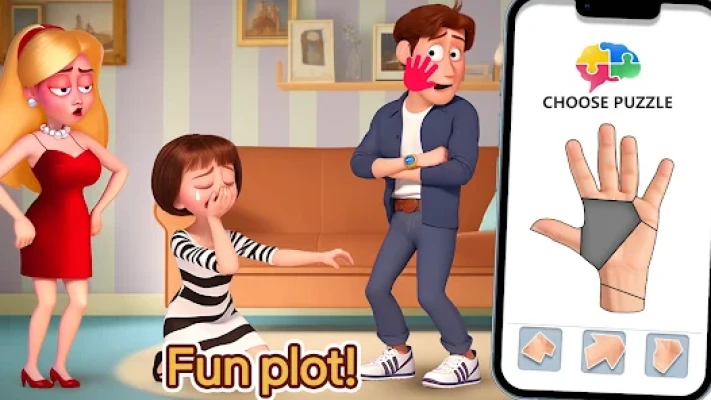
The detective-themed sections involve finding evidence and helping investigate a situation. The Google Play description specifically mentions helping a client discover evidence of her boyfriend's infidelity.
When playing detective scenarios:
Look for suspicious objects
Examine items that appear connected to the situation.
Follow the evidence
Don't choose something simply because it looks unusual. Consider whether it actually provides useful information.
Think about the objective
The purpose is not merely to find a random object. You need to understand what the investigation is trying to establish.
Use the scene
Characters and surrounding objects may provide contextual clues.
Archaeology and Antique Puzzles
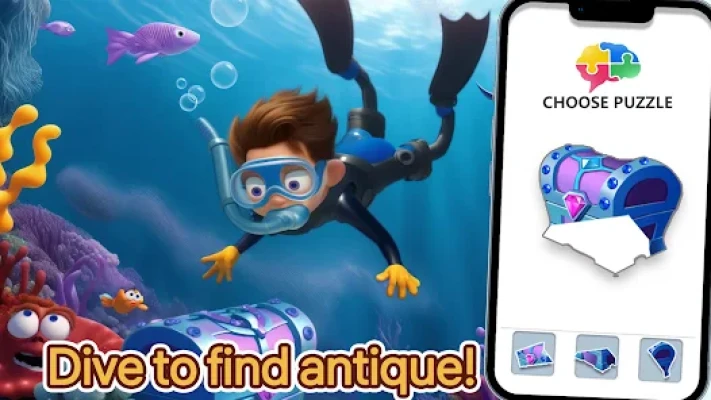
Another scenario puts you in the role of an archaeologist searching for magical antiques.
These levels reward careful observation.
Look for:
- Unusual artifacts
- Objects that appear valuable
- Items that can be combined
- Clues suggesting which object belongs in a particular location
The game describes a progression in which discovered antiques can be sold to build wealth.
Restaurant Gameplay Tips
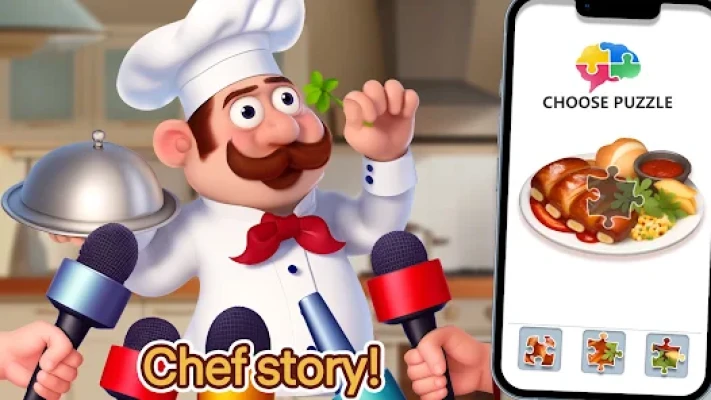
Restaurant-themed puzzles introduce another type of situation.
When solving these levels, think about the relationship between:
Customer → Request → Ingredient/Item → Result
If several items are available, identify which one actually addresses the customer's need.
Avoid selecting objects simply because they are visually prominent.
Business and Hotel Progression
Choose Puzzle also includes a scenario where the player starts with a street stall and gradually works toward becoming the owner of a global hotel chain.
For progression-oriented challenges, focus on the logical next step rather than trying to skip directly to the final outcome.
Think about:
- What resources are currently available?
- What can improve the business?
- What choice creates the next opportunity?
- What does the current situation require?
This approach works better than treating every choice independently.
Beach, Shelter, Fishing and Hunting Modes
The developer lists several themed gameplay categories beyond the main story scenarios, including beach, shelter, season, fishing and hunting.
Each theme can change the type of problem presented to the player.
The best general approach is to identify:
- The immediate objective
- Available tools
- Environmental clues
- Possible consequences
- The most logical sequence
Don't assume that a strategy from one mini-game will always work in another.
How to Solve Difficult Choose Puzzle Levels
When you reach a puzzle that seems confusing, use this process:
Step 1: Stop tapping randomly
Random choices can make it harder to understand the puzzle.
Step 2: Identify the problem
Describe the situation to yourself in one sentence.
Step 3: List the possible solutions
Look at every available item or choice.
Step 4: Eliminate unlikely options
Remove choices that clearly don't address the problem.
Step 5: Predict the consequence
Think about what each remaining choice should cause.
Step 6: Make the most logical selection
Choose the option that best connects the current situation with the desired outcome.
Step 7: Reassess
If it fails, use the result as information and try another logical approach.
Beginner Tips
Tip 1: Read before tapping
The fastest way to make a mistake is to rush.
Tip 2: Search for relationships
Ask how two objects or characters might interact.
Tip 3: Think creatively
Some puzzles aren't solved through conventional logic. Consider unusual but visually supported interactions.
Tip 4: Watch the consequences
A failed choice can still reveal something about the puzzle.
Tip 5: Don't overcomplicate simple levels
If an obvious solution logically fits the situation, try it before inventing a complicated explanation.
Tip 6: Take your time
The game is designed as a relaxing casual experience, so there is little reason to rush through a puzzle.
Advanced Puzzle-Solving Techniques
Use Reverse Thinking
Instead of starting with the available objects, start with the desired result.
For example:
Desired result → What must happen immediately before it? → Which object causes that action?
This reverse approach is particularly useful when several objects appear plausible.
Look for Object Combinations
Some situations require more than simply selecting one item.
Think about whether two objects can logically work together.
The game's description specifically mentions choosing the right props and putting them together.
Separate Visual Distraction From Evidence
Puzzle scenes can contain many objects that are there primarily to make the environment interesting.
Don't assume every visible object is essential.
Focus on objects that have a clear connection to the objective.
Think About Characters
Characters can be just as important as objects.
Ask:
- What does this character need?
- What is the character trying to do?
- Which object could help?
- What would logically change the situation?
Game Modes and Variety
One of the game's defining features is its variety.
The developer describes more than ten gameplay categories, including:
- Basic
- Master
- Story
- Restaurant
- Antique
- Beach
- Shelter
- Season
- Fishing
- Hunting
This gives the game a broader range of situations than a conventional single-mechanic puzzle title.
The Google Play listing also states that the game contains more than 20,000 relaxing levels.
Choose Puzzle Difficulty
The basic controls are simple, but difficulty comes from understanding what each situation is asking you to accomplish.
Some puzzles can be solved almost immediately once the correct object is recognized. Others require more thought because several choices appear possible.
The challenge therefore comes less from complicated controls and more from observation, choice-making and understanding consequences.
Honest Gameplay Impressions
Choose Puzzle: Mini Games has a clear strength: variety.
Instead of playing thousands of levels that all use exactly the same mechanic, players can encounter different themes and situations. That gives the game a more varied casual-puzzle feel.
At the same time, the experience will not appeal equally to everyone. Current Google Play reviews include players who enjoy the puzzle concept as well as reviews describing some levels as less engaging than expected.
The game's best fit is therefore someone who enjoys short, simple puzzle scenarios and experimenting with different choices, rather than someone looking for a deep story or highly complex puzzle system.
Choose Puzzle Pros and Cons
Pros
- Large number of advertised levels
- Multiple puzzle styles
- Story-based situations
- Detective scenarios
- Archaeology and antique themes
- Restaurant and business gameplay
- Beach, shelter, fishing and hunting themes
- Simple controls
- Casual presentation
- Suitable for an Everyone-rated audience
- Regular level updates were announced by the developer
Cons
- Puzzle depth can vary between scenarios
- Some levels may feel simple to experienced puzzle players
- The game contains advertisements
- In-app purchases are available
- The variety may appeal more to casual players than hardcore puzzle fans
Google Play currently lists ads and in-app purchases and gives the game an Everyone content rating.
Who Should Play Choose Puzzle?
Choose Puzzle is worth exploring if you enjoy:
- Casual puzzle games
- Mini-games
- Brain teasers
- Choice-based puzzles
- Story puzzles
- Detective games
- Object-combination puzzles
- Relaxing mobile games
- Short gaming sessions
- Variety rather than one repetitive puzzle mechanic
It is especially suitable for players who enjoy figuring out what the game wants them to do next.
Frequently Asked Questions
What is Choose Puzzle: Mini Games?
Choose Puzzle: Mini Games is a casual Android puzzle collection from Neon Game featuring multiple mini-games, story scenarios and choice-based challenges.
How do you play Choose Puzzle?
You examine each situation, choose appropriate objects or actions, and try to produce the correct outcome. Some puzzles require combining items.
How many levels does Choose Puzzle have?
The Google Play description advertises more than 20,000 relaxing levels.
What types of puzzles are in Choose Puzzle?
The developer lists basic, master, story, restaurant, antique, beach, shelter, season, fishing and hunting gameplay, among other modes.
Is Choose Puzzle suitable for children?
Google Play currently gives Choose Puzzle an Everyone content rating.
Does Choose Puzzle contain ads?
Yes. The current Google Play listing says the game contains ads and in-app purchases.
What is the Android package name?
The package name is com.neongame.choosepuzzle.
Who developed Choose Puzzle?
Choose Puzzle: Mini Games was developed by Neon Game.
Does Choose Puzzle receive updates?
The Google Play listing says levels are updated weekly, although the store page currently shows the listed app update as August 29, 2024.
Final Thoughts
Choose Puzzle: Mini Games takes a broad approach to casual puzzle gaming. Instead of relying on one puzzle mechanic, it combines different situations, mini-games and story scenarios.
The key to solving its puzzles is simple: understand the objective, examine the available choices, think about consequences and select the option that logically changes the situation in the desired way.
With its advertised collection of more than 20,000 levels and numerous gameplay categories, Choose Puzzle offers plenty of variety for players who prefer relaxing mobile puzzles with different themes and scenarios.
Rate the Game
User Reviews










Popular Games



















 Android
 iOS
iOS Windows
 Xbox
Xbox