


Latest Version
November 24, 2025
KAYAC Inc.
Action
iOS
0
Report a Problem
More About :game
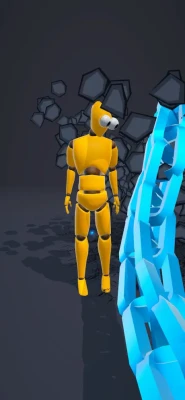
Chain Havoc takes a familiar physics concept and turns it into a fast-paced destruction game.
Instead of controlling a traditional character with complicated buttons, you interact with the environment by drawing lines that guide swinging chains.
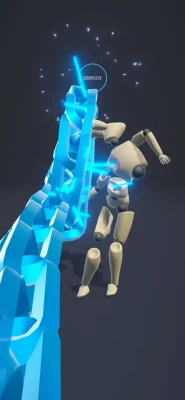
The chains become your main tool for attacking enemies and destroying objects. As the chain moves through the environment, momentum and physics determine how much damage and chaos your attack creates.
The result is a game focused on timing, positioning, momentum, and satisfying destruction.
How Chain Havoc Works
The main mechanic revolves around drawing a line to control the path of a swinging chain.
Your goal is to use the chain effectively against enemies and objects.
A successful swing can:
- Hit ragdoll enemies
- Destroy objects
- Knock targets away
- Create chain reactions
- Clear obstacles
- Produce satisfying physics interactions
The game's appeal comes from seeing how the chain reacts after every movement.
Gameplay Overview
Each challenge places targets and objects within an environment designed for physics-based interaction.
Rather than relying entirely on traditional combat controls, you determine how the chain swings by drawing its path.
The more effectively you plan your movement, the more destructive your attack can become.
A carefully positioned swing can hit multiple targets, while a poorly planned movement may waste your attack.
Drawing the Perfect Chain Path
The line you draw is central to gameplay.
Think of the line as a way of directing the chain toward its target.
Before making a move, consider:
Where should the chain travel?
Which target should it hit first?
Can one swing hit several objects?
Where will the chain go after the impact?
This makes Chain Havoc part action game and part physics puzzle.
Ragdoll Destruction
Ragdoll physics is one of the game's defining features.
When a chain hits an enemy, the character reacts dynamically rather than simply disappearing.
The resulting movement can create unpredictable and often humorous situations.
Enemies can be knocked around, thrown, or pushed by the force of the chain.
That unpredictability is a major part of the game's charm.
Physics-Based Chaos
Chain Havoc is designed around exaggerated physical reactions.
A single successful swing can produce a chain of interactions involving enemies and surrounding objects.
This means the outcome of an attack is not always completely predictable.
That creates a satisfying feeling of experimentation:
Draw → Swing → Smash → Watch the chaos.
How to Play Chain Havoc
Getting started is straightforward:
- Observe the stage.
- Identify the enemies and objects you need to hit.
- Draw a line to create the chain's swing path.
- Release the chain.
- Watch its movement.
- Smash the targets.
- Use the resulting physics to your advantage.
- Complete the stage and continue.
The controls are simple, but improving your accuracy requires practice.
Beginner's Guide
New players should focus on understanding the chain's movement before trying complicated attacks.
Start With One Target
Practice hitting a single enemy accurately.
Study the Swing
Pay attention to how the chain travels after you draw a line.
Use Momentum
A good swing can generate more force than a short, poorly positioned movement.
Aim for Groups
When several enemies are close together, try to create a path that allows the chain to reach multiple targets.
Experiment
Because the physics can produce unexpected reactions, don't be afraid to try different approaches.
Advanced Strategy & Tips
Plan the Entire Swing
Don't think only about your first target. Consider where the chain will travel afterward.
Hit Multiple Targets
Look for opportunities to connect several enemies or objects in one sequence.
Use the Environment
Objects around the stage can become part of the chain reaction. Position your swing so the environment works in your favor.
Control Your Angles
Small changes in the drawn path can dramatically affect the chain's trajectory.
Prioritize Dangerous Targets
If several enemies are present, eliminate the most threatening ones first.
Look for Chain Reactions
The strongest attacks are often those that cause one impact to trigger another.
Game Theme & Atmosphere
Chain Havoc has a playful but destructive atmosphere.
The game is less interested in realistic combat and more focused on exaggerated physics, ragdoll reactions, and satisfying destruction.
The combination of colorful environments, swinging chains, and unpredictable ragdoll movement creates an arcade-like experience designed around quick action.
Game Story
Chain Havoc does not depend on a traditional story campaign.
There is no complex narrative or character-driven plot at the center of the experience.
Instead, the game focuses on a simple gameplay fantasy:
Use swinging chains to smash enemies and objects.
The physics and destruction provide the entertainment.
Characters
The game primarily features ragdoll-style enemies rather than traditional story characters.
These enemies serve as targets for the player's chain attacks.
Their physics-based reactions are an important part of the gameplay experience.
Weapons & Tools
Swinging Chains
The chain is the primary weapon and gameplay tool.
Instead of simply tapping an attack button, players draw lines to control the chain's movement.
This makes the weapon itself part of the game's physics system.
Controls & Interface Guide
Draw a Line
Use your finger to draw a path for the chain.
Position Your Attack
Choose a direction that will bring the chain into contact with the target.
Release and Swing
Once the path is created, the chain moves through the environment.
Watch the Impact
The physics system determines how enemies and objects react.
The control system is intentionally simple, allowing players to concentrate on positioning and timing.
Game Progression
Progression is based around completing the game's stages and encountering different arrangements of targets and objects.
The core mechanic remains consistent, while the challenge comes from how the game combines enemies, environments, and physics interactions.
The App Store version history currently shows several updates focused on minor bug fixes.
Game Difficulty
Difficulty: Easy to Learn, Moderate to Master
The basic controls are simple, but accurate chain placement can become challenging.
Difficulty is influenced by:
- Target positioning
- Chain trajectory
- Timing
- Momentum
- Number of enemies
- Environmental layout
- Ability to create chain reactions
The more targets you need to hit efficiently, the more important careful planning becomes.
Game Modes
The primary experience centers on stage-based action and physics destruction.
The App Store listing does not currently advertise a separate multiplayer or competitive mode, so the main attraction is the single-player chain-swinging experience.
Features
Chain-Swinging Gameplay
Draw lines to swing chains toward enemies and objects.
Ragdoll Physics
Watch enemies react dynamically to powerful chain impacts.
Destructive Action
Smash opponents and objects with physics-driven attacks.
Simple Controls
The line-drawing system makes the game easy to understand.
Physics-Based Challenges
Success depends on trajectory, timing, and momentum.
Chaotic Interactions
One impact can lead to unexpected reactions throughout the stage.
Quick Action
The focused gameplay makes it easy to play in short sessions.
Player Experience
The current U.S. App Store listing shows 4.6 out of 5 stars from 372 ratings, indicating a generally positive overall response.
Some players praise the basic concept and find the game enjoyable, while feedback also includes requests for more original levels and fewer advertisements. One review specifically criticized repeated level structures and some of the game's later content.
This suggests that the core swinging-and-smashing mechanic is the strongest part of the experience, while additional variety could make the later game more engaging.
Pros & Cons
Pros
- Unique chain-swinging mechanic
- Satisfying physics interactions
- Fun ragdoll reactions
- Simple controls
- Easy to learn
- Destructive gameplay
- Good casual action experience
- Strong current App Store rating
Cons
- Some players want more original levels
- Later stages may feel repetitive according to some reviews
- Advertising can interrupt gameplay
- Limited customization has been requested by players
- The gameplay is focused rather than feature-heavy
Ads & Privacy
The App Store listing indicates that the game contains advertising. Apple also lists location, identifiers, usage data, and diagnostics among data that the developer says may be used for tracking, while other data may be collected for advertising, analytics, personalization, and app functionality. Apple notes that these privacy disclosures have not been verified by Apple.
Updates & What’s New
The current App Store version history lists version 1.1.1, with minor bug fixes. Previous versions also included minor bug fixes.
Keeping the game updated is recommended because later releases can improve stability and address gameplay issues.
Technical Details
Game: Chain Havoc: Swing & Smash
Developer: KAYAC Inc.
Category: Action
Price: Free
App Size: 207.5 MB
iPhone: Requires iOS 13.0 or later
iPad: Requires iPadOS 13.0 or later
iPod touch: Requires iOS 13.0 or later
Mac: Requires macOS 11.0 or later and an Apple M1 chip or later
Apple Vision: Requires visionOS 1.0 or later
Language: English
Age Rating: 18+
Advertising: Yes
Chain Havoc on iPhone and iPad
Chain Havoc: Swing & Smash supports both iPhone and iPad. The current App Store listing requires iOS 13.0 or later for iPhone and iPadOS 13.0 or later for iPad. It is also listed for iPod touch, Apple silicon Macs, and Apple Vision.
The touch-based line-drawing controls are particularly well suited to mobile devices.
Accessibility
The current App Store listing states that the developer has not indicated specific accessibility features for the game.
Who Should Play Chain Havoc?
Chain Havoc is a good choice for players who enjoy:
- Physics-based games
- Ragdoll games
- Destruction games
- Casual action games
- Chain reaction games
- Arcade games
- Physics puzzles
- Satisfying mobile games
- Simple touch-control games
- Experimental gameplay mechanics
It may be less suitable for players looking for a deep story, competitive multiplayer, or complex character progression.
What Makes Chain Havoc Different?
The game's biggest strength is its line-drawing chain mechanic.
Instead of simply pressing an attack button, you decide how the chain should move.
That gives the player more control over the trajectory and creates a satisfying connection between your drawing gesture and the resulting physical destruction.
The unpredictability of ragdoll physics makes each successful attack feel slightly different.
Chain Reactions & Destruction
The most satisfying moments come when a single swing affects multiple targets.
A well-designed attack can hit one enemy, send it flying, knock into another object, and create an extended sequence of physical reactions.
These moments reward players who experiment with different angles and trajectories.
Comparison With Traditional Action Games
Traditional action games often rely on predefined attack animations.
Chain Havoc takes a more physics-focused approach.
Your drawing gesture determines the movement of the chain, while the physics system determines what happens when it collides with enemies and objects.
This gives the game a more experimental feel than a conventional button-based action game.
Expert Rating
Gameplay: 8.5/10
Originality: 8.5/10
Physics: 9/10
Controls: 8.5/10
Visual Appeal: 8/10
Challenge: 8/10
Replay Value: 7.5/10
Overall: 8.3/10
Final Verdict
Chain Havoc: Swing & Smash is a simple but entertaining physics-based action game built around one strong idea: draw a line, swing a chain, and smash everything in your path.
Its ragdoll physics and unpredictable reactions give the game a satisfying destructive quality, while the simple touch controls make it easy to pick up.
The main weakness is variety. Some App Store players have asked for more original levels and fewer advertisements, while other feedback suggests that later content can feel repetitive.
Still, the core mechanic is distinctive and enjoyable. Players who like ragdoll physics, chain reaction games, destruction games, and casual action titles should find plenty to enjoy.
Frequently Asked Questions
What is Chain Havoc: Swing & Smash?
Chain Havoc is an action game where players draw lines to swing chains and smash ragdoll enemies and objects using physics-based interactions.
How do you play Chain Havoc?
Draw a line to guide the chain's movement, then use its momentum to hit enemies and objects.
Is Chain Havoc a physics game?
Yes. Physics and ragdoll reactions are central to the game's design.
Is Chain Havoc free?
Yes. The App Store lists Chain Havoc: Swing & Smash as free.
Can I play Chain Havoc on iPhone?
Yes. The game supports iPhone devices running iOS 13.0 or later.
Can I play Chain Havoc on iPad?
Yes. Chain Havoc supports iPad and requires iPadOS 13.0 or later.
Does Chain Havoc have ragdoll enemies?
Yes. Ragdoll characters are a central part of the game's physics-based destruction.
Does Chain Havoc contain advertisements?
Yes. The App Store listing indicates that the game contains advertising.
Who developed Chain Havoc?
Chain Havoc: Swing & Smash was developed by KAYAC Inc.
What is the main objective in Chain Havoc?
The main objective is to use swinging chains to smash enemies and objects while taking advantage of physics and momentum.
Is Chain Havoc difficult?
The controls are easy to learn, but accurate chain positioning and efficient attacks can become more challenging as the stage layouts become more demanding.
Chain Havoc: Swing & Smash turns a simple drawing gesture into a destructive physics playground. Draw lines to swing chains, smash ragdoll enemies, hit objects, and create chaotic reactions.
Its biggest attraction is the combination of simple controls and unpredictable physics. You decide how the chain moves, while the game's physics determine what happens when it connects with enemies and objects.
With its distinctive chain mechanic, ragdoll destruction, and accessible mobile controls, Chain Havoc is a strong choice for players searching for physics games, ragdoll games, destruction games, chain reaction games, and casual action experiences.
Rate the Game
User Reviews















Popular Games



















 Android
 iOS
iOS Windows
 Xbox
Xbox