




Latest Version
December 11, 2025
MOBIRIX
Music
iOS
0
Report a Problem
More About :game
Beat Clash Game Overview
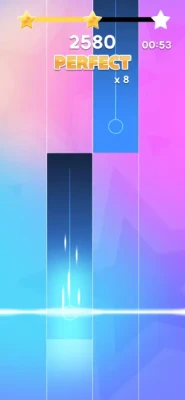
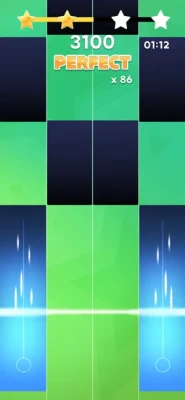
Beat Clash is a mobile rhythm game built around timing, concentration, and musical accuracy. Instead of simply listening to a song, players actively participate by tapping the screen as notes reach the appropriate positions. Each successful input contributes to the score, while accurate sequences help maintain combos and improve overall performance.
Developed by MOBIRIX, Beat Clash features a large music library with more than 1,000 tracks advertised in its store description. The selection includes several popular genres, giving players opportunities to explore different rhythms and musical styles.
One of the game's defining features is its changing note patterns. Higher difficulty levels do not rely solely on faster notes; they can introduce different arrangements that require new timing and coordination skills. This makes learning a song an ongoing process rather than simply memorizing a repeated sequence.
Beat Clash also includes Battle Mode, global rankings, replayable songs, and offline support. These features allow players to practice at their own pace or test their rhythm skills against other players.
The main goal is to hit notes accurately, maintain long combos, complete songs successfully, and steadily improve your performance. Although the controls are easy to understand, mastering difficult patterns takes practice and consistency.
How to Play Beat Clash
The basic gameplay is straightforward. Choose a song, select an available difficulty, and watch the notes as they move toward the input area. Tap the appropriate tiles in time with the music to earn points and maintain your combo.
The most important skill is recognizing the rhythm before the notes reach the input zone. Instead of reacting at the last possible moment, watch the upcoming patterns and prepare your fingers for the next sequence.
As songs become more demanding, you may encounter different arrangements, simultaneous inputs, hold notes, and slide-style notes. Each type requires a slightly different response, so understanding the note patterns is essential.
Your objective is to complete the song with as many accurate inputs as possible. Missed notes can interrupt your combo and reduce your score, while consistent timing helps you achieve stronger results.
Start with a comfortable difficulty and learn the basic controls before moving to more complicated tracks. Building reliable timing on easier songs will make advanced challenges much easier to handle.
Understanding the Note System
Regular Notes
Regular notes are the foundation of Beat Clash. These require a timely tap when the note reaches the designated input area.
The key is to match the visual movement with the musical beat. Avoid tapping too early simply because you can see a note approaching. Wait until the correct timing point and make a clean, deliberate input.
Hold Notes
Hold notes require more than a quick tap. Depending on the displayed pattern, you must press and maintain contact for the required duration.
A common mistake is releasing too early because attention shifts to the next incoming note. Watch the full length of the hold note and keep your finger engaged until the required action is complete.
When hold notes appear alongside regular notes, plan your finger movements carefully. Practicing these sections separately can help you manage more complicated sequences.
Slide Notes
Some patterns involve angled or sliding note movements. These require you to follow the displayed direction or input pattern rather than treating every note as an ordinary tap.
Pay attention to the shape and movement of the note as it approaches the input area. Anticipating the required action helps prevent last-second corrections.
If a slide section repeatedly causes mistakes, replay the song and focus on that pattern instead of trying to improve every part of the chart simultaneously.
Simultaneous Notes
Some sections require multiple inputs at nearly the same time. These patterns can be difficult because both hands or several fingers may need to coordinate accurately.
Try to recognize the arrangement before the notes arrive. Keep your fingers relaxed and avoid making unnecessarily large movements between inputs.
As you become more comfortable with simultaneous notes, focus on consistency rather than speed alone.
Complete Beat Clash Strategy Guide
Choose the Right Difficulty
Selecting an appropriate difficulty is one of the best ways to improve. If a song is too difficult, you may spend most of the session reacting to missed notes rather than learning the rhythm.
Begin with a level where you can follow the majority of the pattern comfortably. Once you can complete it with consistent accuracy, move to a more challenging option.
Remember that higher difficulty can change the arrangement, not just the speed. You may need to learn new note sequences even when you already know the song.
Treat each difficulty as a separate challenge and avoid assuming that success on one level guarantees success on another.
Listen to the Music
Audio is an important source of timing information. Although the falling notes show you what to do, the music helps you recognize the beat and anticipate repeated patterns.
Try to hear the rhythm beneath the melody. Drums, percussion, bass, and other repeating musical elements can help you understand when notes are likely to arrive.
If you struggle with a section, replay the song and listen for its recurring beat before concentrating on the visual pattern again.
With practice, you will begin to recognize rhythmic structures more naturally, reducing the need to react to every note as an isolated event.
Look Ahead Instead of Reacting Late
Watching only the note closest to the input area can leave you unprepared for the next sequence. Train yourself to observe the upcoming notes while maintaining awareness of the immediate input.
This helps you prepare for rapid changes, paired notes, and transitions between different patterns.
Do not look so far ahead that you lose track of the current note. The goal is to balance immediate accuracy with short-term anticipation.
As your timing improves, looking ahead will become more natural and less mentally demanding.
Build Consistent Combos
A combo represents a sequence of successful inputs without a break. Maintaining a combo is valuable because it reflects consistent performance and can help you achieve stronger results.
Focus on hitting every note accurately rather than attempting risky movements just to keep the sequence going. If you begin to lose control, return your attention to the rhythm and recover your timing.
Long combos generally come from reliable technique, not frantic tapping. Relaxed hands, predictable finger movements, and a steady sense of timing can make a substantial difference.
Learn Each Song's Structure
Most songs contain recurring sections, changes in intensity, and patterns that become easier to anticipate after repeated play.
During your first attempt, focus on understanding the general arrangement. Notice when the song becomes more demanding, when patterns repeat, and where transitions occur.
On subsequent attempts, use that knowledge to prepare for difficult sections. Recognizing a challenging passage before it arrives gives you more time to position your fingers and concentrate.
Song familiarity is especially useful when attempting to improve a previous score.
Practice Difficult Sections Through Replays
Beat Clash allows players to replay completed songs. Use this feature to develop consistency and become familiar with challenging note arrangements.
Instead of replaying a track without a goal, identify the section that causes the most mistakes. Pay attention to whether the problem involves timing, finger coordination, a hold note, or an unfamiliar sequence.
Once you understand the problem, concentrate on improving that particular skill. Repeat the song and check whether the difficult section becomes more manageable.
Focused practice is usually more productive than repeatedly playing songs without evaluating your mistakes.
Keep Your Hands Relaxed
Tension can interfere with accurate movement, especially during fast sequences. If you press too hard or move your fingers unnecessarily, it may become more difficult to maintain a steady rhythm.
Use comfortable finger movements and avoid stretching farther than necessary. Position your device so your hands can reach the input areas without strain.
Take short breaks if your fingers become tired. Fatigue can reduce accuracy and make familiar songs feel unexpectedly difficult.
Best Beginner Tips for Beat Clash
Start With Familiar Music
Choose songs with rhythms you already understand. Familiar music makes it easier to anticipate beats and concentrate on the visual patterns.
Learn Timing Before Chasing Scores
Your first goal should be consistency. Accurate inputs provide a stronger foundation than attempting difficult songs before your timing is reliable.
Avoid Random Tapping
Tapping rapidly without following the notes can lead to mistakes and broken combos. Make every input deliberate and connected to the displayed pattern.
Practice One Difficulty at a Time
Become comfortable with a song's current arrangement before moving to a more challenging version. This allows you to build skill gradually.
Pay Attention to Repeated Patterns
When a sequence appears more than once, remember how it works. Recognizing repeated arrangements can reduce hesitation during later sections.
Use Replays to Improve
Replay songs that challenge you, especially when you can identify a specific section that needs work. Each attempt should have a clear learning goal.
Avoid Playing When Tired
Rhythm games demand attention and quick reactions. If you are struggling to concentrate, a short break may be more useful than continuing to make the same mistakes.
Advanced Strategies for Higher Scores
Develop Predictable Finger Movement
Efficient movement is essential when several notes arrive close together. Try to keep your fingers near the areas where they will be needed next instead of making large movements after every input.
The less unnecessary movement you make, the easier it becomes to maintain control during demanding sections.
Recognize Changes in Rhythm
Songs can shift between steady sections and more complicated passages. Watch for changes in note spacing and listen for changes in the musical arrangement.
Preparing for these transitions can help you avoid mistakes when a previously comfortable song suddenly becomes more challenging.
Prioritize Accuracy Over Reckless Speed
Tapping faster does not automatically produce a better result. Your inputs must match the note timing.
When a section becomes difficult, focus on performing the correct movement at the correct moment. Once the pattern becomes familiar, your speed and confidence can improve naturally.
Refine Your Timing Consistency
If you frequently miss notes despite understanding the pattern, evaluate your timing. You may be reacting too early, waiting too long, or struggling to coordinate visual and audio cues.
Try to use the same timing reference throughout a song. Switching between inconsistent visual and audio cues can make your inputs less predictable.
Prepare for Complex Patterns
Advanced sections may combine several note types or require multiple fingers to act in quick succession. Learn to identify the pattern as a sequence rather than treating every note as an unrelated event.
Recognizing the overall shape of a sequence helps you plan your movements and avoid unnecessary hesitation.
Compare Results Across Attempts
After replaying a song, consider whether your accuracy, combo length, and ability to complete difficult sections improved.
A higher score is useful, but identifying the reason for improvement is even more valuable. Understanding what worked allows you to apply the same technique to other songs.
Battle Mode Strategy Guide
Battle Mode allows players to test their rhythm skills against opponents from around the world. It adds a competitive element to the normal song-playing experience and encourages you to improve your performance under pressure.
Focus on Consistency
In a competitive match, a few careless mistakes can affect your result. Prioritize accurate inputs and avoid making sudden changes to your technique simply because another player appears to be performing well.
Stay focused on the notes in front of you rather than worrying about the opponent's progress.
Choose Songs You Can Handle
When song or difficulty selection is available, choose options that match your current abilities. A familiar chart can help you perform consistently, while an unfamiliar or overly demanding one may introduce unnecessary mistakes.
As your skills improve, gradually challenge yourself with more complex music.
Learn to Handle Pressure
Competition can make you tap too early or rush through sections you normally handle comfortably. Keep your attention on the rhythm and follow the same approach you use during practice.
Think of each match as an opportunity to test your skills rather than a situation where every input must be perfect.
Use Competitive Matches as Practice
Winning is rewarding, but losses can reveal weaknesses that may not be obvious during casual play. If a match exposes problems with a particular rhythm or note pattern, practice that skill before returning to competition.
Consistent improvement will help you perform more confidently over time.
Global Rankings and Progression
Beat Clash includes global rankings that allow players to compare their performance with other rhythm game fans. Leaderboards provide an additional goal for players who enjoy improving their scores and competing internationally.
If you want to climb the rankings, focus on developing reliable performance across songs rather than relying on one successful attempt.
Improve your accuracy, learn the patterns of your preferred tracks, and replay songs where you can realistically improve your results.
Rankings can be motivating, but they should not replace the enjoyment of the music itself. Treat them as a way to measure progress while continuing to explore the game's different challenges.
Exploring the Music Library
One of Beat Clash's main attractions is its advertised selection of more than 1,000 tracks. The library covers genres such as pop, EDM, rock, classical, hip-hop, and jazz.
Each genre can offer a different rhythmic experience. Electronic music may feature energetic beats, while other styles may contain more varied timing and phrasing. The exact challenge depends on the individual track and its note arrangement.
Try a variety of songs rather than limiting yourself to one genre. Exploring different musical styles can improve your adaptability and expose you to patterns you might not encounter otherwise.
You can also return to favorite tracks whenever you want to improve a score or simply enjoy playing a familiar song.
Offline Play and Song Replays
Beat Clash advertises offline support, allowing players to enjoy gameplay without a continuous internet connection. This can be convenient when travelling or when a stable connection is unavailable.
However, online features such as Battle Mode and global rankings may require an internet connection. Some content or services may also depend on how the game handles song availability and downloaded data.
If you plan to play offline, test the relevant songs before disconnecting. This helps you confirm which parts of the game are accessible on your device.
Replayable songs are also useful for practice. Once a track has been completed, returning to it can help you refine timing, learn difficult patterns, and improve your performance.
Events and Special Challenges
Beat Clash may feature limited-time events and special rhythm challenges. These activities can introduce themed content or provide additional objectives beyond ordinary song completion.
When an event is available, read its requirements and consider whether they match your current skill level. If a challenge requires consistent accuracy, choose a comfortable practice routine before attempting to complete it.
Do not rush through an event at the expense of your timing. A careful approach can help you make more reliable progress, particularly when the challenge includes difficult note arrangements.
Event availability and rewards can change with updates, so check the current in-game information for details.
VIP Subscription and In-App Purchases
Beat Clash is free to download and offers optional in-app purchases. The store listing advertises access to a large song library without forced video ads, while VIP subscriptions offer benefits such as removing interstitial advertisements and providing five free continues during the subscription period.
The listed subscription options include weekly, monthly, and yearly plans, with prices varying by country and storefront. Other purchases, such as shield packs, may also be available.
A subscription is not necessary to learn rhythm timing or improve your performance. Players can focus on practicing songs, developing accuracy, and exploring available content without automatically purchasing additional services.
Before subscribing, review the displayed price, billing period, included benefits, and renewal conditions. Make sure the offer suits your playing habits and budget.
Common Mistakes to Avoid
Tapping Too Early
Anticipating a note is useful, but pressing before the correct timing can cause a mistake. Watch the input area and coordinate your movement with the rhythm.
Looking Only at One Note
Focusing exclusively on the closest note can leave you unprepared for the next sequence. Learn to monitor upcoming patterns while maintaining accuracy on current inputs.
Ignoring the Music
The visual notes are important, but listening to the beat can help you anticipate patterns and maintain a steady rhythm.
Choosing Difficult Songs Too Soon
Jumping into the hardest charts before learning the basics can lead to repeated mistakes. Build your timing and coordination gradually.
Moving Your Fingers Too Much
Large, unnecessary movements can slow your response and make complex sections harder. Keep your fingers relaxed and use efficient movements.
Repeating Songs Without a Goal
Playing the same song repeatedly does not guarantee improvement. Identify the part that causes mistakes and focus on correcting it.
Letting Competition Distract You
In Battle Mode, watching your opponent too closely can interrupt your concentration. Focus on your own timing and execute each sequence carefully.
Graphics, Sound, and Gameplay Experience
Beat Clash combines a music-focused interface with falling notes, colorful visual feedback, and rhythm-based challenges. Its four-way input system gives players a straightforward way to interact with songs while still allowing complex patterns to develop at higher difficulty levels.
The game's music selection and replay system make it suitable for both short sessions and longer practice periods. Beginners can work on basic timing, while experienced players can concentrate on complicated sequences and competitive matches.
The main appeal comes from the relationship between music and movement. Each successful input provides immediate feedback, and maintaining a long combo can make a difficult song feel increasingly rewarding.
For players who enjoy rhythm games, Beat Clash offers a combination of musical variety, repeatable challenges, and global competition.
Who Should Play Beat Clash?
Beat Clash is well suited to players who enjoy music games, timing challenges, and quick reaction-based gameplay.
Casual players can explore songs at a comfortable pace, while more experienced rhythm fans can work toward better scores and more difficult note arrangements.
Its competitive features may appeal to players who enjoy comparing results with others. Meanwhile, offline support and replayable tracks provide options for those who prefer practicing independently.
Players who dislike rapid tapping or require a slower, less demanding experience may find the more difficult songs challenging. Starting with easier tracks is a sensible way to determine whether the gameplay suits your preferences.
Device Compatibility and Game Information
Game title: Beat Clash
Developer: MOBIRIX
Genre: Music and rhythm game
Platforms: iPhone and iPad
Price: Free to download, with optional in-app purchases
Age rating: 4+
Listed app size: Approximately 202.9 MB
Minimum operating system: iOS 15.0 or later; iPadOS 15.0 or later for iPad
Languages: English, French, German, Hindi, Indonesian, Italian, Japanese, Korean, Portuguese, Russian, Simplified Chinese, Spanish, Thai, Traditional Chinese, Turkish, and Vietnamese
Main features: More than 1,000 advertised tracks, multiple music genres, changing difficulty patterns, four-way input, Battle Mode, global rankings, song replays, and offline support
App size, compatibility information, available tracks, and purchase options may change with future updates. Check the current listing on your device before installing.
Frequently Asked Questions
What is Beat Clash?
Beat Clash is a rhythm music game from MOBIRIX. Players tap falling notes in time with songs, build combos, improve their scores, and compete against other players.
How do you play Beat Clash?
Choose a song and difficulty, watch the notes approach the input area, and tap in time with the rhythm. Maintain accurate timing, follow special note patterns, and avoid unnecessary missed inputs.
How many songs are available in Beat Clash?
The game advertises access to more than 1,000 tracks. The music library includes genres such as pop, EDM, rock, classical, hip-hop, and jazz.
Does Beat Clash have different difficulty levels?
Yes. The game offers different difficulty levels with distinct note arrangements. The challenge can involve more than faster notes, so players may need to learn new patterns when progressing.
What is Battle Mode in Beat Clash?
Battle Mode lets players test their rhythm skills against other players around the world. It adds a competitive element to the game's standard song-based challenges.
How can I get a higher score in Beat Clash?
Focus on accurate timing, learn the song's patterns, maintain combos, and practice difficult sections through replays. Consistency is generally more useful than tapping as quickly as possible.
How do I improve my rhythm timing?
Listen to the music, pay attention to the approaching notes, and practice songs at a comfortable difficulty. Replaying familiar tracks can help you recognize patterns and develop more consistent inputs.
Can I replay completed songs?
Yes. The game advertises a replayable playlist, allowing players to return to completed tracks and practice improving their performance.
Can I play Beat Clash offline?
Yes. Beat Clash advertises offline support. However, online battles and global ranking features may require an internet connection, and some content may have additional requirements.
Is Beat Clash free to play?
Yes. The game is free to download and offers optional in-app purchases and VIP subscriptions. Review the current store listing for local prices and subscription details.
Does Beat Clash contain advertisements?
The game includes advertising, and a VIP subscription is available to remove interstitial ads. The exact benefits and prices depend on the offer displayed in your region.
Is Beat Clash suitable for beginners?
Yes. Beginners can start with easier songs and gradually work toward more complicated note patterns. Learning the controls and developing accurate timing are the most important first steps.
Is Beat Clash available on Android?
The iOS listing confirms support for Apple mobile devices. Check the Google Play Store in your region for current Android availability and compatibility.
Final Thoughts on Beat Clash
Beat Clash offers a lively rhythm game experience built around musical timing, finger coordination, and competitive challenges. Its extensive advertised music library, multiple genres, changing note patterns, and Battle Mode provide plenty of ways to enjoy the gameplay.
The best way to improve is to build strong fundamentals. Start with manageable songs, listen carefully to the rhythm, keep your fingers relaxed, and practice difficult sections through replays. As your timing becomes more consistent, you can move toward harder arrangements and more competitive matches.
Whether you want to enjoy familiar music, chase higher scores, or compete with players around the world, Beat Clash provides a rewarding challenge for anyone who enjoys rhythm-based mobile games.
Rate the Game
User Reviews




Popular Games












 Android
 iOS
 Windows
 Xbox