
Latest Version
August 16, 2026
Playdigious
Strategy
iOS
0
Report a Problem
More About :game
9 Kings puts you in control of a growing kingdom surrounded by rival rulers. Starting with a small settlement, your objective is to develop your territory, strengthen your army and survive increasingly dangerous conflicts.
The game blends roguelike strategy, kingdom building, deckbuilding and autobattler mechanics. Instead of following one fixed strategy, you experiment with cards, buildings, troops, spells and positioning to discover powerful combinations.
Each run can develop differently. One kingdom might become an economic powerhouse built around enormous amounts of gold, while another could rely on dark magic, nature, powerful spells or overwhelming armies.
The mobile version has been redesigned specifically for touchscreens, including a revamped interface and full touch controls.
Game Theme and Atmosphere
The world of 9 Kings combines colorful fantasy with chaotic kingdom warfare.
You are surrounded by rival kings, strange creatures, powerful armies and unpredictable events. Your peaceful-looking kingdom can quickly turn into a battlefield as enemy forces attempt to break through your defenses.
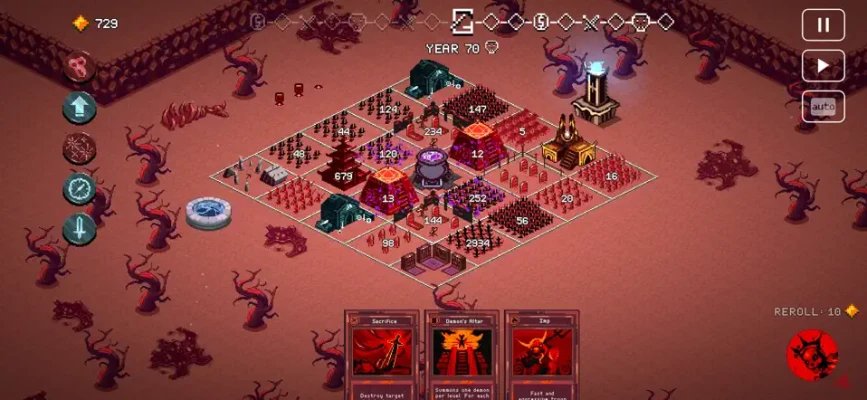
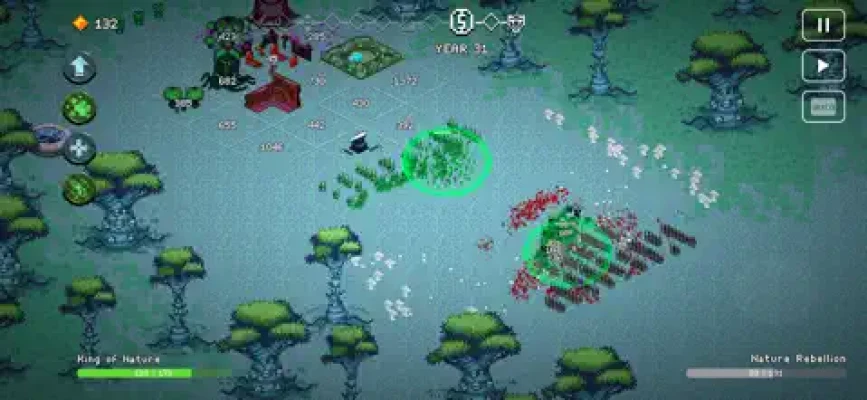
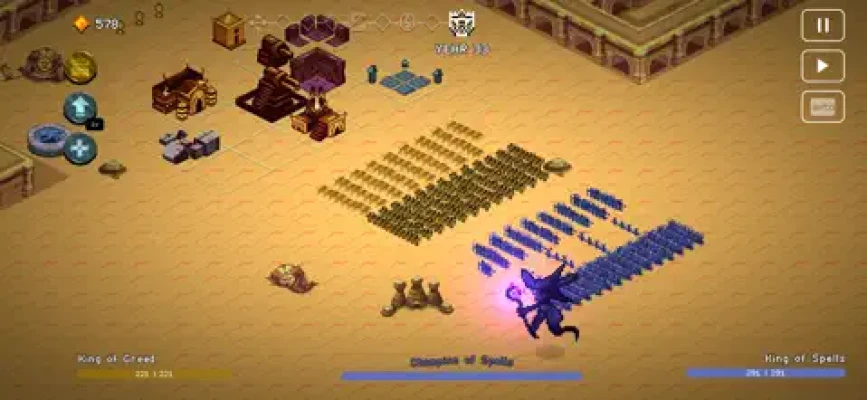
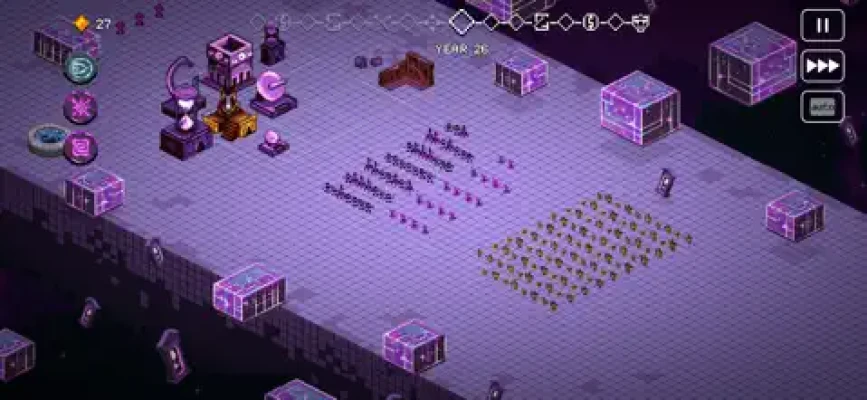
The pixel-art presentation gives the game a distinctive indie strategy-game personality, while large armies and unusual unit combinations create plenty of visual chaos during battles.
The Story and Setting
9 Kings is less focused on a traditional linear story and more centered on the rise of your kingdom.
You begin with a modest territory and gradually transform it into a powerful citadel. Rival kings threaten your lands, creating opportunities for diplomacy, conflict and strategic expansion.
Every run becomes its own story.
You may cooperate with another ruler for a time, fight an enemy to obtain valuable cards, or deliberately target a rival because their deck contains abilities that fit your strategy.
Your ultimate objective is simple:
Survive, expand, overpower your rivals and become King of Kings.
Gameplay Overview
The gameplay revolves around several connected systems:
- Kingdom expansion
- Card-based building
- Unit recruitment
- Spell management
- Deckbuilding
- Resource management
- Strategic positioning
- Defensive preparation
- Large-scale battles
- Rival kings
- Random events
- Roguelike progression
- Quest challenges
- Multiplayer competition
The key is discovering combinations that become stronger when their effects are stacked together.
A building may improve your economy, while another card increases the power of your troops. A spell could enhance those units even further. Combining these effects can create a build that becomes dramatically more powerful over the course of a run.
Choose From Nine Kings
One of the defining features of 9 Kings is its roster of nine kings.
Each ruler has a different playstyle and starting deck, encouraging you to approach kingdom building from a different strategic angle.
Possible approaches include:
The Wealth Strategy
Focus on accumulating gold and using your economy to recruit large numbers of mercenaries.
Nature Strategy
Harness natural forces and build a kingdom around nature-based powers.
Time Manipulation
Use abilities that interact with the laws of time to create unusual strategic opportunities.
Dark Magic
Embrace forbidden powers and use dark magic to strengthen your kingdom.
Imp-Based Armies
Raise hordes of fiendish imps and overwhelm opponents through numbers.
The different kings make experimentation an important part of the game.
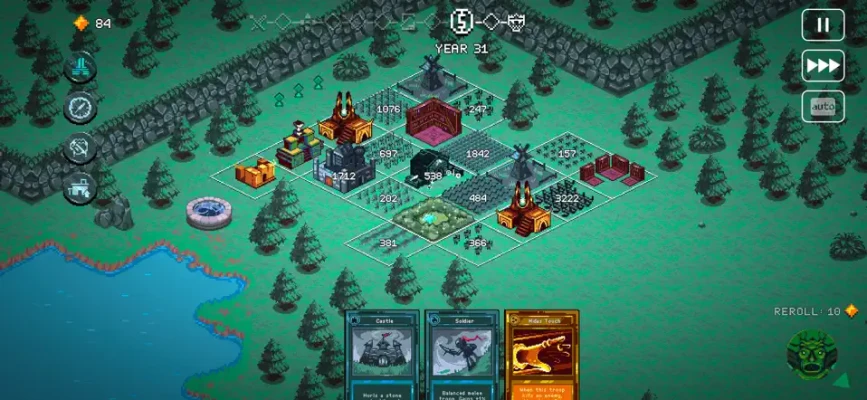
Kingdom Building
Your capital is the heart of your kingdom.
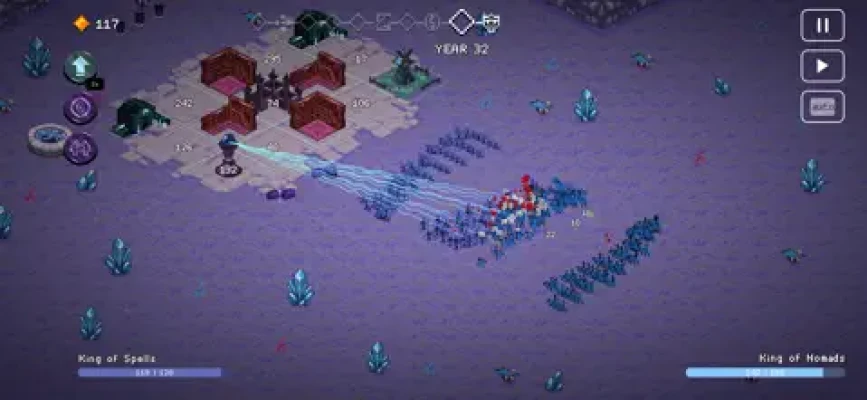
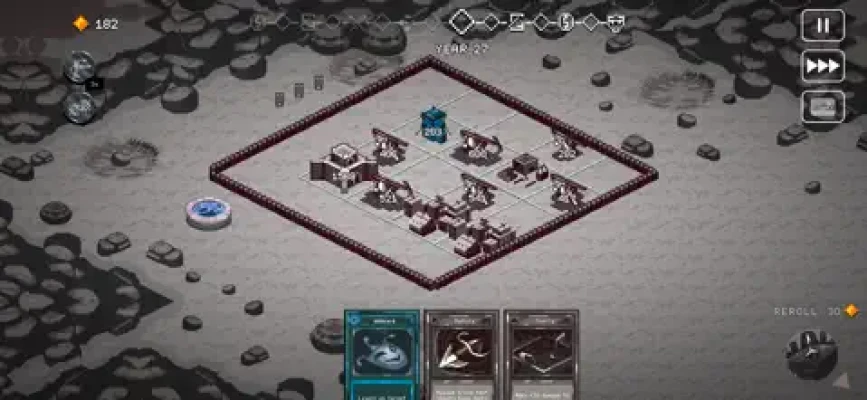
Strategically place cards to expand your territory, improve buildings, strengthen towers and recruit new troops.
Positioning matters because your kingdom is not simply a collection of cards. Where you place structures and how their effects interact can influence the strength and efficiency of your entire build.
A successful kingdom gradually evolves from a small settlement into a powerful fortress capable of surviving prolonged warfare.
Card System
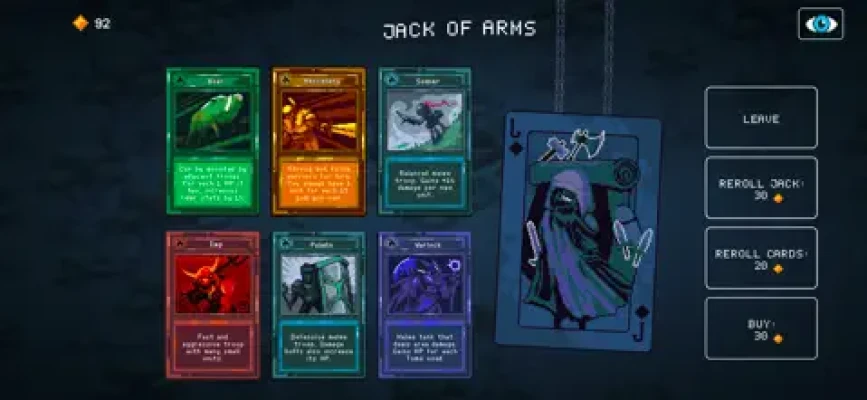
Cards are central to the strategy in 9 Kings.
Your deck can contain different types of tools, including:
- Buildings
- Units
- Spells
- Defensive structures
- Economic effects
- Buffs
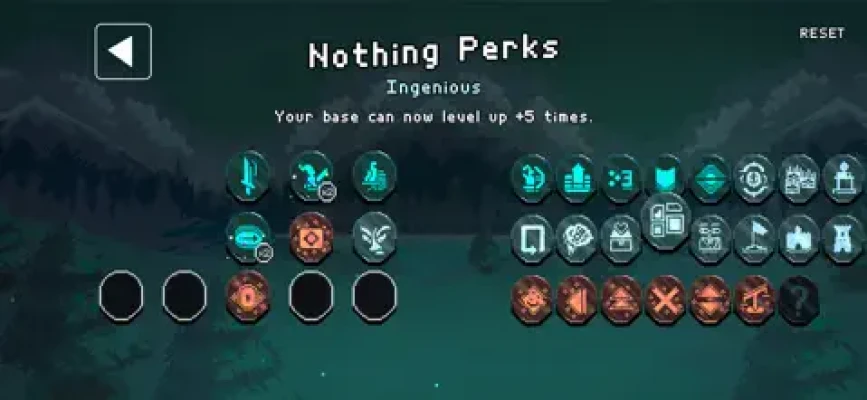
- Special abilities
The interesting part is how these cards interact.
Instead of simply collecting the strongest individual cards, you want to discover combinations that work particularly well together.
This creates the game's signature "break the game" feeling, where a carefully constructed build can become dramatically more powerful.
Deckbuilding Strategy
Every king begins with a different deck.
As you progress, you can obtain cards from rival kings and incorporate their strengths into your own strategy.
This means your final deck does not necessarily have to follow the original identity of your chosen king.
You can begin with an economic strategy and gradually introduce powerful combat abilities. Alternatively, you could start with a magic-focused deck and add units that benefit from your existing bonuses.
The possibilities expand as you experiment.
Rival Kings
The other kings are more than simple enemies.
Their cards and abilities can influence your strategic decisions.
You may choose to cooperate with certain rulers while targeting others whose cards are particularly valuable to your build.
Defeating rival kings can allow you to loot their unique cards and combine them with your own deck.
Massive Battles
Once your kingdom is developed, your carefully constructed army is put to the test.
Battles can involve large numbers of units fighting across the battlefield.
The game includes a wide range of fantasy forces, from knights and warlocks to powerful wizards, bombers, imps and unusual creatures such as sentient mushrooms.
The goal is not simply to recruit as many troops as possible. Strong combinations, positioning and stacked effects can make a smaller but better-designed force extremely effective.
Units and Armies
Your kingdom can recruit a wide variety of units.
Examples include:
- Knights
- Warlocks
- Wizards
- Bombers
- Mercenaries
- Imps
- Nature-based creatures
- Other specialized fantasy units
Different units perform different roles, so creating a balanced army is important.
Some units may provide reliable frontline strength, while others offer high damage or specialized abilities.
Spells and Special Effects
Spells provide another layer of strategy.
Rather than relying exclusively on physical troops, players can use magical abilities to modify battles and enhance their overall build.
The strongest strategies often emerge when spells are combined with buildings, units and persistent effects.
This is where experimentation becomes particularly important.
Strategic Positioning
Positioning is a fundamental part of kingdom development.
Buildings and defensive structures should be placed with their effects and surrounding spaces in mind.
A strong position can allow multiple cards to benefit from one another, creating a chain of bonuses.
Poor placement can waste valuable effects and make your kingdom harder to defend.
Roguelike Progression
9 Kings follows a roguelike structure, meaning each run can develop differently.
You will encounter different combinations of cards, enemies, events and strategic opportunities.
Failure is part of the learning process.
Rather than simply repeating an identical campaign, you use what you learn from previous runs to make better decisions in future attempts.
This makes experimentation a core part of progression.
Random Events
Your kingdom must survive dozens of unique events throughout its development.
These events introduce uncertainty and force you to adapt.
A strategy that works perfectly under one set of circumstances may need to change when a new challenge appears.
Good players learn to build flexible kingdoms rather than relying on a single tactic.
Quest Mode
The mobile version includes Quest Mode, providing additional challenges beyond standard runs.
Quest challenges encourage players to experiment with different strategies and attempt objectives that may require unconventional builds.
Multiplayer
The iOS listing includes asynchronous multiplayer, allowing players to battle against eight rival kings.
This adds a competitive layer to the otherwise heavily replayable single-player experience.
Rather than requiring every player to be online at exactly the same time, asynchronous competition allows strategic battles to fit more naturally into a mobile gaming schedule.
How to Play 9 Kings
- Choose one of the available kings.
- Study your starting deck.
- Begin expanding your kingdom.
- Place buildings strategically.
- Recruit troops.
- Upgrade your defenses.
- Combine cards with complementary effects.
- Prepare for rival attacks.
- Explore new cards and strategic opportunities.
- Loot useful cards from defeated rivals.
- Adapt your build as the run develops.
- Survive increasingly dangerous battles.
- Improve your strategy after each run.
- Aim to become the King of Kings.
Beginner's Guide
Start With a Clear Strategy
Do not place cards randomly. Decide whether your early game will focus on economy, defense, troop strength or another central theme.
Understand Your King's Strengths
Every king has a different starting deck and playstyle. Build around those strengths before trying complicated combinations.
Do Not Ignore Your Economy
Gold can determine how quickly your kingdom develops. A strong economy can provide the resources needed to maintain a large army.
Experiment With Card Synergies
A card that appears weak by itself may become extremely powerful when combined with the right buildings, units or spells.
Keep Your Kingdom Defensible
Growing rapidly is useful, but expansion without adequate defenses can leave your kingdom vulnerable.
Advanced Strategy Tips
Build Around Synergies
The most powerful builds usually come from stacking multiple effects rather than collecting unrelated powerful cards.
Plan Your Territory
Think several steps ahead before placing important cards. Positioning can determine whether your bonuses work together efficiently.
Loot With a Purpose
Do not automatically take every card from a defeated rival. Look for cards that complement your existing deck.
Adapt to Events
A rigid build can collapse when circumstances change. Keep enough flexibility to respond to unexpected events.
Learn From Failed Runs
Roguelike games reward experimentation. A failed kingdom can teach you which combinations work and which strategies are too fragile.
Avoid Overcommitting
An enormous army is not automatically a successful army. Make sure your economy, defenses and card synergies can support your military ambitions.
Controls and Interface
The mobile edition has been specifically redesigned for iPhone and iPad.
According to the App Store listing, it includes:
- Revamped mobile interface
- Full touch controls
- Cloud Save
- Game Center achievements
- iPhone 17 optimization
- Touch-friendly kingdom management
This makes the mobile version more than a simple PC-to-phone conversion.
Game Modes
Standard Roguelike Runs
Build your kingdom, survive enemy attacks and attempt to create an extremely powerful combination of cards.
Quest Mode
Take on special challenges designed around different strategic objectives.
Asynchronous Multiplayer
Compete against rival kings in asynchronous multiplayer and attempt to climb the ranks.
Graphics and Art Style
9 Kings uses a stylized pixel-art fantasy presentation.
The visual identity combines:
- Pixel-art characters
- Fantasy kingdoms
- Colorful buildings
- Large armies
- Magical effects
- Distinctive enemy units
- Chaotic battle scenes
The relatively simple art style allows the game to focus heavily on strategic systems and the interactions between hundreds of possible combinations.
Difficulty
Difficulty: Moderate to High
The controls are easy to understand, but mastering the underlying systems takes considerably more time.
The challenge comes from understanding:
- Card combinations
- Resource management
- Positioning
- Enemy behavior
- Kingdom defense
- Long-term planning
- Roguelike adaptation
New players can learn the basics quickly, but creating consistently powerful builds requires experimentation.
Replay Value
Replayability is one of 9 Kings' strongest features.
Because runs can use different kings, cards, events and combinations, the game encourages repeated experimentation.
The developers describe the game around the idea of creating thousands of possible builds, while the mobile listing emphasizes endless replayability and different runs.
Pros and Cons
Pros
- Deep kingdom-building mechanics
- Nine different kings
- Strong card synergy system
- Roguelike replayability
- Massive battles
- Large variety of units
- Buildings, troops and spells
- Strategic positioning
- Quest Mode
- Asynchronous multiplayer
- Touch-optimized mobile interface
- Strong potential for experimentation
Cons
- The number of systems can initially feel overwhelming.
- Advanced strategies require experimentation.
- Random events can disrupt carefully planned runs.
- Players looking for a traditional real-time strategy campaign may prefer a different style of game.
- The iOS version is listed as an upcoming release rather than an already released full mobile game.
9 Kings on iPhone and iPad
The App Store version is designed specifically for Apple mobile devices.
The current listing requires:
Operating System: iOS 15.0 or later
Processor Requirement: A12 Bionic chip or later
Devices: iPhone and iPad
App Size: Approximately 660.2 MB
Category: Strategy
Age Rating: 13+
Developer/Seller: Playdigious
Languages: English plus 25 additional languages
In-App Purchases: Yes
Full Game Unlock: $8.99 listed on the current U.S. App Store page
Expected Release: October 8, 2026
The listed compatible iPhones include models beginning with the iPhone XS/XR generation and newer devices, including iPhone 17 models.
9 Kings Mobile Version
The mobile release is being handled by Playdigious, bringing the strategy game to iPhone and iPad.
The App Store listing states that players can try 9 Kings for free and unlock the full game through an in-app purchase. The full unlock includes all kings, additional quests and multiplayer features.
9 Kings vs Other Strategy Games
9 Kings stands out because it combines several genres rather than focusing on only one.
It combines:
Kingdom Builder + Roguelike + Deckbuilder + Autobattler + Strategy
That combination gives it a different rhythm from traditional city-building games.
You are not simply constructing a permanent kingdom over dozens of hours. Instead, you repeatedly develop new kingdoms, test new combinations and discover increasingly powerful strategies.
Who Should Play 9 Kings?
9 Kings is especially appealing to players who enjoy:
- Roguelike strategy games
- Kingdom builders
- Card games
- Deckbuilding
- Fantasy strategy
- Autobattlers
- Tower defense elements
- Resource management
- Tactical planning
- Pixel-art games
- Replayable strategy games
- Experimental game builds
It is a particularly good choice for players who enjoy discovering unexpected combinations rather than following one predetermined strategy.
Player Experience
The appeal of 9 Kings comes from the feeling of discovering something unexpectedly powerful.
A simple card combination can eventually become the foundation of an entire kingdom. As more buildings, units, spells and bonuses are added, the build can grow into something much stronger than its individual parts.
That experimentation gives every run a sense of possibility.
The game is also well suited to players who enjoy asking, "What happens if I combine these two systems?"
Expert Rating
Gameplay: 9/10
Strategy Depth: 9/10
Replay Value: 9.5/10
Kingdom Building: 9/10
Card System: 9/10
Visual Style: 8/10
Mobile Controls: 8.5/10
Overall: 9/10
Final Verdict
9 Kings is an ambitious strategy game that successfully combines kingdom building, deckbuilding and roguelike mechanics into one highly replayable experience.
Its greatest strength is freedom. Rather than giving players one correct path to victory, the game encourages them to experiment with kings, cards, buildings, units, spells and positioning until they discover a combination that can overwhelm the competition.
The upcoming iPhone and iPad version makes this complex strategy formula more accessible through a redesigned touch interface, while adding mobile-focused features such as Cloud Save and Game Center achievements.
If you enjoy roguelike strategy games, kingdom builders, deckbuilders and fantasy battles, 9 Kings is a game worth watching for its mobile release.
Frequently Asked Questions
What is 9 Kings?
9 Kings is a fast-paced roguelike kingdom-building strategy game combining deckbuilding, resource management, fantasy battles and strategic positioning.
Who developed 9 Kings?
The original game was developed by Sad Socket. The iOS mobile version is being handled by Playdigious.
How many kings are in 9 Kings?
The game is built around nine kings, with each ruler offering a different playstyle and starting deck.
Is 9 Kings a roguelike?
Yes. Each run can develop differently, and experimentation is a major part of the gameplay.
Is 9 Kings a deckbuilding game?
Yes. Players construct and expand decks containing buildings, units and spells, then combine their effects to create powerful strategies.
Can you build your own kingdom?
Yes. Kingdom building is one of the game's central mechanics. Players expand their territory, upgrade buildings and towers, recruit units and strategically position cards.
Does 9 Kings have multiplayer?
Yes. The iOS listing includes asynchronous multiplayer against rival kings. The mobile listing also says the full-game unlock adds multiplayer.
Does 9 Kings have a single-player mode?
Yes. The core roguelike kingdom-building experience can be played as a single-player game.
Is 9 Kings coming to iPhone?
Yes. The U.S. App Store currently lists the iPhone and iPad version with an expected date of October 8, 2026.
How much does 9 Kings cost on iPhone?
The current U.S. App Store listing shows the app as free to try, with an $8.99 in-app purchase to unlock the full game.
What iPhone is required for 9 Kings?
The App Store currently requires iOS 15.0 or later and an A12 Bionic chip or newer.
Does 9 Kings have Quest Mode?
Yes. Quest Mode provides unique challenges designed to encourage different approaches and builds.
Rate the Game
User Reviews








Popular Games


















 Android
 iOS
iOS Windows
 Xbox
Xbox