
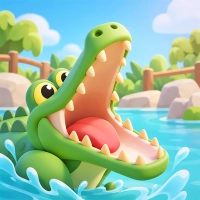


Latest Version
Visit PageMore About :game
From adorable alpacas and elephants to monkeys, lions, hippos, and crocodiles, each animal brings a different activity and challenge. The controls are simple, but later stages can require better timing, careful movement, and quick reactions. With humorous situations, colorful graphics, and short missions, Zoo - Happy Animals offers a casual gaming experience for players who enjoy animal games and interactive challenges.
What Is Zoo - Happy Animals?
Zoo - Happy Animals is a casual simulation game that focuses on animal care and a collection of mini-games. Rather than concentrating on traditional zoo-building mechanics alone, it lets you participate directly in the activities needed to keep the animals happy and cared for.
You may need to clean a dirty animal, groom an alpaca, help a hippo catch food, or guide a group of monkeys through a maze. Other stages involve obstacle courses and tasks that test your coordination and timing.
Every activity has its own objective, so the best strategy changes from one mini-game to another. Some challenges reward steady movements, while others require you to react quickly or plan a safe route.
The game's colorful presentation and humorous animations make it easy to approach. As you progress, the activities become more challenging, encouraging you to learn each mini-game's mechanics and improve your performance.
Main Features of Zoo - Happy Animals
Animal Care Activities
The game includes tasks such as feeding, washing, grooming, and guiding animals. These activities provide different ways to interact with the zoo's residents.
A Variety of Animals
You can encounter alpacas, elephants, monkeys, lions, hippos, crocodiles, and other animals. Each species appears in activities designed around its role in the game.
Fun Mini-Games
Zoo - Happy Animals combines multiple types of challenges instead of relying on one repetitive mechanic. Feeding tasks, cleaning activities, obstacle courses, and maze puzzles help keep the gameplay varied.
Simple Touch Controls
The controls are designed for mobile devices. Swiping, tapping, or moving your finger in the required direction allows you to interact with animals and objects during different stages.
Increasing Difficulty
As you progress, new challenges and more demanding versions of familiar activities test your coordination and decision-making.
Colorful Graphics and Playful Animations
The game uses stylized, cartoon-like visuals to give its animal characters a distinctive appearance. Their movements and reactions add humor to everyday care activities.
Rewards and Progression
Completing activities allows you to continue through the game's progression. Advancing introduces additional challenges and gives you more opportunities to interact with different animals.
Casual Single-Player Experience
The game is designed for individual play, making it suitable for short sessions. You can complete a few activities whenever you have spare time without needing to participate in competitive multiplayer matches.
Offline Play
The Google Play listing identifies Zoo - Happy Animals as supporting offline play. Some features or advertising-related functions may still require an internet connection.
How to Play Zoo - Happy Animals
The basic objective is to complete the task shown in each mini-game. Because the activities vary, it is important to understand the specific goal before making your first move.
Step 1: Read the Objective
At the beginning of a stage, check what you need to accomplish. The task might involve feeding an animal, cleaning its body, grooming its fur, or guiding it through an obstacle course.
Understanding the objective helps you avoid unnecessary movements.
Step 2: Observe the Environment
Look at the animal, the available objects, and any obstacles. Identify where the food, cleaning tools, finish line, or other important elements are located.
Step 3: Learn the Controls
Follow the on-screen instructions to understand how to move or interact with the animal. Some activities rely on swiping, while others require more precise timing or directional control.
Step 4: Complete the Main Task
Focus on the required action rather than trying to do everything at once. For a feeding activity, concentrate on getting the food to the animal. For a maze, work out a safe route before moving.
Step 5: Watch Your Progress
Some mini-games display a progress indicator or provide visual feedback as you complete the objective. Use these cues to understand how much work remains.
Step 6: Finish the Level
Once you meet the objective, complete the stage and move on to the next activity. Pay attention to any new instructions because the following mini-game may use different controls.
Step 7: Adapt to New Challenges
As you encounter new animals and obstacles, adjust your approach. A strategy that works for a grooming activity may not be useful in a maze or feeding challenge.
Best Tips and Tricks for Zoo - Happy Animals
1. Understand Each Mini-Game Before Acting
The game includes several different activity types, and each one has its own rules. Do not assume every level works like the previous one.
Take a moment to identify the objective, controls, and potential hazards. This simple habit can prevent unnecessary mistakes.
2. Use Smooth Movements
When a task involves steering an animal or positioning it beneath falling food, avoid making sudden movements without a clear reason.
Smooth, controlled actions make it easier to adjust your position and respond to changes on the screen.
3. Watch the Animal's Position
In movement-based activities, the animal's location often determines whether your next action will succeed. Keep track of its position relative to food, obstacles, and the target.
This is particularly useful when an animal must catch objects or pass through a narrow section.
4. React Quickly During Feeding Challenges
Some feeding mini-games require you to move an animal into position as food appears or falls. Watch for the next item and adjust your movement before it reaches the ground.
Avoid making large corrections at the last moment when a small adjustment would be sufficient.
5. Plan Your Route Through Mazes
Maze challenges are easier when you identify the destination and examine the available paths before moving.
Look for dead ends and narrow passages. Whenever possible, choose a route that allows you to avoid unnecessary backtracking.
6. Pay Attention to Obstacles
Obstacle courses require you to recognize hazards and respond at the right moment. Watch the spacing between obstacles and avoid rushing into an area you have not assessed.
A controlled approach is often more reliable than moving as quickly as possible.
7. Follow Instructions During Grooming Activities
Grooming and cleaning stages may require you to interact with specific areas of an animal. Pay attention to the on-screen cues and complete the required actions carefully.
If you are unsure what to do next, check the task instructions rather than repeating the same movement.
8. Learn From Failed Attempts
If a stage does not go as planned, consider what caused the problem. You might have moved too late, chosen an inefficient route, or misunderstood the control.
Change your approach based on what happened instead of repeating the same actions without a plan.
9. Be Patient With New Mechanics
Some activities may introduce unfamiliar controls or more complicated obstacles. Give yourself time to understand how the mechanic works before trying to complete the stage quickly.
Once you understand the objective, the challenge usually becomes easier to manage.
10. Enjoy the Variety
One of the game's strengths is the range of activities it offers. Treat each mini-game as a separate challenge rather than expecting one strategy to work everywhere.
Being flexible will help you adapt to different animals and objectives as you progress.
Advanced Strategy Guide
Master Feeding Mini-Games
Feeding challenges often depend on positioning and timing. Your goal is to place the animal where it can receive the food while keeping track of how the items move.
Watch the food's direction and speed, then make small corrections. Large movements can cause you to miss the target or lose control of the animal's position.
When a progress indicator is available, use it to monitor how close you are to finishing the activity.
Improve Your Grooming and Cleaning Technique
Grooming activities are best approached methodically. Examine the animal and follow the on-screen directions to determine where your attention is needed.
Complete the required actions in a controlled way, and avoid rushing through the process. Understanding the task is more important than moving your finger as quickly as possible.
Navigate Mazes Efficiently
For maze puzzles, start by locating the destination. Then look for a path that avoids dead ends and unnecessary turns.
If the route is complicated, break it into smaller sections. Focus on reaching the next useful junction before deciding how to proceed.
This approach reduces confusion and helps you recover more easily if you make a wrong turn.
Handle Obstacle Courses With Better Timing
Obstacle courses reward awareness and coordination. Identify what is coming next and adjust your movement before the animal reaches the obstacle.
Do not focus only on the animal's current position. Anticipate where it will be after your next movement and leave enough room to respond to the following challenge.
Adapt to Different Animal Behaviors
The game features several species, including elephants, hippos, monkeys, alpacas, lions, and crocodiles. Their activities differ, so the same movement pattern will not necessarily work for every animal.
Pay attention to the specific task and how the animal responds to your actions. Treating each stage as a new problem is one of the most effective ways to improve.
Maintain a Steady Pace
Some activities require quick reactions, but speed is not always the most important factor. In puzzles and grooming tasks, accuracy and consistency can be more valuable.
Use a faster pace when the mini-game demands immediate reactions. Slow down when the objective requires careful positioning or precise interaction.
Animal Activities and How to Approach Them
Elephant Care
Elephant-related stages may involve cleaning or interacting with the animal. Follow the instructions carefully and pay attention to the areas that require attention.
Use controlled movements and make sure you understand the objective before starting.
Alpaca Grooming
Alpaca activities focus on grooming and caring for the animal. Follow the game's cues and work through the task systematically rather than rushing.
Monkey Maze Challenges
Monkey activities can involve guiding a group through a maze toward a destination, such as a pile of bananas. Look for a clear path and avoid routes that lead into dead ends.
Hippo Feeding
Hippo feeding challenges may require you to position the animal to catch falling food. Watch the food's movement and make timely adjustments to keep the animal in the correct position.
Lion and Crocodile Activities
These animals appear among the game's broader collection of animal-care challenges. Read the objective carefully and respond to the particular mechanics used in each stage.
The key is to understand what the activity asks you to do rather than relying on assumptions based on the animal alone.
How to Beat Difficult Levels
Some levels become difficult because the controls require precise timing or the environment contains several obstacles. The most effective solution is to identify the specific problem before changing your approach.
If you keep missing food, pay closer attention to the item's movement and adjust the animal's position earlier. If a maze takes too long, examine the route and look for a more direct path. If an obstacle course is difficult, focus on anticipating the next hazard instead of reacting only when it appears.
For grooming activities, return to the instructions and identify which action remains unfinished. Understanding the task often makes it easier to complete.
Above all, avoid treating every mini-game the same way. Feeding, grooming, maze navigation, and obstacle courses require different skills. Adapt your strategy to the activity and use failed attempts to learn what works.
Common Mistakes to Avoid
Moving Without Understanding the Objective
Random movement can waste time and make a simple task harder. Read the instructions before acting.
Reacting Too Late to Falling Food
Waiting until food is almost out of reach can make positioning difficult. Watch its movement and adjust early.
Ignoring Maze Layouts
Entering a maze without considering the route can lead to unnecessary backtracking. Identify the destination and plan your path.
Rushing Through Obstacles
Moving too quickly can cause you to miss important cues. Watch for upcoming hazards and adjust your position in advance.
Repeating the Same Failed Strategy
If your approach does not work, change something. Try a different route, adjust your timing, or reconsider how the controls should be used.
Assuming Every Animal Activity Is Identical
Different mini-games have different objectives. Pay attention to the instructions and use a strategy suited to the current task.
Forgetting to Monitor Progress
When the game provides a progress bar or other visual indicator, use it to understand how much of the objective remains.
Is Zoo - Happy Animals Free to Play?
Zoo - Happy Animals is free to download and includes advertisements and optional in-app purchases. The core experience centers on completing animal-care activities and mini-games.
The availability and pricing of optional purchases can vary. Check the current Google Play listing and in-game purchase options for the latest information.
Can You Play Zoo - Happy Animals Offline?
Yes. The Google Play listing identifies the game as supporting offline play, making it suitable for short sessions when you do not have an internet connection.
However, certain features, advertisements, or other online-dependent functions may require connectivity.
Is Zoo - Happy Animals Suitable for Children?
The game's colorful animals and straightforward controls may appeal to younger players, but the Google Play listing currently carries a Teen content rating and identifies violence, blood, and crude humor.
Parents should review the current rating and gameplay before deciding whether the game is appropriate for their child. It also contains advertisements and in-app purchases, which are worth considering when setting up a device for younger players.
Who Should Play Zoo - Happy Animals?
Zoo - Happy Animals is a good choice for players who enjoy:
Animal-care and zoo simulation games.
Feeding, washing, and grooming activities.
Maze puzzles and obstacle courses.
Simple touch controls and short challenges.
Colorful graphics and humorous animal animations.
A variety of mini-games instead of one repetitive activity.
Casual single-player entertainment.
It may be less suitable for players who want a complex zoo-management simulation with detailed construction, staff management, breeding systems, and extensive economic planning. Its main focus is hands-on animal activities and accessible mini-games.
Frequently Asked Questions
What is Zoo - Happy Animals?
Zoo - Happy Animals is a casual simulation game in which players complete animal-care tasks and mini-games involving feeding, grooming, washing, mazes, and obstacle courses.
Who developed Zoo - Happy Animals?
The game was developed and published by SayGames Ltd.
Which animals appear in the game?
The game's Google Play description mentions alpacas, elephants, monkeys, lions, hippos, and crocodiles, along with other animal encounters.
What do you do in Zoo - Happy Animals?
You complete different animal-related tasks, such as feeding and cleaning animals or guiding them through maze puzzles and obstacle courses.
Is Zoo - Happy Animals difficult?
The game begins with accessible activities and introduces increasingly challenging levels. Difficulty depends on the mini-game, with some stages requiring more precise timing, movement, or route planning.
How do you complete hippo feeding levels?
Watch where the food falls and move the hippo into position in time to catch it. Make small adjustments rather than waiting until the last moment.
How do you solve the maze puzzles?
Identify the destination, inspect the available paths, and choose a route that avoids dead ends. If necessary, divide the maze into smaller sections.
Is Zoo - Happy Animals free?
Yes. The game is free to download and includes advertisements and optional in-app purchases.
Can you play Zoo - Happy Animals offline?
The Google Play listing identifies the game as supporting offline play. Some features may still require an internet connection.
Does Zoo - Happy Animals have multiplayer?
The game is listed as a single-player experience. Its main focus is completing individual activities and progressing through mini-games.
What is the best strategy for harder levels?
Read the objective carefully, understand the controls, and adapt your approach to the mini-game. Use precise movements for feeding tasks, plan routes through mazes, and anticipate obstacles before reaching them.
Final Verdict
Zoo - Happy Animals combines animal care, feeding challenges, grooming activities, maze puzzles, and obstacle courses in a colorful casual game. Its varied mini-games provide a different objective from one stage to the next, while the simple controls make it easy to start playing.
For the best results, understand each task before moving, watch how animals and objects behave, and adjust your timing when a challenge becomes difficult. Plan routes in maze levels, position animals carefully during feeding activities, and follow instructions during grooming stages.
If you enjoy casual animal games with playful graphics and a variety of short challenges, Zoo - Happy Animals offers an entertaining way to spend your free time.
Rate the Game
User Reviews












Popular Games



















 Android
 iOS
 Windows
 Xbox