



Latest Version
January 04, 2026
Skystone Games Pte. Ltd.
Role Playing
iOS
0
Report a Problem
More About :game
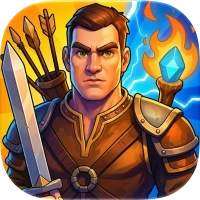
The current U.S. App Store listing describes more than 170 heroes across 10 factions, along with Lord Heroes, dungeon content, gear, artifacts, Guild Boss battles, Void Rift, Immortal Codex and competitive PvP modes.
Rather than simply choosing the strongest characters, successful battles depend on understanding where each hero should be deployed, when to use ultimate abilities, and how to balance damage, healing, crowd control and defense.
What Makes Watcher of Realms Different?
Watcher of Realms combines several systems that normally appear in separate genres.
You have:
- Hero collection and progression
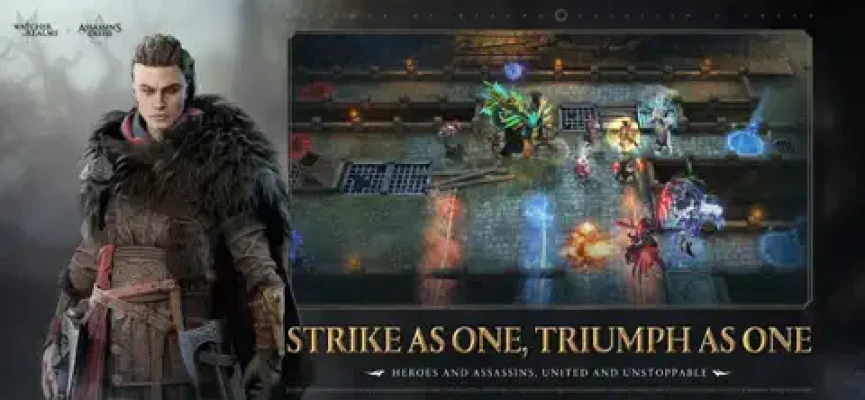
- Tower-defense battles
- RPG equipment and stat management
- Faction bonuses
- Boss encounters
- Guild activities
- PvP modes
- Story chapters and campaign stages
- Resource and dungeon farming
- Hero skill upgrades
The result is a game where having powerful heroes helps, but proper positioning and timing can be just as important.
Explore the World of Tya
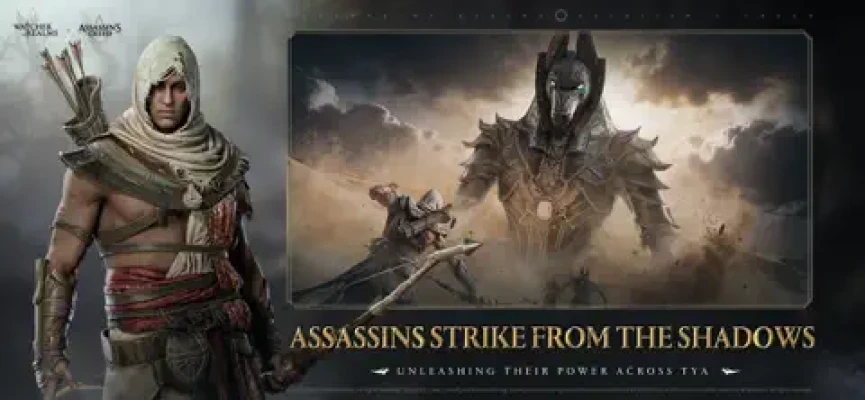
The story takes place in the fantasy continent of Tya, where different factions, heroes and monsters are connected through an expanding fantasy setting.
The game places considerable emphasis on hero backgrounds and faction lore. Each hero has an individual story, while different regions and stages introduce new enemies and battle challenges.
For players who enjoy collecting characters, the large hero roster also gives the game a strong progression and experimentation component.
Hero Collection and Team Building
Hero selection is one of the most important parts of Watcher of Realms.
The App Store currently advertises more than 170 heroes and 10 factions for the U.S. version. Lord Heroes can also provide faction-wide benefits through their special Lord Skills.
Instead of building one team and using it everywhere, it is better to develop several groups for different situations.
Build Around Roles
A useful team normally needs several complementary functions:
Front-line defenders
These heroes absorb pressure and stop enemies from reaching vulnerable units.
Damage dealers
DPS heroes are responsible for eliminating enemies efficiently.
Area-damage heroes
AOE attacks become particularly useful when several enemies arrive together.
Healers
Healing allows your frontline and damage dealers to survive longer.
Control specialists
Slow, stun and other forms of control can buy valuable time.
Specialized heroes
Some characters are particularly effective against specific enemy types or stage mechanics.
A team with five powerful damage dealers can still fail if nobody can hold the line or keep the team alive.
Full Watcher of Realms Strategy Guide
1. Learn the Battlefield Before Deploying Everyone
One of the biggest mistakes beginners make is immediately placing every available hero.
Instead, study the map first.
Look for:
- Enemy entry points
- Enemy paths
- Ground deployment positions
- Ranged deployment positions
- Choke points
- Multiple enemy lanes
- High-value defensive positions
- Areas where enemies remain exposed for longer
A good deployment position can dramatically increase the value of a hero.
A ranged hero placed where enemies stay within attack range for longer can contribute much more damage than the same hero positioned in a poor location.
2. Protect Your Most Important Damage Dealers
Your strongest damage dealer should not automatically be placed in the most dangerous position.
Think about how enemies move through the map.
Use defenders or other durable heroes to absorb pressure while your ranged attackers remain protected behind them.
A simple formation often works well:
Enemy → Defender → Damage Dealer → Support
This isn't a universal formation, but it provides a useful starting point for learning how your heroes interact.
3. Don't Waste Early Energy or Deployment Resources
Early mistakes can make an otherwise manageable stage much harder.
Avoid spending everything immediately.
Instead:
- Deploy the minimum number of heroes needed to stabilize the opening.
- Watch the enemy pattern.
- Identify where the greatest pressure is developing.
- Add damage or support where it is actually needed.
- Save resources for the next dangerous wave.
This approach gives you more flexibility when the stage changes later.
4. Use AOE Damage Against Enemy Groups
When several enemies arrive together, single-target damage can struggle to keep up.
AOE heroes become especially valuable when enemies are forced through narrow areas.
Try to create situations where an AOE attack hits several enemies at once.
A useful principle is:
Don't just ask which hero does the most damage. Ask how many targets that damage can reach.
A slightly weaker AOE attacker can sometimes contribute more practical damage than a powerful single-target character when the map constantly sends groups of enemies.
5. Time Ultimate Abilities Carefully
Ultimate abilities should not always be activated the moment they become available.
Watch the battlefield and identify moments when an ability can change the situation.
Good opportunities include:
- A large enemy group entering range
- A dangerous elite enemy approaching
- Your frontline being overwhelmed
- A boss entering an important phase
- Several high-value targets becoming available
- A healer or support ability being needed to prevent a collapse
Saving an ultimate for the right moment can be more valuable than using it immediately.
6. Keep Your Healers Safe
A healer that dies early can cause an entire formation to collapse.
Avoid placing support characters directly in the path of enemies unless their abilities specifically require it.
Your defensive line should normally create enough distance for healers to operate safely.
If a stage repeatedly defeats your healer, don't immediately assume you need a stronger healer. First check whether the problem is deployment position.
7. Upgrade the Heroes You Actually Use
The huge hero roster makes it tempting to upgrade everyone.
That can quickly consume valuable resources.
Instead, identify a core group of heroes that can handle most of your early progression.
Prioritize characters that:
- Fit several team compositions
- Perform well in campaign stages
- Help with farming
- Cover important combat roles
- Have useful abilities for difficult maps
Once your main team is established, begin developing specialized heroes for particular modes.
Gear and Equipment Strategy
Gear is an important part of long-term progression.
The App Store listing specifically highlights equipment, artifacts and skill-related resources as part of the game's progression systems.
Don't judge equipment only by its overall rarity.
Consider what the individual hero actually needs.
Damage Heroes
Prioritize offensive statistics that improve their primary source of damage.
Tanks
Look for survivability and statistics that allow them to remain on the battlefield.
Healers
Choose equipment that improves the effectiveness of their healing or allows them to cast important abilities more consistently.
Support Heroes
Focus on statistics that strengthen the specific function the hero provides.
A common mistake is giving every hero the same type of equipment simply because it has a higher rarity.
A correctly built lower-rarity item can sometimes be more useful than an unsuitable high-rarity piece.
How to Progress Efficiently
Focus on Campaign Progression
Early campaign progression should remain a major priority.
New stages can unlock additional systems, resources and progression opportunities.
When you become stuck, don't immediately spend all your resources trying to overpower the stage.
First ask:
- Is my formation correct?
- Is my strongest damage dealer positioned properly?
- Is my healer protected?
- Am I using enough crowd control?
- Am I allowing enemies to group together for AOE damage?
- Am I using ultimates at the correct moment?
Sometimes changing the formation can solve a problem without requiring a major upgrade.
Farm the Right Resources
Watcher of Realms includes multiple dungeon and raid activities for obtaining progression materials.
The current App Store listing mentions Gear Raid, Artifact-related progression and other challenging boss-oriented content through modes such as Guild Boss, Void Rift and Immortal Codex.
Avoid farming randomly.
Before spending your stamina or available resources, identify what your account currently needs.
For example:
Need stronger heroes?
Focus on progression resources and summoning opportunities.
Heroes are strong but dying too quickly?
Improve equipment and survivability.
Damage is insufficient?
Look at offensive gear, skill upgrades and team composition.
A specific stage is the problem?
Farm the resource that directly improves the heroes needed for that stage.
Boss Battle Strategy
Bosses require a different mindset from normal campaign stages.
Don't build your team solely around general wave clearing.
Instead, identify the boss's mechanics and determine what your team needs to survive and maintain damage.
The U.S. App Store listing currently highlights bosses and activities including Dragons, Golems, the Undying Bull, Lord of Styx and other encounters across Guild Boss, Void Rift and Immortal Codex.
Boss Fight Checklist
Before starting a difficult boss encounter:
- Identify the boss's major attacks.
- Determine where damage dealers can attack safely.
- Protect your healer.
- Make sure your frontline can survive the expected pressure.
- Save important ultimate abilities for dangerous phases.
- Adjust equipment when necessary.
- Experiment with a different hero if your current team lacks a required function.
Guild and Multiplayer Content
Watcher of Realms is not limited to solo campaign progression.
The game includes guild activities and multiplayer-oriented modes, while the App Store listing specifically highlights Guild Boss battles and PvP content.
Guild content is particularly useful for players who want longer-term progression beyond campaign stages.
Participating consistently can also make the game feel less like a purely single-player RPG and more like a persistent online strategy game.
PvP Tips
PvP requires a different approach from PvE.
A team that performs extremely well against monsters may not automatically perform well against another player.
Pay attention to:
- Enemy positioning
- Opposing hero roles
- Burst damage
- Defensive options
- Crowd control
- Timing
- Counter-picks
- Your opponent's formation
Don't copy a PvE lineup blindly into competitive battles.
Beginner Mistakes to Avoid
Spending resources on every hero
Build a dependable core roster first.
Ignoring positioning
A strong hero in a bad position can perform worse than an average hero in the right position.
Using ultimates immediately
Wait for moments when the ability can affect several targets or prevent a dangerous situation.
Neglecting support heroes
Damage isn't everything. Healing, control and defensive utility can determine whether a difficult stage succeeds.
Equipping gear without checking the hero
Stats should support the hero's actual role.
Trying to brute-force every stage
When a stage repeatedly defeats you, experiment with your formation before simply increasing power.
Forgetting specialized teams
As you advance, different modes and bosses can require different combinations of heroes.
A Simple Beginner Team-Building Formula
If you are still learning the game, start by thinking in terms of functions rather than character names.
A balanced lineup can contain:
1 Frontline Hero
Stops enemies and protects the team.
1–2 Damage Dealers
Provides consistent single-target or burst damage.
1 AOE Specialist
Deals with enemy groups.
1 Healer or Support Hero
Keeps the formation alive.
Then modify the lineup according to the map.
If enemies are overwhelming your frontline, add survivability.
If enemies are accumulating in large groups, increase AOE damage.
If elite enemies survive too long, improve focused damage.
If your team keeps collapsing after several waves, reconsider healing and positioning.
Watcher of Realms on iPhone and iPad
The U.S. App Store version is free to download with optional in-app purchases. The current listing gives it a 13+ age rating, lists Skystone Games Pte. Ltd. as the developer, and shows a size of about 367.5 MB. It requires iOS 15.0 or later on iPhone and iPadOS 15.0 or later on iPad.
The listed supported languages include English, French, German, Indonesian, Italian, Portuguese, Russian, Simplified Chinese and Spanish.
Recent Updates and New Content
Watcher of Realms continues to receive new content and balance changes.
The App Store version history currently lists additions such as new Trial stages, Void Rift auto-explore, new Gear Raid sets and hero adjustments. Earlier updates added Guild War content, Immortal Codex challenges, new raids, Faction Trial stages and equipment improvements.
This means the best team or build can change as heroes, equipment and game systems are adjusted.
For that reason, treat old tier lists as references rather than permanent rules.
Watcher of Realms Pros and Cons
Pros
- Large hero collection
- Strong tower-defense mechanics
- Lots of team-building possibilities
- Detailed fantasy character designs
- Multiple progression systems
- Challenging boss encounters
- Campaign and dungeon content
- Guild and PvP activities
- Frequent additions and hero adjustments
Cons
- Large number of systems can overwhelm new players
- Building many heroes requires substantial resources
- Progression becomes more complicated as the account develops
- In-app purchases are present
- Online multiplayer features can introduce social interactions that some players may prefer to limit
Frequently Asked Questions
Is Watcher of Realms a tower-defense game?
Yes. Its battles combine RPG hero progression with tower-defense-style deployment and positioning. The developer describes the gameplay as strategic, with players choosing hero combinations and timing abilities during battles.
How many heroes are in Watcher of Realms?
The current U.S. App Store description advertises more than 170 heroes across 10 factions, while the game's roster has continued to expand through updates.
Does Watcher of Realms have bosses?
Yes. Boss-focused activities include Guild Boss, Void Rift and Immortal Codex, with the App Store listing highlighting several different boss encounters.
Can you play Watcher of Realms on iPhone?
Yes. The U.S. App Store version supports iPhone and requires iOS 15.0 or later.
Is Watcher of Realms free?
The U.S. App Store lists Watcher of Realms as free with optional in-app purchases.
Does Watcher of Realms have PvP?
Yes. The App Store description includes multiplayer PvP battles and multiple PvP themes.
What should beginners focus on first?
Focus on campaign progression, develop a reliable core team, learn battlefield positioning, upgrade useful equipment and avoid spreading resources across too many heroes.
Final Thoughts
Watcher of Realms works best when you treat every battle as a tactical puzzle rather than simply a test of character power. Hero selection, deployment positions, equipment, faction choices and ultimate timing all affect the result.
For new players, the most useful habit is to build a dependable core team and learn why a stage is defeating you before spending resources to increase combat power. Once you understand the battlefield, the game's large hero roster becomes much more interesting because you can build specialized teams for campaigns, dungeons, bosses, guild activities and PvP.
Rate the Game
User Reviews













Popular Games



















 Android
 iOS
 Windows
 Xbox