


Latest Version
August 26, 2024
Susua Global
Puzzle
Android
0
com.sg.screw.nuts.bolts.unscrew.color.jam.puzzle
Report a Problem
More About :game
Unscrew Color Jam – Game Overview
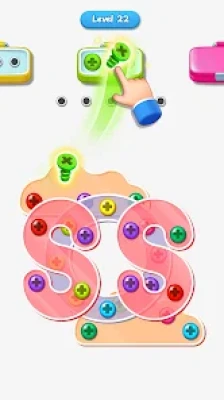
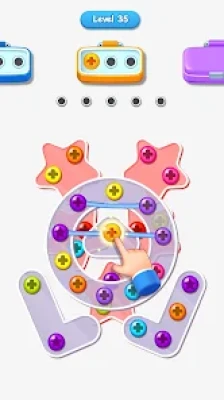
Unscrew Color Jam is a colorful puzzle game built around screws, nuts, bolts, matching, and careful decision-making. The main objective is simple: match screws with the correct colors and place them into the appropriate toolboxes to complete each level.
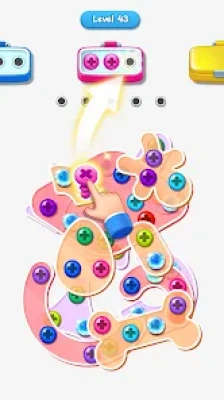
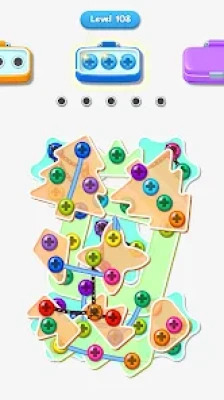
What makes the game more interesting is that the boards are not identical. According to the Google Play listing, levels use different board themes and unique shapes, so players need to study the arrangement before deciding which screw to remove first.
The result is a relaxing but increasingly challenging nuts-and-bolts puzzle experience where planning is often more important than speed.
Game Information
- Game: Unscrew Color Jam
- Developer: Susua Global / Suga Technology Ltd
- Genre: Puzzle
- Platform: Android
- Age Rating: Everyone
- Monetization: Ads and in-app purchases
- Google Play Rating: 4.4 stars
- Downloads: 10K+
- Latest listed update: April 17, 2026
- Core mechanic: Match screws by color and place them into toolboxes
- Main challenge: Solve differently shaped boards while choosing the correct screw order
The current Google Play page also lists phone and tablet support.
What Is Unscrew Color Jam?
Unscrew Color Jam combines a classic color-matching idea with a nuts-and-bolts puzzle mechanic. Instead of simply matching identical objects, you have to pay attention to the screws available on the board and decide which ones should be handled first.
Every move can affect what becomes accessible next. A screw that looks like an easy choice may reveal another part of the board, while removing the wrong color at the wrong moment can make the puzzle harder to manage.
The game's changing board shapes give the basic mechanic more variety.
How to Play Unscrew Color Jam
The basic gameplay can be understood in a few steps:
- Study the board before making a move.
- Identify the available screw colors.
- Look for matching toolbox colors.
- Choose screws that can be safely removed.
- Place matching screws into the correct toolbox.
- Watch what becomes available after each move.
- Continue matching colors until the level is completed.
The important part is not simply finding a matching color. You also need to think about the order in which you remove screws.
Why Screw Order Matters
One of the biggest mistakes in nuts-and-bolts puzzle games is treating every available screw as equally useful.
They are not.
Before tapping a screw, ask yourself:
- What will this move reveal?
- Will another screw become accessible?
- Can I immediately match the color?
- Could this move interfere with a future combination?
- Am I removing a useful screw too early?
Thinking one or two moves ahead can prevent many unnecessary mistakes.
Full Unscrew Color Jam Strategy Guide
1. Inspect the Entire Board First
Do not immediately start tapping screws as soon as a level loads.
Spend a few seconds looking at the complete arrangement. Identify:
- Screw colors
- Toolbox colors
- Groups of similar screws
- Screws that appear important for opening another section
- Areas that may become accessible after a removal
A short planning period can save several failed attempts later.
2. Match Colors Whenever the Opportunity Is Clear
The game's central mechanic is color matching. When you see a screw that clearly corresponds to an available toolbox, consider making that match rather than randomly removing another screw.
The Google Play description specifically states that players match screws with the same color and put them into toolboxes to pass each level.
The key is to combine color recognition with board awareness.
3. Do Not Rush the First Move
Your first move can influence the rest of the puzzle.
A good opening move should ideally do one of two things:
- Complete a useful color match, or
- Open access to another important section of the board.
Avoid choosing a screw simply because it is the easiest one to see.
4. Look for Consecutive Matches
When possible, plan moves that create a chain of useful actions.
For example:
Remove blue → access another blue → complete blue toolbox → reveal a new section
This is much more efficient than:
Remove blue → remove random red → remove random green → reconsider the board
The first approach keeps your moves connected.
5. Prioritize Accessible Screws
If several screws have the same color, consider which one can be removed with the least disruption.
An accessible screw that opens another part of the board may be more valuable than an identical screw sitting in a less useful position.
6. Watch the Board After Every Move
Do not plan five or six moves ahead without checking the result of each action.
Puzzle boards can change as pieces are removed. After every important move, stop and reassess:
What changed?
Then decide your next move.
This simple habit is especially useful on unfamiliar board shapes.
7. Avoid Random Color Switching
Jumping between colors without a plan can make a puzzle unnecessarily complicated.
Instead, when a color has a clear opportunity, consider resolving that color before moving to another part of the board.
This does not mean you should always finish one color first. Sometimes another color needs to be handled to unlock the board. The goal is to avoid unnecessary moves.
8. Think About Future Access
A screw can have two purposes:
- It can be part of a color match.
- It can be blocking another part of the puzzle.
When choosing between two matching screws, consider which removal gives you more useful access.
This is one of the most important habits for harder levels.
9. Learn From Failed Attempts
If a level does not work out, do not simply repeat the same sequence.
Instead, identify the move where the puzzle became difficult.
Ask:
- Did I choose the wrong first screw?
- Did I use a color match too early?
- Did I overlook a hidden opportunity?
- Did I remove a screw that should have been left for later?
Changing one key decision can completely alter the solution.
10. Pay Attention to Similar Colors
Color recognition can become important when several shades appear similar.
Some player feedback on Google Play specifically mentioned difficulty distinguishing certain screw and toolbox shades, while the developer responded that an updated version had been released to address the issue.
If two colors look similar, slow down and compare them carefully rather than relying on a quick glance.
11. Use a Simple Planning Pattern
For difficult boards, use this mental sequence:
Observe → Match → Remove → Recheck → Plan
Do not think only about the current screw.
Think about what your current move creates.
12. Keep Difficult Levels Calm
When a puzzle becomes complicated, rushing usually makes the situation worse.
Take a moment to inspect the board again. Puzzle games like this reward observation and logical sequencing more than fast tapping.
Beginner Tips for Unscrew Color Jam
If you're just starting, these tips can make the early levels easier:
- Look at the whole board before touching anything.
- Learn the toolbox colors first.
- Match obvious colors when the path is safe.
- Avoid random tapping.
- Think about what each screw removal reveals.
- Recheck the board after important moves.
- Remember successful sequences from earlier levels.
- Pay extra attention when colors look similar.
- Do not assume the easiest visible screw is the best choice.
- On difficult boards, solve the puzzle in small sections.
Advanced Puzzle Tips
Once the basic mechanic becomes familiar, start thinking beyond individual matches.
Create Two-Move Plans
Instead of asking only:
“Which screw matches?”
ask:
“Which screw matches, and what will I do immediately afterward?”
This turns each move into part of a larger solution.
Protect Useful Options
If a screw can be useful later, do not automatically remove it just because you can.
Sometimes keeping an option available is more valuable than making an immediate match.
Solve Around Bottlenecks
Look for screws that prevent access to another area.
Removing the correct bottleneck can open several new possibilities at once.
Reassess After Major Changes
Whenever a section of the board becomes available, treat it almost like a new puzzle.
The best move before the reveal may not be the best move afterward.
Common Mistakes to Avoid
Randomly Removing Screws
This is the fastest way to lose control of the board.
Ignoring Color Relationships
The toolbox system makes color recognition central to solving levels.
Moving Too Quickly
Fast decisions can cause you to miss the better sequence.
Focusing on Only One Area
A useful screw may be located somewhere else on the board.
Repeating the Same Failed Solution
If a sequence fails, change the decision that caused the problem instead of repeating it unchanged.
Is Unscrew Color Jam Difficult?
The basic concept is easy to understand, but the challenge comes from deciding which screw to remove and when.
The Google Play listing describes the game as a brain-training puzzle with different board themes and unique shapes.
That means difficulty can come from the arrangement rather than complicated controls. Players who enjoy color sorting, screw puzzles, logic games, and nuts-and-bolts challenges should quickly understand the basic rules while still having room to improve their solving strategy.
Unscrew Color Jam Features
Color Matching Puzzles
The central gameplay revolves around matching screws with their corresponding colors.
Nuts and Bolts Theme
The screw-and-toolbox presentation gives the traditional matching puzzle a mechanical twist.
Different Board Shapes
The developer describes levels as having different themes and unique shapes, adding variety to the puzzle layouts.
Brain-Training Gameplay
The game encourages observation, color recognition, planning, and logical decision-making.
Mobile Puzzle Experience
The Google Play listing supports Android phones and tablets, making it suitable for short puzzle sessions or longer play sessions.
Unscrew Color Jam Pros and Cons
Pros
- Simple controls
- Easy-to-understand core mechanic
- Color-matching gameplay
- Different board layouts
- Mechanical nuts-and-bolts theme
- Suitable for casual puzzle sessions
- Requires planning rather than complicated controls
Cons
- Similar colors can sometimes require extra attention
- Later puzzles can become more demanding
- Ads are present
- Some players may prefer more variety in gameplay mechanics
The current Google Play listing confirms that the game contains ads and in-app purchases.
Unscrew Color Jam Tips for Tricky Levels
When a level feels impossible, use this approach:
Step 1: Stop making random moves.
Step 2: Identify every visible screw color.
Step 3: Find the toolbox that corresponds to each available color.
Step 4: Look for the screw that can be removed without creating a problem.
Step 5: Make one move.
Step 6: Inspect the newly accessible area.
Step 7: Look for the next safe color match.
Step 8: Repeat until the board is cleared.
The goal is to make every move contribute toward opening the board or completing a color match.
What Makes Unscrew Color Jam Fun?
The appeal comes from the combination of a familiar color-matching system and the physical-looking screw puzzle theme.
At first glance, the game looks simple. But once several colors and board sections interact, solving the level becomes a small exercise in planning.
That makes it suitable for players who enjoy:
- Screw puzzles
- Nuts and bolts games
- Color sorting
- Matching puzzles
- Brain teasers
- Logic games
- Casual mobile puzzles
Unscrew Color Jam Review
Unscrew Color Jam delivers a straightforward puzzle concept with enough variation in board shape to keep the basic mechanic from feeling completely repetitive.
Its strongest idea is also its simplest: identify matching screw colors and place them into the correct toolboxes. The challenge comes from deciding the right order and understanding how one removal affects the rest of the board.
The current Google Play listing shows a 4.4-star rating from 234 reviews and more than 10K downloads.
For players who enjoy casual color-matching and nuts-and-bolts puzzles, the game offers an accessible starting point with progressively more thoughtful board-solving challenges.
Frequently Asked Questions
What is Unscrew Color Jam?
Unscrew Color Jam is a puzzle game based on matching colored screws with corresponding toolboxes and solving differently shaped boards.
How do you play Unscrew Color Jam?
Study the board, identify matching screw and toolbox colors, then remove screws in a careful order to complete the level.
Is Unscrew Color Jam available on Android?
Yes. The game is listed on Google Play for Android devices.
Is Unscrew Color Jam free?
The Google Play listing shows the game with ads and in-app purchases.
Is Unscrew Color Jam suitable for children?
Google Play currently gives the game an Everyone content rating.
What is the main objective?
The main objective is to match screws with the same color and put them into the appropriate toolboxes to complete each level.
Does every level have the same board?
No. The developer states that levels feature different board themes and unique shapes.
What should I do when a level becomes difficult?
Stop making random moves, inspect the available colors, identify the most useful screw to remove, and think about what the move will reveal before continuing.
Final Tips
The most important lesson in Unscrew Color Jam is simple: do not treat every available screw as an immediate move.
Look at the colors, study the board, consider what each removal will reveal, and build your solution one move at a time.
When a level becomes complicated, slow down rather than tapping faster. A carefully chosen first move can often make the rest of the puzzle much easier.
With practice, you will become better at recognizing useful screw combinations, spotting bottlenecks, and planning the order needed to clear unusual board shapes.
Rate the Game
User Reviews











Popular Games



















 Android
 iOS
 Windows
 Xbox