




Latest Version
December 29, 2024
AI GAMES FZ LLC
Action
iOS
0
Report a Problem
More About :game
The result is a straightforward arcade experience designed for short sessions. Your goal is not simply to descend as quickly as possible. You also need to read the obstacles ahead, choose safe openings and maintain control while moving deeper into each level.
How To the Core - Crash Planets Works
The basic gameplay loop is easy to understand:
Start the descent → break through layers → avoid hazards → keep moving downward → reach the core.
The game places your drilling character inside colorful 3D environments filled with layers and obstacles. You need to keep progressing rather than becoming trapped by poorly timed movements.
The official listing specifically highlights three actions: blast, smash and drill through the layers.
That combination gives the game its distinctive arcade feel. You are constantly moving through destructible sections while looking for the safest route toward the center.
Main Gameplay Features
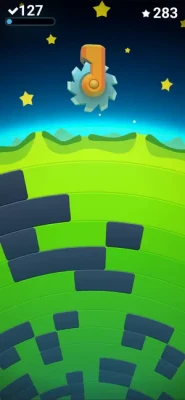
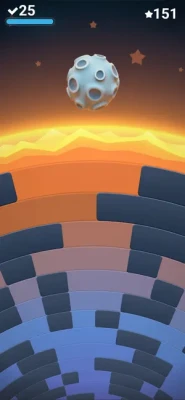
Colorful 3D Planet Layers
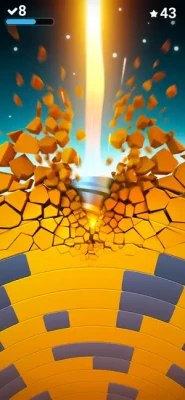
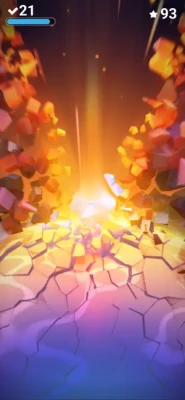
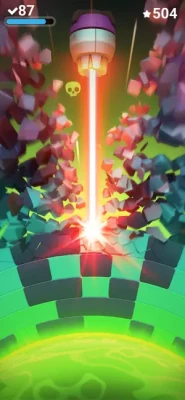
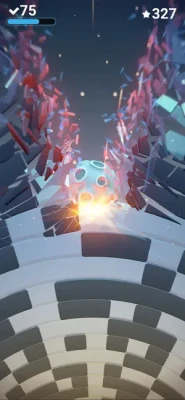
The game uses bright 3D environments to make the different sections of each descent visually distinct.
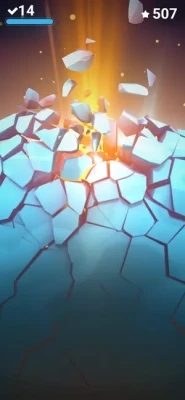
Drilling and Destruction
Breaking through the planet is the central mechanic. Instead of simply running across a conventional track, you are constantly destroying material as you descend.
Obstacle Navigation
The challenge comes from getting through sections without making a poorly timed move. Longer levels can become particularly satisfying when you manage to maintain a clean descent.
Hyper-Casual Controls
The controls are designed to be approachable rather than complicated. The official listing describes the game as easy to play but difficult to master.
Laser Option
The App Store currently lists a Laser in-app purchase for $4.99, alongside a No Ads purchase for $4.99 in the U.S. storefront.
Full To the Core - Crash Planets Strategy Guide
1. Don't Rush the First Few Seconds
The instinct in a drilling game is to go straight down as quickly as possible.
That isn't always the best approach.
At the beginning of a section, take a moment to understand the pattern in front of you. Identify where the open route is before committing to a direction.
A controlled start gives you more time to react later.
2. Watch for Openings Between Obstacles
The most important skill is recognizing safe gaps.
Rather than staring only at the drill itself, look at the next section of the planet. If you can see an opening forming ahead, begin positioning toward it early.
This reduces last-second corrections.
3. Think Two Moves Ahead
A safe opening directly ahead may not actually be the best route.
Before moving into a gap, check what comes immediately afterward.
A useful habit is:
Current obstacle → next opening → following obstacle.
This small amount of forward planning makes longer sections considerably easier.
4. Keep Your Movements Controlled
Overcorrecting is one of the easiest ways to ruin a good run.
If you move too far in one direction, you may end up closer to another obstacle than expected. Small, deliberate adjustments are generally safer than repeated dramatic movements.
5. Learn the Rhythm of Each Section
After several attempts, patterns become easier to recognize.
Instead of thinking of every level as one enormous challenge, divide it into small sections:
- Enter the section
- Identify the safe route
- Pass the obstacle
- Reposition
- Continue drilling
- Prepare for the next pattern
This makes difficult levels feel much more manageable.
How to Handle Long Levels
One of the most satisfying situations mentioned by a player is reaching longer sections and managing to descend while avoiding the obstacles.
The key is consistency.
On longer levels, don't try to make every movement perfect. Focus on keeping the run stable.
If you have already survived several difficult sections, avoid becoming overly aggressive simply because you are close to the end.
A calm final section is often better than a risky shortcut.
Advanced Movement Strategy
Use Early Positioning
If an obstacle requires you to move toward one side, start moving before you are directly beside it.
Late reactions give you less room for correction.
Avoid Excessive Corrections
A common mistake is:
move left → panic → move right → panic → move left again.
This creates unpredictable movement.
Instead, make one deliberate adjustment and reassess the situation.
Identify Safe Zones
When you find an area where your path is relatively clear, use it to stabilize your position.
Don't immediately move again just because movement is possible.
Sometimes the best decision is simply to continue through a safe area.
Preserve Your Momentum
Stopping or changing direction unnecessarily can make the next obstacle harder to handle.
Try to maintain a smooth rhythm rather than constantly switching directions.
How to Deal With Difficult Obstacles
When a difficult section appears, use this three-step approach:
Step 1: Identify the obstacle
Understand exactly what is blocking your route.
Step 2: Find the largest opening
Don't automatically choose the closest gap. Look for the route that gives you the most room for error.
Step 3: Commit early
Once you've chosen your route, make a controlled movement toward it rather than waiting until the last possible moment.
This strategy is especially useful in longer levels where a single mistake can interrupt an otherwise strong run.
Laser Strategy
The Laser is one of the listed in-app purchase options.
If you choose to use it, treat it as a tool for handling problematic sections rather than something that should replace good movement.
The best approach is to use additional power strategically:
- Save it for difficult sections.
- Don't waste it on easy layers.
- Use it when an obstacle pattern is slowing your progress.
- Combine it with careful positioning rather than relying on it alone.
The goal should still be learning the level's movement patterns.
Best Beginner Strategy
If you're playing for the first time, follow this simple routine:
- Start slowly.
- Look ahead before moving.
- Identify the safest opening.
- Make small movements.
- Avoid unnecessary direction changes.
- Learn the obstacle patterns.
- Become more aggressive only after you understand the section.
- Stay calm near the core.
This approach works better than trying to complete the level at maximum speed from the beginning.
Common Mistakes to Avoid
Moving Too Quickly
Fast movement can make an easy obstacle much harder.
Looking Only at the Character
Your character is important, but the next section of the planet matters more. Always look ahead.
Making Huge Corrections
Large movements reduce your margin for error.
Ignoring the Next Obstacle
Getting past one obstacle is not enough. Always check what follows it.
Restarting Too Quickly
If a run becomes difficult, use the remaining section to learn the pattern. The information gained can make your next attempt much easier.
Treating Every Route as Equally Good
Some paths give you more room to react than others. Favor routes with wider openings whenever possible.
Tips for Reaching the Core More Consistently
Stay patient. The game rewards controlled movement.
Read the level early. Give yourself time to react.
Favor wide openings. They provide more room for error.
Don't oversteer. One good movement is usually better than several frantic corrections.
Learn from failed attempts. A failed descent can reveal exactly where your timing needs improvement.
Protect a good run. When you've reached a difficult section successfully, don't throw it away by becoming unnecessarily aggressive.
To the Core - Crash Planets Review
What Works
- Simple concept that is easy to understand
- Colorful 3D presentation
- Drilling and destruction provide satisfying feedback
- Short-session arcade gameplay
- Straightforward controls
- Longer levels can provide satisfying obstacle-avoidance moments
- A Laser option adds another gameplay tool
What Could Be Better
- The gameplay can feel repetitive if you want deeper progression.
- The App Store rating in the U.S. is currently only 2.3/5 from 13 ratings.
- Several reviews strongly criticize the advertising experience.
- Some players appear to have expected a different game because of the title, which created negative reactions.
- The available player sample is small, so the overall rating should not be treated as a definitive measure of the entire player base.
Player Feedback
The reception is noticeably mixed.
One player described the game positively as addictive, with intuitive controls, colorful presentation and an exciting arcade experience. Another player specifically enjoyed the satisfaction of navigating longer levels while avoiding obstacles.
However, several U.S. App Store reviews are highly critical, particularly regarding advertising and expectations created by the game's title.
That makes the game difficult to recommend universally. It is better suited to players who specifically enjoy simple hyper-casual drilling and obstacle-navigation gameplay.
Ads and In-App Purchases
The game is free to download and includes in-app purchases.
The U.S. App Store lists:
- No Ads — $4.99
- Laser — $4.99
Advertising is an important consideration because multiple negative reviews specifically mention encountering an ad very early in the experience.
Players who dislike frequent advertisements may want to consider the No Ads option rather than judging the game entirely from the free experience.
Graphics and Presentation
To the Core uses a bright, cartoon-like 3D visual style rather than attempting realism.
The colorful presentation fits the hyper-casual design: objects are easy to recognize and the action remains visually straightforward while you move through the planet.
The official description specifically promotes the game's colorful 3D presentation.
Difficulty
Beginning: Easy to understand.
Middle sections: More dependent on timing and positioning.
Longer levels: Require greater concentration because mistakes can become more costly.
The difficulty is less about complicated controls and more about learning how to read the obstacles and move through openings consistently.
Game Information
| Feature | Details |
|---|---|
| Game | To the Core - Crash Planets |
| Developer | AI Games FZ |
| Category | Action |
| Style | 3D hyper-casual |
| Price | Free with in-app purchases |
| U.S. App Store rating | 2.3/5 from 13 ratings |
| Age rating | 4+ |
| Size | 265.3 MB |
| Languages | English + 31 more |
| iPhone | iOS 13.0 or later |
| iPad | iPadOS 13.0 or later |
| Mac | macOS 11.0+, Apple M1 or later |
| Apple Vision | visionOS 1.0 or later |
| Latest listed version | 1.01.18 |
| Latest listed update | January 26, 2024 |
The current App Store listing confirms the 265.3 MB size, iOS 13+ requirement, 4+ age rating, 32 supported languages and compatibility with iPhone and iPad; it also lists Mac and Apple Vision compatibility requirements.
Update History
The available App Store history shows:
Version 1.01.18 — January 26, 2024
- Bug fixes
Version 1.01.17 — August 25, 2023
- New levels
Version 1.01.05 — June 7, 2023
- Bug fixes
The App Store currently shows January 26, 2024 as the latest version-history entry.
Frequently Asked Questions
What is To the Core - Crash Planets?
It is a 3D hyper-casual action game where you blast, smash and drill through layers of a planet to reach its core.
Is To the Core - Crash Planets free?
Yes. The App Store lists the game as free with in-app purchases.
What is the objective?
The objective is to descend through the planet, break through its layers and reach the core.
Is the game difficult?
The basic controls are easy to understand, but later sections require better timing and obstacle awareness. The developer describes it as easy to play but hard to master.
Does the game have ads?
Yes. The game contains advertising, and the App Store lists a No Ads purchase.
Is there a Laser upgrade?
Yes. A Laser purchase is listed at $4.99 in the U.S. App Store.
What devices support the game?
The App Store lists iPhone and iPad support, with iOS/iPadOS 13 or later. It also lists compatibility with Apple silicon Macs and Apple Vision.
Is To the Core - Crash Planets suitable for children?
The App Store gives it a 4+ age rating.
How can I get better at the game?
Look ahead, choose wide openings, make controlled movements and avoid unnecessary direction changes. Learning obstacle patterns is more valuable than simply trying to move faster.
Final Tips
To the Core - Crash Planets is at its best when you approach it as a quick arcade challenge rather than a deep progression game.
The most important lessons are simple:
Look ahead. Move early. Avoid overcorrecting. Choose wider openings. Learn the obstacle patterns.
Don't focus exclusively on speed. A controlled descent is more valuable than a reckless one, especially when the level becomes longer.
The game has a straightforward premise and colorful presentation, but the small review sample and strong complaints about advertising mean it is worth presenting honestly. For players who enjoy short hyper-casual drilling challenges, it can provide a satisfying way to spend a few minutes; players looking for deeper systems or substantial progression may find it too repetitive.
Rate the Game
User Reviews







Popular Games















 Android
 iOS
iOS Windows
 Xbox
Xbox