




Latest Version
October 02, 2026
Netmarble Corporation
Action
iOS
0
Report a Problem
More About :game
Players join Cloud, Verna, and Nyanners on an adventure through a world inhabited by humans, monsters, elves, beastkin, and other mysterious characters. The game's central attraction is its combination of character collection and monster taming, allowing players to build teams around different abilities and combat situations.
The game is designed so players can progress through the story at their own pace rather than competing directly with other players for the main adventure experience. Its current content includes multiple story episodes, additional regions, Legendary Conquest Monsters, character events, Monsterling systems, and increasingly difficult challenge content.
MONGIL: STAR DIVE Game Information
Game: MONGIL: STAR DIVE
Developer: Netmarble Corporation
Genre: Action RPG / Monster-Taming RPG
Platform: iPhone, iPad, Android, PC
Category: Action
Age Rating: 13+
Business Model: Free-to-play with in-app purchases
iOS Requirement: iOS 15.0 or later
App Size: Approximately 470 MB on the current U.S. App Store listing
Languages: English, French, German, Indonesian, Japanese, Korean, Portuguese, Russian, Simplified Chinese, Spanish, Thai, and Traditional Chinese
Controller Support: Yes
The App Store currently lists MONGIL: STAR DIVE at 4.8/5 from about 3.9K ratings, although ratings can change over time.
What Makes MONGIL: STAR DIVE Different?
MONGIL: STAR DIVE combines several systems into one adventure:
Monster collecting
Monster taming
Real-time character switching
Three-character teams
Tag Skills
Character recruitment
Story quests
Epic quests
Legendary monsters
Equipment and artifacts
Events
Dispatch
Monsterling development
High-difficulty boss challenges
The result is an RPG where team construction is just as important as individual character strength.
Story and World
The adventure follows Cloud and Verna, accompanied by the mysterious cat-like companion Nyanners.
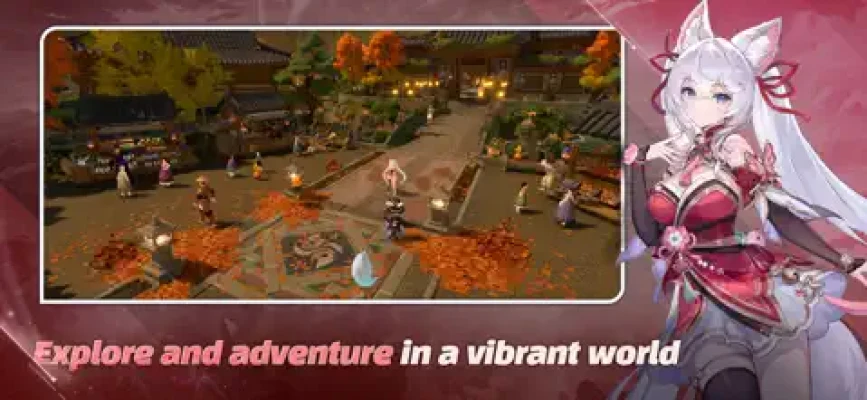
Their journey takes them through a world where humans, monsters, elves, beastkin, and other races coexist.
Rather than rushing players through a competitive progression system, the game encourages exploration and story progression at the player's own pace.
The story has continued to expand through new episodes and regions.
The current Version 1.4 content introduced the Gaba Archipelago, where Cloud and Verna's party continue their journey while searching for Mina. It also adds new story characters Isabella and Chloe through Episode 7.
Triple Tag-Team Combat
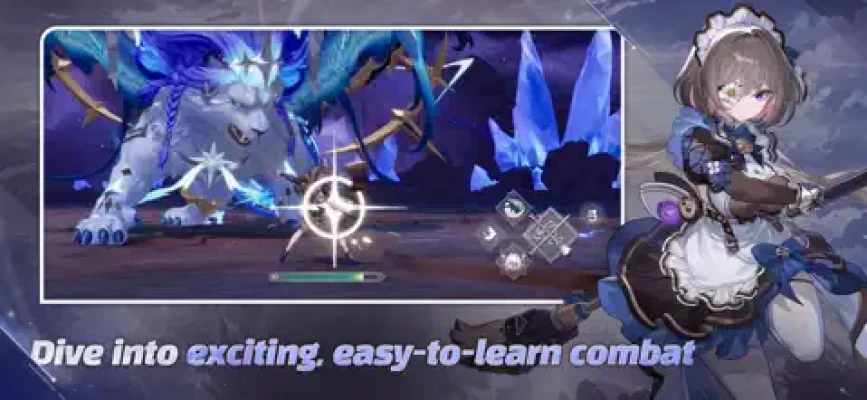
One of the most important mechanics in MONGIL: STAR DIVE is its triple tag-team battle system.
Instead of controlling only one character throughout an encounter, players can switch between members of their team during combat.
This makes battles more dynamic because you can change characters according to the situation.
How Tag Combat Works
A typical battle can follow this pattern:
Attack → Switch → Tag Skill → Switch → Counter → Finish
The objective isn't simply to use the strongest character continuously.
Instead, watch the battle and determine which character is best suited to the current situation.
Tag Skills
Tag Skills are powerful attacks activated through character switching.
The App Store describes real-time switching and Tag Skills as a core part of the combat system.
Tag Skill Strategy
Don't switch characters randomly.
Instead:
Identify the enemy's current weakness.
Choose the character who can exploit it.
Switch at the appropriate moment.
Activate the Tag Skill.
Continue the attack with the new character.
Switch again when the situation changes.
This creates a much more effective combat rhythm than repeatedly attacking with one character.
Building Your First Team
A balanced three-character team should generally have complementary strengths.
Consider having:
A strong damage dealer
A character suited to control or utility
A character who can handle a different elemental or combat situation
Don't automatically build a team around three characters who perform exactly the same role.
A balanced team gives you more options when enemy mechanics change.
Character Recruitment
MONGIL: STAR DIVE uses character recruitment to expand the roster.
The game regularly introduces new characters through summon events.
Recent updates have added characters including:
Mina
Narae
Brisshell
Vivian
Isabella
Chloe
The Version 1.4 update also introduced a Promise of Choice Recruitment, allowing players to select a permanent character of their choice during the associated event.
How to Build Characters
When developing a character, don't focus only on rarity.
Consider:
Role
Skills
Element
Equipment
Artifacts
Passive traits
Awakening
Team synergy
Boss requirements
A character that looks less impressive individually may become much more useful when paired with the right teammates.
Monsterling Guide
Monsterlings are one of the game's defining systems.
The objective isn't simply to collect as many creatures as possible.
You should gradually develop a useful Monsterling collection that supports your combat teams.
The official App Store description encourages players to collect monsters, complete the Monster Codex, tame creatures, and use their unique abilities in battle.
Monster Codex
Completing your Monster Codex gives you a reason to explore beyond the main story.
When encountering a new Monsterling:
Identify the creature.
Determine whether you already own it.
Capture or tame it when possible.
Add it to your collection.
Develop useful duplicates or combinations.
Continue filling the Codex.
Don't treat collection as separate from progression.
It can become a long-term goal alongside character development.
Monsterling Development
Monsterlings can be strengthened through their own progression systems.
Recent official events have specifically included Monsterling combining, with rewards such as Superior Growth Chow and Catnip Spray used for Monsterling development.
Monsterling Tips
Don't spend every development material immediately.
Identify which Monsterlings are useful for your main teams.
Keep valuable resources for promising creatures.
Continue collecting even when you aren't immediately using a Monsterling.
Use the Monster Codex as a long-term collection goal.
Monsterling Auto-Equip
The Version 1.3 update added a Monsterling Auto-Equip feature, making it easier to manage Monsterling setups.
This is particularly useful for newer players who don't yet understand every part of the Monsterling system.
However, once you become more experienced, manually reviewing your setup can help you create more specialized teams.
Epic Quests
Epic Quests provide additional character-focused content.
For example, Version 1.3 added Brisshell's Epic Quest, "A Visitor From Afar." The official update notes that the quest becomes available after clearing Episode 3.
Don't ignore these quests.
They can provide:
Additional story
Character development
Rewards
Gameplay objectives
More information about the world
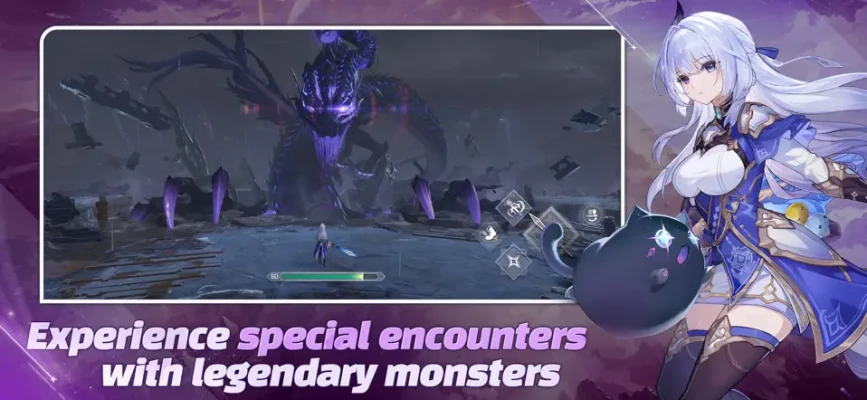
Legendary Conquest Monsters
MONGIL: STAR DIVE includes powerful Legendary Conquest Monsters designed to test stronger teams.
Recent content has introduced monsters such as:
Reginula
Sorin
Version 1.4 introduced Epithym: Sorin, an oriental serpent-themed Legendary Conquest Monster with varied attack patterns involving attributes and spatial mechanics.
Legendary Boss Strategy
Don't approach a Legendary boss as if it were a normal story enemy.
Before the battle:
Check the boss's elemental behavior.
Review your team's weaknesses.
Choose complementary characters.
Prepare appropriate Monsterlings.
Learn the attack patterns.
Save powerful abilities for useful windows.
During the fight:
Observe → Dodge → Switch → Attack → Tag Skill → Reposition
Elemental Sanctum Guide
Version 1.4 introduced Elemental Sanctum, a challenging progression system featuring multiple bosses appearing sequentially.
Players can push toward higher stages while dealing with additional restrictions that increase difficulty, including mechanics such as hidden boss HP or periodic HP recovery.
Successful clears provide currency for obtaining items used with the restriction system, while progression can also grant Elemental Blessing, which increases elemental damage and contributes to new character-specific passive traits.
Elemental Sanctum Strategy
Don't simply use your strongest team.
Instead:
Identify the elemental requirements.
Build the appropriate team.
Check the boss mechanics.
Avoid unnecessary restrictions early.
Improve your elemental damage.
Gradually push higher stages.
This is content where specialized teams can become more important than a single universal lineup.
Character Passive Traits
Version 1.4 added new character-specific Passive Traits connected to Elemental Sanctum.
These traits provide additional ways to strengthen characters and can improve characters regardless of their Awakening Stage.
This means that character progression isn't limited to simply obtaining duplicates or increasing basic stats.
As you progress into more advanced content, passive traits should become part of your team-building decisions.
Equipment Strategy
Equipment should be treated as part of your overall build rather than something to upgrade indiscriminately.
Before investing heavily in equipment, consider:
Which character uses it?
Is the character part of your main team?
Does the equipment complement the character's role?
Will you continue using the character?
Does the upgrade solve an actual weakness?
Avoid spreading your best materials across too many characters.
Artifact Strategy
Artifacts can influence the effectiveness of your characters and teams.
When building a character, consider the relationship between:
Character + Skills + Equipment + Artifact + Monsterling + Team
A powerful individual item won't necessarily create a powerful team if the rest of the setup doesn't complement it.
Dispatch System
The game added a Dispatch System in Version 1.03.00.
Dispatch systems are useful because they can provide progression value without requiring you to actively control every part of the process.
Make dispatch activities part of your regular routine rather than checking them only occasionally.
Main Story Progression Guide
For new players, the main story should be the foundation of progression.
Step 1 – Follow the Story
Complete the available main quests and learn the world.
Step 2 – Build Your First Three-Person Team
Focus on creating a functional team rather than collecting every character immediately.
Step 3 – Develop Monsterlings
Start building a useful collection alongside your characters.
Step 4 – Upgrade Key Equipment
Concentrate resources on characters you actually use.
Step 5 – Unlock More Content
As you progress, additional regions, events, Epic Quests, and bosses become available.
Step 6 – Start Specialized Builds
Once basic progression becomes comfortable, create teams for specific elemental or boss requirements.
Best Beginner Strategy
If you're completely new to MONGIL: STAR DIVE, don't try to master every system on the first day.
Use this progression order:
Story → Team → Monsterlings → Equipment → Events → Bosses → Specialized Teams
This gives you a natural path through the game's systems.
Daily Routine
A simple daily routine can keep your account progressing efficiently.
1. Check Daily Rewards
Collect available login and activity rewards.
2. Complete Important Missions
Prioritize missions that contribute to your current progression.
3. Check Dispatch
Collect completed dispatch rewards and begin new assignments when available.
4. Develop Monsterlings
Use available resources on your priority Monsterlings.
5. Check Events
Limited-time events often contain valuable progression materials.
6. Continue Story Progress
Advance through available episodes.
7. Challenge Boss Content
Once your team is strong enough, attempt Legendary and other challenging content.
Event Strategy
Events are an important part of MONGIL: STAR DIVE.
The game regularly adds:
Event stories
Recruitment events
Mini-games
Special quests
Limited rewards
Character events
New regions
Recent updates have included Summer Lane, character recruitment events, new regions, and special story content.
Event Tips
Check event objectives early.
Complete limited-time missions before they expire.
Prioritize rewards that improve your main team.
Don't waste stamina or resources on low-value activities.
Check whether event currencies expire.
Half-Anniversary Content
The Version 1.4 update also introduced half-anniversary events with substantial recruitment opportunities.
The developer announced more than 150 total recruitments across the anniversary-related events, including recruitment events featuring Mina, Narae, Esther, and Nagi, plus the Promise of Choice Recruitment.
For players starting during major celebration events, this can significantly affect how quickly a roster develops.
Combat Tips
Learn to Switch
Don't remain on one character throughout every battle.
Switching is a fundamental part of the combat system.
Use Tag Skills at the Right Moment
A Tag Skill can be much more useful when used during a boss vulnerability window.
Watch Enemy Patterns
Learn:
Attack animations
Area indicators
Charge attacks
Recovery windows
Boss transitions
Don't Ignore Defense
Surviving long enough to use your strongest attacks is often more valuable than constantly attacking.
Boss Battle Strategy
For difficult bosses, use a simple preparation checklist.
Before Battle
Check the boss.
Check your team.
Check elements.
Check Monsterlings.
Check equipment.
Check available passive traits.
During Battle
Watch the boss.
Avoid major attacks.
Switch characters when appropriate.
Use Tag Skills strategically.
Save major attacks for vulnerability windows.
After Battle
If you fail, identify the actual problem.
Ask:
Did I lack damage?
Did I die too quickly?
Did I use the wrong element?
Did I fail a mechanic?
Was my team poorly balanced?
Fix the specific problem rather than upgrading everything.
How to Build a Strong Team
A strong team isn't necessarily three of the rarest characters.
Look for synergy.
A practical team-building process is:
1. Choose Your Main Damage Dealer
Pick the character who will provide your primary offensive pressure.
2. Add a Complementary Character
Select someone who covers a different weakness.
3. Add a Character for Utility or Another Damage Type
This gives you more options when the battle changes.
4. Match Monsterlings
Choose Monsterlings that complement the team's abilities rather than selecting them randomly.
5. Match Equipment
Build equipment around each character's actual role.
Free-to-Play Resource Management
MONGIL: STAR DIVE is free to play and includes optional in-app purchases and loot boxes.
If you're playing without spending heavily, resource management is particularly important.
Save Recruitment Currency
Don't immediately spend every currency on the first available banner.
Consider whether the character will actually improve your roster.
Prioritize Your Main Team
Avoid investing heavily in a large number of characters simultaneously.
Use Events
Events can provide valuable progression materials.
Don't Waste Upgrade Materials
Before enhancing an item, determine whether it will remain useful.
Common Beginner Mistakes
Building Too Many Characters
Spreading resources across your entire roster can slow down your main team's development.
Better approach: establish a core team first.
Ignoring Monsterlings
Monsterlings are a major part of the game's identity and combat progression.
Better approach: develop a useful Monsterling collection alongside your characters.
Never Switching Characters
The triple tag system exists for a reason.
Better approach: practice switching until it becomes part of your normal combat rhythm.
Saving Everything Forever
Resource management doesn't mean refusing to spend.
Better approach: spend resources when they produce meaningful progression.
Ignoring Events
Limited-time events can provide useful rewards.
Better approach: check event missions regularly.
Advanced Team-Building Strategy
Once you reach more difficult content, stop thinking about one universal team.
Build teams around specific goals.
For example:
General Story Team
A balanced team capable of handling normal encounters.
Boss Team
Characters selected around the boss's mechanics and elemental requirements.
Elemental Team
Characters optimized around a particular elemental damage requirement.
Challenge Team
A specialized setup designed for difficult stage restrictions.
This becomes especially valuable in content such as Elemental Sanctum, where increasing restrictions can force players to adapt their teams.
Graphics and Atmosphere
MONGIL: STAR DIVE uses a colorful fantasy presentation that combines expressive characters, animated environments, cute monsters, and cinematic combat.
Its visual identity contrasts lighthearted Monsterlings with more dramatic story sequences and challenging boss battles.
The App Store describes the game as a world of humans, monsters, elves, beastkin, and other characters, while its official tagline emphasizes exploration and discovery.
Is MONGIL: STAR DIVE Worth Playing?
MONGIL: STAR DIVE is designed for players who enjoy:
Character-collection RPGs
Monster-taming games
Action combat
Real-time character switching
Anime-style fantasy worlds
Story-driven adventures
Boss battles
Team-building
Collectible creatures
Its biggest gameplay focus is the interaction between characters, Monsterlings, and real-time tag-team combat.
Players who prefer slower turn-based RPGs may find the real-time action system different, while players who enjoy switching between characters and managing a flexible team can explore a deeper combat system as they progress.
Pros and Cons
Pros
Real-time triple tag-team combat
Character switching during battles
Large Monsterling collection
Monster Codex
Story-driven adventure
Regular new characters
Epic Quests
Legendary Conquest Monsters
Elemental challenge content
Events and mini-games
Controller support
Multiple languages
Ongoing content updates
Cons
Many progression systems can take time to learn
Character recruitment involves randomized systems
In-app purchases are available
Some advanced content requires specialized teams
New players may initially find team-building systems overwhelming
Frequently Asked Questions
What is MONGIL: STAR DIVE?
MONGIL: STAR DIVE is a monster-taming action RPG developed by Netmarble. It combines character collection, Monsterlings, story exploration, and real-time triple tag-team combat.
Who are the main characters?
The main adventure follows Cloud and Verna, accompanied by the mysterious companion Nyanners.
What are Monsterlings?
Monsterlings are collectible creatures that can be tamed, developed, and used as part of the game's progression and battle systems.
How does combat work?
Combat uses real-time action with a three-character team. Players can switch characters during battles and activate Tag Skills.
Can I switch characters during battle?
Yes. Real-time character switching is one of the core features of MONGIL: STAR DIVE.
What is Elemental Sanctum?
Elemental Sanctum is high-difficulty content introduced in Version 1.4 where players face multiple bosses sequentially while dealing with additional restrictions.
Who is Sorin?
Sorin is a Legendary Conquest Monster introduced in Version 1.4. It has an oriental serpent-inspired design and uses varied attack patterns involving attributes and spatial mechanics.
What is Gaba Archipelago?
Gaba Archipelago is a new region introduced with Version 1.4, where Cloud and Verna's group continue their adventure and search for Mina.
Is MONGIL: STAR DIVE free to play?
Yes. The App Store lists the game as free with optional in-app purchases.
Does MONGIL: STAR DIVE have in-app purchases?
Yes. The game contains optional purchases and loot boxes.
Does the game support controllers?
Yes. The current App Store listing indicates controller support.
What iOS version is required?
The current App Store listing requires iOS 15.0 or later.
Final MONGIL: STAR DIVE Strategy Guide
MONGIL: STAR DIVE becomes much easier to understand when its systems are viewed as one connected progression loop.
Start with a reliable three-character team, learn the real-time switching system, and practice using Tag Skills rather than simply attacking with one character. Then begin developing Monsterlings that complement your characters and gradually expand your collection.
As you progress through the story, move into Epic Quests, events, Legendary Conquest Monsters, and specialized challenges. The newer Elemental Sanctum content makes elemental team-building and character-specific passive traits increasingly important.
For resources, concentrate your investment on your core team instead of trying to fully develop every character immediately. Use events and regular activities to strengthen your roster over time.
The most important combat lesson is simple:
Don't just build stronger characters. Build better teams.
A well-coordinated team with complementary characters, Monsterlings, equipment, and Tag Skills can handle difficult encounters much more effectively than a collection of individually powerful characters with little synergy.
With its expanding story, new regions, collectible Monsterlings, character recruitment, Legendary bosses, and regular events, MONGIL: STAR DIVE is built as a continuing action RPG adventure where team-building and exploration remain important throughout progression.
Rate the Game
User Reviews












Popular Games


















 Android
 iOS
iOS Windows
 Xbox
Xbox