

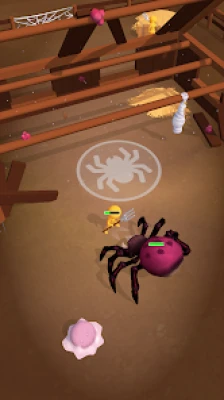
Latest Version
September 09, 2024
Homa
Action
0
com.beetleplay.spidernest
Report a Problem
More About :game
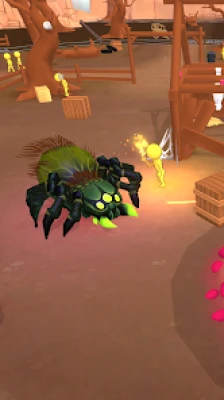
As the colony develops, your offspring become increasingly important. They can attack invaders, use venom, collect enemies, and help defend the nest. You can also evolve your spiders by collecting mutagens and strengthening the colony.
The result is a mixture of spider survival, action combat, nest defense, resource management, and creature evolution.
The Spider Nest Overview
The main gameplay loop revolves around four connected goals:
Defend the nest → defeat invaders → collect resources → evolve the spider colony
You are not playing as an ordinary spider wandering through a world. Your nest is the center of your progression, and protecting it is just as important as defeating individual enemies.
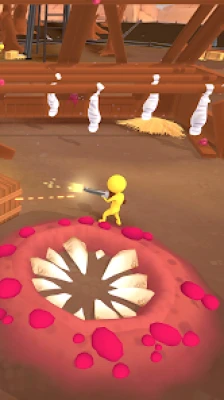
Humans become increasingly dangerous as they attack the colony with weapons and other methods of destroying your nest. The official game description specifically highlights enemies attempting to shoot the spider, use fire, and destroy the nest.
This means successful play requires both offense and defense.
Story and Atmosphere
The game creates a dark fantasy-style atmosphere around the idea of a giant spider colony fighting for survival.
You play as the spider queen, responsible for protecting eggs and building a growing army of spider offspring.
The world is hostile. Human invaders enter the spider territory, attack the colony, and attempt to destroy the nest.
Rather than following a heavily scripted story, the game's narrative comes primarily from its survival premise:
A spider colony is under attack, and you must turn the nest into a stronger force before the humans overwhelm it.
Core Gameplay
The basic gameplay cycle is:
Explore the surrounding area.
Locate human invaders.
Attack vulnerable targets.
Wrap defeated enemies in cocoons.
Bring captured enemies back toward the nest.
Use resources to support your colony.
Protect eggs and offspring.
Evolve your spider army.
Defend against stronger attacks.
Repeat the process with increasingly difficult encounters.
The game is therefore more strategic than a simple action game.
Every enemy you defeat can contribute to the growth of your colony, while every attack against your nest represents a potential threat to your progress.
Understanding Your Role as the Spider Queen
Your giant spider is the center of the colony.
You are responsible for:
Fighting human invaders.
Protecting the nest.
Capturing enemies.
Feeding the growing colony.
Supporting spider offspring.
Collecting valuable resources.
Finding mutagens.
Developing stronger spiders.
Deciding when to attack and when to retreat.
Do not think of the spider queen as merely a powerful combat unit.
She is also the leader of the entire colony.
Protect the Nest First
One of the biggest mistakes is becoming too focused on attacking enemies far away from your nest.
A successful expedition means little if the colony is left vulnerable.
Before moving deep into enemy territory, consider:
How far you are from the nest.
Whether enemies are approaching from another direction.
Whether your spider offspring can defend the area.
Whether you have enough strength to return safely.
Whether the resources you are collecting justify the risk.
Your nest is your strategic base.
Protect it before chasing every available enemy.
How to Fight Human Invaders
Human enemies are dangerous because they can use weapons against the spider colony.
The safest approach is to avoid allowing several enemies to attack simultaneously whenever possible.
When approaching a group, identify:
The weakest or most exposed target.
Enemies with dangerous ranged attacks.
Enemies positioned near the nest.
The safest escape route.
Nearby environmental advantages.
Defeating one enemy quickly can reduce the amount of incoming damage and make the remaining fight easier.
Avoid Unnecessary Battles
Not every enemy needs to be attacked immediately.
If a group is much stronger than your current spider, rushing into combat can cost more resources than the encounter is worth.
Instead, strengthen your colony and return later.
A useful rule is:
If the enemy can defeat you faster than you can meaningfully reduce its numbers, retreat and evolve first.
Capture Enemies Instead of Wasting Them
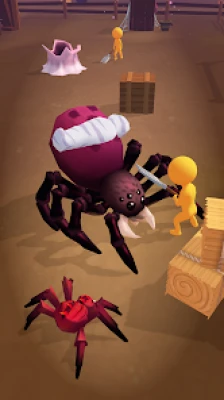
One of the game's defining mechanics is the ability to wrap defeated human invaders in silk cocoons and bring them back to your lair.
This changes how you should think about combat.
The enemy is not simply a defeated opponent.
It can become a resource for the colony.
Whenever the situation is safe, take advantage of opportunities to bring captured enemies back toward your feeding areas.
The Importance of Feeding Your Colony
Your offspring depend on resources to develop.
This means successful combat should feed back into colony growth.
A good progression cycle is:
Fight → capture → return → feed → evolve → fight stronger enemies
If you spend all your time fighting without developing the colony, you will eventually encounter enemies that are much harder to defeat.
Building Your Spider Army
Your offspring are more than background decoration.
They become active members of your colony and can help attack invaders, use venom, and collect enemies.
The official Google Play description emphasizes that the young spiders can evolve into stronger warriors and assist against human invaders.
This means your long-term objective should be to create a colony that can increasingly handle threats without relying entirely on the queen.
Why Spider Evolution Matters
Evolution is one of the most important progression mechanics.
As your colony grows, you can collect mutagens and use them to increase the strength of your spiders.
Mutagens should therefore be treated as an important long-term resource.
Do not think only about immediate survival.
Every successful expedition should ideally contribute toward a stronger future colony.
Collect Mutagens Efficiently
Mutagens are particularly valuable because they are connected directly to spider evolution.
When you encounter opportunities to collect them, consider whether the area can be cleared safely.
A dangerous mutagen pickup is not automatically worth taking.
The best approach is to combine resource gathering with enemy clearing:
Defeat enemies → secure the area → collect resources → return safely
This minimizes unnecessary exposure.
When to Evolve
Do not wait until your spider is completely overwhelmed.
If the colony has accumulated enough resources for a meaningful improvement, consider evolving before entering a significantly stronger area.
A stronger spider can improve:
Combat survival.
Enemy clearing.
Resource gathering.
Nest defense.
Ability to handle stronger camps.
Evolution is most useful when it changes what enemies you can realistically defeat.
Use Your Spider Army as a Force Multiplier
One spider fighting alone has limited options.
A developed colony gives you additional offensive pressure.
When your offspring are strong enough, allow them to participate in battles rather than trying to handle every enemy personally.
The advantage is simple:
More spiders attacking = less pressure on the queen.
This becomes especially valuable when confronting groups.
Do Not Rush the Strongest Camp
A common mistake is entering the most difficult enemy camp simply because it contains attractive resources.
Camp strength matters.
If you are repeatedly losing health or wasting resources, leave the area and improve the colony first.
Return when your spider army has better strength and survivability.
This is generally more efficient than repeatedly attacking an area you are not prepared to conquer.
Webs and Nest Defense
Webs are an important part of the defensive theme.
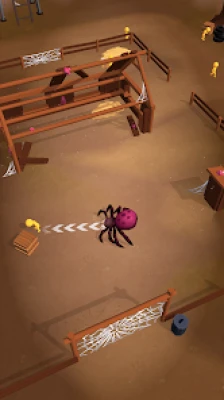
The game specifically encourages spinning webs to help keep invaders away from the colony.
Think of webs as part of your defensive environment rather than something that should only be used during emergencies.
A prepared nest is much easier to defend than a completely exposed one.
Defending the Eggs
Your eggs represent the future of your colony.
If enemies can reach them easily, the colony's growth can be interrupted.
When an invasion begins, prioritize threats that can reach vulnerable parts of the nest.
Do not chase an enemy far away if another enemy is moving toward your eggs.
A simple priority rule works well:
Nest threat > distant enemy
Handling Fire Attacks
The official description warns that human enemies may attempt to kill the spider with fire.
This makes fire-equipped enemies particularly important targets.
If you identify an enemy capable of causing serious damage, consider eliminating it before spending too much time fighting weaker opponents.
Removing the greatest threat first can dramatically improve your survival chances.
Handling Ranged Enemies
Ranged attackers are dangerous because they can damage you before you reach them.
When possible:
Approach from a favorable angle.
Avoid standing exposed for too long.
Close the distance quickly.
Prioritize dangerous ranged attackers.
Use your spider army to distribute enemy attention.
Retreat if the incoming damage becomes excessive.
Do not allow several ranged enemies to attack the queen uncontested.
Enemy Camp Strategy
Before entering a camp, take a moment to observe.
Ask:
How many enemies are present?
Which ones appear strongest?
Where are they positioned?
Is the camp close to my nest?
Where can I retreat?
What resources can I gain?
Is my current spider strong enough?
This short assessment can prevent unnecessary deaths.
Resource Management
The colony depends on several resources and progression materials.
The most important principle is not to spend everything immediately.
Keep enough resources available for meaningful improvements and recovery.
Prioritize resources that directly improve your ability to survive the next challenge.
A useful order is:
Survival → evolution → army development → optional improvements
The exact value of individual resources can vary by progression stage, so always prioritize the upgrade that solves your current bottleneck.
The Best Upgrade Mindset
Do not ask:
“Which upgrade looks strongest?”
Ask:
“Which weakness is currently stopping my progress?”
If your queen dies too quickly, improve survivability.
If enemy camps take too long to defeat, prioritize offensive development.
If the nest is frequently threatened, strengthen your defensive capabilities and spider army.
If resource collection is slowing your progression, improve the parts of the colony that help you gather and process resources more efficiently.
Early-Game Strategy
During the early game, concentrate on learning the movement and combat rhythm.
Your priorities should be:
Protect the nest.
Defeat manageable enemies.
Capture resources.
Feed the colony.
Develop your first spider allies.
Collect mutagens.
Avoid overextending.
Do not worry about clearing every enemy immediately.
The objective is to establish a stable colony.
Mid-Game Strategy
Once you have a stronger spider army, you can begin taking on more demanding areas.
At this stage:
Use offspring more actively.
Target stronger camps selectively.
Collect mutagens consistently.
Improve the queen.
Protect the nest while exploring.
Avoid unnecessary losses.
Build enough strength to handle multiple enemies.
Your army should gradually reduce the amount of work the queen must do alone.
Advanced Strategy
Experienced players should think about the entire colony rather than individual fights.
Before attacking, consider:
What do I gain?
Then ask:
What will this cost?
If defeating a camp provides valuable resources and your colony can survive the fight, it may be worthwhile.
If the camp is expensive to conquer and offers little meaningful progression, move elsewhere.
Retreat Is a Strategy
Retreating is not failure.
If your health is falling quickly and the enemy force is still strong, continuing the fight can turn a manageable situation into a complete loss.
Return to the nest, strengthen the colony, and try again.
A stronger second attempt is usually better than repeatedly losing with the same setup.
How to Avoid Losing Progress
Some player reviews have reported progress-loss problems after closing the game, particularly around resources and health. These are user reports rather than a confirmed universal behavior, but they are worth noting when deciding how long to play in one session.
As a practical habit, avoid ending a session immediately after a major risky expedition.
Give the game time to complete any apparent progression or reward processing before leaving.
Level and Progression Problems
Some reviews also report difficulty progressing beyond certain stages, including complaints around level 8. These are player reports and may not reflect every current installation or progression state.
If progression appears stuck:
Check whether all required resources have been collected.
Complete available objectives.
Return to earlier areas if necessary.
Restart the game normally.
Make sure the game is updated.
Avoid assuming that grinding one resource alone will always unlock the next stage.
Managing Ads
The current Google Play listing indicates that the game contains advertisements and in-app purchases.
Recent player feedback also includes complaints about frequent advertisements.
Because ads are part of the free-to-play experience, plan your sessions around the game's natural pauses rather than expecting uninterrupted action.
Common Mistakes
Attacking Too Many Humans at Once
Large groups can overwhelm an underdeveloped queen.
Ignoring the Nest
A distant victory does not matter if your base is left vulnerable.
Fighting Strong Camps Too Early
Build your colony first.
Forgetting About the Spider Army
Your offspring are valuable combat support.
Wasting Mutagens
Use evolution resources strategically.
Ignoring Ranged Threats
Enemies that can damage you from a distance deserve early attention.
Chasing Enemies Too Far
Do not abandon your defensive position without a good reason.
Fighting Until Death
Retreat when the situation is clearly unfavorable.
Focusing Only on the Queen
The strongest long-term strategy is to build a capable colony rather than relying on one spider.
Best Combat Routine
A reliable combat routine is:
Scout → identify threats → isolate a target → attack → capture → secure resources → check the nest → retreat or continue
This keeps you from becoming trapped in chaotic fights.
Best Resource Routine
After clearing an area:
Collect available resources.
Check for mutagens.
Capture usable enemies.
Return toward the nest.
Feed the colony.
Evolve when worthwhile.
Prepare for the next expedition.
This creates a consistent progression cycle.
Best Nest Defense Routine
When enemies approach the nest:
Identify the most dangerous attacker.
Keep the queen near critical areas.
Allow developed offspring to participate.
Prevent enemies from reaching vulnerable parts of the colony.
Use webs and defensive positioning.
Eliminate the immediate threat before chasing distant targets.
Tips for New Players
Protect the nest before chasing distant enemies.
Capture defeated humans whenever possible.
Feed your colony consistently.
Collect mutagens for evolution.
Develop spider offspring instead of relying only on the queen.
Learn which enemies cause the most damage.
Avoid strong camps until you are ready.
Retreat when the fight turns against you.
Use webs as part of your defensive strategy.
Treat resources as tools for future strength, not just immediate rewards.
Tips for Experienced Players
Scout camps before attacking.
Prioritize dangerous ranged enemies.
Use your spider army to reduce pressure on the queen.
Choose battles based on reward versus risk.
Collect mutagens whenever safely possible.
Keep the nest protected while exploring.
Avoid unnecessary damage.
Return to easier areas if you need resources for an important evolution.
Develop a balanced colony rather than maximizing one aspect only.
Think several encounters ahead rather than focusing only on the current battle.
Difficulty
The Spider Nest is easy to understand but becomes more demanding as enemy strength increases.
The main sources of difficulty are:
Stronger human camps.
Ranged attackers.
Fire-based threats.
Protecting the nest.
Managing the queen's health.
Building a capable spider army.
Collecting enough resources for evolution.
Deciding when to retreat.
The game therefore combines casual action controls with light strategic decision-making.
Pros and Cons
Pros
Unusual giant-spider gameplay
Strong survival theme
Nest defense mechanics
Spider army progression
Creature evolution
Mutagen-based development
Human invasion combat
Cocoon and feeding mechanics
Web-based defense
Colorful stylized presentation
Offline play
Android and Windows availability
Easy-to-understand core objective
Cons
Gameplay can become repetitive over longer sessions
Some stages can feel grind-heavy
Ads may interrupt the experience
Some players report progression or level-cap issues
Some players have reported losing progress after closing the game
Players looking for a deep story may find the narrative relatively light
These disadvantages are partly based on recurring player feedback and should be viewed as user experience reports rather than universal problems.
Is The Spider Nest Worth Playing?
If you enjoy creature-evolution games, survival action, unusual simulation concepts, or games where you build a growing army, The Spider Nest is an interesting choice.
Its most appealing feature is the combination of direct control and colony development.
You are personally controlling the giant spider, but your long-term success depends on what happens around the nest.
The result is more engaging than a simple enemy-killing game because every successful hunt can contribute to the development of your colony.
Final Verdict
The Spider Nest: Spider Games gives players a distinctive role rarely seen in mobile action games: the leader of a growing spider colony fighting to survive against human invaders.
The strongest strategy is to think like a queen rather than simply like a fighter.
Protect the nest, choose battles carefully, capture enemies, feed your offspring, collect mutagens, evolve the colony, and gradually build enough strength for more dangerous areas.
The biggest mistake is trying to win every fight immediately.
The better approach is:
Build the colony first, then let the colony make difficult fights easier.
For players who enjoy spider games, survival adventures, creature evolution, nest defense, and casual action gameplay, The Spider Nest offers a distinctive concept with a satisfying progression loop.
Frequently Asked Questions
What is The Spider Nest: Spider Games?
It is a survival-action game where you control a giant spider queen defending a nest from human invaders while developing a growing spider army.
What is the main objective?
The main goal is to protect your nest, defeat human invaders, gather resources, develop spider offspring, and evolve the colony.
Can spiders evolve?
Yes. The game allows you to collect mutagens and use them to evolve your spider colony.
Can the baby spiders fight?
Yes. Spider offspring can become warriors that assist in attacking invaders and defending the colony.
What should I do with defeated human enemies?
The game allows you to wrap defeated invaders in silk cocoons and bring them back toward the nest to support the colony.
How do I defend my nest?
Keep the queen and spider army near important areas, use webs as part of your defensive setup, and prioritize enemies that pose the greatest immediate threat.
Should I attack every enemy camp?
No. Strong camps should be approached only when your queen and spider army are prepared.
What are mutagens used for?
Mutagens are collected for spider evolution and help strengthen the colony.
How do I defeat stronger humans?
Develop your spider army, improve your queen, prioritize dangerous attackers, use favorable positioning, and avoid fighting several strong enemies at once.
Can I retreat from combat?
Strategically retreating is often the best choice when your health is falling quickly and the enemy force is still too strong.
Does The Spider Nest work offline?
The current Google Play listing identifies the game as supporting offline play.
Is The Spider Nest free?
Yes. The game is free to play, but the current Google Play listing indicates advertisements and optional in-app purchases.
What age rating does the game have?
The current Google Play listing shows an Everyone 10+ rating and notes fantasy violence and mild blood.
Rate the Game
User Reviews















Popular Games



















 Android
 iOS
iOS Windows
 Xbox
Xbox