
Latest Version
September 09, 2024
Homa
Action
0
com.borna.tapethrower
Report a Problem
More About :game
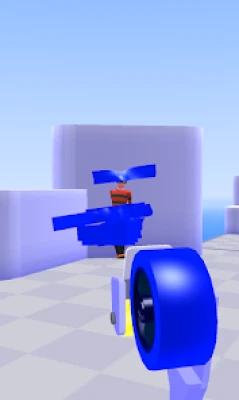
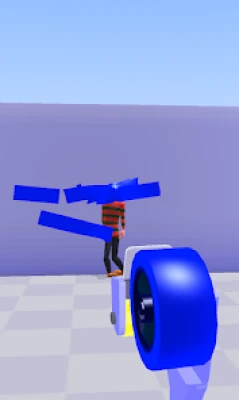
The controls are simple: swipe across the screen to launch sticky projectiles. The real challenge comes from aiming accurately, reacting quickly, choosing the right target, and making effective use of the game's special tape powers.
The game combines casual shooting mechanics, physics-based interactions, prank-style situations, and colorful low-poly environments into short, easy-to-learn stages.
Tape Thrower Overview
Tape Thrower takes a deliberately unusual approach to action gameplay.
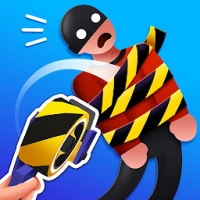
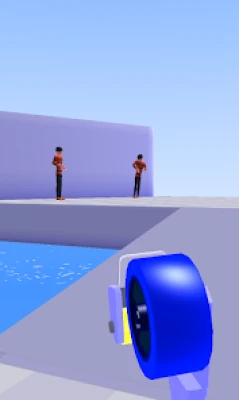
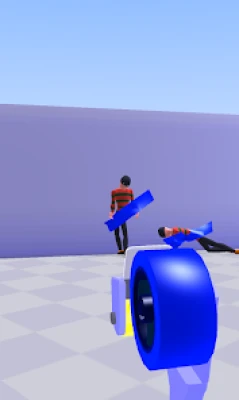
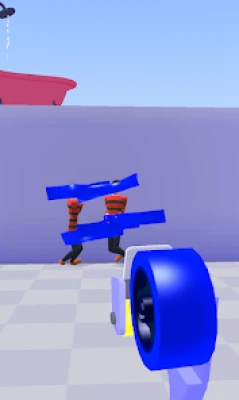
Instead of relying on conventional weapons, you use a sticky pistol loaded with tape-like projectiles. The goal is to stop characters by attaching them to suitable surfaces.
The concept is immediately understandable:
Aim → Swipe → Stick → Complete the scene
But as situations become more complicated, accuracy and timing become increasingly important.
The current Google Play listing describes dozens of superpowers that can modify the tape, including effects that can electrify, inflate, explode, or burst targets.
Theme and Atmosphere
Tape Thrower has a lighthearted prank-game atmosphere rather than a serious combat tone.
The environments are colorful and stylized, with exaggerated characters and situations designed around the game's unusual sticky-tape concept.
You may encounter scenarios involving:
Thieves
Police vehicles
Clowns
Ferris wheels
Walls
Other environmental surfaces
The objective is often less about traditional combat and more about finding a satisfying way to attach the target to the environment.
The low-poly 3D presentation reinforces the casual arcade feel.
Core Gameplay
The main control is a swipe.
You use your finger to direct the sticky projectile toward a target.
A successful throw depends on three things:
Direction
Timing
Target position
Because the control system is so simple, small aiming mistakes can make a large difference.
The best approach is to treat every swipe as a deliberate shot rather than rapidly dragging across the screen.
How to Aim the Tape
Before swiping, identify the exact part of the target that you want the tape to reach.
Think about:
The target's current position.
Its direction of movement.
The surface behind it.
The distance between you and the target.
Whether another character or object is blocking the path.
If the character is moving, do not always aim directly at the position you see.
Instead, anticipate where the target will be when the tape reaches it.
Aim for the Body and the Surface
Tape Thrower is not simply about touching the character.
The objective is to attach the character to a surrounding surface.
That means you should think in terms of a complete trajectory:
Tape → target → wall/object
A shot that reaches the character but does not create a useful attachment may be less effective than a shot that connects the character cleanly to the surface behind them.
Learn the Swipe Distance
One of the most important skills is becoming comfortable with how far a finger swipe moves the projectile.
Short swipes can be useful for nearby targets.
Longer swipes can help reach targets farther away or positioned higher in the scene.
Do not constantly use maximum-length gestures.
Instead, adjust your swipe to the target's distance and position.
Use Small Corrections
When a target is moving unpredictably, avoid making exaggerated gestures.
A controlled swipe is easier to aim than a frantic movement across the entire screen.
Once you become familiar with the game's aiming response, you can make faster throws without sacrificing accuracy.
Timing Is More Important Than Speed
Tape Thrower looks like a speed game, but blindly throwing tape as quickly as possible is not always the best strategy.
Wait for a useful opening.
If the target is about to move behind an obstacle, for example, firing immediately may waste the shot.
Instead, anticipate the movement and launch when the target enters the best trajectory.
Watch the Environment
The environment is part of the puzzle.
Walls and objects can provide useful attachment points.
When you enter a new scene, quickly identify:
Large walls
Vehicles
Poles
Amusement structures
Other stable surfaces
Then consider how the target can be positioned against them.
This makes the game easier because you are no longer thinking only about the character.
You are thinking about the entire scene.
Target Selection
When multiple characters are present, do not automatically attack the closest one.
Consider which target is:
Moving fastest.
Most exposed.
Closest to a useful surface.
Blocking another target.
Most likely to escape the available throwing angle.
The best first target is often the one that makes the remaining situation easier.
Deal With Moving Targets
Moving targets require prediction rather than simple reaction.
If a character is running toward the right, a shot aimed directly at their current location may arrive too late.
Instead, aim slightly ahead of them.
The amount of lead depends on the target's speed and the distance of the throw.
With practice, this becomes one of the most useful skills in the game.
Use the Scene to Your Advantage
A target near a large wall is generally easier to secure than one standing in an open area.
When possible, wait until a character moves into a favorable position.
This is especially useful when the environment contains a large stationary surface that provides a reliable landing point.
Superpower Tape
One of the game's main progression elements is its collection of tape superpowers.
The Google Play description highlights several types of effects, including:
Electrify
Inflate
Explode
Burst
These powers give the basic tape mechanic additional possibilities.
Do not think of superpowers simply as stronger versions of ordinary tape.
They can change how you approach a scene.
When to Use Superpowers
A superpower is most useful when the normal tape mechanic is not enough to handle the situation efficiently.
Consider using one when:
Several targets are grouped together.
A target is difficult to reach.
The environment creates a complicated setup.
A special effect can solve the situation more efficiently.
You need additional control over the scene.
If a normal tape throw works perfectly, there is no reason to waste a more specialized effect.
Electrify Effect
An electrifying effect can add a different type of interaction to the basic tape mechanic.
When using a specialized power, first consider whether the target is positioned in a way that allows the effect to accomplish something useful.
Avoid activating a special effect simply because it looks impressive.
The best use of a power is one that actually improves your chance of completing the stage.
Inflate Effect
Inflating effects can create unusual interactions with targets.
When an effect changes the target's physical behavior, consider how that movement interacts with the surrounding environment.
The important question is:
Where will the target end up after the effect?
Thinking one step ahead can turn a strange-looking power into a useful strategic tool.
Explosive Effects
Explosive tape effects can be useful when multiple targets or complicated situations are involved.
However, the surrounding environment matters.
Before activating an explosive effect, identify what you are trying to accomplish and whether the resulting interaction will actually help complete the stage.
Burst Effects
Burst-style effects can provide another way to deal with situations that are difficult to solve with a normal adhesive shot.
As with every power, use it because the situation calls for it rather than simply because it is available.
Build a Consistent Throwing Rhythm
Good Tape Thrower players develop a rhythm:
Observe → aim → swipe → evaluate → adjust
Avoid throwing repeatedly without looking at the result.
After every attempt, immediately assess:
Did the tape reach the target?
Did the target move?
Did the tape attach correctly?
Is the target now in a better position?
Should the next throw be shorter, longer, higher, or lower?
This turns each attempt into useful feedback.
Common Aiming Mistakes
Aiming at the Wrong Position
If the target is moving, its current position may not be its position when the tape reaches it.
Swiping Too Quickly
A rushed gesture can produce poor accuracy.
Ignoring the Background
The target must interact with a suitable surface, so the environment matters.
Using the Same Swipe Every Time
Different distances and angles require different gestures.
Focusing Only on the Character
Always consider the character and the surface together.
Advanced Strategy: Think in Trajectories
Instead of thinking:
“I need to hit that character.”
Think:
“I need the tape to travel through this point, hit the character, and secure them against that surface.”
This three-part mental model makes difficult shots much easier.
Advanced Strategy: Predict Movement
For moving targets, estimate:
Current position + movement direction + travel time
You do not need exact calculations.
Even a rough prediction can make your shots considerably more accurate.
Advanced Strategy: Choose the Best Surface
When multiple surfaces are available, choose the one that gives you the clearest trajectory.
A large wall is generally easier to work with than a narrow object.
Likewise, a stationary object is easier to predict than a moving one.
Advanced Strategy: Control the Order of Targets
If multiple targets are available, the order in which you deal with them can affect the difficulty of the remaining scene.
Try to remove the target that creates the greatest immediate threat or blocks your best throwing angle.
Once that target is secured, reassess the scene before making your next move.
How to Improve Your Accuracy
Improving at Tape Thrower is mostly about learning the relationship between finger movement and projectile trajectory.
Practice these techniques:
Short Swipe
Use for nearby targets.
Medium Swipe
Use for ordinary mid-range shots.
Long Swipe
Use when the target is farther away or positioned at a greater angle.
Controlled Diagonal Swipe
Useful when the target is offset from your current position.
Predictive Swipe
Aim ahead of a moving target rather than directly at it.
How to Handle Difficult Scenes
When a scene becomes difficult, stop throwing for a moment.
Look at the complete environment.
Ask yourself:
Which target should I deal with first?
Where is the safest attachment surface?
Which target is moving?
Is another character blocking the path?
Would a superpower make the situation easier?
What happens if my first throw misses?
This brief pause can prevent several wasted attempts.
Practice Strategy
If you keep missing the same type of shot, focus on one variable at a time.
First practice distance.
Then practice moving targets.
Then practice diagonal throws.
Finally, practice combining movement prediction with environmental surfaces.
The goal is to develop muscle memory rather than relying on conscious calculation for every throw.
How to Become a Better Tape Thrower
Follow this simple progression:
Beginner
Focus on hitting stationary targets.
Intermediate
Learn to anticipate moving targets.
Advanced
Use the environment to determine your throwing angle.
Expert
Combine accurate throws with superpowers and target-order decisions.
This progression helps you improve naturally without making the simple controls unnecessarily complicated.
Is Speed Important?
Yes, but accuracy comes first.
A fast player who misses repeatedly will perform worse than a slightly slower player who lands nearly every throw.
The ideal balance is:
Fast decision + controlled swipe + accurate placement
Once your accuracy becomes reliable, increase your throwing speed.
Is There a Score Strategy?
The current game description emphasizes completing the tape-based challenges rather than presenting a deep traditional score system. Some long-standing user reviews have criticized the lack of more elaborate goals or scoring mechanics, while other players praise the game for quick, casual fun.
That makes the best strategy less about grinding a complicated score formula and more about improving your accuracy, speed, and ability to solve each scene efficiently.
Ads and Optional Purchases
The current Google Play listing indicates that Tape Thrower contains advertisements and in-app purchases.
Because the game is designed around short casual stages, players should expect a more arcade-like free-to-play experience rather than a long-form campaign with deep progression systems.
Pros and Cons
Pros
Very simple swipe controls
Unusual tape-based gameplay
Colorful 3D presentation
Quick casual levels
Easy to understand
Several tape superpowers
Creative environmental scenarios
Moving targets add timing challenges
Suitable for short gaming sessions
Available on Android and Windows
Offline support is listed on the current store listing
Cons
Gameplay can become repetitive for some players
The core objective remains relatively simple
Ads can interrupt the experience
Optional in-app purchases are present
Players looking for deep progression or complex strategy may find the mechanics limited
User feedback is generally positive about the basic concept and casual fun, while recurring criticism focuses on advertising and repetition. These are player opinions rather than universal shortcomings.
Is Tape Thrower Worth Playing?
Tape Thrower is worth trying if you want a lightweight action game with unusual mechanics and very simple controls.
Its appeal comes from the novelty of using sticky tape as the main projectile and the satisfying interaction between characters and the environment.
It is not designed as a deep tactical shooter. Instead, it works best as a quick casual game where you can jump into a level, make a few accurate swipes, experiment with different powers, and move on.
Final Verdict
Tape Thrower - Stickers Gun takes an extremely simple idea and builds an entertaining casual game around it.
The controls are easy, but accurate throwing requires practice. Once you begin predicting moving targets, selecting better attachment surfaces, controlling swipe distance, and using superpowers at the right moment, the gameplay becomes much more satisfying.
The key to mastering Tape Thrower is not simply throwing tape faster.
It is learning to aim intelligently.
Read the scene, predict movement, choose the right surface, make controlled swipes, and use special tape powers when they genuinely improve the situation.
For players who enjoy casual action games, physics-style interactions, prank games, and quick pick-up-and-play experiences, Tape Thrower offers a distinctive concept that is easy to understand and fun to experiment with.
Frequently Asked Questions
What is Tape Thrower - Stickers Gun?
Tape Thrower is a casual 3D action game where players use a sticky tape launcher to attach characters to walls, vehicles, and other surfaces.
How do you play Tape Thrower?
Swipe across the screen to aim and launch sticky tape at targets. The objective is to secure the characters against suitable surfaces.
What makes Tape Thrower different?
Instead of conventional projectiles, the game uses sticky tape as its main mechanic, creating playful interactions between characters and the environment.
Does Tape Thrower have superpowers?
Yes. The game features multiple tape superpowers, including electrifying, inflating, exploding, and bursting effects.
How do I aim better?
Pay attention to the target's movement, adjust the length and direction of your swipe, and consider the surface behind the target.
Should I aim directly at moving enemies?
Not always. For moving targets, aim slightly ahead of their current position so the tape and target meet at the right moment.
What is the best strategy for difficult scenes?
Study the entire environment before throwing. Identify the target's movement, the best attachment surface, and whether a superpower can simplify the situation.
Is Tape Thrower difficult?
The controls are easy to learn, but accurate aiming and movement prediction become more important as situations become more complicated.
Is Tape Thrower free?
The game is free to play and currently contains advertisements and optional in-app purchases.
Can Tape Thrower be played offline?
The current Google Play listing identifies the game as supporting offline play.
Is Tape Thrower suitable for children?
The Google Play listing currently gives the game an Everyone content rating.
Rate the Game
User Reviews






Popular Games














 Android
 iOS
iOS Windows
 Xbox
Xbox