

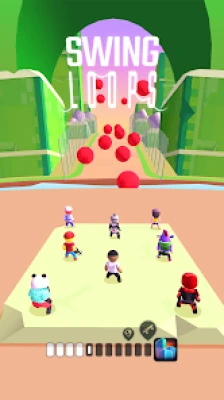
Latest Version
October 25, 2024
SayGames Ltd
Casual
0
com.parkour.swing
Report a Problem
More About :game
Game Overview
Game information and gameplay guide
Game title: Swing Loops: Grapple Hook Race
Developer: SayGames Ltd
Genre: Casual, parkour, racing, arcade
Platform: Android; also listed for Windows through compatible technology
Game mode: Single-player
Gameplay style: 3D movement, obstacle navigation, swinging, and racing
Main objective: Reach the finish line ahead of competing runners.
Collectibles: Gems, golden keys, money, and other treasures
Customization: Outfits and various movement-related items
Progression: Levels containing 11 sublevels each, according to the game's published description
Monetization: Free to play with advertisements
Internet requirement: Listed as playable offline on Google Play
Content rating: Everyone
These details are based on the game's published store information and may change with future updates.
What Is Swing Loops: Grapple Hook Race?
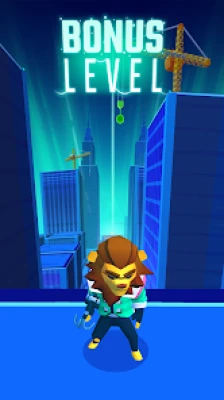
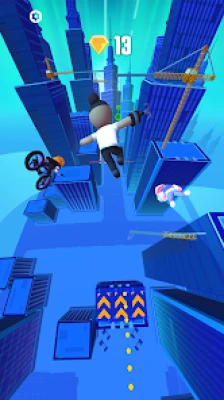
Swing Loops: Grapple Hook Race offers a different take on traditional mobile racing games. Instead of relying entirely on conventional running, players must navigate a busy urban environment using parkour movements, jumps, swinging mechanics, and airborne sections.
The city setting creates a sense of height and speed as the character moves between buildings and obstacles. Every race is an opportunity to improve movement timing, collect valuable rewards, and reach the finish line before the other runners.
The game is designed for players who enjoy short challenges rather than long, complicated missions. Its straightforward concept makes it easy to start playing, while the variety of routes and movement options gives players reasons to keep improving.
Whether you enjoy casual racing, parkour challenges, arcade action, or collecting rewards, Swing Loops combines these elements into a fast-paced mobile gaming experience.
Main Features of Swing Loops
1. Dynamic Parkour Racing
The central attraction is the combination of running, jumping, swinging, and flying. Players must react to the layout of each course and use the available movement options to maintain momentum.
2. City Environments
The game takes place in a large urban setting featuring skyscrapers, roads, and other city details. The three-dimensional environments help make the races feel more immersive.
3. Multiple Sublevels
Each main level contains 11 sublevels, according to the published game description. Players must work through the required stages rather than skipping directly to the next destination.
4. Competitive Races
Other runners appear alongside the player, adding a competitive element. Finishing ahead of them requires a combination of efficient movement, good timing, and awareness of the course.
5. Collectible Rewards
Gems, golden keys, and money provide additional objectives during races. These collectibles give players reasons to explore the available route and work toward unlocking more content.
6. Character Customization
Players can unlock stylish outfits and other items to personalize their experience. Available equipment includes different movement-related items, with access depending on game progression.
7. Replayable Challenges
Players can restart after mistakes and attempt difficult sections again. Replaying stages helps develop familiarity with obstacles and improve performance over time.
8. Reward Multipliers
The game includes opportunities to multiply collected treasures. These rewards can make successful runs more valuable, although the available options may depend on the particular stage or reward screen.
Gameplay Mechanics Explained
Running and Movement
Running is the foundation of every race. Players need to keep moving while responding to changes in the course. Pay attention to the route ahead instead of concentrating only on the other competitors.
Jumping Over Obstacles
Jumping helps the character clear gaps and navigate obstacles. Poor timing can interrupt your progress, so learn to recognize upcoming jumps and prepare before reaching them.
Swinging Through the City
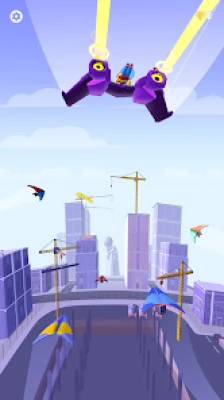
Swinging is one of the game's defining mechanics. It allows the character to move through the air and cover distances that ordinary running cannot handle as effectively.
The key is to develop a feel for when to begin a swing and when to release it. Releasing too early can reduce forward movement, while holding on too long may make it harder to approach the next section correctly.
Flying and Airborne Movement
Certain sections allow the character to travel through the air. These moments can help maintain speed and create opportunities to move past obstacles.
Watch the landing area whenever possible. A successful airborne section is most useful when it places you in a good position to continue running.
Collecting Rewards
Treasures provide additional goals beyond winning races. You may need to choose between following the quickest route and collecting items along the way.
The best decision depends on your current objective. If you are trying to finish first, prioritize a clean route. If you are collecting resources, consider whether a detour is worth the extra time or risk.
Complete Strategy Guide for Swing Loops
Strategy 1: Learn the Controls Before Racing Seriously
Spend your first few races getting comfortable with the movement controls. Focus on understanding how your character responds to directional inputs, jumps, swings, and releases.
Avoid trying to collect every item immediately. Learning the basic movement system first makes later challenges easier to handle.
Pro tip: Practice one movement at a time. Once running, jumping, and swinging feel natural, combine them into a smooth sequence.
Strategy 2: Master Swing Timing
Good swing timing can make a significant difference in your race performance.
Follow these principles:
Begin swinging when the route offers a useful attachment point.
Maintain forward momentum instead of making unnecessary movements.
Observe where the character will travel after releasing.
Release when the next movement or landing requires it.
Avoid repeating the same timing if it consistently leads to a poor landing.
The goal is not simply to spend more time in the air. It is to use swinging to move efficiently toward the next section of the course.
Strategy 3: Prioritize a Clean Landing
A long jump is not automatically a good jump. Landing in the correct position is often more valuable than gaining extra airtime.
Look for a clear path after every airborne section. If a landing leaves you facing an obstacle or heading toward an awkward turn, adjust your approach on the next attempt.
Pro tip: Judge each jump by how smoothly you can continue moving afterward, not just by how far the character travels.
Strategy 4: Watch the Course Ahead
Concentrating entirely on your character can make obstacles harder to anticipate. Try to notice upcoming gaps, turns, platforms, and changes in the route.
Preparing early gives you more time to react. This is especially useful when the course combines several movement types in quick succession.
Strategy 5: Balance Speed and Accuracy
Moving quickly is important in a race, but uncontrolled movement can cost more time than it saves.
Avoid unnecessary directional changes and poorly timed jumps. Use the simplest reliable path through each obstacle section.
When competing against other runners, focus on maintaining a steady pace rather than reacting to every movement they make.
Strategy 6: Choose Collectibles Wisely
Gems, keys, and money are valuable for progression and customization. However, collecting everything is not always the best strategy for winning.
Use this approach:
Collect items directly along your route whenever practical.
Evaluate detours based on their difficulty and potential reward.
Avoid risky movements for a single collectible when a clean finish matters more.
Replay familiar stages to improve your collection efficiency.
Check which items are required for the upgrades or customization options you want.
Strategy 7: Make the Most of Reward Multipliers
Reward multipliers can increase the value of collected treasures. When a multiplier opportunity appears, consider the potential benefit before choosing it.
If the game offers an optional reward for watching an advertisement, decide whether the extra reward is worth the additional time. You do not need to treat every optional bonus as essential to progression.
Strategy 8: Unlock Items With a Purpose
Customization is part of the progression system, but the most attractive outfit is not necessarily the most useful purchase.
Prioritize items according to your goals. If a particular piece of equipment changes movement options, experiment with it and determine whether it helps with your preferred approach. If an item is purely cosmetic, choose it according to your personal taste.
Avoid spending all your resources immediately if you are saving for a particular unlock.
Strategy 9: Use Failed Attempts as Practice
Falling, missing a jump, or losing a race can reveal which part of your approach needs improvement.
After a failed attempt, identify the exact mistake:
Did you jump too early?
Did you release the swing too soon?
Did you approach an obstacle from the wrong direction?
Did you choose a difficult route for an unnecessary reward?
Did you focus on the rival instead of the course?
Change one thing during your next attempt. This makes it easier to discover what works.
Strategy 10: Learn Each Sublevel
Since the published description specifies 11 sublevels per main level, consistent progress is more useful than rushing through unfamiliar stages.
Treat each sublevel as an individual challenge. Learn its movement requirements, identify difficult sections, and develop a reliable route before trying to improve your finishing time.
Best Tips and Tricks for Beginners
Here are the most useful habits for new players:
Keep your movements deliberate. Avoid unnecessary changes in direction.
Learn the release timing. Swinging works best when it leads naturally into the next movement.
Look for safe landings. A clean landing helps preserve momentum.
Study difficult sections. Remember where previous attempts went wrong.
Collect nearby rewards. Avoid dangerous detours when winning is your main goal.
Save resources for useful unlocks. Make purchases according to your priorities.
Replay challenging stages. Repetition helps improve timing and familiarity.
Stay focused on the route. Competing runners are important, but obstacles require your attention.
Experiment with equipment. Different available items may suit different stages.
Be patient with progress. Reliable movement is more valuable than repeated risky attempts.
Advanced Racing Techniques
Maintaining Momentum
Try to connect running, jumping, swinging, and landing without unnecessary interruptions. Smooth transitions help you avoid wasting movement opportunities.
Rather than treating each action as a separate event, think of the course as a continuous sequence.
Reading the Best Route
The most obvious path may not always be the most efficient. Consider the obstacles, distance, collectible placement, and landing positions before committing to a route.
When replaying a stage, compare your previous approach with an alternative. Small improvements can make a noticeable difference over several attempts.
Improving Reaction Time
Reaction time improves when you recognize familiar patterns. Learn the appearance of obstacles and prepare for the movement they require.
Instead of waiting until the last moment to react, anticipate the next challenge whenever the course gives you enough visual information.
Racing Against Other Players
The other runners provide a competitive benchmark. Use their positions to understand how your progress compares, but do not let the competition distract you from safe movement.
A consistent route can be more effective than an aggressive approach that frequently leads to mistakes.
How to Progress Faster
The most reliable way to progress is to combine efficient racing with sensible resource management.
First, learn the movement mechanics and complete stages consistently. Next, collect accessible treasures and identify which unlocks matter most to you. Finally, replay difficult sections to improve your route and reduce mistakes.
A useful progression routine is:
Start with a focus on completing the course.
Identify the hardest movement section.
Practice that section on subsequent attempts.
Collect rewards that fit naturally into your route.
Review available unlocks and save for your priorities.
Repeat the process as new sublevels become available.
This approach keeps progression manageable without requiring you to master every mechanic immediately.
Common Mistakes to Avoid
Releasing the Swing at the Wrong Time
An early or late release can lead to a poor landing. Pay attention to the next platform or movement opportunity instead of relying on a fixed timing for every situation.
Chasing Every Collectible
Taking every possible detour can interrupt your race. Choose rewards according to your current objective and avoid unnecessary risks.
Ignoring the Landing Area
A jump may look successful while leaving the character poorly positioned for the next obstacle. Consider the entire movement sequence, including what happens after landing.
Making Too Many Directional Corrections
Overcorrecting can make movement less predictable. Use measured inputs and adjust your approach gradually whenever possible.
Spending Resources Without a Plan
Buying every available item as soon as it appears may slow your progress toward more desirable unlocks. Decide which rewards and equipment matter most before spending.
Repeating the Same Failed Approach
Restarting without changing anything often produces the same result. Identify the cause of the failure and adjust your timing, route, or movement.
Rewards, Gems, Keys, and Customization
Swing Loops includes collectible resources that add a progression element to its racing gameplay.
Gems: These colorful collectibles can be used to purchase available customization and equipment options.
Golden keys: Keys are among the collectible items featured in the game. Their exact uses can depend on the available game systems.
Money: Currency provides another reward to collect while completing courses.
Outfits: Players can unlock different looks to personalize their characters.
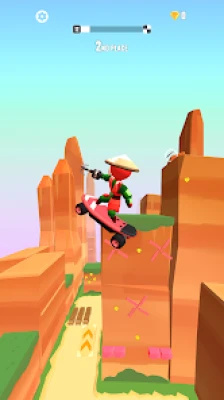
Equipment: The game description mentions movement-related items such as climbing tools, skateboards, wings, and boats. Availability may depend on progression.
The best way to approach these rewards is to collect them consistently without sacrificing every race for a minor bonus.
Is Swing Loops: Grapple Hook Race Difficult?
Swing Loops is designed to be approachable for casual players, but its movement mechanics can take practice. Running is relatively straightforward, while swinging and airborne sections require better timing and awareness.
Beginners may need several attempts to understand how to approach certain obstacles. As they become familiar with the controls and routes, they can focus more on efficient movement, collectible placement, and beating rival runners.
The difficulty comes primarily from executing the right action at the right moment rather than learning a complicated set of controls.
Is Swing Loops an Offline Game?
The game is listed as playable offline on Google Play. This means players can enjoy its core single-player experience without necessarily maintaining an internet connection.
However, advertisements, optional reward features, and other connected services may behave differently when offline. Availability can also vary depending on the installed version and device.
Frequently Asked Questions
What is Swing Loops: Grapple Hook Race?
Swing Loops: Grapple Hook Race is a casual racing and parkour game from SayGames Ltd. Players run, jump, swing, and fly through city environments while competing against other runners.
How do you play Swing Loops?
You control your character through a series of racing stages, using movement actions to navigate obstacles and reach the finish line. You can also collect treasures and unlock customization options.
How do you win races in Swing Loops?
Focus on smooth movement, accurate swing timing, safe landings, and efficient routes. Avoid unnecessary detours when finishing ahead of other runners is your priority.
How many sublevels are in each level?
The game's published description states that each main level contains 11 sublevels.
What can you collect in Swing Loops?
Collectibles include gems, golden keys, money, and other treasures. These rewards support the game's collection and progression systems.
Can you customize your character?
Yes. The game includes unlockable outfits and other items that let players personalize their characters and access available equipment options.
Is Swing Loops free to play?
The game is listed as free to install and play, with advertisements. Optional reward opportunities may also appear during gameplay.
Can you play Swing Loops without internet?
The game is listed as supporting offline play. Some advertisement-based or connected features may still require an internet connection.
What is the best beginner strategy?
Learn the controls, focus on completing each stage, and practice swing timing before chasing every collectible. Once your movement becomes consistent, work on improving your route and collecting more rewards.
How can you get better at swinging?
Practice the timing of each swing and release, and pay attention to where the character will land. Focus on maintaining forward movement and preparing for the next obstacle.
Is Swing Loops suitable for casual players?
Yes. Its short races, straightforward premise, collectible rewards, and accessible controls make it suitable for players who enjoy quick arcade challenges.
What makes Swing Loops different from other racing games?
Its combination of parkour, swinging, airborne movement, city environments, and collectible rewards gives it a different feel from conventional racing games.
Final Verdict
Swing Loops: Grapple Hook Race combines casual racing with parkour movement, swinging mechanics, and collectible-based progression. Its city environments, competing runners, character customization, and short stages offer plenty of opportunities to practice and improve.
The best strategy is to master the movement controls first, focus on smooth transitions between actions, and collect rewards without taking unnecessary risks. With practice and a little patience, players can develop more consistent routes, unlock additional items, and enjoy a more rewarding racing experience.
Rate the Game
User Reviews












Popular Games



















 Android
 iOS
 Windows
 Xbox