
Latest Version
Visit PageMore About :game
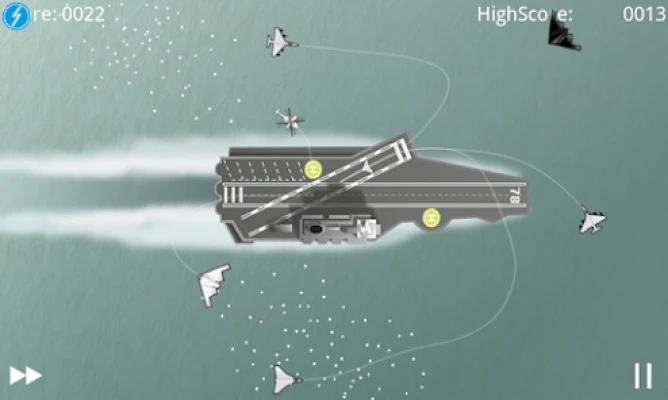
As more planes enter the airspace, managing their movements becomes increasingly difficult. You must think quickly, organize flight routes, prevent collisions, and ensure that every aircraft reaches the correct landing area.
Featuring classic gameplay, a unique puzzle mode, and online high-score competitions, Air Control Lite combines simple drawing controls with challenging strategic gameplay. It is an entertaining choice for players who enjoy aviation games, casual puzzles, and quick-thinking challenges.
Specific Game Titles and Information
Game Title: Air Control Lite
Developer: Four Pixels Games
Original Game Series: Air Control
Package Name: dk.logisoft.aircontrol
Platform: Android
Game Category: Casual
Game Genre: Arcade, Strategy, Puzzle, Simulation
Gameplay Style: Single-player
Game Perspective: Top-Down View
Control System: Touchscreen Drawing Controls
Graphics Style: Simple 2D Graphics
Main Character: Air Traffic Controller
Main Objective: Guide airplanes safely to their designated runways without causing collisions.
Main Gameplay Mechanics: Drawing flight paths, aircraft management, runway coordination, and collision avoidance.
Available Game Modes: Classic Mode and Puzzle Mode
Special Aircraft: Supersonic Jets and Zeppelin Airships
Environments: Four different maps in the full Air Control experience.
Special Features: Online High Scores, Multiple Aircraft Types, Drawing-Based Controls, and Puzzle Challenges.
Content Rating: Everyone
Monetization: Free-to-play version supported by advertisements and optional in-game offers.
Internet Connection: Offline gameplay is supported. Internet access is needed for online high scores.
Latest Listed Update: June 23, 2026.
All About Air Control Lite
What Is Air Control Lite?
Air Control Lite is a fun airport management game that puts players in charge of busy airspace. Rather than controlling an airplane from the cockpit, you take responsibility for coordinating multiple aircraft and making sure they land safely.
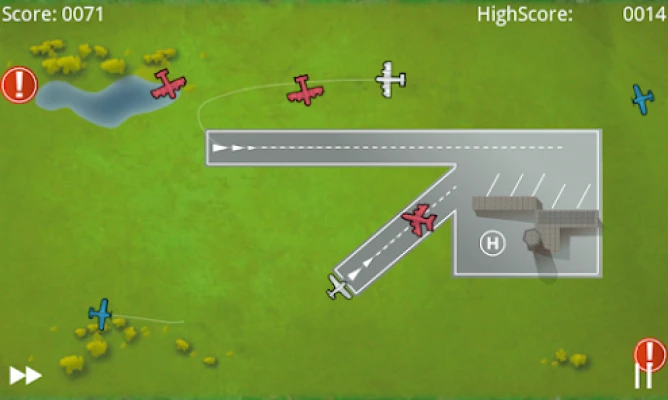
The concept is easy to understand. Planes appear on the screen and begin moving through the airspace. Your responsibility is to draw suitable flight paths that guide them toward the correct runways.
However, the challenge becomes much greater as additional aircraft arrive. Different planes may approach the same runway, cross one another's routes, or move toward dangerous positions.
You must carefully monitor the entire screen, make quick decisions, and organize aircraft movements before the situation becomes uncontrollable.
The game combines drawing mechanics with strategic thinking, creating an experience that is simple to start but challenging to master.
Drawing-Based Flight Controls
The most important feature of Air Control Lite is its drawing-based control system.
Instead of using traditional directional buttons, players draw lines on the screen to determine where airplanes should travel.
Each route must lead toward the appropriate landing area. The aircraft then follows the assigned path, allowing you to organize traffic and manage multiple planes.
The simplicity of this system makes the game accessible to new players, while the increasing number of aircraft creates a demanding challenge for experienced players.
Classic Game Mode
Classic Mode is the main attraction for players who enjoy continuous arcade challenges.
The objective is to manage incoming aircraft for as long as possible while preventing collisions.
As more planes appear, the airport becomes increasingly crowded. You must constantly monitor their positions, adjust your strategy, and make sure that different flight paths do not interfere with one another.
The longer you survive, the more demanding the experience becomes.
Unique Puzzle Game Mode
Air Control Lite also includes a special Puzzle Mode.
Unlike the continuous traffic-management challenge of Classic Mode, puzzle gameplay encourages players to think carefully about how aircraft should move.
The focus is on finding suitable routes and solving specific aircraft-management situations.
This mode provides a different experience for players who prefer thoughtful planning over constant reactions.
Different Aircraft Types
The game features several aircraft types, including ordinary airplanes and special vehicles such as supersonic jets and zeppelin airships.
These aircraft add variety to the gameplay and require players to pay attention to their positions and movement patterns.
A supersonic jet can create a different timing challenge from a slower-moving aircraft, while a zeppelin adds another distinctive vehicle to manage.
Learning to recognize the different aircraft and anticipate their movements is an important part of becoming a better controller.
Four Different Maps
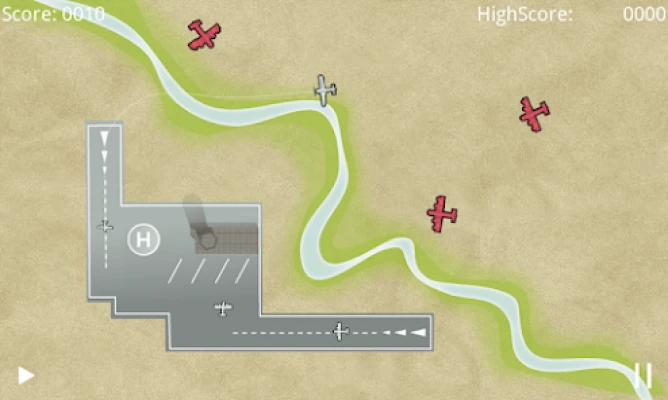
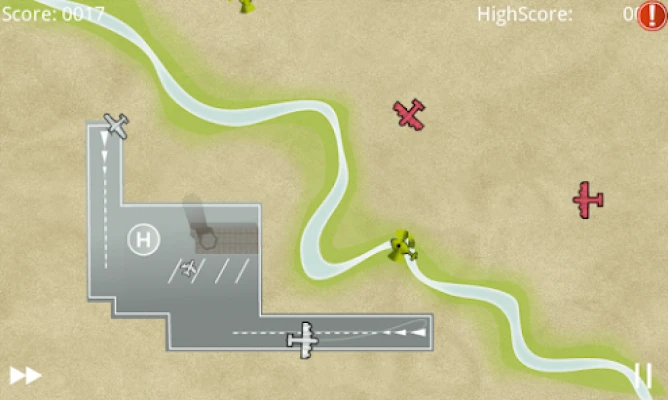
The full Air Control experience features four different maps, providing additional environments for players to explore.
Different map layouts can change the way you organize flight paths and manage runway traffic.
Understanding the arrangement of landing areas is essential because a route that works well in one environment may not be suitable for another.
Online High Scores
Air Control Lite includes online high-score functionality.
This feature allows players to compare their results with other participants and compete for better positions.
It provides an additional reason to improve your skills, survive longer sessions, and develop more efficient aircraft-management strategies.
Simple Graphics and Addictive Gameplay
Air Control Lite uses a straightforward visual presentation that keeps attention on the most important part of the experience: aircraft movement.
The clean appearance makes it easier to identify planes, runways, and potential collision points.
Although the graphics are simple, the gameplay can become surprisingly intense when several aircraft approach the airport simultaneously.
Full Air Control Lite Strategy Guide
Understand the Airport Layout First
Before directing any aircraft, take a moment to examine the airport.
Identify every available runway and understand where aircraft are entering the screen.
Knowing the location of each landing area makes it easier to create suitable routes and avoid unnecessary movement.
A good air traffic controller understands the airport before attempting to manage a large number of planes.
Draw Clear and Direct Flight Paths
Drawing routes is the foundation of Air Control Lite.
Whenever an aircraft appears, identify its intended runway and create a path that guides it toward the correct destination.
Try to avoid unnecessary curves and complicated movements.
A clear route makes it easier to understand where an aircraft is heading and reduces the chance of creating confusion when several planes are moving simultaneously.
Avoid Crossing Flight Paths
One of the most important rules is to prevent aircraft from following dangerous intersecting routes.
Two planes may be heading toward different runways, but their paths can still cross before they reach their destinations.
Always consider the complete flight path rather than focusing only on the landing point.
When possible, organize routes that keep aircraft separated and reduce unnecessary intersections.
Prioritize the Most Dangerous Situations
When several aircraft appear together, you cannot treat every situation as equally urgent.
Look for planes that are approaching one another or moving toward intersecting paths.
An aircraft with a clear route and plenty of space may not need immediate attention.
However, a plane approaching a collision point should receive priority.
Learning to recognize these dangerous situations quickly will significantly improve your performance.
Manage Runway Traffic Carefully
Runways are the final destinations for incoming aircraft, so managing their traffic is essential.
Avoid sending multiple planes toward the same runway without considering their arrival timing.
If one aircraft is already approaching a landing area, check whether another plane can safely follow it or whether a different route would be more appropriate.
Good runway organization helps prevent congestion and allows aircraft to reach their destinations more efficiently.
Monitor the Entire Screen
A common beginner mistake is concentrating on only one or two aircraft.
As the game progresses, new planes can appear in different areas of the screen, creating unexpected situations.
Make a habit of scanning the entire airspace regularly.
Check incoming aircraft, existing routes, approaching runways, and potential collision points.
Maintaining a broad view helps you notice problems before they become difficult to manage.
Learn the Movement of Special Aircraft
Supersonic jets and zeppelin airships add variety to the game.
Do not assume that every aircraft will create the same timing challenges.
Pay attention to how quickly different vehicles move and how much time you have to organize their routes.
Fast-moving aircraft may require earlier decisions, while other vehicles may need more careful coordination with surrounding traffic.
Understanding these differences makes it easier to maintain control when the airport becomes crowded.
Avoid Making Too Many Changes
Changing an aircraft's route repeatedly can create unnecessary complications.
Before drawing a path, think about the destination and the movement of other aircraft.
Once a safe route has been established, avoid changing it unless the situation genuinely requires an adjustment.
This approach keeps the airport more organized and reduces the number of decisions you need to make.
Master Classic Mode
Classic Mode rewards players who can maintain control over increasingly busy airspace.
Start by learning the basic traffic patterns and understanding how quickly aircraft arrive.
As your confidence improves, focus on managing several planes without allowing their routes to overlap.
Try to develop a consistent routine:
Identify newly arriving aircraft.
Determine the correct runway.
Check nearby aircraft and their routes.
Draw a safe flight path.
Monitor the aircraft until it lands.
Repeat the process while watching the entire screen.
Consistency is more important than making every decision as quickly as possible.
Develop a Strategy for Puzzle Mode
Puzzle Mode requires a more deliberate approach.
Instead of immediately drawing the first route that comes to mind, examine the entire situation.
Identify all aircraft, their destinations, and any possible route conflicts.
Think about how one aircraft's movement may affect another.
The best solution is usually the one that organizes all available routes while minimizing dangerous intersections.
Take your time to understand the challenge before committing to a particular arrangement.
Improve Your Reaction Speed
Air Control Lite becomes more demanding as traffic increases.
Improving reaction speed can help you respond to incoming aircraft before they create dangerous situations.
However, fast reactions should always be supported by good judgment.
Practice identifying important movement patterns so you can recognize common problems without spending too much time thinking about every individual decision.
Learn From Every Collision
Mistakes are part of learning the game.
If two aircraft collide, examine what happened before the accident.
Perhaps their flight paths crossed, the runway was already occupied, or you failed to notice an incoming plane.
Understanding the reason behind a collision helps you avoid repeating the same mistake.
Each unsuccessful attempt can teach you something about aircraft positioning and route management.
Compete for Better High Scores
Online high scores provide a useful long-term objective.
If you want to achieve better rankings, concentrate on maintaining a safe and organized airport for as long as possible.
Do not sacrifice safety simply to create shorter routes.
The ability to manage traffic consistently is more valuable than making several risky decisions.
Advanced Tips and Tricks for Air Control Lite
Plan Routes Before Drawing
Identify the destination and check surrounding aircraft before assigning a flight path.
Keep Flight Paths Organized
Avoid creating unnecessary intersections that could lead to collisions.
Watch Aircraft Speed
Different aircraft can require different amounts of attention depending on their movement.
Prioritize Collision Risks
Always address the most dangerous traffic situations first.
Keep Runways Clear
Consider the arrival timing of aircraft before sending additional planes toward the same landing area.
Use Puzzle Mode for Strategic Practice
Puzzle challenges can help you develop a better understanding of route planning and aircraft coordination.
Avoid Tunnel Vision
Regularly scan the entire screen instead of concentrating on one aircraft.
Stay Calm During Busy Moments
Rushing without evaluating the situation can create more problems. Make quick but deliberate decisions.
Aim for Consistency
A reliable approach to aircraft management will help you achieve better results over multiple sessions.
Study Your Previous Mistakes
Every collision provides an opportunity to improve your understanding of the game's mechanics.
Common Mistakes to Avoid
Drawing Flight Paths Without Checking Other Aircraft
A route may look safe when viewed individually, but it can become dangerous when another plane crosses it. Always consider surrounding traffic.
Sending Too Many Aircraft to One Runway
Runway congestion can create serious problems. Organize landing movements and consider arrival timing.
Ignoring Incoming Planes
Focusing exclusively on existing aircraft can cause you to overlook new arrivals. Keep checking the entire screen.
Using Complicated Routes
Unnecessary curves and overlapping paths can make traffic difficult to manage. Prefer clear and organized routes.
Reacting Too Late
Waiting until two aircraft are dangerously close leaves fewer opportunities to correct the situation. Anticipate potential problems early.
Treating Every Aircraft the Same
Special aircraft may have different movement characteristics. Pay attention to their speed and position.
Forgetting the Difference Between Game Modes
Classic Mode emphasizes continuous traffic management, while Puzzle Mode focuses more on finding solutions to specific challenges. Adjust your approach accordingly.
Is Air Control Lite Worth Playing?
Air Control Lite is an excellent choice for players who enjoy simple arcade games that challenge their concentration and decision-making abilities.
Its biggest strength is the drawing-based control system. Guiding aircraft by drawing flight paths is easy to understand, but coordinating multiple planes creates an increasingly demanding experience.
The addition of Classic Mode and Puzzle Mode gives players different ways to enjoy the game. Classic Mode provides an ongoing test of reaction speed, while Puzzle Mode encourages more careful planning.
Special aircraft, multiple maps, and online high scores add further variety.
The game is particularly appealing to people who enjoy aviation-themed challenges, strategy puzzles, and games that are easy to start but difficult to master.
Its simple presentation may not appeal to players looking for realistic 3D airport simulations, but the addictive gameplay makes it a worthwhile option for casual gaming.
Frequently Asked Questions
What is Air Control Lite?
Air Control Lite is an airport traffic management game in which players guide airplanes toward runways by drawing flight paths while avoiding collisions.
Who developed Air Control Lite?
Air Control Lite was developed by Four Pixels Games.
How do you play Air Control Lite?
You use touchscreen drawing controls to create routes for airplanes. Your objective is to guide every aircraft to the correct runway without allowing planes to collide.
What game modes are available?
The game includes Classic Mode and a unique Puzzle Mode.
Does Air Control Lite feature different aircraft?
Yes. The game includes ordinary airplanes and special aircraft such as supersonic jets and zeppelin airships.
Does Air Control Lite have multiple maps?
The full Air Control experience features four different maps.
Can you play Air Control Lite offline?
Yes. The game supports offline gameplay, although online high-score features require an internet connection.
Does Air Control Lite have leaderboards?
Yes. Players can submit scores and compete through online high-score rankings.
Is Air Control Lite difficult?
The basic controls are simple, but managing several aircraft simultaneously becomes increasingly challenging. Good timing, route planning, and concentration are essential.
Is Air Control Lite suitable for children?
The game has an Everyone content rating and uses straightforward drawing-based gameplay.
What is the difference between Classic Mode and Puzzle Mode?
Classic Mode focuses on managing continuous aircraft traffic, while Puzzle Mode offers more structured challenges that require players to find suitable solutions.
Final Verdict
Air Control Lite is an entertaining airport management game that transforms the responsibilities of an air traffic controller into an addictive mobile experience.
Its straightforward drawing controls make it easy to understand, while the growing number of aircraft creates a genuine strategic challenge. Players must organize flight paths, manage runways, recognize collision risks, and make quick decisions to keep the airport operating safely.
The combination of Classic Mode, Puzzle Mode, special aircraft, multiple maps, and online high scores gives the game plenty of replay value.
Whether you enjoy aviation games, casual strategy challenges, or puzzle experiences that test your reflexes, Air Control Lite offers an enjoyable way to challenge your decision-making skills.
It is especially appealing to players who prefer simple gameplay mechanics with increasing difficulty and rewarding opportunities to improve their performance.
Rate the Game
User Reviews














Popular Games



















 Android
 iOS
 Windows
 Xbox