


Latest Version
November 06, 2026
Heseri Games Inc
Casual
iOS
0
Report a Problem
More About :game
Each run contributes to progression, allowing players to improve the rock, strengthen the slingshot, and increase their income. With straightforward controls, destructive physics-inspired gameplay, and strategic upgrade decisions, Just a Rock offers an entertaining experience for players who enjoy incremental games and satisfying destruction challenges.
What Is Just a Rock?
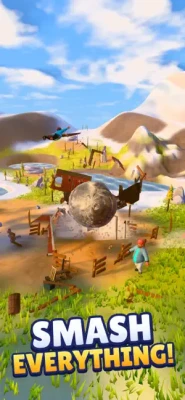
Just a Rock is a casual simulation game developed by Heseri Games Inc. It transforms an ordinary rock into the main character of a simple but entertaining downhill adventure. Rather than controlling a traditional vehicle or racing against opponents, players launch a boulder with a slingshot and watch it roll through the environment, growing bigger and smashing obstacles along the way.
The central objective is to make each run more successful than the previous one. Players send their rock downhill, break objects in its path, and work toward reaching the finish line. The rewards earned during these attempts can then be invested in upgrades that improve future performance.
The game combines three important progression elements: rock growth, slingshot power, and income. Each upgrade contributes to the overall development of the experience, encouraging players to think about where their resources will make the greatest difference.
Just a Rock is designed around short, repeatable gameplay sessions. Its controls are simple, but choosing the right upgrades and gradually improving each run gives players a reason to continue.
Main Features of Just a Rock
Downhill Rock Launching
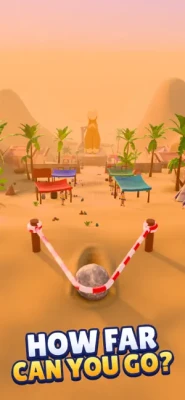
Use a slingshot to launch your boulder downhill. Every run begins with the opportunity to send the rock into the environment and build momentum toward the finish line.
Growing Rock Mechanics
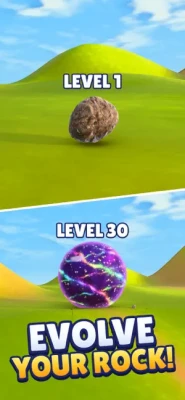
The rock becomes bigger as you progress through repeated runs. Its growth is a central part of the gameplay and gives players a clear sense of improvement.
Destructive Gameplay
Smash objects and obstacles along the route as your boulder rolls forward. The destruction-focused design makes every attempt visually satisfying.
Slingshot Upgrades
Improve the slingshot to strengthen your launches. Better launch performance helps create more productive runs and supports long-term progression.
Rock Upgrades
Invest in improving the rock itself. Developing its capabilities is an important part of making progress through the downhill challenges.
Income Improvements
The game includes an income upgrade category. Improving income supports resource generation and helps players afford further progression upgrades.
Repeatable Runs
Each attempt contributes to the larger progression system. Players can return for another launch, collect more resources, and improve their performance.
Simple Controls
The basic gameplay is easy to understand, making the experience accessible to casual players who want straightforward action without complicated racing controls.
Strategic Upgrade Decisions
Choosing between rock improvements, slingshot power, and income is an important part of the experience. The best investment depends on what is currently limiting your progress.
Gameplay and Core Mechanics
Just a Rock revolves around a straightforward gameplay cycle: launch the boulder, roll downhill, smash obstacles, earn rewards, and upgrade your equipment.
Although the main action is simple, the upgrade system gives the game its progression structure. Players need to decide how to use their available resources to make future attempts more effective.
Slingshot Launching
The slingshot is responsible for sending the rock downhill. It provides the starting point for every run and is one of the main upgrade categories.
Improving the slingshot helps strengthen your launch potential. This makes it an important investment when you want to improve the overall performance of your attempts.
Rock Growth
The rock grows bigger as you progress through runs. This mechanic gives the game a distinctive identity and makes the boulder itself an important part of the upgrade system.
A growing rock is central to the destructive experience. Players work toward developing a stronger boulder that can make better progress through the environment.
Downhill Destruction
Once launched, the rock rolls through the level and smashes objects in its path. Destruction is an important part of the game's appeal, giving each attempt a satisfying visual result.
The objective is to keep improving your performance and make progress toward the finish line.
Income System
Income is another important upgrade category. It supports the resource side of progression and helps players invest in improvements over time.
Developing income can be useful when upgrade costs begin increasing and you need more resources to continue improving your rock and slingshot.
Upgrade Progression
The game encourages players to repeat runs and use their earnings to strengthen different aspects of the experience.
The three main upgrade priorities are:
Slingshot: Improves the launching system.
Rock: Develops the boulder and its growth progression.
Income: Supports the generation of resources for future upgrades.
Balancing these categories is an important part of making steady progress.
Complete Just a Rock Strategy Guide
Getting Started
When you begin Just a Rock, focus on understanding the basic launch-and-upgrade cycle.
Your first objective is to send the rock downhill and observe how it moves through the environment. Pay attention to the destruction along the route and the rewards you receive after each attempt.
Once a run is complete, explore the available upgrade options. Understanding how the rock, slingshot, and income categories contribute to progression will help you make better decisions.
Do not worry about reaching the finish line immediately. Early runs are an opportunity to learn the system and begin developing your upgrades.
Understand the Three Main Upgrade Categories
The most important strategic decision in Just a Rock is how to distribute your resources.
Each upgrade category serves a different purpose, so spending everything on one option may not always be the best approach.
Slingshot upgrades focus on improving the launch system. They are worth considering when the starting power of your runs is holding back progress.
Rock upgrades focus on developing the boulder. They are important when you want to improve the central object used throughout the game.
Income upgrades support your ability to earn resources. They become particularly valuable when the cost of improvements increases and you need more money to continue progressing.
A balanced approach is generally more reliable than ignoring one category completely.
Prioritize Upgrades That Solve Your Current Problem
Before spending your rewards, consider what is preventing you from making better progress.
If your launches are not producing the results you want, look at the slingshot upgrade. If the rock itself needs improvement, invest in its development. If you frequently lack enough resources to purchase upgrades, consider strengthening income.
This approach helps you avoid unnecessary spending and makes each investment more purposeful.
Improve Your Slingshot Regularly
The slingshot determines how the rock begins its journey. Since every attempt starts with a launch, improving this system is an important part of long-term progression.
Check the available slingshot improvements whenever you have enough resources. Consider how each improvement affects your overall progress and whether it is more useful than investing in another category.
Avoid neglecting the launch system for too long. A stronger starting point can support better future attempts.
Develop Your Rock
The rock is the central element of the game, so its development should remain one of your main priorities.
Invest in rock upgrades as you earn enough resources. Pay attention to how the boulder changes over time and use each improvement as part of your long-term progression plan.
Do not assume that slingshot power alone will solve every challenge. The rock itself also needs attention as you move through the game.
Build a Reliable Income
Income upgrades can make a significant difference to your ability to progress.
As upgrade costs increase, having a stronger resource system becomes more useful. Instead of repeatedly struggling to save enough for improvements, investing in income can help support future purchases.
However, avoid spending every available reward on income without considering your immediate needs. If a particular upgrade would help you make better progress now, it may deserve priority.
The goal is to maintain a useful balance between earning resources and improving your rock.
Make Every Run Productive
Repeated runs are a central part of Just a Rock. Each attempt gives you another opportunity to make progress and earn resources for future upgrades.
Rather than treating unsuccessful runs as wasted time, use them as part of your development strategy.
After each attempt, review your available resources and decide which upgrade should come next. Even small improvements can contribute to stronger future runs.
A consistent routine of launching, collecting, and upgrading is more effective than making random purchases.
Work Toward the Finish Line
Reaching the finish line is the main objective of the downhill challenge.
Focus on improving your overall setup rather than expecting one attempt to solve every progression obstacle. A better-developed rock and slingshot can help you make more effective runs.
If progress slows, return to the upgrade menu and identify which category needs attention.
Do not rush your decisions. Improving the right part of your setup can be more useful than purchasing several upgrades without a clear goal.
Handle Increasing Upgrade Costs
As you progress, improvements can become more expensive. This is where resource management becomes increasingly important.
Before spending your earnings, compare the available upgrade costs and consider which purchase will provide the most useful progress.
If you cannot afford an important improvement, continue making runs and consider whether income upgrades could help you reach the required amount sooner.
Avoid spending all your resources on minor improvements when you are saving for an upgrade that could make a bigger difference.
Be Patient With Repeated Levels
Like many incremental games, Just a Rock uses repeated attempts as part of its progression loop. You may encounter familiar environments or challenges as you continue advancing.
When this happens, focus on improving your setup instead of expecting every new attempt to introduce a completely different experience.
Use repeated runs to gather resources and develop the rock, slingshot, and income system. This makes repetition part of your progression strategy rather than simply a setback.
Establish a Consistent Upgrade Routine
A simple routine can make the game easier to manage:
Complete a downhill run.
Review the rewards you earned.
Check the cost of available upgrades.
Identify your weakest progression category.
Purchase the most useful improvement.
Launch another run and compare your results.
Following this cycle helps keep your progress organized and reduces unnecessary spending.
Best Upgrade Strategy
There is no single upgrade order that will suit every stage of the game. Your priorities should change depending on your current performance and available resources.
Early Game Strategy
During the early stages, experiment with the three upgrade categories. Learn how slingshot power, rock development, and income contribute to your results.
Make affordable improvements and avoid spending resources without understanding their purpose.
Middle Game Strategy
As progression becomes more demanding, start balancing your investments more carefully.
If your launches are limiting your runs, prioritize the slingshot. If the rock needs further development, invest in that category. If upgrade prices are becoming difficult to manage, improve income.
The most effective strategy is to address the weakest part of your setup.
Later Game Strategy
In later progression, upgrade costs can become a more important consideration. Continue comparing the value of available improvements and avoid making purchases simply because they are affordable.
Keep developing all three categories over time. A balanced system can help prevent one neglected area from becoming a major obstacle.
Advanced Tips for Better Progress
Check upgrades after every run. Make it a habit to review your resources and available improvements before launching again.
Avoid random spending. Each purchase should support a specific progression goal.
Balance the three upgrade categories. Slingshot power, rock development, and income all have important roles.
Invest in income when resources become a bottleneck. Better resource generation can make future upgrades easier to afford.
Do not neglect the rock. Its growth is central to the game's identity and progression.
Strengthen the launch system. A better slingshot can improve the starting conditions of your runs.
Use repetition productively. Familiar runs still provide opportunities to earn resources and improve your setup.
Compare your progress over time. Notice whether your upgrades are helping you move closer to the finish line.
Be patient with expensive improvements. Saving for a useful upgrade can be better than spending everything immediately.
Keep a clear objective. Decide whether your next goal is improving the launch, developing the rock, or increasing income.
Common Mistakes to Avoid
Ignoring income upgrades: Resource generation becomes important when improvements start costing more.
Spending everything on the slingshot: Launch power matters, but the rock and income systems also need attention.
Neglecting rock development: The boulder is the main character of the game and deserves regular investment.
Purchasing upgrades without a plan: Random spending can slow down meaningful progression.
Expecting every run to be different: Repeated attempts are part of the game's incremental design.
Giving up after a slow run: Even familiar runs can provide resources for future improvements.
Ignoring the upgrade menu: Regularly reviewing available improvements helps you identify the best next purchase.
Trying to progress without enough resources: Sometimes the best decision is to complete additional runs and build up your earnings.
Graphics, Destruction, and Overall Presentation
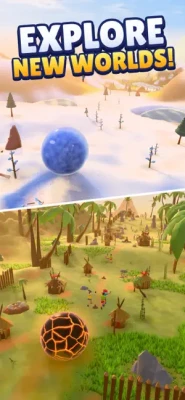
Just a Rock uses a colorful 3D presentation built around a simple visual concept: a boulder rolling downhill through environments filled with objects that can be smashed.
The rock's growth gives the player a visible sense of progression. As the boulder develops, the destructive theme becomes an increasingly important part of the experience.
The game's appeal comes from its straightforward presentation and satisfying action. Instead of requiring complicated controls or lengthy tutorials, it lets players focus on launching, watching the destruction, and improving their setup.
The repeatable structure also makes it suitable for short gaming sessions. Players can complete a run, purchase an upgrade, and return whenever they want to make further progress.
Difficulty and Replay Value
Just a Rock starts with an easy-to-understand objective, but its progression system encourages players to think about long-term improvements.
The main challenge is deciding how to spend resources effectively. Slingshot upgrades, rock development, and income improvements all contribute to progression, but their usefulness depends on the player's current needs.
Repeated runs are an important part of the experience. Players return to familiar downhill challenges to earn more resources and make their next attempts stronger.
The replay value comes from the desire to grow the rock, improve the launch system, unlock further progression, and reach the finish line.
Players who enjoy incremental games and gradual upgrades may appreciate this structure, while those who prefer completely different levels in every session may find the repeated gameplay less varied.
Who Should Play Just a Rock?
Just a Rock is a good choice for players who enjoy:
Casual simulation games.
Incremental progression systems.
Downhill rolling challenges.
Slingshot launching mechanics.
Destruction-focused gameplay.
Growing and upgrading objects.
Simple controls and short sessions.
Resource management.
Strategic upgrade decisions.
Repeatable challenges with gradual improvements.
Players looking for complicated racing mechanics, competitive multiplayer, or a story-driven adventure may prefer another genre. Just a Rock is focused on simple action, satisfying destruction, and steady progression.
Game Information
Game Title: Just a Rock
Developer: Heseri Games Inc.
Category: Simulation
Genre: Casual Simulation, Incremental Progression, Destruction Game
Platform: iPhone and iPad
Minimum Operating System: iOS 15.0 or later
Gameplay Style: Single-player downhill launching and upgrade progression
Main Character: A growing rock or boulder
Main Mechanic: Launching a rock downhill with a slingshot
Main Objective: Smash obstacles, improve performance, and reach the finish line
Main Upgrade Categories: Slingshot, Rock, and Income
Progression System: Repeated runs, resource collection, and strategic upgrades
Price: Free to download
In-App Purchases: Available
Optional Purchases: Starter Pack, Remove Ads, diamond packs, and ticket packs
Language Support: English, French, German, Japanese, Korean, Simplified Chinese, Spanish, and Traditional Chinese
Age Rating: 13+ on the US App Store listing
Final Verdict
Just a Rock takes a simple concept and turns it into an entertaining incremental simulation experience. Launching a boulder downhill, watching it grow, and smashing objects along the way creates an easy-to-understand gameplay loop with satisfying progression.
The upgrade system adds a strategic element beyond the basic destruction. Players must decide how to distribute their resources between slingshot power, rock development, and income improvements. Making sensible choices can help keep progress moving even when upgrade costs become more demanding.
The game is particularly suitable for people who enjoy casual games with repeatable runs, visible improvements, and straightforward objectives. Its simple controls make it accessible, while the upgrade system provides a reason to return for another attempt.
For the best experience, focus on balanced upgrades, use your resources carefully, and treat every run as an opportunity to improve your next launch. If you enjoy incremental progression and satisfying downhill destruction, Just a Rock is worth trying.
Rate the Game
User Reviews















Popular Games



















 Android
 iOS
 Windows
 Xbox