

Latest Version
November 22, 2026
Fruit Puzzle Games
Puzzle
iOS
0
Report a Problem
More About :game
One Drawing Puzzle – Draw Games is a casual logic puzzle developed by Fruit Puzzle Games. Its central challenge is simple to understand but increasingly difficult to master: connect every dot on the screen with one continuous stroke without lifting your finger.
Each level presents a pattern made of connected or unconnected points. Your task is to study the arrangement and discover a route that completes the entire drawing. You can begin from any dot, but choosing the right starting point and planning the path are important parts of solving more complicated puzzles.
The game combines easy-to-learn controls with challenges that encourage careful observation, logical reasoning, and spatial thinking. Early puzzles help players understand the basic rules, while later designs require more planning and experimentation.
With more than 1,000 levels, smooth touch controls, intuitive hints, and no time limit, One Drawing Puzzle is designed for both short breaks and longer puzzle sessions. It is suitable for players who enjoy line-drawing challenges, dot-connecting games, and simple brain teasers.
Main Features
More Than 1,000 Puzzle Levels
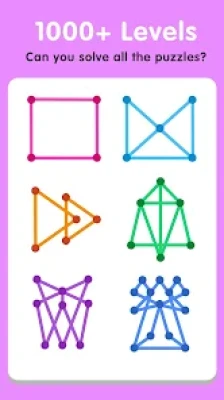
The game offers over 1,000 designed levels, giving players a substantial collection of dot-connecting challenges. Each puzzle provides another opportunity to discover a route that completes the drawing in one stroke.
One-Stroke Drawing Gameplay
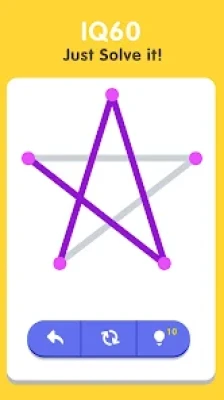
The main rule is straightforward: connect the required dots with a single continuous line. You must plan your movement carefully because lifting your finger interrupts the drawing.
Start from Any Dot
Players have the freedom to begin from any dot. This makes the starting position an important strategic decision, particularly when a puzzle has several connected branches.
Smooth Touch Controls
The game uses simple touch-based controls. Draw your route by moving your finger across the puzzle, allowing you to focus on the solution rather than complicated mechanics.
No Time Limit
There is no countdown forcing you to rush. You can study the pattern, test your ideas, and think through a solution at your own pace.
Helpful Hints
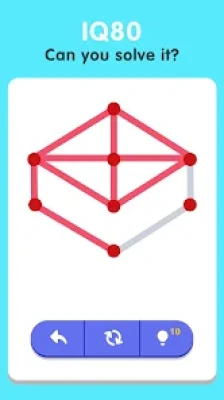
Intuitive hints are available to help players when a puzzle becomes difficult. They can provide assistance when you have examined the pattern but cannot identify a workable route.
Clear Graphics
The straightforward visual presentation makes the dots and connecting lines easy to follow. This helps players concentrate on the puzzle's structure.
Offline Gameplay
The game is advertised as playable without Wi-Fi, making it convenient for travel, waiting rooms, and other situations where an internet connection is unavailable.
Suitable for Different Ages
The simple rules make the game accessible to a wide range of players. Beginners can learn the basic idea quickly, while more experienced puzzle fans can work through challenging arrangements.
Specific Game Information
Game Title: One Drawing Puzzle – Draw Games
Developer: Fruit Puzzle Games
Package Name: one.line.oneline.onestroke.onetouch.dot.puzzle.game
Platform: Android
Category: Puzzle
Game Type: One-line drawing, dot connection, logic puzzle, brain training
Gameplay: Single-player
Number of Levels: More than 1,000
Controls: Touch and drag
Starting Point: Any dot
Time Limit: No time limit
Hints: Available
Offline Support: Advertised as no-Wi-Fi-needed gameplay
Price: Free to play
Monetization: Contains advertisements and in-app purchases
Content Rating: Everyone
Gameplay and How to Play
One Drawing Puzzle is built around connecting every required dot in a puzzle using one continuous stroke. Instead of drawing separate lines or lifting your finger between connections, you must find a route that allows the entire pattern to be completed in one movement.
When a level begins, examine the arrangement of dots and connecting lines. Identify the different sections of the shape and consider how they connect to one another.
Choose a starting dot and begin drawing along the route. Continue moving through the available connections until the full pattern is complete. If your path is correct, you finish the drawing and can progress to the next challenge.
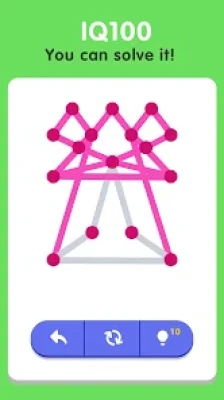
The basic rules are easy to understand, but more complicated patterns require careful planning. A route that looks promising at the beginning may leave an isolated section that cannot be reached without lifting your finger. This is why it is important to think about the entire drawing before starting.
Full Strategy Guide
Understand the One-Line Rule
The most important rule is that the complete drawing must be made with one continuous stroke. You cannot finish one section, lift your finger, and begin another separate line.
Before drawing, understand which dots and connections belong to the same puzzle. Think of the route as one uninterrupted journey from the starting point to the final point.
Remembering this rule will help you avoid many unnecessary attempts.
Examine the Entire Shape First
Do not immediately start drawing when a level appears. Take a few seconds to inspect the complete arrangement.
Look for long branches, corners, intersections, and sections with only one possible way in or out. These details can determine how the route should be planned.
A quick visual inspection can help you avoid choosing a starting point that makes the remaining puzzle unnecessarily difficult.
Choose Your Starting Dot Carefully
Although the game allows you to start from any dot, not every starting point is equally convenient.
Pay special attention to dots at the ends of branches. These points often provide useful clues about the direction of a successful route.
Consider how many connections are available from each dot. A point with only one connection may need to be handled at a particular stage of the drawing, so think about whether it is better to visit it early or finish there.
Identify Dead Ends
Dead ends are among the most important details in a one-line puzzle. A dead end is a point or branch that offers only one way to continue.
If you enter such a section too early and cannot return through the same connection, you may become trapped. This can leave part of the drawing unfinished.
Identify these sections before starting. Plan how to reach them and whether they should form part of the beginning or ending of your route.
Count the Connections at Each Dot
A useful mathematical technique is to examine how many lines meet at each dot.
In an ordinary connected graph, a route that uses every edge exactly once is called an Euler trail. The number of connections at each vertex can reveal whether such a route is possible.
For a connected graph:
If every dot has an even number of connections, an Euler circuit is possible, meaning the route can start and finish at the same dot.
If exactly two dots have an odd number of connections, an Euler trail is possible, with the route starting at one odd-degree dot and finishing at the other.
If more than two dots have an odd number of connections, it is not possible to use every edge exactly once in a single continuous trail.
This mathematical idea is especially useful for understanding why certain starting points work better than others. The game may also include rules about its own drawing paths, so always follow the actual level's requirements.
Plan Around Intersections
Intersections can make a puzzle look more complicated than it really is. When several lines meet at one dot, you need to consider how to pass through that point without leaving an important connection unused.
Do not think only about the next line. Consider what connections will remain after you move through an intersection.
Try to avoid separating the remaining puzzle into disconnected sections. A successful route must keep the unfinished parts reachable through one continuous path.
Work from Difficult Sections Backward
Sometimes it is easier to solve a puzzle by identifying the most restrictive sections first.
Look for branches that have only one possible entrance or exit. Then imagine how the rest of the route must connect to those sections.
Planning backward from a difficult endpoint can reveal the correct starting position and reduce unnecessary experimentation.
Avoid Repeating Connections Unnecessarily
When a puzzle requires every line to be covered once, tracing an already completed connection again will not help you finish the remaining parts.
Keep track of the lines you have already used. If a route repeatedly sends you back over completed sections, reconsider your approach.
A good solution should gradually cover the required connections while keeping the remaining route accessible.
Use Hints at the Right Time
Hints are useful when you have spent time examining a puzzle without finding a workable route.
Before using one, try identifying the dead ends and counting the connections at important dots. These simple techniques may be enough to reveal the answer.
If you are still stuck, use the available hint to help you move forward. Treat it as an opportunity to understand the puzzle's structure rather than simply rushing to the next level.
Learn from Failed Attempts
An unsuccessful drawing attempt can show you which part of your plan was incorrect.
Perhaps you started from an unsuitable dot, entered a dead end too early, or left an important branch disconnected. Identify the problem before trying again.
Changing one part of your strategy is often more effective than repeating the same route.
Stay Patient on Difficult Levels
Some puzzles require several minutes of careful thinking. Since there is no time limit, there is no reason to rush.
Take a short break if you become frustrated. Returning with a fresh perspective can make it easier to notice a connection or route that you previously overlooked.
Common Mistakes to Avoid
Starting Without Planning
Drawing immediately can lead to a dead end. Examine the complete pattern before selecting your starting point.
Ignoring Dead Ends
A branch with only one connection can determine where your route begins or ends. Pay attention to these points before drawing.
Choosing a Poor Starting Position
Starting from an inconvenient dot may make the remaining route difficult or impossible to complete. Consider the structure of the puzzle first.
Forgetting the One-Stroke Rule
The entire required drawing must be completed continuously. Avoid planning a route that depends on lifting your finger and starting again.
Repeating Completed Lines
Retracing connections can waste movement when the objective is to cover each required line once. Keep track of the route as you draw.
Overlooking Intersections
A central dot may connect several different branches. Plan how to pass through it while keeping the unfinished sections reachable.
Rushing Through Difficult Levels
There is no time limit, so careful thinking is more useful than speed. Take the time needed to understand the pattern.
Tips for Better Results
Study the complete drawing before making your first move.
Identify dots with only one connecting line.
Count the connections at important intersections.
Look for possible starting and ending points.
Pay attention to branches that could become isolated.
Plan a continuous route instead of solving one section at a time.
Avoid retracing connections unnecessarily.
Use hints when you genuinely need help.
Learn from failed attempts and adjust your route.
Take your time because there is no countdown.
Is One Drawing Puzzle – Draw Games Worth Playing?
One Drawing Puzzle – Draw Games is a good option for players who enjoy simple rules combined with increasingly challenging logic. Its one-stroke concept is easy to understand, but completing complicated patterns requires observation, planning, and careful decision-making.
The large collection of more than 1,000 levels gives players plenty of puzzles to work through. Smooth touch controls and the absence of a time limit make the experience approachable for beginners, while the more difficult arrangements provide an additional challenge for experienced puzzle fans.
Its offline availability also makes it convenient for playing during short breaks or while travelling. If you enjoy connecting dots, drawing shapes, and solving logic puzzles, this game offers an enjoyable way to spend your free time.
Frequently Asked Questions
What is One Drawing Puzzle – Draw Games?
It is a casual logic puzzle in which players connect dots and complete shapes using one continuous line.
Who developed One Drawing Puzzle?
The game is developed by Fruit Puzzle Games.
How many levels does the game have?
The published game description advertises more than 1,000 designed puzzle levels.
How do you play One Drawing Puzzle?
Study the pattern, choose a starting dot, and draw one continuous route that connects the required points without lifting your finger.
Can you start from any dot?
Yes. The game description specifically lists the ability to start from any dot.
Is there a time limit?
No. The game advertises no time limit, allowing players to solve puzzles at their own pace.
Does One Drawing Puzzle have hints?
Yes. The game description lists intuitive hints to help players with difficult challenges.
Can I play without Wi-Fi?
Yes. The game is advertised as requiring no Wi-Fi for its core puzzle gameplay.
Is One Drawing Puzzle free?
The game is listed as free to play, with advertisements and optional in-app purchases.
Is the game suitable for beginners?
Yes. Its basic one-line drawing rule is easy to understand, although later puzzles can require more advanced planning.
What is the best strategy for difficult levels?
Start by identifying dead ends and counting the connections at each dot. Then determine the best starting and ending points before drawing the complete route.
Final Thoughts
One Drawing Puzzle – Draw Games turns a simple drawing idea into a collection of engaging logic challenges. Connecting every dot with one continuous stroke requires more than careful finger movement; it also rewards players who can recognize patterns, plan ahead, and understand how different sections of a shape connect.
With more than 1,000 levels, helpful hints, simple controls, and no time pressure, it is an enjoyable choice for fans of one-line puzzles and brain-training games. Take your time, plan each route, and see how many drawings you can complete in a single stroke.
Rate the Game
User Reviews










Popular Games



















 Android
 iOS
 Windows
 Xbox