


Latest Version
November 21, 2026
NSTAGE
Puzzle
0
com.cookapps.playgrounds.ff.aliceblast
Report a Problem
More About :game
Game Overview
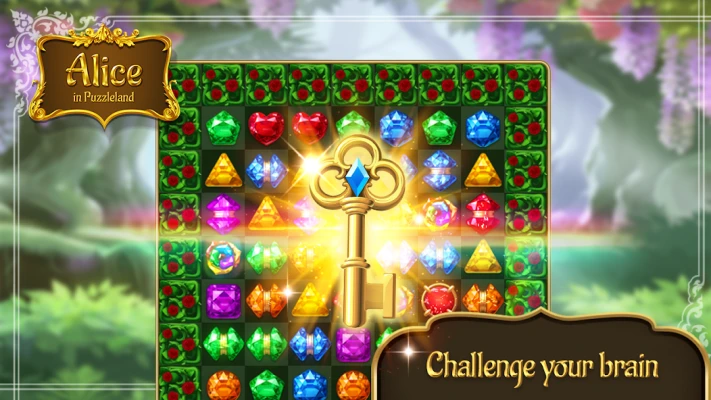
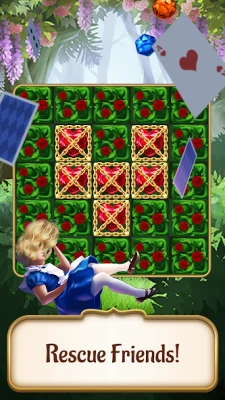
Alice in Puzzleland is a casual jewel-matching puzzle game developed by NSTAGE. It combines traditional match-3 mechanics with a charming Wonderland-inspired atmosphere, giving players an entertaining experience built around colorful gems, strategic combinations, and progressively challenging levels.
The main objective is to complete different puzzle stages by matching jewels and clearing the required elements from the board. Although the basic gameplay is easy to understand, completing later stages requires more careful planning, efficient use of special jewels, and smart decisions about which matches to make.
The game is particularly suitable for players who enjoy relaxing puzzle adventures without the pressure of countdown timers. Instead of rushing through every stage, players can examine the board, consider their available moves, and choose combinations that provide the greatest benefit.
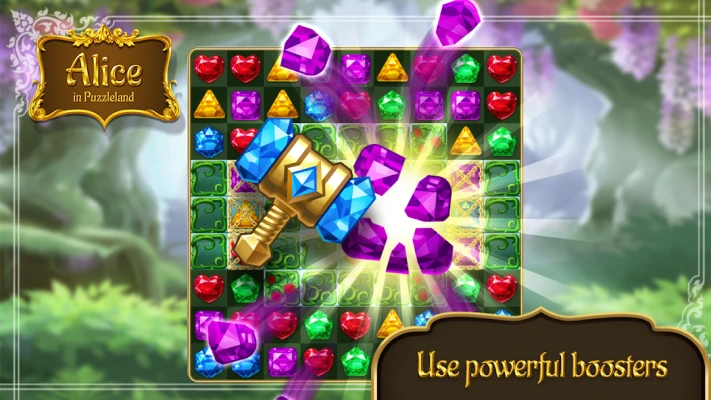
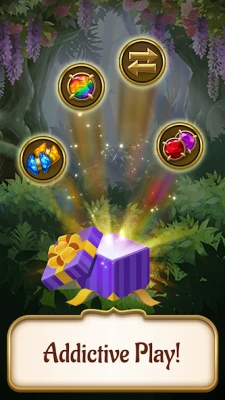
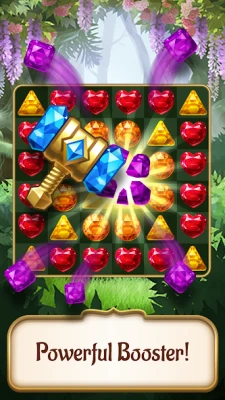
One of the most enjoyable aspects of Alice in Puzzleland is its special jewel system. Matching four jewels creates a powerful special jewel capable of clearing an entire row or column. Matching five jewels produces a Rainbow Jewel that removes jewels of a selected color across the board.
These mechanics make every stage an opportunity to experiment with different combinations and discover more effective ways to complete objectives.
Main Features of Alice in Puzzleland
Magical Jewel-Matching Gameplay
The central attraction is the familiar match-3 system. Players swap neighboring jewels to create lines of three or more identical pieces. Successful matches remove the selected jewels and allow new ones to fall into their positions.
This simple mechanic creates plenty of opportunities for combinations, chain reactions, and unexpected board changes.
Special Jewel Creation
Matching larger groups of jewels rewards players with special pieces that can clear considerably more space than ordinary matches.
Four-jewel combinations create special jewels that destroy a row or column, while five-jewel combinations produce Rainbow Jewels capable of removing all jewels of the same color.
Hundreds of Puzzle Levels
Alice in Puzzleland offers hundreds of stages, each introducing different arrangements and challenges. As players advance, they encounter puzzles that require better planning and more efficient use of their available moves.
Daily Rewards
Daily bonuses provide additional rewards that can help players continue their adventure. Collecting these bonuses regularly is a useful way to build up resources and prepare for difficult stages.
Offline Gameplay
The game supports offline play, allowing players to enjoy its jewel-matching puzzles without requiring a continuous internet connection. This makes it convenient for entertainment while traveling or during breaks.
No Time Limits
Unlike puzzle games that require players to finish stages within a countdown, Alice in Puzzleland allows players to think through their decisions without time pressure.
Colorful Visual Effects
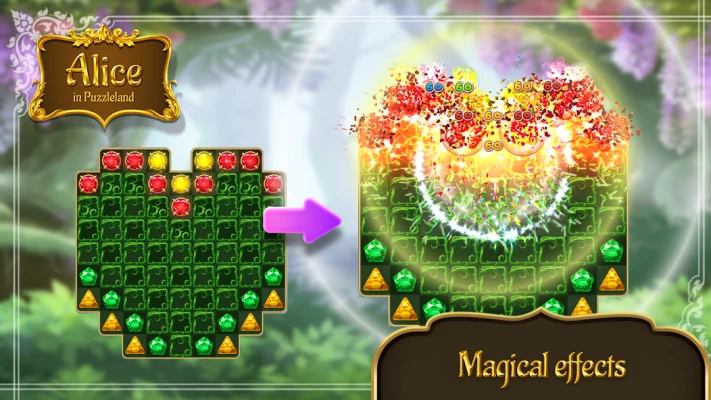
Bright jewels, sparkling animations, and satisfying explosions make the puzzle experience visually enjoyable. Special combinations are particularly entertaining because they can remove large groups of jewels in a single action.
Regular Content Updates
The developer promotes new puzzle content and weekly updates, giving players opportunities to discover additional challenges as the game develops.
Gameplay Mechanics Explained
Matching Three Jewels
The simplest move involves connecting three identical jewels horizontally or vertically.
Once the match is completed, the jewels disappear, and new pieces fall into the empty spaces. This is the foundation of almost every puzzle in the game.
Matching Four Jewels
Matching four identical jewels creates a Special Jewel.
This special piece has the ability to clear an entire row or column, making it particularly useful when several obstacles or important pieces are positioned along the same line.
Rather than using it immediately, consider where its effect will provide the greatest benefit.
Matching Five Jewels
Creating a five-jewel match produces a Rainbow Jewel.
This powerful piece removes all jewels of the same color from the board, potentially creating a major chain reaction and opening several new opportunities.
Rainbow Jewels are especially valuable when one color appears frequently or when clearing a particular color can help achieve the stage objective.
Combining Special Jewels
Combining two special jewels produces a stronger explosion that can clear considerably more of the board.
Learning when to combine these pieces is an important part of mastering difficult stages. Using them individually may provide immediate progress, but saving them for a combination can sometimes produce a much better result.
Cascading Matches
After jewels disappear, new ones fall into the available spaces. These falling pieces can automatically create additional matches.
These chain reactions are useful because they can clear more jewels without requiring another manual move.
Complete Strategy Guide for Alice in Puzzleland
Understand the Objective Before Making Your First Move
Every puzzle should begin with a quick examination of the board.
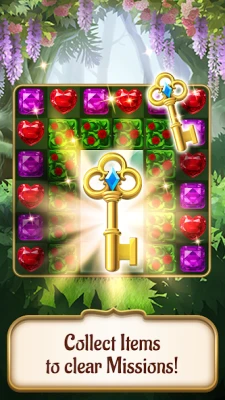
Look at the stage objective and identify what needs to be cleared or collected. Do not assume that making the largest available match is always the best choice.
Some moves remove many jewels but contribute very little toward the actual objective. Other moves may appear smaller but help complete an important part of the challenge.
Understanding the goal prevents unnecessary moves and helps you develop a more effective strategy.
Prioritize Matches That Create Special Jewels
Ordinary three-jewel combinations are useful, but special jewels provide much greater clearing power.
Whenever possible, look for opportunities to match four or five jewels. These combinations can dramatically improve your progress, especially when the board becomes crowded.
However, avoid creating a special jewel without considering its position. A special piece placed in an unhelpful location may not produce the results you expect.
Save Rainbow Jewels for Valuable Opportunities
Rainbow Jewels are among the most powerful tools available in Alice in Puzzleland.
Before activating one, examine the board and identify which color appears most frequently.
Removing a color with many pieces can create a substantial clearing effect and trigger additional matches.
It is also useful to consider which color is blocking your progress. Sometimes removing a smaller group of strategically important jewels is more beneficial than choosing the most common color.
Use Special Jewel Combinations Wisely
Combining two special jewels can produce impressive results, but timing matters.
Try to position special pieces close enough to create a combination instead of activating them separately as soon as they appear.
A well-timed combination can clear a large section of the board, create additional falling matches, and help complete several objectives simultaneously.
Look for Matches Near the Bottom
Matches near the lower section of the board can influence a larger portion of the puzzle.
When jewels disappear from the bottom, pieces above them fall into new positions. This movement can create several additional matches and sometimes produce unexpected special jewels.
Although bottom matches are not always the best option, they are worth considering when you want to encourage larger cascading effects.
Think Beyond the Immediate Match
One of the biggest mistakes in match-3 games is focusing only on the next available combination.
Instead, examine how the board might change after a move.
Ask yourself whether the match will create a useful special jewel, open a blocked area, or position other pieces for a future combination.
Planning one or two moves ahead can make a noticeable difference when dealing with more demanding stages.
Avoid Wasting Powerful Jewels
Special jewels should be treated as valuable resources.
Using a powerful piece to clear an area that could easily be handled with an ordinary match is not always worthwhile.
Consider saving it for a moment when it can remove several important pieces or help complete the level objective.
The best strategy is not necessarily to create the biggest explosion immediately, but to use each powerful combination where it has the greatest impact.
Take Advantage of Cascading Effects
Cascades can help complete objectives while conserving moves.
Before making a match, look at the pieces positioned above the selected area. If their movement could create additional combinations, the move may be more valuable than it initially appears.
The more effectively you understand these falling patterns, the easier it becomes to recognize opportunities for chain reactions.
Collect Daily Rewards Regularly
Daily rewards are worth collecting whenever you open the game.
Even if you only have a few minutes available, checking your available bonuses can help you maintain a useful supply of resources.
Building a regular reward-collection habit is particularly helpful when you eventually encounter challenging stages.
Be Patient With Difficult Levels
Some levels may require several attempts before you discover an effective approach.
If a particular stage proves difficult, avoid repeating the same moves without considering alternative possibilities.
Try changing your opening strategy, prioritizing a different section of the board, or saving special jewels for a more useful moment.
Because the game does not impose time limits, patience and careful observation are important advantages.
Advanced Tips and Tricks
Create Matches That Prepare Future Combinations
Experienced players do not simply look for matches that provide immediate rewards. They also create board positions that make future combinations easier.
For example, clearing a few jewels in the middle of the board may allow pieces from different sections to fall into positions where they can form a four- or five-jewel match.
Thinking about the next opportunity is a valuable habit.
Pay Attention to Jewel Distribution
The number of jewels of each color can influence your strategy.
If one color dominates the board, a Rainbow Jewel can become particularly effective when removing that color supports the objective.
If the colors are distributed evenly, consider which removal will create the most useful board movement.
Choose Horizontal or Vertical Special Jewel Effects Carefully
Special Jewels can clear a complete row or column.
Before activating one, examine the direction of its effect and consider which line contains the most useful targets.
A well-positioned special jewel can accomplish much more than one activated without planning.
Focus on the Most Difficult Part of the Board
When a level contains several areas that need attention, identify the section that is hardest to reach.
Clearing this area early can prevent it from becoming a bigger problem later.
Avoid spending too many moves on sections that are already easy to manage.
Make Every Move Count
Efficient play is more important than creating impressive visual effects.
A small match that directly advances the objective can be more useful than a large explosion that clears unnecessary pieces.
Always evaluate the actual benefit of a move before committing to it.
Common Mistakes to Avoid
Making random matches: Moving jewels without considering the objective can waste valuable opportunities.
Ignoring special combinations: Failing to create or combine special jewels makes difficult stages unnecessarily challenging.
Using Rainbow Jewels too early: Activating them without checking the board can reduce their potential value.
Ignoring the bottom of the board: Missing opportunities for cascading matches can make progress slower.
Focusing only on large explosions: Impressive effects do not always translate into meaningful progress toward the objective.
Repeating unsuccessful strategies: When a stage becomes difficult, changing your approach is often more productive than repeating the same moves.
Forgetting daily rewards: Skipping available bonuses means missing opportunities to collect useful resources.
Best Strategy for Beginners
New players should concentrate on learning the basic matching mechanics before attempting complicated combinations.
Start by identifying groups of three identical jewels and understanding how the board changes after each match.
Once the basic gameplay becomes familiar, begin looking for four-jewel combinations and learn how Special Jewels affect rows and columns.
After that, practice creating five-jewel combinations and using Rainbow Jewels effectively.
The most important beginner skill is learning to examine the entire board before making a move. This simple habit can prevent unnecessary mistakes and improve overall performance.
Best Strategy for Advanced Players
Players who have already completed many stages should focus on efficiency and combination planning.
Look for opportunities to create multiple special jewels within a short sequence of moves. Whenever possible, position them so they can be combined.
Pay particular attention to the way falling jewels change the board. A carefully selected match can produce several automatic combinations and create opportunities that were not available before.
Advanced players should also learn when not to use a special jewel. Sometimes keeping a powerful piece on the board is more valuable than activating it immediately.
Is Alice in Puzzleland Worth Playing?
Alice in Puzzleland is a good choice for players who enjoy colorful match-3 puzzles, jewel combinations, and relaxing casual gameplay.
Its biggest strengths are its straightforward mechanics, special jewel system, hundreds of stages, daily rewards, and offline support.
The absence of time limits is another welcome feature because it allows players to enjoy each puzzle at their own pace.
The game also offers enough strategic depth to keep experienced match-3 fans interested. Creating special jewels, combining powerful pieces, and planning cascading effects provide several ways to approach individual challenges.
Although some stages may require multiple attempts, the gradual challenge makes completing difficult puzzles more satisfying.
Overall, Alice in Puzzleland offers an enjoyable combination of relaxation, colorful visuals, and strategic jewel-matching gameplay.
Game Information
Category | Details |
|---|---|
Game title | Alice in Puzzleland |
Developer | NSTAGE |
Package name | com.cookapps.playgrounds.ff.aliceblast |
Platform | Android |
Game genre | Puzzle |
Gameplay style | Match-3 |
Game mode | Single-player |
Internet requirement | Offline play supported |
Time limits | No time limits |
Main objective | Match jewels and complete puzzles |
Special features | Special Jewels and Rainbow Jewels |
Level content | Hundreds of levels |
Rewards | Daily rewards |
Monetization | Free with ads and in-app purchases |
Content rating | Everyone |
Frequently Asked Questions
What is Alice in Puzzleland?
Alice in Puzzleland is a casual match-3 puzzle game developed by NSTAGE. Players match colorful jewels, create special combinations, and complete challenging stages in a magical puzzle adventure.
How do you play Alice in Puzzleland?
The main objective is to match three or more identical jewels by swapping neighboring pieces. Completing matches removes jewels from the board and helps players progress through different puzzle levels.
How do you create Special Jewels?
Matching four identical jewels creates a Special Jewel that clears an entire row or column.
What does the Rainbow Jewel do?
A Rainbow Jewel is created by matching five identical jewels. It removes all jewels of the same color from the board when activated.
Can you combine two Special Jewels?
Yes. Combining two Special Jewels creates a powerful explosion that clears more of the board and can help complete difficult objectives.
Can you play Alice in Puzzleland offline?
Yes. The game supports offline gameplay, allowing players to enjoy its puzzles without a continuous internet connection.
Does Alice in Puzzleland have a time limit?
No. The game advertises gameplay without time limits, allowing players to consider their moves at their own pace.
Is Alice in Puzzleland free?
Yes. Alice in Puzzleland is free to download and play, although it includes advertisements and optional in-app purchases.
How can you beat difficult levels?
Focus on the level objective, create special jewels whenever useful, combine powerful pieces, and look for opportunities to trigger cascading matches. Planning your moves instead of making random combinations is the most effective approach.
Does Alice in Puzzleland offer daily rewards?
Yes. Players can collect daily bonuses that provide additional rewards for their puzzle adventure.
Final Verdict
Alice in Puzzleland is an entertaining jewel-matching adventure that combines accessible gameplay with satisfying puzzle mechanics. Its colorful presentation, special jewel combinations, Rainbow Jewel effects, and extensive collection of levels make it appealing to fans of casual puzzle games.
Whether you enjoy completing a few quick challenges during a break or spending more time solving complicated boards, the game provides a relaxing experience with plenty of opportunities to improve your matching skills.
The key to success is simple: understand each objective, plan your combinations, use special jewels strategically, and make every move count. With patience and the right approach, even the more challenging puzzles become manageable.
Rate the Game
User Reviews














Popular Games



















 Android
 iOS
 Windows
 Xbox