


Latest Version
September 09, 2024
Homa
Puzzle
0
com.fusee.MergeMaster
Report a Problem
More About :game
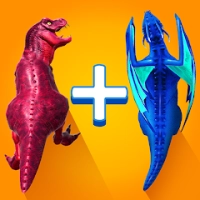
Merge Master combines unit merging, dinosaur evolution, battlefield strategy, and quick battles into a simple gameplay loop.
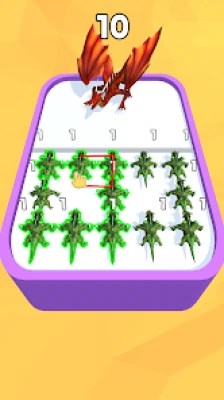
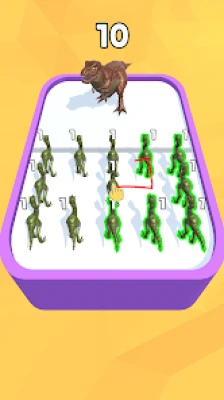
You begin with basic units and gradually create stronger creatures by combining matching fighters. Each successful fusion can improve your army, but merging without considering the battlefield can leave you with fewer units in important positions.
The central idea is simple:
Deploy → Merge → Upgrade → Position → Battle → Evolve
The deeper strategy comes from deciding when a merge is worth making and where your strongest units should be placed.
Game Information
Game: Merge Master: Dinosaur Monster
Developer: Homa
Genre: Strategy, Arcade, Casual
Core Gameplay: Merge and battle
Main Theme: Dinosaurs, monsters and warriors
Game Style: Fast-paced tactical battles
Players: Single-player
Platform: Android
Controls: Touch controls
Progression: Unit merging and evolution
Content Rating: 7+
Google Play Package: com.fusee.MergeMaster
Downloads: 100M+ according to current Play Store tracking
The package has also been associated with the title Merge Master in historical release databases, while current store-tracking sources identify it as Merge Master: Dinosaur Monster.
What Is Merge Master: Dinosaur Monster?
Merge Master challenges you to build a stronger army by combining matching units.
Your troops can include dinosaurs and human warriors. When compatible units are merged, they evolve into more powerful fighters. The objective is to create an army strong enough to defeat the opposing side.
The game rewards fast thinking, but blindly merging everything is not always the best approach.
A strong player needs to consider:
Which units should be merged
Which units should remain separate
Where to place stronger creatures
When to create an upgraded unit
How quickly the opposing army is developing
Which part of the battlefield needs additional strength
Complete Merge Master Strategy Guide
1. Learn the Merge System First
The most important mechanic is combining matching units.
When two compatible units are merged, they become a stronger unit. This gives you a direct way to increase the power of your army without simply adding more individual fighters.
However, merging has an important trade-off.
Two units become one.
That means you should consider both quality and quantity.
If you merge too quickly, you may create one powerful creature but leave another section of your army weak.
Before merging, look at the entire battlefield.
Ask:
Will this merge make my overall army stronger, or will it create a dangerous gap?
2. Don't Merge Automatically
One of the biggest beginner mistakes is merging every matching unit immediately.
A merge can be useful, but timing matters.
If your army needs several units to hold different positions, keeping units separate may be temporarily better.
Merge when:
You need additional strength
A stronger unit can replace a weak one
You have enough other units to protect the battlefield
The upgraded creature can handle an important enemy
The merge improves your overall formation
Avoid merging simply because the game allows it.
3. Build Strong Units Early
Although you shouldn't merge blindly, creating stronger units is essential for progression.
Basic units can become increasingly ineffective as enemy forces become stronger.
Try to establish a clear upgrade path:
Basic unit → merged unit → stronger fighter → advanced creature
Don't spend too long maintaining a large collection of weak units.
The goal is to gradually transform your army into a smaller number of significantly stronger fighters while maintaining enough battlefield coverage.
4. Pay Attention to Battlefield Position
Positioning is just as important as unit strength.
A powerful dinosaur in the wrong location may be less useful than a slightly weaker unit placed where it can immediately engage an important enemy.
Before a battle begins, examine the opposing army.
Look for:
Strong enemy units
Weakly defended areas
Concentrated enemy forces
Open positions
Areas where your strongest unit can have the greatest impact
Then arrange your army accordingly.
5. Protect Your Weak Side
Don't concentrate your entire army in one area.
A common mistake is putting the strongest creatures together while leaving the opposite side exposed.
If the enemy breaks through the weak side, your strongest unit may not be able to reach the battle quickly enough.
Maintain reasonable coverage across the battlefield.
Your formation should have:
Strength + coverage + flexibility
rather than maximum power in only one position.
6. Create a Strong Front Line
Your stronger and more durable units should generally occupy positions where they can absorb pressure and remain involved in combat.
The front line is particularly important because losing it can expose weaker units behind it.
When possible:
Place stronger fighters where enemies are concentrated
Avoid exposing your weakest units unnecessarily
Use upgraded dinosaurs to stabilize difficult positions
Keep enough strength available to respond to enemy breakthroughs
7. Don't Ignore Human Warriors
The dinosaur units may be the most visually impressive part of Merge Master, but human warriors also have an important role.
They provide additional battlefield options and can help maintain coverage while you work toward stronger dinosaur fusions.
Don't treat every human unit as disposable simply because a dinosaur looks stronger.
Evaluate the entire army rather than one unit type.
8. Merge With a Goal
Every major merge should have a purpose.
For example:
Goal: Strengthen the center.
Merge two compatible units to create a stronger fighter, then place it where it can immediately reinforce the center.
Or:
Goal: Defend a weak side.
Keep several units available rather than merging everything into one creature.
Thinking this way makes the game much more strategic.
How to Win Battles More Consistently
Step 1: Examine the Enemy
Before committing to your final formation, look at the opposing army.
Identify the strongest threats first.
Step 2: Check Your Available Units
Determine which units can be merged and which ones should remain separate.
Step 3: Create Important Fusions
Prioritize merges that produce meaningful increases in battlefield strength.
Step 4: Position Your Strongest Units
Put upgraded creatures where they can influence the battle most effectively.
Step 5: Maintain Coverage
Don't leave an entire section of the battlefield undefended.
Step 6: Adapt
If your formation repeatedly fails in the same area, change the position of your units rather than simply repeating the same setup.
Beginner Tips
Merge matching units whenever the upgrade is useful
Merging is your main method of increasing unit power, but timing still matters.
Don't focus only on one dinosaur
A single powerful creature cannot compensate for a completely weak formation.
Watch the battlefield before merging
Always consider what will happen to your formation after two units become one.
Build toward stronger units
Weak units eventually need to be replaced or merged into more powerful fighters.
Use positioning to compensate for lower power
A well-organized army can perform better than a poorly positioned army with similar overall strength.
Don't leave vulnerable areas
A strong center doesn't help if the enemy can easily break through another side.
Learn from failed battles
If you lose, identify where your formation collapsed. Then change the specific weakness instead of randomly changing everything.
Intermediate Merge Strategy
Once you understand the basic mechanics, begin thinking several moves ahead.
Save Useful Merges
Sometimes it is better to keep two matching units available until you know where the next major threat will appear.
This gives you flexibility.
You can then create the stronger unit when its position and timing matter most.
Avoid Over-Merging
If you repeatedly merge units until only a few remain, you can create an army with excellent individual strength but poor battlefield coverage.
The ideal balance depends on the battle.
Sometimes:
Fewer powerful units > many weak units
But in other situations:
Several strategically positioned units > one extremely powerful unit
Understanding this difference is one of the keys to improving.
Build Around Your Strongest Unit
When you create a particularly powerful dinosaur, treat it as the centerpiece of your formation.
Place supporting units around it rather than leaving it isolated.
The strongest creature should help determine the structure of your army.
Advanced Battlefield Strategy
Identify the Enemy's Main Threat
Don't treat every enemy as equally dangerous.
Find the unit that could cause the most damage or break your formation.
Then allocate your strongest available response to that threat.
Create Local Superiority
Instead of trying to make every part of your army equally strong, you can sometimes create a powerful advantage in one important area.
For example, if the enemy has a particularly dangerous unit on one side, concentrate enough strength there to defeat it quickly.
Once that threat is removed, your remaining units may have an easier time controlling the battlefield.
Maintain a Backup
Don't use every possible merge immediately.
Keeping one or two useful units available can give you options if the battle develops differently than expected.
Flexibility is particularly valuable when your first formation doesn't work perfectly.
Common Mistakes in Merge Master
Merging Everything Immediately
This is perhaps the most common beginner mistake.
It reduces the number of units on the battlefield and can create gaps.
Ignoring Position
A strong creature cannot help much if it is placed where it has little impact.
Creating One Overpowered Unit
One powerful dinosaur is useful, but your entire formation still matters.
Neglecting Weak Areas
The enemy only needs to exploit one major opening to disrupt your formation.
Repeating the Same Formation
If the same strategy loses repeatedly, something needs to change.
Focusing Only on Evolution
Evolution and merging are important, but winning also depends on how those upgraded units are used.
Efficient Progression Strategy
For steady progression, use this general routine:
1. Start with a balanced army.
2. Identify compatible units.
3. Create your most useful early fusion.
4. Reposition the upgraded unit.
5. Maintain enough units to cover the battlefield.
6. Watch for the enemy's strongest threat.
7. Use another merge when it provides a meaningful advantage.
8. Gradually replace weak units with stronger creatures.
The goal is to improve the entire army rather than chase individual upgrades.
How to Think Like a Merge Master
The game becomes easier when you stop thinking:
“Which units can I merge?”
and start thinking:
“Which merge gives me the biggest tactical advantage?”
That small change in mindset makes a significant difference.
A merge can provide:
More attack power
A stronger defensive position
Better battlefield control
A stronger response to an enemy
More efficient use of limited units
Choose the result you need rather than simply choosing the available merge.
Best Strategy for Difficult Battles
When a battle becomes difficult, don't immediately assume that you need more power.
First determine why you're losing.
If your units are defeated too quickly
Create stronger fighters and reinforce the area under the most pressure.
If you have one powerful unit but still lose
Improve the rest of the formation and protect your weaker positions.
If the enemy overwhelms one side
Rearrange your army to strengthen that area.
If you constantly run out of useful units
Avoid merging too aggressively.
If your army feels too weak overall
Prioritize creating higher-level units through deliberate combinations.
Merge Master for New Players
The first few battles should be treated as practice.
Learn:
How quickly units can be merged
Which units can combine
How upgraded units affect battles
How battlefield positioning changes outcomes
How many units you should keep available
Which enemy formations cause problems
Once these fundamentals become automatic, you can concentrate on more advanced tactical decisions.
Is Merge Master: Dinosaur Monster Worth Playing?
Merge Master is a good fit for players who enjoy short tactical battles, dinosaur games, merging mechanics and simple strategy.
Its appeal comes from the combination of easy controls and immediate visual progression. Watching basic creatures combine into stronger dinosaurs gives the game a clear sense of development.
Players looking for a deep, traditional strategy game with complex resource economies and extensive multiplayer systems may find it relatively simple.
For casual players who want quick dinosaur battles and straightforward merging mechanics, however, it offers an accessible experience.
Pros and Cons
Pros
Easy-to-understand merging mechanics
Dinosaur-focused gameplay
Fast battles
Simple controls
Large selection of creatures and warriors
Clear progression through fusion
Accessible to casual players
Quick tactical decisions
Cons
The core gameplay loop can become repetitive
Strategy is simpler than a traditional full-scale strategy game
Battles can feel similar after extended play
Players who prefer deep multiplayer strategy may want more complexity
Who Should Play Merge Master?
Merge Master is a good choice for players who enjoy:
Dinosaur games
Merge games
Strategy games
Casual battle games
Monster evolution
Unit fusion
Quick tactical gameplay
Simple battlefield management
It is especially appealing if you like the satisfaction of turning basic units into increasingly powerful creatures.
Frequently Asked Questions
What is Merge Master: Dinosaur Monster?
Merge Master: Dinosaur Monster is a Homa game focused on merging dinosaurs and warriors into stronger battlefield units and using them to defeat enemy forces.
How do you get stronger dinosaurs?
Combine compatible units to create stronger fighters. Strategic merging is the main progression mechanic.
Should you merge every matching unit?
No. Merging everything immediately can reduce your battlefield coverage. Consider whether the new unit will improve your overall formation.
What is the most important strategy?
The most important principle is balancing powerful merged units with good battlefield coverage. Strong units are valuable, but positioning and timing also matter.
Is Merge Master multiplayer?
The Android version associated with this package is primarily a single-player experience. Historical game databases also list no online multiplayer for the title.
Is Merge Master difficult?
The controls are easy to learn, but later battles can require better decisions about merging and positioning.
Who developed Merge Master?
The game is developed and published by Homa. Current store-tracking data identifies Homa as the developer.
Final Verdict
Merge Master: Dinosaur Monster keeps its strategy accessible by reducing the battlefield to a simple but satisfying question: which units should you combine, and when should you do it?
The strongest approach is not to merge as quickly as possible. Instead, build your army with purpose. Create powerful dinosaurs, maintain battlefield coverage, protect weak positions and use major fusions when they provide a clear tactical advantage.
Once you stop treating every available merge as an automatic upgrade and start thinking about formation, timing and enemy threats, the battles become considerably more interesting.
For fans of dinosaur games, merge mechanics and quick strategy battles, Merge Master: Dinosaur Monster is an easy game to pick up with a clear progression loop and plenty of creature-fusion action.
Rate the Game
User Reviews















Popular Games



















 Android
 iOS
 Windows
 Xbox