
Latest Version
November 01, 2026
Ben Luca Krastel
Adventure
iOS
0
Report a Problem
More About :game
Runners receive a head start and must stay hidden until the game timer expires, while Hunters use periodic GPS location updates to track them down. Players can also use special wildcards and fake location signals to confuse their opponents and create unexpected situations.
With customizable game durations, location update intervals, optional play boundaries, and private multiplayer lobbies, Manhunt: Chase with Friends offers a different way to enjoy outdoor activities with friends.
Whether you are organizing a weekend adventure, a friendly competition, or an outdoor group event, the game transforms an ordinary area into an interactive playground filled with teamwork, movement, and strategy.
Game Overview and Main Information
Game Title: Manhunt: Chase with Friends
Developer: Ben Luca Krastel
Publisher: Ben Luca Krastel
Genre: Adventure, Sports, Outdoor Multiplayer, GPS Games
Platform: iOS
Compatible Devices: iPhone
Minimum Operating System: iOS 17.6 or later
Price: Free to download
In-App Purchases: None listed in the referenced store information
Game Size: Approximately 5 MB, depending on the version and storefront
Languages: English and German
Age Rating: 12+ on some App Store storefronts
Main Gameplay: GPS hide-and-seek, team chasing, outdoor exploration, and location-based multiplayer.
Game Modes: Hunter and Runner gameplay, with additional Infection mode.
Multiplayer System: Private lobbies with invitation codes and shareable links.
Main Objective: Hunters must find and catch the Runners, while Runners attempt to avoid detection until the round ends.
Special Mechanics: GPS location pings, fake pings, wildcards, hotspots, shrinking play areas, and customizable boundaries.
Game Style: Real-world outdoor multiplayer experience.
What Is Manhunt: Chase with Friends?
Manhunt: Chase with Friends takes the familiar concept of hide-and-seek and transforms it into a real-world multiplayer adventure.
Instead of hiding behind objects in a small room or searching for opponents in a virtual environment, players move around an actual outdoor area while their smartphones provide the information needed to play.
The game divides participants into two main teams. Hunters are responsible for tracking down the opposing players, while Runners must use clever movement, hiding locations, and strategic decisions to avoid being caught.
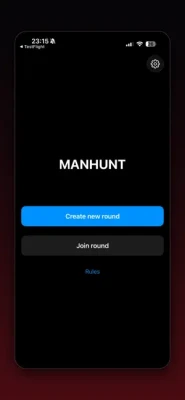
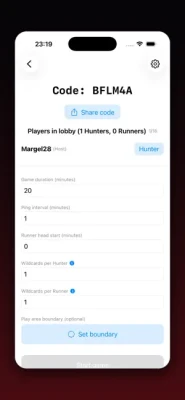
At the beginning of a round, the host creates a private lobby and invites friends using a game code or invitation link. Once everyone joins, the host can configure important settings such as the game duration, Runner head start, GPS update interval, and optional play area boundaries.
Runners receive time to move away and find suitable hiding locations before the Hunters begin their pursuit.
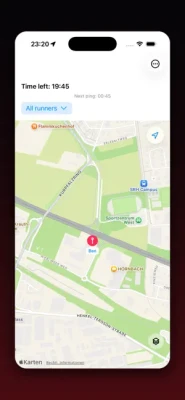
The tracking system works through regular GPS location updates. Rather than necessarily revealing every movement continuously, the app sends location information at intervals determined by the game settings.
This creates opportunities for both teams to make strategic decisions.
Hunters must interpret the available location information and predict where their opponents might move next. Runners must think about how their movements will appear to the opposing team and avoid becoming too predictable.
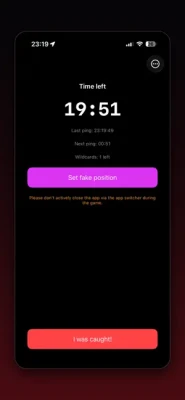
The game also includes wildcards and fake pings, allowing players to introduce misleading information and make the chase less predictable.
An additional Infection mode changes the traditional team structure by allowing caught Runners to become Hunters and join the pursuit.
With customizable boundaries, hotspots, and shrinking play areas, Manhunt: Chase with Friends provides several ways to organize exciting outdoor competitions.
Main Features of Manhunt: Chase with Friends
Real-World GPS Hide and Seek
The biggest attraction is the ability to turn a familiar outdoor environment into a multiplayer playing field.
Players can explore suitable neighborhoods, parks, and other agreed-upon locations while participating in an organized chase.
The GPS system connects the physical world with the game's rules, making every round different depending on where participants move.
Hunter and Runner Teams
The game revolves around two opposing roles.
Hunters must locate the Runners using periodic GPS information, while Runners must remain undetected until the timer expires.
Each team requires a different strategy.
Hunters need coordination, observation, and effective searching techniques. Runners need patience, smart positioning, and an understanding of how GPS updates influence the chase.
Customizable Game Settings
The host can adjust several important settings before starting a match.
These include:
Total game duration.
Runner head-start time.
GPS location ping intervals.
Optional play area boundaries.
Additional gameplay rules.
These settings allow groups to create shorter, faster competitions or longer outdoor adventures.
Private Multiplayer Lobbies
Players can create a lobby and invite friends using a unique code.
Shareable invitation links make joining easier because friends can open the invitation and access the game with the code already filled in.
This makes organizing a multiplayer session more convenient.
GPS Location Pings
Location updates are essential to the Hunter experience.
Runners automatically send their positions at the configured intervals, allowing Hunters to receive information about where their opponents were located.
The time between updates creates opportunities for movement and deception.
Hunters must remember that a location ping represents information from a particular moment rather than a guarantee of where a Runner is currently standing.
Wildcards and Fake Pings
The wildcard system introduces additional tactical possibilities.
Players can use special actions and strategically placed fake pings to confuse opponents.
These mechanics make it more difficult for Hunters to rely on location information alone.
They also encourage Runners to think creatively when choosing their movements and hiding strategies.
Infection Mode
Infection mode introduces a different style of team competition.
When a Runner gets caught, that player becomes a Hunter and joins the pursuit.
As more Runners are captured, the Hunter team becomes larger and the remaining players face increasing pressure.
This creates an exciting change in the balance of the game.
Hotspot Challenges
The game includes a hotspot feature that allows the host to place up to three special locations.
Runners who enter a hotspot reveal their position to Hunters at regular intervals, while also earning a joker.
This creates an interesting risk-and-reward decision.
Players must decide whether the potential reward is worth revealing their location.
Shrinking Game Area
The shrinking boundary mechanic gradually reduces the available playing area.
This prevents Runners from remaining in distant hiding locations indefinitely.
As the playable area becomes smaller, Hunters have fewer places to search and Runners must make more careful movement decisions.
Custom Game Boundaries
Hosts can create custom play areas by drawing their own boundaries.
This feature is useful for organizing games in private properties, gardens, and other locations where a standard boundary may not be suitable.
It also helps groups define exactly where players are allowed to move.
Random Role Assignment
The app includes an option to assign roles randomly in the lobby.
This makes organizing games easier when participants prefer not to decide manually who becomes a Hunter or Runner.
Flexible Rules and Fair Play
The game provides sample rules covering catching, permitted locations, safety, and fairness.
Groups can adapt these rules to suit their location and the preferences of their participants.
This flexibility makes the game suitable for different types of outdoor gatherings.
Privacy-Focused Location Handling
According to the developer's description, location information is processed during active rounds and automatically deleted when the round ends.
The developer also states that location information is not shared with third parties.
Players should still review the app's privacy information and understand its location permissions before joining a game.
How to Play Manhunt: Chase with Friends
Creating a Multiplayer Lobby
The first step is to create a game lobby.
One participant becomes the host and configures the match settings.
The host can determine the duration of the game, the amount of time Runners receive before the chase begins, and how frequently GPS positions are updated.
An optional playing boundary can also be established to keep the competition within a manageable area.
Once the settings are ready, the host shares the invitation code or link with friends.
Everyone joins the same lobby before the round begins.
Understanding the Hunter Role
Hunters are responsible for finding and catching the opposing team.
Their main source of information is the periodic GPS location updates sent by Runners.
Because the updates arrive at intervals, Hunters need to interpret location information carefully.
They should consider where a Runner might have moved since the last update instead of automatically assuming the reported position is still accurate.
Team communication and coordinated searching are important parts of this role.
Understanding the Runner Role
Runners receive a head start before the Hunters begin their pursuit.
Their objective is to remain free until the game timer expires.
Successful Runners must understand their environment, identify suitable hiding locations, and avoid making predictable movements.
They can also use available wildcards and fake pings to make tracking more difficult.
However, they must remain aware of the game boundaries and any special conditions established by the host.
How a Round Ends
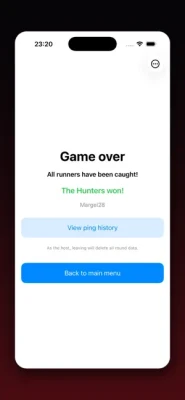
The traditional objective is for Hunters to catch the Runners before the timer expires.
When a participant is caught, that player reports the capture using the in-game button.
The game can continue for the remaining participants, allowing the competition to develop even after individual players are eliminated.
The final outcome depends on the selected game rules and whether the Hunters successfully catch the opposing team.
Full Strategy Guide for Manhunt: Chase with Friends
Best Strategy for Beginners
The first important lesson is to understand that Manhunt is not simply about running faster than your opponents.
The game rewards planning, communication, observation, and smart use of location information.
Before starting your first round, make sure every participant understands the basic rules.
Know the play area, the game duration, the Runner head start, and the conditions that count as a successful catch.
Once the game begins, focus on making sensible decisions rather than rushing into unnecessary movements.
For beginners, the best approach is to play a relatively short round in a familiar outdoor location. This allows everyone to understand how GPS updates work before attempting more complicated challenges.
Hunter Strategy Guide
Study Every GPS Location Update
Hunters should pay close attention to every location ping.
The most important detail is understanding when the position was recorded.
A location update provides useful information about a Runner's previous position, but the player may have moved since then.
Instead of heading directly toward the reported location without thinking, consider the possible routes the Runner could have taken.
This helps prevent wasted movement.
Predict Where Runners Will Go Next
Good Hunters think about likely destinations rather than focusing exclusively on current coordinates.
For example, a Runner may move toward a large open area, a permitted public path, or another location that offers several escape routes.
By considering the available environment, Hunters can make better decisions about where to search.
Prediction becomes especially important when GPS updates are separated by longer intervals.
Divide Searching Responsibilities
When several Hunters are working together, avoid having everyone follow exactly the same route.
Instead, divide the search area into manageable sections.
One Hunter can investigate one side of the playing area while another checks a different route.
This increases the amount of ground covered and reduces unnecessary duplication.
Communication is essential because Hunters should share useful observations and coordinate their next movements.
Use Location Information Carefully
Do not assume that every ping provides a complete picture of a Runner's movements.
Location information can be affected by signal quality, surroundings, and the configured update interval.
Hunters should compare several updates before drawing strong conclusions.
Look for patterns that suggest a direction of movement or repeated use of particular areas.
Work Together Near the End of a Round
As the timer approaches its final minutes, Hunters should become more focused.
If the play area is shrinking, concentrate on the remaining permitted locations.
Share information about likely hiding places and avoid wasting time searching areas that are no longer accessible.
A coordinated final search is usually more effective than several Hunters moving independently without a plan.
Runner Strategy Guide
Use Your Head Start Wisely
The Runner head start is one of the most valuable opportunities in the game.
Do not waste it by moving randomly or remaining in the first location you find.
Use the available time to understand the playing area and choose a suitable hiding strategy.
Look for legal locations that provide more than one possible route while keeping the safety rules in mind.
The goal is to begin the main chase with a clear plan.
Avoid Predictable Movement Patterns
Moving repeatedly along the same route makes it easier for Hunters to anticipate your next position.
Instead, think about how your movements might appear through periodic GPS updates.
Avoid unnecessary backtracking and consider alternative routes when they are safe and permitted.
The objective is to make your location history less predictable without taking unnecessary risks.
Understand the GPS Ping Interval
The time between location updates affects how much information Hunters receive.
When updates are frequent, Runners have less time to move before another position is reported.
When updates are less frequent, there may be more opportunity to change location before the next ping.
However, do not assume that a longer interval makes you automatically safe.
Hunters can still use previous information to predict your likely movement.
Use Wildcards at the Right Time
Wildcards should be treated as strategic resources rather than actions that must be used immediately.
Think about the current situation before activating one.
A wildcard may be particularly useful when Hunters are getting close, when your previous location has become obvious, or when you need to create uncertainty.
Fake pings can also mislead opponents, but their effectiveness depends on timing and the surrounding circumstances.
Be Careful Around Hotspots
Hotspots introduce an interesting strategic decision.
Entering one can reveal your position to Hunters at regular intervals, but it also provides a joker.
Before approaching a hotspot, consider the potential benefits and risks.
If Hunters are already nearby, revealing your position may make the situation much more difficult.
If you have a clear plan for leaving the area safely, the reward may be worth considering.
Keep Track of the Shrinking Boundary
A shrinking play area changes the entire Runner strategy.
A hiding location that was safe early in the round may become unsuitable later.
Always pay attention to the remaining playable area and prepare to move before your current location becomes inaccessible.
Waiting until the last moment can force you into a rushed decision.
Stay Calm Under Pressure
Being chased by several Hunters can create stressful situations.
However, panic often leads to poor decisions.
Instead of immediately changing direction or running without a plan, consider the available legal routes and the information Hunters may have received.
A calm decision is often more useful than an unnecessary burst of movement.
Infection Mode Strategy
Infection mode changes the traditional balance between Hunters and Runners.
When a Runner gets caught, that participant joins the Hunter team.
This means the number of Hunters can increase throughout the match.
Strategies for Hunters in Infection Mode
The most important objective is to increase the Hunter team while limiting opportunities for Runners to escape.
Communicate with newly converted Hunters and share information about the playing area.
As the Hunter team grows, divide the remaining search responsibilities more carefully.
Avoid allowing the team to become disorganized simply because more players are available.
Strategies for Runners in Infection Mode
Runners should understand that every capture makes the remaining challenge harder.
Avoid unnecessary risks and pay attention to how many Hunters are participating.
Try to maintain distance from known pursuit areas and make decisions based on the current situation rather than following the same strategy throughout the match.
The longer you remain free, the more important your decisions become.
Advanced GPS Chase Strategies
Understand the Difference Between Previous and Current Positions
One of the biggest strategic mistakes is treating a GPS ping as a live representation of a player's exact position.
The game uses periodic location updates, so there can be a difference between the recorded location and where the player currently is.
Hunters should account for this delay, while Runners should understand that every update may reveal useful information about their movements.
Combine Observation With Team Communication
GPS information is more useful when combined with observations from teammates.
Hunters should communicate which areas have already been searched and where recent pings suggest movement.
Runners should also understand the importance of following agreed-upon team rules when playing with other Runners.
Adapt to Different Game Durations
Short rounds require quick decisions and efficient movement.
Longer matches reward patience, planning, and careful resource management.
Hunters should adjust their searching approach according to the remaining time, while Runners should avoid exhausting themselves unnecessarily.
Make Use of Custom Boundaries
Custom boundaries are useful because they allow the host to design a playing area suited to the group.
A smaller boundary creates a more concentrated chase.
A larger boundary provides additional movement possibilities but may require more time and coordination.
The best boundary is one that offers enough space for an enjoyable competition without introducing unnecessary safety concerns.
Best Tips for Winning Manhunt: Chase with Friends
Understand the game rules before joining a round.
Study the playing boundary and identify permitted areas.
Use the Runner head start effectively.
Pay attention to the timing of GPS updates.
Hunters should coordinate their searching responsibilities.
Avoid treating old location pings as live positions.
Runners should avoid predictable movement patterns.
Use wildcards strategically instead of activating them immediately.
Consider the risks before entering a hotspot.
Monitor shrinking boundaries throughout the match.
Communicate clearly with teammates.
Adjust your strategy according to the remaining time.
Respect every participant's safety and personal boundaries.
Keep the competition within the agreed playing area.
Common Mistakes to Avoid
Starting Without Understanding the Rules: Players should know exactly how catches, boundaries, and game endings work before the round begins.
Ignoring the GPS Update Interval: Hunters who forget that location information arrives periodically may waste time chasing outdated positions.
Moving Without a Plan: Runners who move randomly can make themselves easier to predict and may enter unsuitable areas.
Using Wildcards Too Early: Special abilities can be more valuable when used at important moments.
Ignoring Hotspot Risks: Entering a hotspot without considering the location reveal can make a Runner easier to track.
Forgetting the Shrinking Boundary: Players who ignore boundary changes may find themselves outside the permitted area.
Poor Team Communication: Hunters who fail to coordinate may repeatedly search the same locations.
Running Into Unsafe Areas: No game advantage is worth entering roads, private property, restricted locations, or dangerous surroundings.
Ignoring Battery and GPS Reliability: A phone with low battery or unreliable location access can disrupt the entire experience.
Safety Tips for Outdoor Gameplay
Because Manhunt: Chase with Friends uses real-world locations, safety should always be part of the game strategy.
Choose a familiar outdoor area with clearly defined boundaries.
Avoid playing near busy roads, railway lines, construction sites, waterways, or other hazardous locations.
Do not enter private property or restricted buildings without permission.
Players should walk or move at a safe pace and never use their phones while crossing roads or navigating dangerous areas.
The host should explain the rules before starting and make sure everyone understands what locations are prohibited.
It is also important to play with people you trust and share invitation codes only with the intended participants.
The game is most enjoyable when everyone can focus on the competition without compromising personal safety.
Is Manhunt: Chase with Friends Difficult?
Manhunt: Chase with Friends is relatively easy to understand because its basic rules are built around the familiar concept of hide-and-seek.
However, the GPS system and additional gameplay mechanics introduce strategic depth.
Hunters must understand location updates, communicate effectively, and predict where opponents might move.
Runners must manage their head start, choose suitable locations, and avoid predictable movement patterns.
Infection mode, hotspots, wildcards, and shrinking boundaries introduce additional challenges.
The difficulty depends heavily on the number of participants, the size of the playing area, the game duration, and the selected settings.
Beginners can start with simple matches and gradually experiment with more advanced configurations.
What Makes Manhunt: Chase with Friends Enjoyable?
Real-World Multiplayer Action
Unlike traditional mobile games, Manhunt turns actual outdoor locations into the playing environment.
This makes every match feel different.
Team-Based Competition
The Hunter and Runner roles create two different experiences, encouraging teamwork and communication.
Strategic GPS Gameplay
Periodic location updates make the chase more unpredictable and reward players who can interpret information effectively.
Special Abilities and Wildcards
Fake pings and other special actions introduce additional tactical decisions.
Flexible Match Settings
Hosts can adjust game durations, head starts, ping intervals, and boundaries to create different challenges.
Infection Mode
The ability for caught Runners to join the Hunters introduces a changing team dynamic.
Great for Group Activities
The game can be used for friendly competitions, summer camps, group gatherings, celebrations, and outdoor team events.
Who Should Play Manhunt: Chase with Friends?
Manhunt: Chase with Friends is particularly suitable for people who enjoy outdoor activities and competitive group games.
It may appeal to:
Fans of hide-and-seek games.
Groups of friends looking for outdoor entertainment.
Players who enjoy GPS-based adventures.
People who like team competitions.
Fans of real-world treasure hunts and chasing games.
Summer camp organizers.
Groups planning bachelor and bachelorette parties.
People who enjoy physical outdoor activities.
Players interested in tactical multiplayer experiences.
Anyone looking for a creative alternative to traditional mobile games.
It is especially appealing to groups that enjoy organizing their own activities and experimenting with different rules.
Frequently Asked Questions
What Is Manhunt: Chase with Friends?
Manhunt: Chase with Friends is a GPS-based outdoor multiplayer game where one team hunts another. Runners receive a head start and try to remain undetected until the timer expires.
How Do You Play Manhunt: Chase with Friends?
Players create a private lobby, invite friends, select their roles, and configure the match settings. Hunters use periodic GPS location updates to track Runners, while Runners use hiding strategies and special abilities to avoid capture.
What Is the Difference Between Hunters and Runners?
Hunters search for and catch opponents using location information. Runners must avoid detection and remain free until the game ends.
Does Manhunt: Chase with Friends Use GPS?
Yes. GPS is an essential part of the gameplay because it allows the game to provide location updates during active rounds.
Can You Play Manhunt: Chase with Friends With Friends?
Yes. Players can create private lobbies and invite friends using a code or shareable invitation link.
What Are Fake Pings?
Fake pings are misleading location signals that can be used to confuse opponents and make tracking more challenging.
What Is Infection Mode?
Infection mode allows caught Runners to become Hunters and join the pursuit, gradually increasing the size of the Hunter team.
What Are Hotspots?
Hotspots are special locations established by the host. Entering one can reveal a Runner's position to Hunters at regular intervals while providing a joker reward.
Does the Game Have a Shrinking Play Area?
Yes. The shrinking boundary mechanic gradually reduces the available playing space, encouraging Runners to move and making the search more challenging.
Can You Customize the Playing Area?
Yes. The host can establish optional boundaries and draw custom shapes to define where the game takes place.
Is Manhunt: Chase with Friends Free?
Yes. The developer describes the game as completely free, without advertisements or in-app purchases in the published listing information.
Does Manhunt: Chase with Friends Work on Android?
The referenced listing is for iOS. Android availability for this specific application is not established by the listing.
Does the Game Require an Internet Connection?
The game relies on sharing location updates and coordinating multiplayer sessions, so players should have a working internet connection and GPS access during gameplay.
Does the Game Track Players Outside Active Rounds?
According to the developer's description, location information is processed only during active rounds and automatically deleted when the round ends.
What Is the Best Strategy for Runners?
Runners should use their head start wisely, avoid predictable movements, understand GPS update intervals, and use available wildcards strategically.
What Is the Best Strategy for Hunters?
Hunters should coordinate their search, study location updates, predict possible routes, and communicate with teammates to cover the playing area efficiently.
Final Thoughts
Manhunt: Chase with Friends transforms the traditional hide-and-seek concept into an exciting outdoor multiplayer experience. By combining GPS tracking, team competition, strategic movement, and customizable rules, it gives groups a creative way to turn familiar surroundings into an interactive playing field.
The distinction between Hunters and Runners creates two different approaches to every match. Hunters must interpret location information and coordinate their searches, while Runners need to plan their movements, choose suitable hiding strategies, and make effective use of special abilities.
Additional features such as Infection mode, hotspots, fake pings, shrinking boundaries, and custom play areas provide even more variety.
The best way to enjoy the game is to organize a suitable playing area, agree on clear rules, communicate with teammates, and prioritize safety throughout the competition.
Whether you are planning an outdoor adventure with friends, organizing a group event, or looking for a fresh alternative to ordinary mobile games, Manhunt: Chase with Friends offers an entertaining combination of real-world movement, teamwork, and strategic competition.
Rate the Game
User Reviews










Popular Games


















 Android
 iOS
 Windows
 Xbox