
Latest Version
December 02, 2024
Erabit Studios
Action
Android
0
com.lost.potato.mobile.paid.gp
Report a Problem
More About :game
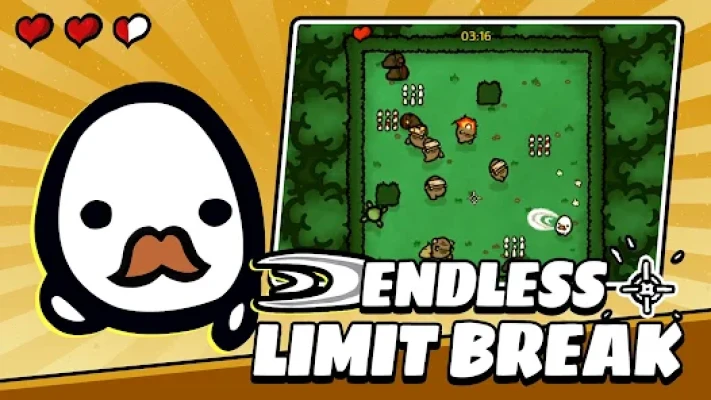
Developed by Erabit Studios, Lost Potato combines quick reflexes, environmental puzzles, roguelite progression and randomly generated stages into short, replayable runs. The official Google Play listing says average runs last around 3–5 minutes, making it particularly well suited to quick mobile gaming sessions.
What Is Lost Potato?
Lost Potato is a top-down roguelite survival game in which a young potato must escape a dangerous jungle populated by hostile tribes.
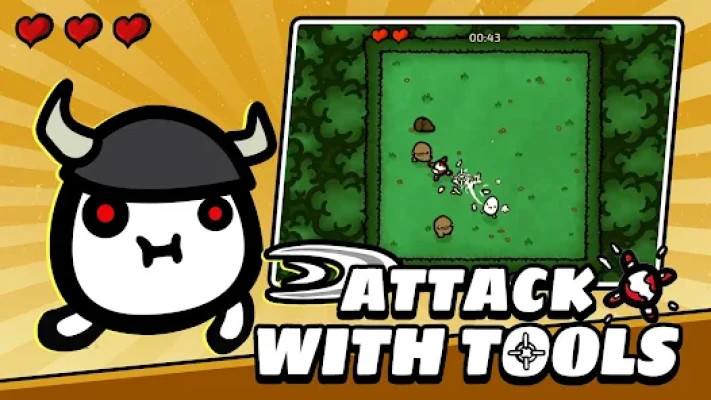
The unusual part is the combat system. Your character cannot simply defeat enemies through conventional attacks. Instead, you must manipulate enemy movement, use hazards and reflect projectiles to survive.
This makes positioning and timing just as important as traditional combat strength.
Every run presents new challenges, randomized levels and upgrade choices, encouraging players to experiment with different strategies.
Lost Potato Gameplay
The core gameplay revolves around three simple ideas:
- Avoid danger
- Manipulate enemies
- Use the environment to defeat them
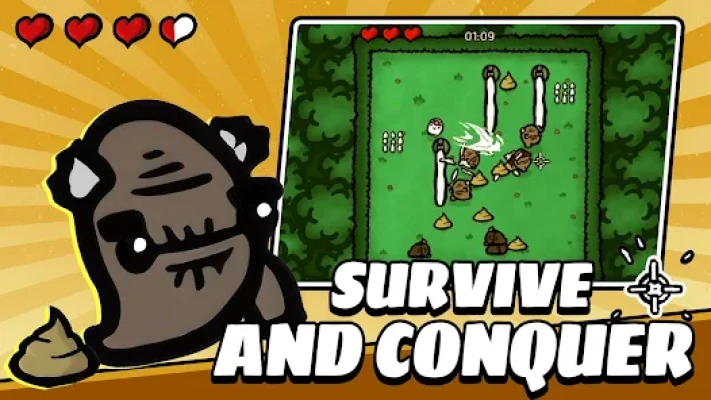
You can push enemies toward spikes and other hazards while avoiding their attacks.
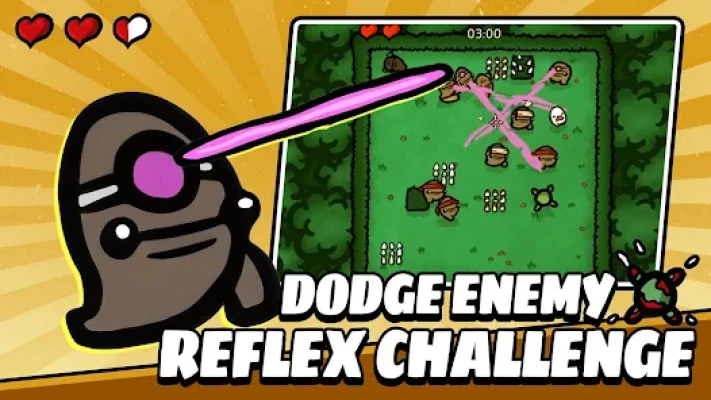
Projectiles can also become weapons when you learn how to reflect them back toward enemies.
This creates a gameplay loop where the environment is effectively part of your combat system.
Unique No-Damage Combat
The defining feature of Lost Potato is that you cannot directly damage enemies.
That restriction completely changes how you approach each encounter.
Rather than asking which weapon deals the most damage, you need to ask:
Where should I move the enemy?
This turns ordinary enemies into pieces of a moving puzzle.
You must find opportunities to make opponents collide with environmental hazards while keeping your potato safe.
Use the Environment as a Weapon
Environmental combat is at the heart of Lost Potato.
Spikes and other hazards can eliminate enemies without requiring conventional attacks.
The best players learn to position themselves so that enemies move into dangerous areas naturally.
This creates satisfying moments where a carefully planned movement can defeat multiple threats at once.
Reflect Enemy Bullets
Enemy projectiles aren't simply something to dodge.
Lost Potato allows you to reflect bullets, giving you another way to eliminate enemies while turning their attacks against them.
This mechanic adds another layer of timing and positioning.
A dangerous projectile can potentially become an opportunity if you are positioned correctly.
Randomly Generated Levels
Lost Potato uses randomly generated levels, helping make each run feel different.
Because the layout and situations can change, players cannot always rely on memorizing a single route.
You need to react to what appears in the current run and make decisions based on the environment around you.
Random Upgrade Choices
Progression during a run also includes randomly generated upgrade choices.
These upgrades can influence your character's abilities and help you develop different approaches to the challenges ahead.
Because the available options can change between runs, experimentation becomes an important part of the experience.
14 Unlockable Hats
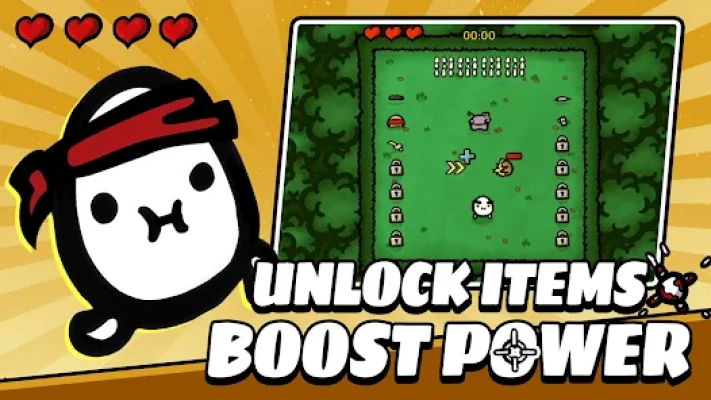
Lost Potato features 14 hats to unlock.
Each hat provides different starting statistics or traps, giving players additional ways to customize their runs.
The hat system adds another layer of replayability because changing your starting setup can encourage a completely different strategy.
Hat Progression
The hats are more than cosmetic accessories.
According to the Google Play listing, each unlockable hat provides new starting stats or traps.
This means unlocking hats can directly affect gameplay and provide new options for future attempts.
Players can experiment with different starting advantages to find combinations that suit their preferred playstyle.
Fast 3–5 Minute Runs
Lost Potato is designed around short gaming sessions.
The official listing states that average runs last 3–5 minutes.
This makes it easy to play a quick run during a short break while still offering enough variety for repeated attempts.
The short format also works well with the roguelite structure: if a run fails, you can immediately start another attempt.
Jungle Setting
The game's adventure takes place in a dangerous jungle filled with hostile tribes.
The story premise is simple: help the young potato find a way out.
The jungle isn't just a backdrop. Its hazards and level layouts form an important part of the gameplay.
Story and Premise
You play as a young potato trying to escape a jungle filled with dangerous, man-eating tribes.
With no conventional way to directly destroy enemies, survival depends on clever movement, environmental hazards and the ability to turn enemy attacks against them.
The simple premise gives the gameplay a clear objective:
Survive the jungle and find a way out.
How to Play Lost Potato
Step 1: Observe the Environment
Before moving toward enemies, look for spikes, obstacles and useful positions.
Step 2: Avoid Direct Confrontation
Remember that enemies cannot simply be defeated through normal attacks.
Step 3: Push Enemies Toward Hazards
Use movement and positioning to force enemies into dangerous environmental objects.
Step 4: Reflect Projectiles
When enemies fire bullets, look for opportunities to reflect those projectiles back.
Step 5: Choose Upgrades Carefully
Random upgrades can shape your run, so choose options that complement your current strategy.
Step 6: Experiment With Hats
Different hats provide different starting advantages, so try several options to discover which ones fit your playstyle.
Step 7: Adapt to Each Run
Because levels and upgrades are randomly generated, remain flexible rather than relying on one fixed strategy.
Beginner's Guide
Lost Potato can initially feel unusual because traditional attacks aren't the main solution.
Don't rush
Moving directly toward enemies can put you in a dangerous position.
Study the environment
Spikes and other hazards are essential to your survival.
Use enemy attacks against them
Projectiles can become useful when reflected correctly.
Think about positioning
Your location determines whether an enemy is dangerous or vulnerable.
Learn from failed runs
Because runs are short, mistakes are useful opportunities to learn.
Try different hats
The 14 hats can provide different starting advantages, so experiment instead of sticking with one setup.
Advanced Strategy
Experienced players should start thinking of Lost Potato as an environmental puzzle rather than a conventional action game.
Instead of reacting to enemies at the last second, anticipate where they will move.
Try to position yourself so that multiple enemies enter the same hazard zone.
Projectile reflection also becomes more valuable when you understand enemy movement patterns.
The strongest strategy often combines enemy manipulation, environmental hazards and carefully timed movement.
Enemy Positioning
Enemy positioning is one of the most important skills in Lost Potato.
An enemy that is directly beside you can be dangerous, but the same enemy may become harmless if you lure it toward a spike.
Think of enemies as moving hazards that you can manipulate.
Your goal is not necessarily to attack them, but to control where they go.
Projectile Reflection Strategy
When an enemy fires a projectile, don't immediately treat it as something that must be avoided.
Consider whether you can position yourself to reflect it.
A successful reflection can turn an enemy's attack into an offensive opportunity while allowing you to maintain distance.
Environmental Trap Strategy
Environmental hazards are your primary weapons.
Try to identify safe paths and dangerous areas before engaging enemies.
If several opponents can be directed toward the same hazard, you can potentially eliminate multiple threats through one carefully planned sequence.
Roguelite Progression
Lost Potato uses a run-based roguelite structure.
Each attempt gives you opportunities to encounter different levels and upgrade choices.
When a run ends, you can start again with a new set of circumstances.
This encourages experimentation rather than requiring players to follow a single permanent strategy.
Replay Value
The combination of random levels, randomized upgrades and 14 hats gives Lost Potato considerable replay potential for a compact mobile game.
The short run length makes experimentation particularly convenient.
You can try one strategy, learn from it and begin another attempt only a few minutes later.
Game Difficulty
Lost Potato is easy to understand but can become challenging when multiple enemies, projectiles and environmental hazards overlap.
The difficulty comes from managing space and timing rather than simply increasing your attack power.
Players who try to treat the game like a traditional action game may struggle at first.
Those who learn to manipulate the environment will have a much easier time.
Controls and Interface
The game is designed around straightforward top-down movement and interaction.
Because the combat system focuses on positioning rather than complicated weapon combinations, the challenge comes primarily from timing, movement and decision-making.
This makes the game relatively easy to pick up while leaving room for players to improve their skills.
Game Modes
The primary experience revolves around short roguelite runs.
The main gameplay loop includes:
- Entering a randomized level
- Avoiding enemies
- Manipulating enemy movement
- Using environmental hazards
- Reflecting projectiles
- Selecting upgrades
- Unlocking hats
- Attempting another run
Lost Potato Features
- Minimalist top-down roguelite gameplay
- No direct enemy damage
- Environmental combat
- Push enemies into spikes
- Reflect enemy bullets
- Randomly generated levels
- Random upgrade choices
- 14 unlockable hats
- Different starting stats
- Additional traps
- Fast 3–5 minute runs
- Jungle survival setting
- Short, replayable gameplay sessions
- Mobile-friendly roguelite progression
Lost Potato Technical Details
Game: Lost Potato
Developer: Erabit Studios
Platform: Android
Package ID: com.lost.potato.mobile.paid.gp
Genre: Roguelite / Action
Content Rating: Everyone 10+
Downloads: 100K+
Google Play Rating: 3.1 stars
Reviews: 1K+
Latest listed update: January 30, 2026
In-App Purchases: Yes
Is Lost Potato Free?
The current Google Play listing shows Lost Potato with in-app purchases. The exact price or purchase configuration can vary by region and store presentation, so visitors should check the Google Play listing for the current local price.
Is Lost Potato an Action Game?
Yes. Lost Potato combines action gameplay with roguelite progression and environmental puzzle mechanics.
The emphasis, however, is not conventional attacking. Players need to dodge, push enemies, exploit traps and reflect projectiles.
Is Lost Potato a Roguelite?
Yes. Google Play describes Lost Potato as a minimalistic top-down roguelite featuring randomly generated levels and upgrade choices.
What Makes Lost Potato Different?
The biggest difference is the restriction against directly damaging enemies.
Most action games give players weapons designed to eliminate opponents.
Lost Potato instead makes the player use:
- Spikes
- Environmental traps
- Enemy movement
- Projectile reflection
- Positioning
- Timing
This creates a distinctive style of gameplay that feels closer to an action puzzle than a conventional shooter.
Is Lost Potato Like Brotato?
Lost Potato and Brotato come from Erabit Studios and both appeal to fans of compact roguelite action games, but their gameplay systems are quite different.
Brotato focuses heavily on weapons and direct combat.
Lost Potato's central mechanic is environmental combat, where enemies are defeated through hazards and reflected projectiles.
Lost Potato vs Traditional Roguelites
Traditional roguelites often focus on collecting weapons and becoming stronger through direct damage.
Lost Potato takes another approach.
The game's restrictions force you to think about movement and the environment first.
That makes it particularly interesting for players who want something different from conventional survivor or bullet-heaven games.
Lost Potato Pros and Cons
Pros
- Unique combat concept
- Environmental hazards matter
- Projectile reflection adds depth
- Randomized levels
- Random upgrade choices
- 14 gameplay-affecting hats
- Very short runs
- Easy to pick up
- Strong replay potential
- Distinctive jungle setting
Cons
- The unusual combat system may take time to understand
- Players looking for conventional weapons may find the gameplay restrictive
- Randomized progression can make some runs feel less predictable
- The current Google Play rating suggests the experience may not appeal equally to every player
Player Experience
Lost Potato is best suited to players who enjoy unusual roguelite mechanics and short action challenges.
The three-to-five-minute run structure makes it easy to experiment.
A failed attempt doesn't require a major time commitment, allowing you to immediately try a different upgrade path or hat.
The game's strongest appeal comes from the satisfaction of defeating enemies without directly attacking them.
Updates and What's New
The current Google Play listing shows the game was updated on January 30, 2026, with the latest listed update described as bug fixes.
Keeping the game updated is recommended for players who want the latest fixes and improvements.
Accessibility and Mobile Experience
Lost Potato is built around compact sessions and relatively simple controls.
The 3–5 minute average run length makes it suitable for players who prefer games that can be played in short bursts.
Its top-down perspective also makes enemy positions and environmental hazards easier to read during fast encounters.
Expert Rating
Gameplay: 8.7/10
Originality: 9.2/10
Replay Value: 8.8/10
Controls: 8.5/10
Progression: 8.4/10
Mobile Suitability: 9.1/10
Overall: 8.8/10
Final Verdict
Lost Potato is a refreshingly unusual roguelite that replaces conventional combat with environmental strategy.
Its central rule — you cannot directly damage enemies — forces you to approach every encounter differently. Spikes become weapons, enemy bullets can become opportunities, and positioning becomes just as important as movement speed.
With randomly generated levels, upgrade choices, 14 unlockable hats and fast 3–5 minute runs, the game offers a compact but replayable mobile experience.
If you enjoy roguelite games, top-down action, survival challenges, environmental puzzles and games with unusual mechanics, Lost Potato is worth checking out.
Frequently Asked Questions
What is Lost Potato?
Lost Potato is a minimalist top-down roguelite where you help a young potato escape a dangerous jungle while defeating enemies through environmental hazards and projectile reflection.
Can you directly attack enemies in Lost Potato?
No. The game's defining mechanic is that enemies cannot be directly damaged. Instead, players use the environment, spikes and reflected projectiles.
How do you defeat enemies in Lost Potato?
You can push enemies into spikes and use environmental hazards to eliminate them. Enemy bullets can also be reflected back toward opponents.
How long is a Lost Potato run?
The official Google Play listing says average runs last approximately 3–5 minutes.
How many hats are in Lost Potato?
There are 14 hats to unlock, with each providing new starting statistics or traps.
Does Lost Potato have random levels?
Yes. Lost Potato features randomly generated levels and randomly generated upgrade choices.
Is Lost Potato a roguelite?
Yes. It is officially described as a minimalist top-down roguelite.
Who developed Lost Potato?
Lost Potato was developed by Erabit Studios.
Is Lost Potato available on Android?
Yes. The game is available through Google Play for Android devices.
What is the Lost Potato package name?
The Android package ID is com.lost.potato.mobile.paid.gp.
Does Lost Potato have in-app purchases?
Yes. The current Google Play listing indicates that the game contains in-app purchases.
What age rating does Lost Potato have?
The current Google Play listing shows an Everyone 10+ content rating.
How many downloads does Lost Potato have?
The current Google Play listing shows 100K+ downloads.
Is Lost Potato similar to Brotato?
Both are roguelite games associated with Erabit Studios, but Lost Potato focuses on environmental combat and projectile reflection instead of conventional weapon-based combat.
Rate the Game
User Reviews












Popular Games


















 Android
 iOS
iOS Windows
 Xbox
Xbox