



Latest Version
July 27, 2024
IVYGAMES
Puzzle
Android
0
com.ivy.jewelpirate.treasurehunter
Report a Problem
More About :game
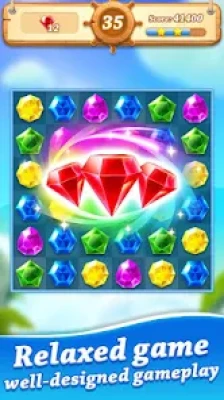
Jewel Pirate - Treasure Legend is a casual puzzle game developed by IVYGAMES. It combines traditional match-3 gameplay with a nautical theme, colorful gems, underwater exploration, and additional leisure activities.
The main challenge revolves around matching jewels to complete level objectives. You swap neighboring gems to create combinations, clear parts of the board, and work through increasingly demanding puzzles. As you advance, some stages may require more careful planning because obstacles and limited moves can make a simple-looking level surprisingly challenging.
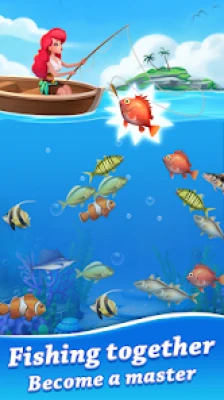
The game also includes activities beyond matching gems. Players can enjoy fishing, discover stories involving different sea creatures, and explore progression features connected to the game's treasure-hunting theme. Global rankings add a competitive element for players who want to compare their progress with others.
Jewel Pirate is designed to be easy to pick up, making it suitable for casual gaming sessions. However, progressing through difficult stages requires patience, observation, and an understanding of how each move affects the board.
Main Features of Jewel Pirate
1. Classic Match-3 Jewel Puzzles
The core gameplay involves matching colorful gems to clear them from the board. Each move can change the arrangement of the remaining jewels, creating opportunities for new combinations.
The basic rules are simple, but choosing the right move becomes increasingly important when a level contains obstacles or specific objectives. Instead of making random matches, focus on combinations that help you complete the stage.
2. Thousands of Puzzle Levels
The Google Play description advertises thousands of levels, giving players a substantial collection of challenges to explore.
As you progress, you can encounter new layouts and more demanding objectives. The key is to adapt your approach to the requirements of each stage rather than relying on the same moves every time.
3. Pirate-Themed Treasure Adventure
Jewel Pirate adds an adventurous atmosphere to the familiar match-3 formula. Its nautical theme, bright jewel designs, and underwater imagery give the puzzle experience a distinct identity.
The sea-inspired presentation makes the game feel like a journey rather than a collection of disconnected boards.
4. Fishing Activities
Fishing is one of the additional leisure activities advertised by the game. It gives players something different to enjoy alongside the main jewel-matching puzzles.
The fishing experience also connects with the game's sea-life theme, adding another reason to explore its features beyond completing levels.
5. Sea-Creature Stories
The game includes opportunities to unlock stories about small and large fish. These elements add character to the underwater adventure and help reinforce its ocean-inspired setting.
For players who appreciate more than just clearing puzzle boards, these details provide extra variety.
6. Global Rankings
Jewel Pirate advertises global rankings that let players compare their progress with friends and other players.
Leaderboards can provide an additional goal for people who enjoy competition. However, the most useful approach is to improve your own puzzle-solving skills rather than focusing entirely on your position.
7. Relaxed Casual Gameplay
The game uses straightforward touch controls and an accessible match-3 system. This makes it suitable for short sessions during breaks or longer periods of casual play.
Although some levels can become challenging, the basic mechanics are easy to understand. New players can learn the fundamentals quickly and improve as they become familiar with the different puzzle layouts.
8. Offline Support
Jewel Pirate is listed as supporting offline gameplay. This can be convenient when travelling or playing somewhere with an unreliable internet connection.
Some connected features, including global rankings or server-dependent activities, may require an internet connection.
How to Play Jewel Pirate - Treasure Legend
Step 1: Examine the Puzzle Board
Before making a move, look across the board and identify the available matches. Check whether the level contains obstacles, special targets, or other conditions that affect how you should play.
A few seconds of planning can prevent you from wasting a useful opportunity.
Step 2: Match Three or More Jewels
Swap neighboring gems to create matching combinations. When a valid match is made, the jewels are cleared and other gems may fall into the empty spaces.
Pay attention to the new arrangement because falling gems can create additional matches.
Step 3: Read the Level Objective
Each stage may require you to clear certain objects, remove obstacles, collect targets, or complete another specified goal.
Check the instructions before you begin. The most useful move is the one that helps you complete the objective, not necessarily the one that clears the largest number of ordinary jewels.
Step 4: Look for Follow-Up Combinations
After a match, inspect the board again. Newly fallen gems may create another combination or expose a useful area.
Planning for these possibilities can help you make more progress with fewer moves.
Step 5: Use Boosters Carefully
If the current level provides boosters or other assistance, learn what each tool does before using it. Save valuable tools for situations where they can help you overcome a difficult obstacle or finish an important objective.
The exact availability and effects of boosters may depend on the current game version and level.
Step 6: Complete the Stage and Continue
Once you have fulfilled the objective, move on to the next puzzle. Use the experience from previous stages to recognize patterns, understand obstacles, and improve your strategy.
If a level proves difficult, review your previous moves and try a different approach rather than repeating the same sequence without a plan.
Complete Jewel Pirate Strategy Guide
Strategy 1: Focus on the Objective First
One of the most common mistakes in match-3 games is clearing ordinary gems without considering what the level actually requires.
Before your first move, identify the main objective. If you need to remove obstacles, concentrate on combinations that affect them. If the level asks you to collect specific items, look for moves that help those items reach their targets.
A large match can be satisfying, but it is not always the best move. Prioritize progress toward the level's goal.
Strategy 2: Look for Larger Matches
Whenever possible, search for combinations that match more than the minimum number of jewels. Larger matches can clear more of the board and may create useful special effects when supported by the current game mechanics.
However, do not spend too many moves trying to set up a large combination if a simpler move would solve an urgent problem.
The best choice depends on the board, the available moves, and the stage's objective.
Strategy 3: Make Every Move Count
Some stages can become difficult because you have limited opportunities to complete the required tasks. Random swaps can leave you with too few useful moves later.
Before making a move, ask yourself:
Does this combination help complete the objective?
Will it remove or weaken an important obstacle?
Could the resulting gem movement create another match?
Is there a more useful combination elsewhere on the board?
You do not need to predict every outcome perfectly. Simply comparing the available options can improve your results.
Strategy 4: Prioritize Difficult Obstacles
When a level includes layered barriers or other obstacles, think about how to remove them efficiently. Repeatedly matching gems far away from a target may do little to help you finish.
Look for combinations close to the obstacle or moves that create a chain reaction in the relevant area. If several obstacles remain, consider which one is preventing the greatest progress.
The objective is to clear the most important barriers without wasting moves on areas that do not contribute to success.
Strategy 5: Use Cascades to Your Advantage
A cascade happens when one match causes gems to fall and form another combination. These chain reactions can help clear more jewels without requiring a separate manual move for each match.
To encourage useful cascades, examine the gems above and around the combination you plan to make. Consider how the empty spaces will affect the falling pieces.
Cascades are not guaranteed, so treat them as an opportunity rather than the foundation of your entire plan.
Strategy 6: Pay Attention to the Bottom of the Board
In many match-3 puzzles, clearing gems near the bottom changes the arrangement of a large section above them. This can produce unexpected matches and expose new opportunities.
A lower-board match is not automatically better than an upper-board match, but it is worth considering when the two options are otherwise similar.
Look at how the falling gems may affect your remaining objectives before choosing where to play.
Strategy 7: Save Boosters for Difficult Moments
Boosters can be valuable when ordinary moves are unlikely to solve a difficult situation. Using them too early may leave you without assistance when a more demanding obstacle appears.
Before activating a booster, determine what problem it needs to solve. Is it clearing an important barrier, helping you reach a target, or giving you another way to make progress?
Choose the tool that addresses the immediate challenge, and check its effect in the current version of the game.
Strategy 8: Understand the Fishing Activities
Fishing provides a change of pace from the main puzzle system. Explore the available fishing features and pay attention to any progression or collection goals associated with them.
If fishing activities provide rewards in your current version, consider how those rewards fit into your overall progress. Avoid assuming that every activity has the same requirements or reward structure across different versions.
Strategy 9: Treat Global Rankings as a Secondary Goal
Leaderboards can make progression more competitive, but they should not distract you from learning the game.
Focus first on completing levels efficiently and understanding the mechanics. As you improve, your progress may naturally become more competitive.
Remember that rankings can depend on factors beyond a single level, so check the rules of the current leaderboard before deciding how to approach it.
Strategy 10: Learn From Failed Attempts
If a level becomes frustrating, review what happened during your previous attempt. Perhaps you focused too much on ordinary gems, used a booster too early, or failed to address a key obstacle.
Identify one change to make on the next attempt. A small adjustment in your opening moves can sometimes make a difficult board easier to manage.
Repeated attempts are most useful when each one teaches you something about the puzzle.
Advanced Tips and Tricks
Read the objective before playing. Understand what the level requires and choose moves accordingly.
Scan the full board. Do not commit to the first match you notice.
Look for larger combinations. Use them when they help you progress more efficiently.
Watch for cascades. Falling gems may create additional matches after a successful move.
Prioritize obstacles. Focus on the areas that prevent you from completing the stage.
Consider the bottom rows. Clearing lower gems can change a large part of the board.
Use boosters with a purpose. Save assistance for moments when it makes a meaningful difference.
Recheck the board after every match. New combinations may appear as gems fall.
Explore the fishing feature. Enjoy the game's additional activities instead of treating every session as a race through levels.
Be patient with difficult stages. A deliberate move is often better than several random swaps.
Common Mistakes to Avoid
Making Random Matches
Matching gems without considering the objective can waste valuable opportunities. Compare the available options and choose a move that makes useful progress.
Ignoring Obstacles
If a level contains barriers, focus on how to clear them. Spending too many moves on unrelated areas can make the objective harder to complete.
Using Boosters Too Early
An early booster may provide little benefit if the board is still manageable. Understand the problem first and use assistance when it is likely to make a meaningful difference.
Overlooking Falling-Gem Combinations
A successful match changes the board. Always inspect the new arrangement before deciding on your next move.
Repeating the Same Failed Approach
If a level repeatedly defeats you, changing nothing is unlikely to improve your chances. Review the board and experiment with a different opening or priority.
Focusing Only on Leaderboards
Competition can be enjoyable, but completing objectives and improving your puzzle skills should remain the main priorities.
Graphics, Sound, and Atmosphere
Jewel Pirate uses bright colors, polished jewel designs, and a sea-inspired setting to create a cheerful puzzle experience. The underwater theme helps distinguish it from match-3 games built around gardens, castles, or candy.
Its presentation emphasizes clear visuals and satisfying elimination effects. This supports the simple nature of the gameplay, allowing players to focus on recognizing combinations and planning their next moves.
The fishing activities and sea-creature stories add variety to the main puzzle experience. Together, these features create an adventure atmosphere without changing the familiar rules that make match-3 games easy to understand.
Pros and Cons of Jewel Pirate - Treasure Legend
Pros
Familiar match-3 gameplay with simple touch controls.
Thousands of advertised puzzle levels.
Bright jewel graphics and an ocean-inspired theme.
Additional fishing activities beyond the main puzzles.
Stories involving different sea creatures.
Global rankings for players who enjoy comparing progress.
Offline support for puzzle gameplay.
Accessible to beginners while offering more demanding stages.
Suitable for short casual sessions.
Cons
Some stages may require repeated attempts and careful planning.
Players who prefer action or exploration in a fully interactive world may find the main puzzle mechanic repetitive.
Advertisements may interrupt gameplay.
Some additional features may require an internet connection.
Progress can become frustrating if a level has difficult obstacles and limited moves.
Players seeking a deep pirate role-playing adventure may find that the main experience focuses primarily on puzzles.
Is Jewel Pirate - Treasure Legend Good for Beginners?
Yes. Jewel Pirate is easy to approach because its central mechanic is familiar: match colorful jewels to clear them from the board.
Beginners can start by looking for simple combinations and learning how the board changes after each match. As the puzzles become more demanding, the most useful skill is learning to choose moves according to the level objective rather than making matches at random.
New players should also learn the available boosters and understand the role of obstacles. With practice, they can become better at spotting larger combinations, anticipating cascades, and managing difficult stages.
The fishing activities and underwater theme provide extra variety for players who enjoy casual games with a little more personality than a standard puzzle board.
Jewel Pirate - Treasure Legend Game Information
Full Title: Jewel Pirate - Treasure Legend
Developer: IVYGAMES
Genre: Casual puzzle, match-3, and gem elimination
Main Gameplay: Match jewels to clear the board and complete level objectives
Level Count: Thousands of levels advertised
Additional Activities: Fishing and sea-creature stories
Competitive Features: Global rankings
Visual Style: Colorful jewels and an underwater adventure theme
Controls: Touch-based gem swapping
Game Mode: Primarily single-player puzzle gameplay
Offline Play: Supported
Platform: Android
Content Rating: Everyone
Monetization: Free to play, with advertisements and in-app purchases
Features and availability may vary depending on the installed version, device, and region.
Frequently Asked Questions
What is Jewel Pirate - Treasure Legend?
Jewel Pirate - Treasure Legend is a casual match-3 puzzle game where players match colorful gems, complete levels, and explore a sea-themed adventure. It also features fishing activities, sea-creature stories, and global rankings.
Who developed Jewel Pirate?
Jewel Pirate - Treasure Legend was developed by IVYGAMES.
How do you play Jewel Pirate?
Swap neighboring jewels to create matching combinations and clear gems from the board. Complete the objective shown for each level, pay attention to obstacles, and use boosters when they can help you make progress.
How many levels does Jewel Pirate have?
The Google Play description advertises thousands of levels. The exact number available may change as the game is updated.
Can you play Jewel Pirate offline?
Yes. The game is listed as supporting offline play. Features that depend on online services, such as global rankings, may require an internet connection.
Does Jewel Pirate include fishing?
Yes. Fishing is one of the additional leisure activities described in the game's listing. It complements the main jewel-matching puzzles and supports the game's underwater theme.
Is Jewel Pirate a multiplayer game?
The main gameplay is a single-player puzzle experience, while global rankings let players compare progress with others. The listing also describes sharing experiences with friends and global players.
Is Jewel Pirate free to play?
The game is listed as free to install on Google Play. It contains advertisements and offers in-app purchases.
What is the best strategy for difficult Jewel Pirate levels?
Start by identifying the objective and any obstacles. Look for combinations that directly help you complete the level, consider how falling gems may create cascades, and save boosters for situations where they can make a meaningful difference.
Are boosters useful in Jewel Pirate?
Boosters can help when a level becomes difficult, particularly if they allow you to address an obstacle or make progress toward an objective. Their usefulness depends on the current board and the specific tool available.
Is Jewel Pirate suitable for children?
The Google Play listing gives the game an Everyone content rating. Parents should still review the current store information, advertisements, and in-app purchase options before allowing children to play.
Is Jewel Pirate similar to other match-3 games?
Yes. It shares the basic gem-matching mechanics found in many match-3 puzzle games. Its pirate-inspired setting, underwater presentation, fishing activities, and sea-creature stories give it additional character.
Final Verdict
Jewel Pirate - Treasure Legend combines familiar match-3 puzzles with a colorful ocean adventure. Its thousands of advertised levels provide plenty of puzzle-solving opportunities, while fishing activities, sea-creature stories, and global rankings add variety beyond the main gameplay.
The best way to progress is to understand each level's objective, make purposeful matches, and use boosters carefully when a puzzle becomes difficult. Paying attention to falling gems and potential cascades can also help you complete stages more efficiently.
If you enjoy casual jewel-matching games with bright graphics, an underwater theme, and additional activities to explore, Jewel Pirate - Treasure Legend is worth considering.
Rate the Game
User Reviews











Popular Games



















 Android
 iOS
 Windows
 Xbox