



Latest Version
December 22, 2024
Oleksandr Piddubnyi
Puzzle
iOS
0
Report a Problem
More About :game
The game gives players plenty of creative freedom while also adding a story-driven progression system. As you advance through the puzzle levels, new renovation opportunities and design choices become available. The game can be played at a comfortable pace because its puzzle gameplay does not require you to race against a timer.
What Is House Design: Home Makeover?
House Design: Home Makeover is a home renovation puzzle game built around a simple gameplay loop: solve match-3 puzzles, earn resources, renovate rooms, and continue unlocking the story.
Instead of focusing only on decorating, the game uses puzzle challenges as the main way to fund and progress through the renovation process. Players swap and match colorful pieces to complete objectives, then spend their rewards on improvements around the house.
The combination of match-3 puzzles and home design makes the game suitable for players who enjoy casual puzzle games as well as interior decorating.
Main Features
Match-3 Puzzle Gameplay
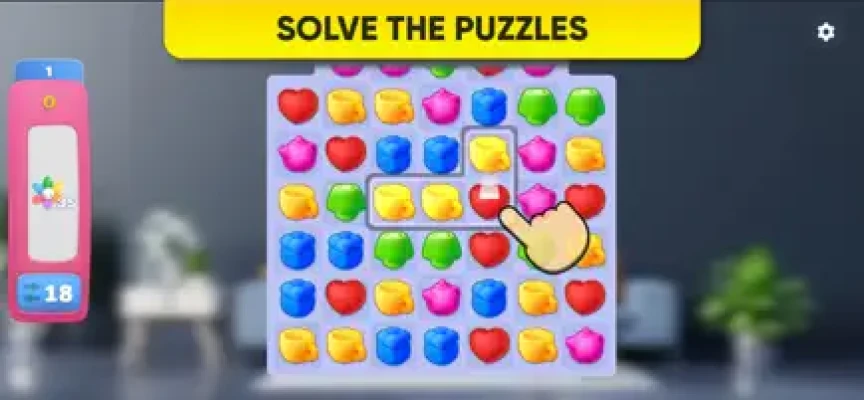
The core gameplay revolves around swapping pieces and creating matches of three or more identical elements. Successful combinations help complete level objectives and provide the resources needed for renovation.
Home Renovation
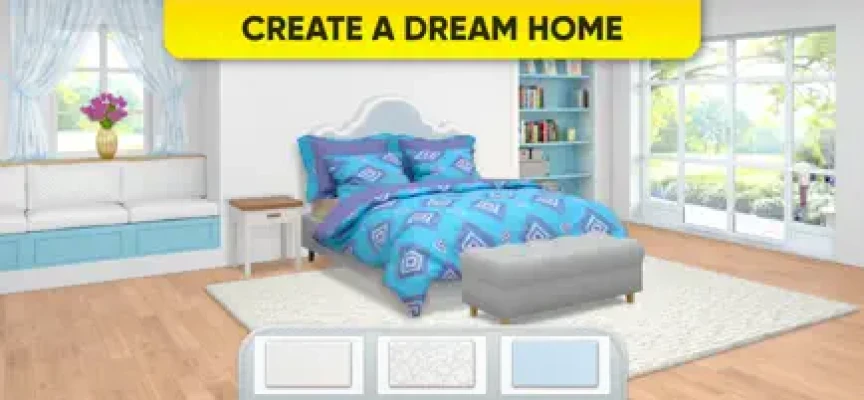
Your puzzle progress contributes directly to the home's transformation. As you advance, you can work on different parts of the property and gradually turn an unfinished space into a more attractive home.
Interior Decorating
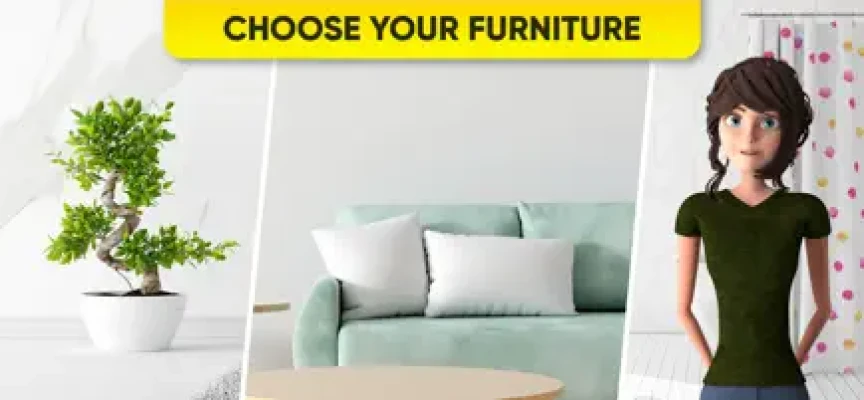
Decoration is one of the game's biggest attractions. Players can make decisions about elements such as:
- Furniture
- Carpets
- Lamps
- Tables and chairs
- Flooring
- Wallpaper
- Other decorative details
The available description emphasizes thousands of design possibilities, giving players room to experiment with different looks.
Story-Based Progression
Renovation is connected to an ongoing story. Completing puzzle levels allows you to unlock additional chapters and discover more of the game's characters and house.
Relaxed Puzzle Experience
There is no time limit described for the main puzzle gameplay, so players can concentrate on planning their moves instead of rushing through each level.
Boosters and Explosive Combinations
Special combinations and boosters can help clear difficult sections of a puzzle board. Learning when to create and use these combinations becomes increasingly important as levels become more challenging.
How to Play House Design: Home Makeover
The basic progression is straightforward:
Match pieces → complete objectives → earn rewards → renovate → unlock more content → continue the story.
At the beginning, concentrate on learning how the match-3 board works. Look carefully at the available moves instead of immediately making the first obvious match.
Once you become comfortable with the puzzle mechanics, start thinking several moves ahead. A good move can create a second combination after the board rearranges itself, allowing you to accomplish much more with a single turn.
Complete House Design: Home Makeover Strategy Guide
1. Look for Special Matches First
Before making an ordinary three-piece match, scan the entire board.
Look for opportunities to create larger combinations. A carefully planned move can generate a stronger effect than several basic matches made separately.
This is particularly useful when a level contains several objectives that must be completed within a limited number of moves.
2. Do Not Rush Your Moves
One of the advantages of the game is its relaxed pacing.
Take a moment before every move and examine:
- Possible three-piece matches
- Larger combinations
- Obstacles or difficult areas
- Pieces positioned near your objectives
- Potential chain reactions
The strongest move is not always the match that immediately completes an objective.
3. Work Toward the Level Objective
Avoid making random combinations simply because they are available.
Instead, ask:
What does this level actually require me to clear?
If the objective involves particular pieces or areas of the board, prioritize moves that directly contribute toward completing that requirement.
This can save moves and make difficult stages considerably easier.
4. Create Larger Combinations
Whenever the board allows it, look for ways to match more than three pieces.
Larger combinations generally give you more powerful clearing effects and can create chain reactions.
A useful habit is to check whether moving one piece can simultaneously:
- Create a special piece
- Clear part of the objective
- Open another section of the board
- Trigger an additional match
That type of multi-purpose move is usually more valuable than a simple three-piece match.
5. Use Boosters at the Right Time
Boosters are most useful when they solve a specific problem.
Do not automatically activate a powerful booster just because it is available. Consider whether saving it for a more difficult position will provide greater value.
Good opportunities include situations where:
- Several target pieces are difficult to reach.
- A large section of the board needs clearing.
- You are running low on useful moves.
- One combination can trigger several objectives at once.
6. Pay Attention to Chain Reactions
After making a match, the board can change and create new opportunities.
Don't immediately focus on the next obvious move. Watch how the pieces fall and inspect the new board.
Sometimes a normal-looking move produces a chain reaction that creates a much stronger follow-up opportunity.
7. Renovate Strategically
When you earn enough resources to renovate, think about the overall look you want.
Furniture, flooring, wallpaper, lighting, and other decorative choices can dramatically change the atmosphere of a room.
Instead of choosing every item independently, try creating a consistent theme.
For example:
Modern room
- Simple furniture
- Neutral colors
- Clean flooring
- Minimal decoration
Cozy room
- Warm colors
- Soft furnishings
- Comfortable furniture
- Decorative lighting
Classic room
- Traditional furniture
- Detailed patterns
- Elegant lighting
- Richer decorative elements
8. Experiment With Your Design Choices
There is no need to make every room look the same.
One of the fun parts of a home makeover game is experimenting with different combinations. Try contrasting styles between rooms while maintaining a few common elements that make the house feel connected.
9. Save Resources for Important Renovations
If the game gives you several renovation choices, don't spend everything immediately without considering future progression.
Keep track of your available resources and make sure you have enough to continue progressing through upcoming renovation tasks.
10. Use the Story as a Progression Guide
The story provides another reason to continue beyond simply completing puzzle boards.
As you finish renovation tasks and advance through chapters, additional parts of the house and story become available. Treat each renovation project as part of a larger progression rather than an isolated decorating task.
Match-3 Tips for Difficult Levels
When a level becomes difficult, use this checklist:
First: Identify the objective.
Second: Look for the largest available combination.
Third: Prioritize moves that affect the objective.
Fourth: Check the board after every major combination.
Fifth: Save powerful boosters for situations where they can affect multiple targets.
Sixth: Avoid wasting moves on matches that do not help the objective.
The most important skill is recognizing that the best move is usually the one that creates future opportunities, not necessarily the one that produces the biggest immediate visual effect.
Home Decorating Tips
Once you reach the renovation portion of the game, think like an interior designer.
Choose a Color Palette
Pick two or three main colors for each room rather than using unrelated colors everywhere.
Balance Large and Small Furniture
Large furniture should establish the room's structure, while smaller decorations provide personality.
Use Contrast Carefully
A room can feel flat if everything has the same tone. A contrasting piece of furniture, floor, lamp, or decoration can give the space more character.
Think About the Whole Room
Don't judge individual furniture items separately. Consider how the floor, walls, furniture, lighting, and accessories look together.
Create Different Room Personalities
Give bedrooms, living rooms, kitchens, and other spaces their own identity instead of making every room identical.
Progression Guide
A typical progression cycle in House Design: Home Makeover looks like this:
- Enter a match-3 level.
- Study the puzzle objectives.
- Make efficient matches.
- Create special combinations when possible.
- Complete the level.
- Collect the resulting rewards.
- Spend those rewards on renovation.
- Make design choices for the house.
- Unlock additional story content.
- Continue to the next renovation project.
This structure keeps the puzzle and decorating elements connected rather than treating them as separate game modes.
Best Beginner Strategy
If you're just starting, don't worry about creating the perfect design immediately.
Focus on understanding the puzzle system first. Complete early levels efficiently and learn how special combinations work.
Once you have a better understanding of the game, start experimenting with different decorating choices.
A simple beginner routine is:
Complete a few puzzle levels → collect rewards → renovate one area → review the room → continue progressing.
This prevents the game from becoming overwhelming and lets you gradually build your preferred style.
Common Mistakes to Avoid
Making the First Available Match
The first available match isn't necessarily the best move.
Ignoring the Objective
Clearing random pieces may look productive but can leave you with too few moves to complete the actual target.
Using Boosters Immediately
Powerful tools are more valuable when used against difficult sections of the board.
Focusing Only on Decoration
The puzzle system drives your renovation progress, so improving your match-3 skills is essential.
Using Too Many Unrelated Styles
Experimentation is encouraged, but a room generally looks more cohesive when its major elements share a common theme.
House Design: Home Makeover Gameplay Experience
The appeal of House Design: Home Makeover comes from the combination of two familiar casual-game ideas.
The match-3 levels provide the challenge, while the renovation system provides a visible sense of progression. Every successful puzzle contributes toward changing the appearance of the house.
That makes the game particularly appealing to players who enjoy seeing a space gradually transform rather than simply completing disconnected puzzle levels.
The relaxing pace and absence of a main time limit also make it suitable for short sessions or longer decorating sessions when you want to concentrate on designing rooms.
Is House Design: Home Makeover Worth Playing?
If you enjoy match-3 puzzle games, home renovation games, interior decorating, room makeover games, and casual story-driven gameplay, House Design: Home Makeover brings those elements together in one experience.
Its main attraction is the progression between puzzle solving and home renovation. Instead of completing puzzles with no larger purpose, your success helps develop the house and unlock additional parts of the experience.
The game is also designed around relaxed progression rather than timed competition, making it a natural choice for players who prefer casual puzzle games.
House Design: Home Makeover FAQs
What type of game is House Design: Home Makeover?
It is a casual match-3 puzzle and home renovation game that combines puzzle levels with interior decorating and story progression.
How do you renovate the house?
Complete match-3 levels to earn rewards, then use your progress to make renovation and decorating choices.
Does the game have match-3 puzzles?
Yes. Match-3 gameplay is the central puzzle mechanic.
Can you decorate the rooms?
Yes. The game allows players to customize different parts of the home with furniture, flooring, wallpaper, lighting, and other decorative elements.
Is there a time limit?
The available game description specifically states that there is no time limit, allowing players to make moves at their own pace.
Does the game include a story?
Yes. Puzzle and renovation progression are connected to story chapters and characters.
Are there boosters?
Yes. The game description mentions unique boosters and explosive combinations that can help during puzzle levels.
What makes the game different from a normal match-3 game?
Instead of focusing solely on puzzle progression, your victories help renovate and customize a house, combining match-3 gameplay with interior design.
Game Information
| Category | Details |
|---|---|
| Game | House Design: Home Makeover |
| Genre | Match-3 Puzzle / Home Design |
| Gameplay | Puzzle, renovation, decorating |
| Main Mechanic | Match-3 |
| Theme | Home renovation and interior design |
| Progression | Puzzle levels and story chapters |
| Customization | Furniture, flooring, wallpaper and decorations |
| Style | Casual, relaxing, colorful |
| Time Pressure | No main time limit described |
| Platform | iPhone / iPad |
| Developer | Oleksandr Piddubnyi |
| App ID | 1620327163 |
| Latest listed version | 3.1.3 |
| Last listed update | July 24, 2024 |
The developer and version information comes from third-party App Store catalog data because Apple's supplied page currently returns a rate-limit response when accessed directly. The catalog records version 3.1.3 and a July 24, 2024 update.
Rate the Game
User Reviews













Popular Games



















 Android
 iOS
 Windows
 Xbox