


Latest Version
October 16, 2024
AI GAMES FZ LLC
Puzzle
iOS
0
Report a Problem
More About :game
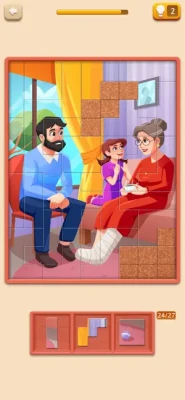
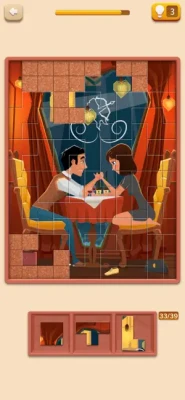
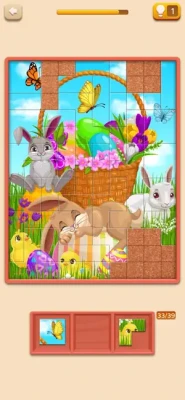
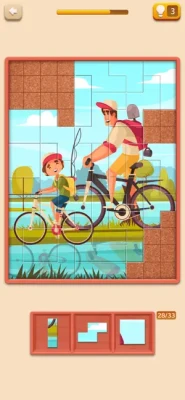
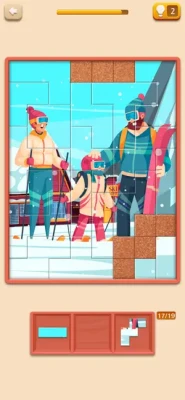
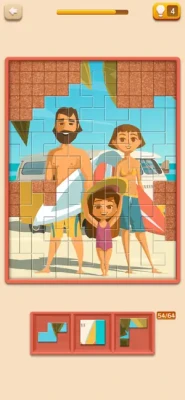
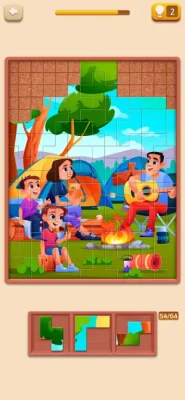
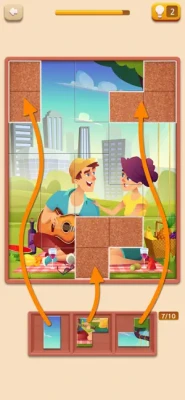
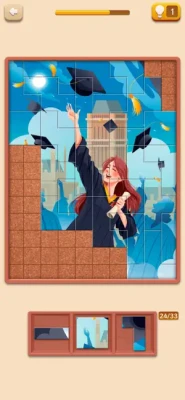
The game features hundreds of pictures, daily puzzles, simple controls, and a mixture of relaxing artwork and brain-teasing challenges. It can also be played offline, making it a convenient choice for puzzle fans who want something to enjoy without always needing an internet connection.
The current App Store listing places the game in the Puzzle category and lists AI Games FZ as the developer. It is available for iPhone and iPad and requires iOS 15 or later.
What Is Fancy Puzzles?
Fancy Puzzles takes the familiar jigsaw format and turns it into a mobile-friendly puzzle experience.
The basic objective is straightforward: assemble the scattered pieces until they form a complete image.
What makes the game appealing is the combination of:
- Colorful artwork
- Short puzzle sessions
- Daily challenges
- Hundreds of different images
- Relaxing gameplay
- Brain-focused activities
- Simple controls
- Offline puzzle play
- A large variety of picture themes
The result is a casual puzzle game that can work equally well for a few minutes of downtime or a longer puzzle-solving session.
Main Features
Hundreds of Picture Puzzles
Fancy Puzzles offers a large collection of artwork to assemble. The variety helps prevent the experience from becoming repetitive too quickly.
Different images also create different levels of difficulty because some pictures have obvious visual patterns while others contain many similar colors and shapes.
Daily Puzzles
Daily puzzles give players a reason to return regularly.
Rather than completing the available content and stopping, daily challenges provide a continuing stream of fresh picture puzzles.
Quick Puzzle Sessions
The game is designed with short sessions in mind. You do not necessarily need to spend an hour completing one puzzle.
This makes Fancy Puzzles suitable for:
- Coffee breaks
- Waiting rooms
- Travel
- Evening relaxation
- Short gaming sessions
- Casual brain-training routines
Relaxing Gameplay
There is no requirement to react quickly or defeat an opponent.
The focus is on observation, matching, and gradually reconstructing the image.
Brain Engagement
Jigsaw puzzles naturally require players to compare shapes, colors, patterns, and positions.
Fancy Puzzles combines those traditional puzzle skills with a mobile interface designed for quick access.
Offline Play
The App Store description states that players do not always need an internet connection to enjoy the puzzles, making offline play one of the useful features for mobile users.
Simple Interface
The game uses straightforward puzzle mechanics, making it easy to understand without a lengthy tutorial.
How to Play Fancy Puzzles
The basic process is simple:
- Select a puzzle.
- Examine the completed image or available visual clues.
- Study the loose pieces.
- Look for matching colors and patterns.
- Identify pieces belonging to obvious sections.
- Assemble related pieces together.
- Connect larger groups.
- Complete the picture.
The important thing is to avoid trying to solve the entire image at once.
Break the puzzle into smaller visual sections.
Full Strategy Guide
1. Study the Picture Before Moving Pieces
Before you start assembling pieces, take a moment to understand the image.
Look for:
- Large color regions
- Faces
- Buildings
- Objects
- Textures
- Strong outlines
- Bright highlights
- Dark areas
- Repeating patterns
These features become useful reference points.
2. Start With Distinctive Pieces
Do not begin with pieces from a section containing dozens of similar colors.
Instead, find pieces that have something distinctive.
For example, a bright red object against a blue background is much easier to identify than several nearly identical blue pieces.
3. Work on the Edges First
If the puzzle has recognizable border pieces, assembling the outer frame can provide a useful foundation.
The completed border gives you a clearer idea of the available space and makes the remaining interior easier to organize.
4. Group Pieces by Color
Color is one of the fastest ways to organize a jigsaw puzzle.
Create mental groups such as:
- Blue pieces
- Green pieces
- Red pieces
- Skin tones
- Dark pieces
- White or bright pieces
- Patterned pieces
Once you have separated the major color families, finding matching pieces becomes much easier.
5. Use Texture Instead of Color Alone
Two pieces may have the same dominant color but represent completely different parts of the image.
Look closely at texture.
A piece containing:
- Hair
- Wood grain
- Clouds
- Brick
- Leaves
- Clothing
- Water
- Sky
can often be identified from its visual texture.
6. Look for Strong Lines
Straight or curved lines can provide excellent clues.
A piece containing part of a building, road, table, frame, or other defined object may have a distinctive line that connects naturally with another piece.
Follow those lines across neighboring pieces.
7. Build Small Clusters
You do not need to connect pieces directly to the final board immediately.
Create small groups first.
For example, you might assemble:
four pieces of a face → six pieces of the surrounding background → connect both groups
Small completed clusters reduce the number of loose pieces and make the final stage much easier.
8. Solve High-Contrast Areas First
High-contrast sections are usually easier to recognize.
A black object against a white background is more useful than a section containing several shades of gray.
Use obvious visual boundaries to establish your first major sections.
9. Save Similar Pieces for Later
If you have twenty pieces that all look like blue sky, do not waste time trying to determine their exact positions immediately.
Put them aside mentally and work on distinctive areas first.
Once enough of the surrounding image has been completed, those similar pieces become easier to place.
10. Use the Completed Image as Your Map
Always compare your work against the overall image.
If a section appears visually correct but does not connect naturally with the surrounding pieces, reconsider it.
A good jigsaw solution should make the larger picture increasingly recognizable.
11. Don't Force a Piece
If a piece appears to fit but something about the image looks wrong, leave it.
Forcing pieces into approximate positions can create confusion later.
The visual pattern should provide confirmation.
12. Work From Easy to Difficult
A useful solving order is:
Distinctive objects → borders → high-contrast sections → recognizable patterns → similar-color areas → final details
This minimizes frustration and keeps the puzzle moving forward.
Advanced Jigsaw Strategies
Use Shape as a Secondary Clue
When several pieces have similar colors, their shape becomes important.
Look at:
- Number of tabs
- Number of gaps
- Tab orientation
- Corner shapes
- Relative width
- Piece curvature
Color identifies the general area; shape helps determine the exact position.
Combine Multiple Clues
The strongest placement decisions usually come from several clues working together.
For example:
blue color + cloud texture + matching edge + correct shape
is much stronger evidence than simply saying:
this piece is blue.
Solve Around Anchors
An anchor is a highly recognizable part of the picture.
Examples include:
- A person's face
- A large flower
- A distinctive building
- A bright object
- A unique animal
- Large lettering
Once an anchor is assembled, use it as the center of a larger cluster.
Rotate Your Attention, Not Just the Pieces
When you become stuck, stop focusing on one section.
Move to another part of the image.
Completing a different area may reveal information that solves the difficult section later.
Leave Uniform Backgrounds Until the End
Large areas of sky, water, walls, grass, or other repeating textures are often among the hardest sections.
Save them for when most of the image is already assembled.
How to Solve Difficult Picture Puzzles
When a puzzle becomes difficult, use this sequence:
Step 1: Stop trying random pieces.
Step 2: Identify the most recognizable unfinished area.
Step 3: Gather pieces matching its color and texture.
Step 4: Compare their shapes.
Step 5: Build a small cluster.
Step 6: Connect the cluster to the completed image.
Step 7: Repeat with the next distinctive area.
Step 8: Leave repetitive backgrounds until the final stage.
This approach turns a large collection of pieces into several manageable mini-puzzles.
Daily Puzzle Strategy
Daily puzzles are best approached as a short routine rather than a race.
Start by examining the artwork.
Find one or two obvious anchors.
Complete those sections first.
Then work outward toward less distinctive areas.
If the daily puzzle is particularly difficult, don't spend all your time staring at the same group of pieces. Move to another section and return later.
A fresh look often makes previously confusing pieces easier to recognize.
Tips for Faster Puzzle Solving
Use Color Families
Separate pieces by dominant colors before attempting detailed placement.
Find Corners
Corner pieces are often among the easiest pieces to identify.
Build the Border
A completed outer frame gives you a reliable structure.
Look for Faces
Faces, eyes, hair, and other human features are highly distinctive.
Follow Lines
Roads, buildings, furniture, clothing patterns, and other lines can connect multiple pieces.
Avoid Guessing
If two pieces look similar, wait for another clue rather than forcing a decision.
Save Repetitive Areas
Leave large sections of nearly identical color until more of the puzzle is complete.
Common Mistakes
Starting With Random Pieces
This can create unnecessary confusion.
Focusing Only on Color
Color alone is rarely enough for difficult pieces.
Ignoring Piece Shape
The shape can eliminate several seemingly possible placements.
Spending Too Long on One Area
If you are stuck, switch sections and return later.
Forcing a Match
A piece should fit visually as well as structurally.
Trying to Finish Too Quickly
Jigsaw puzzles reward careful observation more than speed.
What Makes the Game Relaxing?
Fancy Puzzles removes much of the pressure associated with competitive games.
There are no opponents to defeat and no complicated controls to master.
The player simply works through an image one piece at a time.
The App Store specifically describes the game as offering relaxing gameplay and daily puzzles intended to provide a calming experience.
That makes it suitable for players who want a quieter alternative to action, racing, or strategy games.
Artwork and Puzzle Variety
The game emphasizes vivid imagery and hundreds of unique pictures.
That variety is important because the visual identity of a jigsaw puzzle has a major effect on how enjoyable it is to solve.
Some images can be relatively straightforward because they contain strong contrasts and recognizable objects.
Others become more challenging when large areas contain similar colors or repeated patterns.
The App Store listing positions the artwork as one of the central attractions of the game.
Difficulty
Fancy Puzzles is easy to understand, but the actual difficulty of a puzzle depends heavily on its artwork.
A picture with strong visual boundaries can be straightforward.
A picture dominated by:
- Sky
- Water
- Grass
- Walls
- Repeating patterns
- Similar shades
can require considerably more patience.
This creates a natural variation in difficulty even when the basic puzzle mechanics remain unchanged.
Fancy Puzzles Review
Fancy Puzzles: Jigsaw Art Game is a good choice for players who enjoy picture puzzles but prefer short, relaxed sessions rather than traditional marathon jigsaw sessions.
Its biggest strengths are the visual variety, daily puzzles, simple controls, and ability to play offline. The App Store currently lists a 4.7-star rating from around 7.3K ratings, which indicates strong overall reception.
Player feedback is not completely uniform, however. Some reviewers praise the smooth and accessible puzzle experience, while others have criticized certain artwork choices and the presence of advertisements.
That is worth keeping in mind if artwork selection and an uninterrupted experience are especially important to you.
Overall, the core puzzle mechanics are straightforward and relaxing, making Fancy Puzzles a solid option for fans of jigsaw puzzles, picture puzzles, brain games, and casual art games.
Pros and Cons
Pros
- Hundreds of picture puzzles
- Attractive artwork
- Daily puzzles
- Short gaming sessions
- Relaxing gameplay
- Simple controls
- Offline play
- Brain-focused puzzle solving
- Available on iPhone and iPad
- Regular updates
Cons
- Some artwork may not appeal to every player
- Advertisements are included
- In-app purchases are available
- Some images can be difficult when large areas have similar colors
- Players looking for advanced traditional jigsaw controls may want more customization
Game Information
Game Name: Fancy Puzzles: Jigsaw Art Game
Developer: AI Games FZ
Publisher/Seller: AI GAMES FZ LLC
Genre: Puzzle
Platforms: iPhone and iPad
Age Rating: 13+
Price: Free with in-app purchases
Category: Puzzle
Languages: English plus 37 additional languages
Compatibility: iOS 15.0 or later
Core Gameplay: Jigsaw and picture puzzles
Daily Puzzles: Yes
Offline Play: Supported
Advertisements: Yes
In-App Purchases: Yes
Latest Listed Version: 1.55
Latest Version Update: August 28, 2026
The App Store currently lists purchases including an option to remove ads, unlock monthly challenges, and VIP subscriptions.
Who Should Play Fancy Puzzles?
Fancy Puzzles is a good fit for players who enjoy:
- Jigsaw puzzles
- Picture puzzles
- Art games
- Brain teasers
- Relaxing games
- Casual puzzle games
- Daily challenges
- Offline games
- Visual pattern recognition
- Short mobile gaming sessions
It is especially suitable if you want a puzzle that can be picked up for a few minutes without requiring a large time commitment.
Frequently Asked Questions
What is Fancy Puzzles: Jigsaw Art Game?
Fancy Puzzles is a mobile jigsaw puzzle game featuring hundreds of pictures, daily puzzles, relaxing gameplay, and short puzzle sessions.
Is Fancy Puzzles free?
Yes. The game is free to download, but it contains advertising and optional in-app purchases.
Can you play Fancy Puzzles offline?
Yes. The App Store description states that the game can be enjoyed without always requiring an internet connection.
Does Fancy Puzzles have daily puzzles?
Yes. Daily puzzles are one of the game's main recurring features.
How do you solve difficult Fancy Puzzles?
Start with distinctive objects and colors, identify corners and borders, build small clusters, and leave repetitive backgrounds until later.
Is Fancy Puzzles good for adults?
Yes. The game is specifically marketed toward adults who enjoy jigsaw and brain puzzles, and the current App Store age rating is 13+.
Does Fancy Puzzles have ads?
Yes. The App Store lists advertising, with a separate in-app purchase available to remove ads.
Does Fancy Puzzles receive updates?
Yes. The App Store version history shows regular updates, including the current 1.55 release with bug fixes and minor improvements.
Final Strategy Tips
The fastest way to improve at Fancy Puzzles is not to move pieces faster. It is to organize the visual information better.
Start with corners, borders, distinctive objects, and high-contrast areas. Group similar colors together, pay attention to piece shapes, and build small clusters before connecting them to the main image.
When the remaining pieces all look similar, don't guess. Use the completed sections around them as your guide.
The hardest part of a jigsaw is often the final stretch, but once most of the artwork is assembled, even repetitive areas become much easier to solve.
Rate the Game
User Reviews










Popular Games



















 Android
 iOS
 Windows
 Xbox