




Latest Version
September 09, 2024
Homa
Action
0
com.hysgames.cardevolution
Report a Problem
More About :game
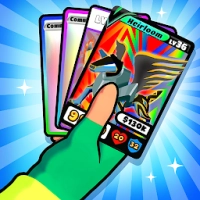
The game combines several ideas into one progression loop. You guide cards through choice-based running sections, make decisions that can improve their value, collect new cards, merge cards during battles, and use your growing collection to compete in card battles. Character themes range from sports-inspired cards to monsters, giving the collection a varied feel.
The main objective is simple: build a valuable collection, evolve your best cards, unlock more powerful decks, and become a stronger card collector.
Game Information
Game: Card Evolution: TCG hyper game
Developer: Homa / HYS Games
Package: com.hysgames.cardevolution
Genre: Casual, card collection, evolution
Main Focus: Collecting, evolving, merging, deck building and battles
Platforms: Android
Monetization: Free-to-play with advertisements and in-app purchases
Content Rating: Everyone with mild fantasy violence
Android Requirement: Android 7.1 or later for the currently documented version
Game Style: 3D casual card game
The game has reached more than 10 million downloads and has maintained a strong player rating in available tracking data, showing that its simple card-collection concept has attracted a large audience.
What Makes Card Evolution Different?
Card Evolution is not a traditional trading card game where the entire experience revolves around complicated rules and long matches. Instead, it mixes collection mechanics with a runner-style progression system.
A typical progression cycle involves:
Starting with a card.
Moving through a choice-based course.
Selecting options that affect the card.
Increasing the card's value or rarity.
Reaching the end of the run.
Adding the result to your collection or using it for progression.
Building stronger decks.
Entering card battles.
Combining cards to create higher-level cards.
Reinvesting rewards into your collection.
This combination makes the game easy to understand while still giving experienced players reasons to think carefully about their choices.
How to Play Card Evolution
1. Start With the Card in Front of You
Each run begins with a card that can be developed through the course.
Your goal is not simply to reach the finish line. You want to finish with a better card than the one you started with.
Pay attention to every available choice because the route you take can influence the final quality of the card.
2. Make Smart Running Choices
The running sections use a choice-based system. Cards move through the course automatically while you influence their development through decisions.
The safest approach is to think about the long-term value of the card instead of selecting an option simply because it looks immediately attractive.
Whenever possible, favor choices that contribute to:
Higher rarity
Greater card value
Better evolution potential
Stronger collection progression
3. Build Your Collection
Collection growth is one of the central objectives.
New cards give you more options when constructing decks and more opportunities to discover stronger combinations.
Do not judge a card only by how useful it is during one stage. Some cards can become more valuable after evolution or merging.
4. Evolve Cards
Evolution is one of the most important progression systems.
The game allows cards to develop into higher-level versions, while merging can also help create stronger cards.
A useful approach is to concentrate your resources on cards that have clear long-term value rather than spreading upgrades across everything you own.
5. Build Your Deck
Once you have a broader collection, start thinking about your deck as a complete group rather than a collection of individual cards.
A strong deck should have cards that complement one another and perform reliably during battles.
Do not automatically assume that the rarest card is always the only card worth using. A balanced combination can be more useful than several powerful cards that do not work well together.
Card Evolution Runner Strategy
The running sections are deceptively important because your decisions can determine how valuable the finished card becomes.
Prioritize Quality Over Random Choices
When presented with multiple options, consider which one improves the card's future value.
Avoid choosing randomly just because an option appears more exciting.
Think About the Finish Line
The objective is the condition of your card at the end of the run.
A good decision early in the course can have a greater effect than a minor improvement near the end.
Try to build momentum rather than constantly changing direction.
Protect a Strong Card
If your card is already developing well, avoid unnecessary risky choices.
A safe improvement is often preferable to a dramatic option that could damage the card's final value.
Learn From Failed Runs
If a card finishes weaker than expected, consider which choices caused the decline.
The runner system rewards familiarity. After several attempts, you should begin recognizing which types of decisions are consistently useful.
How to Increase Card Value
Card value is an important part of the collection system.
To improve your results:
Make deliberate choices during runs.
Favor improvements that increase rarity or value.
Avoid unnecessary negative choices.
Invest in cards with good development potential.
Use merging when it provides a meaningful upgrade.
Keep your best cards for future progression.
Avoid wasting resources on cards you are unlikely to use.
The key is consistency. One excellent card is useful, but a collection containing several strong cards gives you much more flexibility.
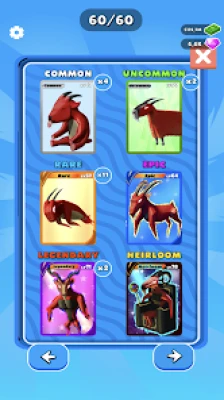
Understanding Card Rarity
Rarity gives your collection another layer of progression.
Higher-rarity cards are generally more desirable, particularly when you are trying to create stronger collections and decks.
However, rarity should not become an excuse to ignore everything else.
When deciding which card deserves attention, consider:
Rarity + evolution potential + battle usefulness + collection value
That is a better decision-making framework than looking at rarity alone.
Card Merging Strategy
Merging is particularly important during card battles and progression.
When you have duplicate or compatible cards that can be combined, think about whether the resulting upgrade will improve your active collection.
Best Practices for Merging
Avoid merging valuable cards without understanding the result.
Prioritize cards that can become part of your main deck.
Use weaker duplicates as progression material when appropriate.
Focus on meaningful upgrades instead of constantly merging for small gains.
Keep useful cards available when they have strategic value.
Merging should strengthen your collection rather than simply reduce the number of cards you own.
Building a Strong Deck
A powerful deck starts with understanding your own collection.
Step 1: Identify Your Best Cards
Look through your collection and determine which cards have the strongest combination of rarity, evolution level and battle usefulness.
Step 2: Remove Weak Links
A card that consistently underperforms can hold the rest of your deck back.
Replace weak cards as better options become available.
Step 3: Upgrade the Core
Instead of upgrading every card equally, concentrate resources on your most important cards.
A strong core makes progression much more efficient.
Step 4: Test Your Deck
Battle results are useful feedback.
If a deck repeatedly struggles, do not simply keep upgrading the same cards. Consider whether changing the composition would produce better results.
Card Battle Strategy
The battle system provides a different challenge from the runner sections.
Running is about making progression choices. Battles are about using the collection you have built.
Do Not Enter Battles With an Underdeveloped Deck
A common mistake is to focus heavily on collecting while neglecting the cards that actually form the active deck.
Before difficult battles, make sure your main cards are properly evolved and upgraded.
Use Evolution Before Major Battles
If you have enough resources to improve an important card, consider doing so before entering a difficult battle.
A single meaningful upgrade can be more useful than several minor upgrades spread across weaker cards.
Watch How Your Deck Performs
If you repeatedly lose, look for patterns.
Ask:
Which cards perform poorly?
Which cards survive or contribute consistently?
Is the deck too dependent on one powerful card?
Are there stronger evolved cards sitting unused?
Can merging improve your lineup?
Use losses as information rather than simply repeating the same strategy.
How to Progress Faster
Focus on Your Main Collection
Trying to upgrade everything at once can slow progression.
Choose a core group of cards and build around them.
Spend Rewards Carefully
Rewards should support long-term progression.
Before spending currency, ask whether the purchase will:
Improve your main deck
Unlock useful cards
Increase your collection's overall quality
Help you reach a meaningful progression milestone
Keep Collecting
Collection growth remains important even after you have established a strong deck.
New character series and additional cards can open up new possibilities.
Reinvest Your Success
The game's progression loop encourages you to earn rewards through runs and battles and then put those rewards back into your collection.
The strongest approach is to continually turn short-term rewards into long-term improvements.
Beginner Tips
If you are just starting Card Evolution, use these principles:
Learn the runner mechanics before taking unnecessary risks.
Focus on improving card value and rarity.
Keep your best cards instead of replacing them immediately.
Build a small group of strong cards before upgrading everything.
Experiment with merging.
Upgrade your battle deck regularly.
Use rewards to improve long-term progression.
Collect new cards whenever they provide useful progression.
Do not ignore evolution.
Learn from failed battles and failed runs.
Intermediate Strategy
Once the basic systems become familiar, start playing more efficiently.
Create a Core Collection
Identify several cards that consistently contribute to your progress.
These should receive priority for upgrades and evolution.
Balance Collection and Power
A huge collection is not automatically a strong collection.
Try to maintain both:
Collection breadth for unlocking and experimentation
Collection depth for having highly developed cards
Plan Before Merging
Do not merge simply because you can.
Think about what your collection will look like after the merge and whether the result actually improves your deck.
Improve Before You Need To
Do not wait until a difficult battle stops your progress before upgrading.
Maintain your core deck as you progress so that new challenges do not become sudden walls.
Advanced Strategy
Optimize Every Run
At higher progression levels, small decisions matter more.
Try to recognize which choices consistently produce stronger outcomes and avoid options that offer poor long-term value.
Build Around Your Strongest Evolution Paths
When you identify cards that evolve particularly well, prioritize them.
Your goal is to create a collection where several cards are capable of reaching high levels rather than relying on a single favorite.
Use Battles as Testing Grounds
Battles can reveal weaknesses that are not obvious while collecting cards.
If a card looks impressive but performs poorly in your deck, reconsider its role.
Avoid Resource Fragmentation
Constantly upgrading dozens of cards can leave your entire collection mediocre.
Concentrating resources produces a stronger core and usually makes progression easier.
Common Mistakes to Avoid
Upgrading Everything
Spreading resources across the entire collection can prevent your best cards from reaching their full potential.
Choosing Runner Options Randomly
The running section is part of the progression system. Treat choices as strategic decisions.
Ignoring Evolution
A newly collected card is not necessarily better than an older card that has already been developed.
Merging Without a Plan
Always consider the resulting card and its usefulness before combining valuable cards.
Building a Deck Around One Card
A deck that depends completely on one card can struggle when that card does not perform as expected.
Chasing Collection Size Alone
More cards are useful, but quality matters too.
Repeating Failed Battles Without Changes
If your strategy fails repeatedly, modify the deck or upgrade your core cards rather than simply trying the same approach again.
Game Atmosphere and Visual Style
Card Evolution uses a colorful 3D presentation designed around collectible cards, character evolution and short gameplay sessions.
The character collection includes themes ranging from sports to monsters, giving the game a playful variety instead of keeping the collection focused on one visual style.
The casual presentation also makes the game approachable for players who enjoy collection and progression mechanics without wanting an extremely complicated card-game ruleset.
Controls and Gameplay Experience
The game is designed around simple interactions.
The runner sections primarily revolve around selecting choices as your card progresses through the course, while collection and battle systems add additional progression decisions.
This makes the basic gameplay easy to understand while giving players several systems to explore as their collection grows.
Difficulty
Card Evolution is easy to start but becomes more strategic as the collection expands.
The basic controls are accessible, but efficient progression requires better decisions about:
Which cards to develop
Which cards to merge
Which cards belong in your deck
When to upgrade
How to approach difficult battles
How to maximize runner progression
The difficulty therefore comes more from resource and collection management than complicated controls.
Ads and In-App Purchases
The game is free-to-play and includes advertisements and in-app purchases.
Player feedback is generally positive about the core collection concept and easy-to-learn gameplay, although some reviews criticize the amount of advertising and progression or purchase-related frustrations.
Players who prefer uninterrupted sessions should be aware that advertising is part of the game's monetization model.
Player Feedback
Available player feedback highlights the addictive and accessible nature of the card-collection concept. Players also enjoy collecting cards and the variety of characters.
The main criticisms include advertisements, occasional frustration with progression, and requests for additional cards or more content.
This makes Card Evolution particularly appealing to players who enjoy short sessions, collection systems and visible progression.
Pros and Cons
Pros
Easy-to-learn gameplay
Large card-collection focus
Card evolution and merging
Choice-based runner sections
Deck-building progression
Card battles
Sports and monster-themed characters
Strong sense of collection progression
Suitable for short casual sessions
Cons
Advertising can interrupt gameplay
Progression may feel slower later on
Some players may want more cards and content
The battle system may feel less complex than traditional TCGs
Resource management becomes increasingly important
Who Should Play Card Evolution?
Card Evolution is a good choice for players who enjoy:
Collecting digital cards
Card evolution
Merge mechanics
Casual strategy
Deck building
Short gameplay sessions
Character collecting
Runner-style games
Incremental progression
Light card battles
It is especially suitable for players who like the idea of a trading-card collection without wanting to spend their entire time learning complicated competitive TCG rules.
Is Card Evolution Worth Playing?
Yes, if you enjoy collection-focused mobile games with simple controls and multiple progression systems.
The strongest part of Card Evolution is the combination of running, collecting, evolving, merging and battling. Each system feeds into the next, giving players a clear reason to continue developing their collection.
It is less suitable for players looking for a highly competitive, deeply strategic traditional trading card game. Its appeal comes from accessible progression and collecting rather than extremely complicated battle mechanics.
Frequently Asked Questions
What is Card Evolution: TCG hyper game?
Card Evolution is a casual card-collection game where players collect cards, improve their value and rarity, evolve and merge cards, build decks and participate in card battles.
Who developed Card Evolution?
The game is associated with Homa and HYS Games.
What is the main goal?
The main goal is to build a powerful and valuable card collection, unlock new cards and decks, evolve cards and perform well in battles.
How do you evolve cards?
Cards can be developed through the game's progression systems, including choice-based runs and merging mechanics.
Is Card Evolution a traditional TCG?
Not exactly. It combines trading-card collection and battle ideas with runner and evolution mechanics, making it more accessible than a traditional complex TCG.
Should I upgrade every card?
No. Concentrating resources on your strongest and most useful cards is generally more efficient than upgrading everything equally.
Is merging important?
Yes. Merging is one of the game's important ways to evolve cards into higher-level versions.
How can I build a stronger deck?
Develop a core group of strong cards, prioritize useful evolutions, replace weak cards as better options become available, and use battle results to identify weaknesses.
Does Card Evolution require complicated controls?
No. The game is designed around relatively simple interactions, with strategy coming mainly from choices, collection management, evolution and deck building.
Does the game contain advertisements?
Yes. The game uses advertisements as part of its free-to-play model.
Final Verdict
Card Evolution: TCG hyper game offers a refreshing casual take on card collecting by combining runner-style decisions, card evolution, merging, deck building and battles.
The best way to play is to think beyond individual cards. Build a strong collection, protect your valuable cards, make deliberate choices during runs, evolve your strongest options, merge intelligently and continually improve your battle deck.
For players who enjoy collecting, upgrading and watching a collection grow stronger over time, Card Evolution provides an accessible and entertaining progression loop.
Rate the Game
User Reviews














Popular Games


















 Android
 iOS
iOS Windows
 Xbox
Xbox