

Latest Version
November 12, 2024
ABI GLOBAL LTD.
Puzzle
iOS
0
Report a Problem
More About :game
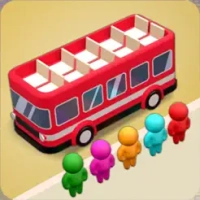
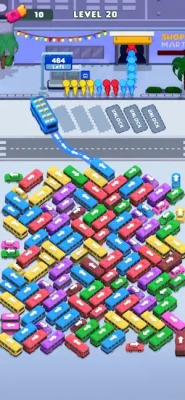
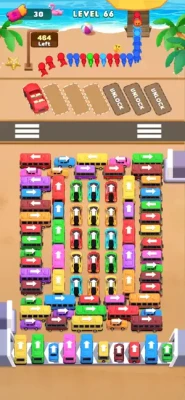
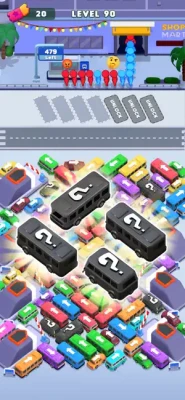
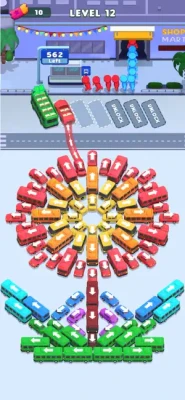
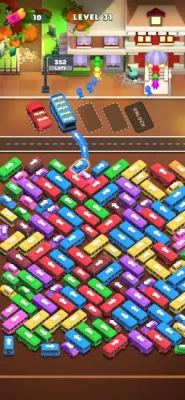
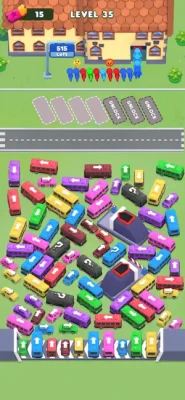
The central challenge is simple to understand but becomes increasingly strategic: move vehicles in their available direction, manage limited parking space, collect passengers, and make sure they reach the correct matching buses.
Every move can affect the rest of the board. A vehicle that looks easy to move may block another route, occupy valuable parking space, or change the order in which passengers can reach their buses.
That makes Bus Escape more than a simple color-matching game. Successful levels require planning, spatial awareness and careful move sequencing.
Bus Escape: Traffic Jam Game Information
- Game: Bus Escape: Traffic Jam
- Developer: ABI GLOBAL LTD.
- Genre: Puzzle / Casual
- Platform: iPhone and iPad
- App Store ID: 6689516366
- Android package: com.abi.busjam.sortpuzzle
- Main gameplay: Parking, traffic-jam solving and color sorting
- Core objective: Match passengers with their corresponding buses
- Vehicle movement: Each vehicle moves in its available direction
- Parking: Limited parking spaces create additional strategy
- Passenger capacity: Vehicles can carry groups of passengers depending on the vehicle
- Boosters: Available for difficult situations
- Leaderboards: Supported through Game Center
- Price: Free
- In-App Purchases: Yes
- Advertising: Yes
- Age Rating: 9+
- iOS requirement: iOS 15.0 or later
The current store-tracking information also shows a September 2026 update, with the latest recorded version listed as 1.9.94 and new levels included in the update.
How to Play Bus Escape: Traffic Jam
The basic gameplay loop is:
Observe the traffic → move vehicles → free passengers → match colors → fill buses → clear the level.
Vehicles generally have a restricted movement direction, so you cannot simply move any car wherever you want. The limited parking spaces make this restriction even more important.
Your objective is to create enough space for the correct vehicles and passengers while preventing the parking area from becoming completely blocked.
Understanding the Core Puzzle
There are three important elements to watch:
Vehicles
Each vehicle has a movement path that determines where it can go.
Passengers
Passengers need to be matched with the appropriate bus.
Parking Spaces
Available parking positions are limited, so careless vehicle movement can quickly create a traffic jam.
The best players think about all three elements at the same time.
Full Bus Escape: Traffic Jam Strategy Guide
1. Study the Entire Board Before Moving
Don't immediately tap the first vehicle you see.
Take a moment to identify:
- Which vehicles can move immediately
- Which vehicles are blocked
- Which buses are waiting
- Which passenger colors are available
- Where the open parking spaces are
- Which vehicle is preventing another from moving
This initial scan can save several moves later.
2. Identify the Most Important Blocker
The vehicle you need to move first isn't necessarily the one closest to the exit.
Look for the vehicle that is preventing other vehicles from moving.
If moving one car opens two or three additional routes, that move is usually more useful than simply moving an easy vehicle.
Think of the puzzle as a chain reaction.
One vehicle moves → space opens → another vehicle moves → passengers become accessible.
3. Protect Your Parking Spaces
Limited parking is one of the game's key strategic elements.
Don't treat every empty parking position as an invitation to move a vehicle there.
Before using a parking space, ask:
“Will I need this space for something more important later?”
If the answer might be yes, keep it available.
4. Match Colors Carefully
Color matching is at the center of the passenger and bus system.
Before moving a vehicle, check which passengers are currently available and which bus they need.
Avoid moving a vehicle simply because it is free.
The best move is often the one that connects a vehicle with passengers that can immediately progress toward their matching bus.
5. Think Several Moves Ahead
A common mistake is solving only the current move.
Instead, try to predict the next three moves.
For example:
Move A opens a parking position.
Move B allows another vehicle to move.
Move C brings the correct passengers toward their bus.
If your first move doesn't create a useful second move, reconsider it.
6. Don't Fill Every Available Space
An open parking area can be extremely valuable.
If you fill it too early, you may leave yourself with no room for a vehicle that urgently needs to move.
Keep at least one useful escape route whenever possible.
7. Prioritize Vehicles That Unlock the Board
When several vehicles can move, prioritize those that:
- Block another vehicle
- Prevent passenger access
- Occupy an important route
- Restrict parking
- Prevent a matching bus from progressing
This usually produces better results than moving vehicles randomly.
8. Look for Forced Moves
Some situations have only one sensible move.
If three vehicles are blocked but one can move without creating a new problem, that vehicle may be the key to opening the puzzle.
Recognizing forced moves is particularly helpful on harder traffic-jam levels.
9. Think About the Next Bus
Don't focus only on the bus you can fill immediately.
Look at the next available bus and determine which passengers will be needed.
Preparing the board for the next bus can prevent a traffic jam later.
10. Avoid Creating a Dead End
A dead end happens when your remaining vehicles cannot move because you've blocked the available routes or parking positions.
Before making a move, ask:
“If I put this vehicle here, what options will remain?”
If the answer is “almost none,” choose another move.
Bus Escape: Traffic Jam Color Matching Strategy
Color matching looks simple, but it becomes more difficult when several colors are present simultaneously.
Start With the Available Match
If passengers of a particular color can immediately be sent toward their matching bus, consider whether completing that match will free valuable space.
Don't Ignore Other Colors
While solving one color, monitor the positions of the other passengers.
A move that solves one color but blocks another can create unnecessary problems.
Follow the Flow
Try to establish a natural sequence:
Passenger group → matching vehicle → matching bus → cleared space.
The more smoothly that chain works, the fewer unnecessary moves you'll need.
Parking Strategy
Parking is where many difficult levels are decided.
Keep Flexible Spaces Open
A completely empty area is often more valuable than it looks.
It can provide:
- Temporary vehicle storage
- An escape route
- Room for a blocked vehicle
- Space for setting up the next match
Avoid Unnecessary Parking
If a vehicle can move directly toward its useful destination, don't park it somewhere that creates another obstacle.
Use Parking as a Temporary Tool
Think of parking spaces as part of your strategy rather than a final destination.
A vehicle may need to move temporarily so another vehicle can pass.
How to Solve Difficult Bus Escape Levels
When a level becomes complicated, use this process.
Step 1: Count Your Free Spaces
Know exactly how much room you have.
Step 2: Identify the Blocker
Find the vehicle preventing the most movement.
Step 3: Check the Passenger Colors
Determine which passenger group can be served first.
Step 4: Find the Required Vehicle
Locate the vehicle associated with that passenger group.
Step 5: Plan the Route
Determine how that vehicle can reach the useful position.
Step 6: Make One Move
Don't execute several moves blindly.
Step 7: Reassess
After the board changes, scan it again.
This method keeps you from committing to a long sequence that eventually fails.
Advanced Bus Escape Strategy
Use Reverse Planning
Instead of asking:
“What can I move now?”
ask:
“What needs to happen immediately before the level can be completed?”
Then work backward.
For example:
Final bus filled → correct passengers available → vehicle reaches passengers → route cleared → blocker moved.
This reverse-planning method can reveal the correct first move.
Find the Critical Vehicle
Most complicated boards have one or two vehicles that have a disproportionate effect on the rest of the puzzle.
Identify them early.
If moving one vehicle opens several routes, it should receive your attention before vehicles that have little effect on the board.
Preserve Future Mobility
A good position isn't necessarily the one that looks most organized.
A good position is one that leaves you with several possible moves.
When choosing between two options, favor the one that preserves more future movement.
Booster Strategy
Bus Escape: Traffic Jam includes boosters that can help players overcome difficult situations.
However, boosters are most useful when applied strategically.
Use them when:
- The board has reached a genuine deadlock
- A critical move is difficult to make
- You have already analyzed the puzzle
- One intervention can restore useful movement
Don't immediately use a booster whenever a level becomes confusing.
First determine whether the problem can be solved by changing your move order.
Common Bus Escape Mistakes
Moving the Easiest Vehicle First
The easiest vehicle isn't always the most important vehicle.
Filling Parking Spaces Too Early
This can eliminate the flexibility you need later.
Ignoring Passenger Colors
Moving vehicles without considering passenger demand can create unnecessary traffic.
Solving Only One Move Ahead
A move can be successful immediately but disastrous three moves later.
Blocking a Route
Always consider what your vehicle's new position will prevent.
Random Tapping
If you're no longer sure why you're moving a vehicle, stop and reassess the board.
Using Boosters Too Soon
Try to understand the puzzle before using assistance.
Bus Escape Tips for Beginners
Tip 1: Scan First
Take a few seconds to understand the layout.
Tip 2: Find the Biggest Blocker
Move the vehicle that opens the most possibilities.
Tip 3: Protect Empty Spaces
Don't fill every available parking position.
Tip 4: Follow Colors
Always know which passengers need which buses.
Tip 5: Think Ahead
Try to predict at least two or three moves.
Tip 6: Keep Routes Open
Mobility is more valuable than temporary organization.
Tip 7: Learn From Mistakes
A failed sequence tells you which moves should be avoided.
Tip 8: Use Boosters as a Last Resort
Save them for genuinely difficult situations.
Bus Escape: Traffic Jam Review
Bus Escape: Traffic Jam combines three familiar puzzle ideas—parking, traffic management and color sorting—into one compact gameplay loop.
The game's main challenge comes from restricted vehicle movement and limited parking capacity. At the same time, players must ensure that passengers are matched with the appropriate buses.
The game also supports leaderboards and achievements through Game Center, adding a competitive element beyond simply clearing levels.
The current App Store listing has thousands of ratings and a strong overall rating, although ratings naturally vary between regional storefronts.
Pros
- Easy-to-understand basic objective
- Strategic traffic-jam puzzles
- Color-matching gameplay
- Limited parking creates meaningful decisions
- Boosters for difficult situations
- Large selection of levels
- Leaderboards and achievements
- Can be played without an internet connection according to the App Store description
Cons
- Later puzzles can become difficult
- A single poor move can create a traffic jam
- Limited parking can feel restrictive
- Advertising is included
- Optional purchases are available
- Some players may find repeated sorting mechanics repetitive
Is Bus Escape: Traffic Jam Worth Playing?
Bus Escape: Traffic Jam is built for players who enjoy logic puzzles where every move affects the next.
Its combination of vehicle movement, passenger sorting and color matching gives the basic parking-jam concept additional depth. The limited parking area means you cannot simply move everything out of the way; you need to think about where each vehicle goes and what that move allows you to do next.
It is particularly suited to fans of:
- Traffic-jam puzzles
- Parking puzzles
- Color sorting
- Logic games
- Organization games
- Casual brain teasers
- Short puzzle sessions
Frequently Asked Questions
What is Bus Escape: Traffic Jam?
Bus Escape: Traffic Jam is a puzzle game from ABI GLOBAL LTD. that combines traffic-jam movement, parking puzzles and passenger-to-bus color matching.
How do you play Bus Escape: Traffic Jam?
Players tap vehicles to move them according to their available direction, manage limited parking space, and match passengers with the appropriate buses.
What is the main goal?
The goal is to organize the traffic, move the appropriate vehicles and ensure that passengers reach their matching buses.
Why is Bus Escape difficult?
The difficulty comes from limited parking spaces and restricted vehicle movement. A poorly planned move can block another vehicle and create a traffic jam.
How do I solve difficult levels?
Start by identifying the biggest blocker, preserve empty parking spaces, study passenger colors and plan several moves ahead.
Does Bus Escape have boosters?
Yes. The game includes boosters intended to help players overcome difficult puzzle situations.
Does Bus Escape have leaderboards?
Yes. The App Store listing indicates support for Game Center leaderboards and achievements.
Can Bus Escape be played offline?
The App Store description states that the game can be enjoyed without an internet connection. Some online-related features, such as leaderboards, may naturally require connectivity.
Is Bus Escape: Traffic Jam free?
Yes. The game is listed as free, with advertising and optional in-app purchases.
What devices support Bus Escape?
The current App Store listing supports iPhone and iPad and requires iOS 15.0 or later.
What is the best strategy for Bus Escape?
Don't simply move the first available vehicle. Identify the vehicle blocking the most routes, protect your limited parking spaces, and plan the passenger-to-bus sequence before making important moves.
Final Thoughts
Bus Escape: Traffic Jam turns a crowded parking area into a series of logical problems.
The secret to consistent progress is not moving vehicles as quickly as possible. Instead, look at the entire board, identify the most important blocker, preserve valuable parking space and consider how every move changes the next few options.
When the puzzle becomes difficult, slow down rather than tapping randomly.
Think about the vehicle, the passengers, the matching bus and the available parking space as one connected system.
Once you start planning around that entire system, the traffic jams become much easier to understand and solve.
Rate the Game
User Reviews













Popular Games



















 Android
 iOS
 Windows
 Xbox