

Latest Version
October 19, 2024
Solid Games LIMITED
Puzzle
iOS
0
Report a Problem
More About :game
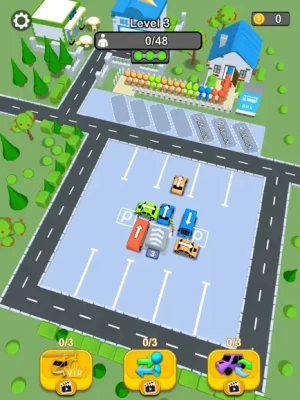
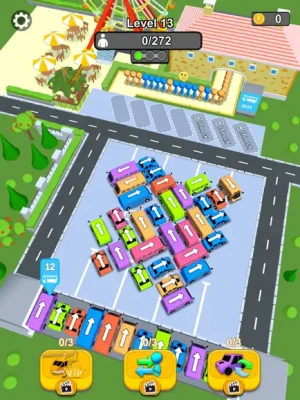
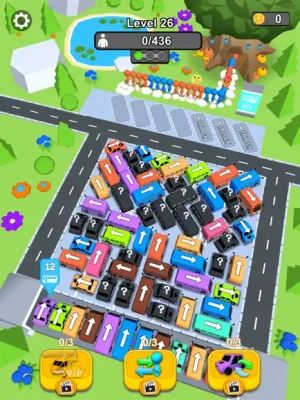
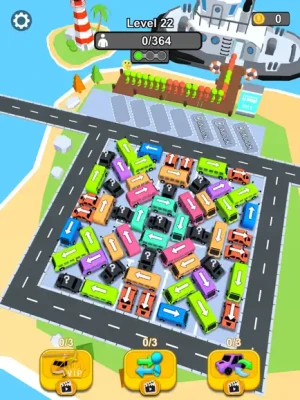
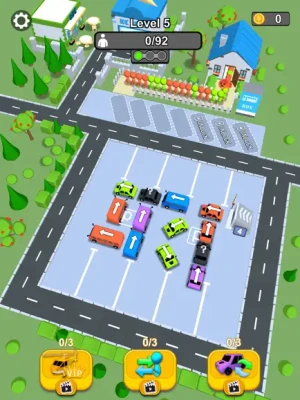
The central challenge comes from coordinating bus positions and passenger queues. You need to observe the colors, understand which passengers belong to which buses, and move vehicles in the right order without allowing the situation to become too difficult to manage.
The game also includes special power-ups designed to help when a puzzle becomes complicated.
The available App Store listing data describes Bus Chaos as a game focused on logic, observation, quick decisions, vehicle movement, and passenger color matching.
How Bus Chaos Gameplay Works
The basic gameplay loop is built around solving a crowded parking puzzle.
You need to:
- Examine the buses and passengers.
- Identify the relevant color matches.
- Move buses into useful positions.
- Allow the correct passengers to board.
- Avoid creating unnecessary blockages.
- Continue clearing the parking area.
- Use power-ups when they provide a meaningful advantage.
The game becomes challenging because your decisions affect what can happen next.
A move that looks useful immediately may create a problem a few moves later.
That makes planning and observation more important than simply moving the first available bus.
Complete Bus Chaos Strategy Guide
1. Study the Entire Board Before Moving
One of the most useful habits in Bus Chaos is taking a moment to look at the complete puzzle before making your first move.
Don't immediately tap the most obvious bus.
Instead, look for:
- The passengers currently waiting
- The colors of available buses
- Buses blocking other vehicles
- Potentially useful parking spaces
- Which bus can make immediate progress
- Which move could create a future blockage
Because the game emphasizes logic and observation, understanding the board before acting can prevent unnecessary mistakes.
2. Match Passenger Colors Carefully
Passenger sorting is at the heart of the puzzle.
The goal is to make sure passengers board the appropriate bus.
Before moving a bus, identify:
Which passengers does this bus serve?
Then ask:
Can I reach those passengers without blocking something more important?
This second question is crucial.
A correct color match isn't necessarily the best move if getting that bus into position prevents another bus from moving.
3. Think Several Moves Ahead
Bus Chaos rewards players who think beyond their immediate move.
For example, suppose a red bus can currently be moved into position.
Before doing so, consider:
- What happens after the red passengers board?
- Which vehicle becomes available?
- Does the red bus block another route?
- Does the next passenger group have a matching bus?
- Will the remaining parking spaces still be usable?
The best move is often the one that creates more options for your next few moves, rather than simply completing one immediate action.
4. Don't Create Parking Bottlenecks
The parking area is one of the most important parts of the puzzle.
When several buses are crowded together, careless movement can create a bottleneck.
Try to maintain enough room for future vehicle movements.
A useful principle is:
Don't sacrifice the entire board for one successful match.
If moving a bus solves one problem but makes several other buses inaccessible, it may not be the right time to move it.
5. Use Passenger Sorting Strategically
Bus Chaos includes a Passenger Sorting power-up that can reorganize the passenger queue so passengers better match the available bus colors.
This is particularly useful when the queue is becoming difficult to manage.
However, don't use the power-up automatically.
Before activating it, consider whether a normal bus movement can solve the problem.
Save special assistance for situations where it actually changes the puzzle.
Passenger Sorting is particularly useful when:
- The queue order is preventing progress.
- The correct bus is available but the passengers are poorly arranged.
- Several passenger colors are competing for attention.
- You have limited useful moves.
- The current arrangement is creating a chain of blocked decisions.
6. Understand the Helicopter Power-Up
The game also provides a Helicopter power-up.
According to the available listing description, the helicopter can transport a bus directly to the VIP area.
This gives you a way to bypass part of the normal vehicle movement process.
The key is deciding when the shortcut is actually valuable.
Use it when a bus is difficult to position normally or when removing that bus would significantly simplify the board.
Don't waste a powerful tool simply because it is available.
7. Solve the Biggest Problem First
When a board becomes crowded, identify the move causing the most trouble.
Ask:
Which bus or passenger group is preventing the most other actions?
That should often become your priority.
For example, if one bus is blocking access to several other vehicles, moving that bus may be more valuable than immediately completing a simple color match elsewhere.
This is a classic puzzle principle:
Remove the bottleneck before optimizing the easy moves.
8. Keep an Escape Route
Whenever possible, avoid completely filling your available movement space.
You want to preserve options.
A board with several possible moves is safer than one where only a single move remains.
Before committing to a movement, consider whether you're reducing your future options.
If a move leaves you with only one possible action, make sure that action is actually useful.
9. Don't Rush Because the Game Is Fast-Paced
The listing describes Bus Chaos as fast-paced, but fast-paced does not mean every decision should be made instantly.
The game still depends on observation and logic.
A few extra seconds of planning can prevent an entire puzzle from becoming complicated.
Develop the habit of:
Observe → Plan → Move → Reassess
rather than:
Tap → Tap → Tap → Fix the mistake
Bus Chaos Advanced Strategy
Create Chains of Progress
The best puzzle moves often produce multiple benefits.
For example:
Move Bus A → passengers board → parking space opens → Bus B becomes accessible → next passenger group can board
This is much more valuable than a move that only solves one small part of the puzzle.
Whenever possible, look for moves that trigger a chain reaction.
Prioritize Mobility
A bus that can move freely gives you options.
A bus trapped behind several other vehicles doesn't.
Therefore, keeping important vehicles mobile can be more valuable than immediately completing a passenger match.
When evaluating two possible moves, consider not just what each move solves but also how much freedom it leaves afterward.
Plan Around the Queue
The passenger queue should be treated as part of the puzzle rather than as a separate system.
Before moving buses, check which passengers are likely to become relevant next.
If the queue contains several passengers of one color, a matching bus may become particularly important.
Conversely, if the required bus is inaccessible, you may need to change the board first.
Bus Chaos Tips and Tricks
Tip 1: Scan before moving
Look at buses, passengers and parking spaces before making your first decision.
Tip 2: Match colors carefully
Don't assume the first available bus is the correct choice.
Tip 3: Keep space available
Crowded parking areas can quickly become difficult to recover.
Tip 4: Solve bottlenecks
Move the vehicle that is preventing the greatest number of future actions.
Tip 5: Think ahead
Try to predict at least the next two or three consequences of a major move.
Tip 6: Save power-ups
Don't spend special tools on situations that can easily be solved normally.
Tip 7: Use Passenger Sorting when the queue becomes the problem
The power-up is designed specifically to reorganize passengers according to bus colors.
Tip 8: Use the Helicopter to remove difficult vehicles
The helicopter can transport a bus directly to the VIP area.
Tip 9: Protect your future moves
A successful current move isn't necessarily good if it leaves the board impossible to manage.
Tip 10: Reassess after every major movement
The board changes after buses and passengers move, so don't blindly follow your original plan.
Bus Chaos Progression Guide
Early Levels
The opening levels are the ideal time to learn the game's core logic.
Focus on:
- Understanding bus colors
- Learning passenger matching
- Learning how parking movement works
- Identifying blocked vehicles
- Practicing forward planning
Don't rely heavily on power-ups while learning.
Understanding the normal puzzle mechanics will make later levels easier.
Middle Levels
As the boards become more crowded, start paying more attention to the order of your moves.
At this stage:
- Look for bottlenecks.
- Preserve parking space.
- Plan passenger matches.
- Consider several moves ahead.
- Use power-ups when they provide genuine value.
The main difference from the early game is that mistakes can have more consequences.
Later Levels
More complicated layouts require you to combine several ideas.
Your priority should become:
Board awareness → Bottleneck removal → Color matching → Space management → Chain reactions
Don't focus on one bus in isolation.
Instead, consider how every movement changes the entire puzzle.
Power-Up Guide
Helicopter
Purpose: Moves a bus directly to the VIP area.
Best use: When a particular bus is difficult to move through the normal parking arrangement or removing it will significantly simplify the board.
Passenger Sorting
Purpose: Reorganizes the passenger queue so passengers match bus colors more effectively.
Best use: When passenger order is preventing otherwise possible matches.
Why Observation Matters in Bus Chaos
Bus Chaos isn't only about matching colors.
The game combines logic, observation, vehicle positioning, and quick decision-making.
That combination means there are two things you should constantly monitor:
The immediate problem
Which passenger or bus needs attention right now?
The future problem
What will happen after you solve the immediate problem?
Strong play comes from answering both questions before moving.
Features
Based on the available listing information, Bus Chaos includes:
- Bus parking puzzles
- Passenger color matching
- Vehicle movement
- Parking-lot management
- Logic-based challenges
- Observation-focused gameplay
- Quick decision-making
- Helicopter power-up
- Passenger Sorting power-up
- VIP-area mechanics
- Multiple levels
- Casual puzzle gameplay
The game is listed under Casual/Puzzle and was developed by Solid Games.
Reviews and Player Feedback
The available App Store market data reports an overall rating of approximately 4.61/5, although ratings can change over time and may vary by storefront.
The game's description and categorization position it as a puzzle experience rather than a traditional driving simulator.
That distinction is important: the main challenge is decision-making and organization, not realistic bus driving.
The available listing data also shows that the game has received additional levels through updates, with version 0.1.8 recorded as adding new levels.
Is Bus Chaos Worth Playing?
Bus Chaos is designed for players who enjoy short-form puzzle challenges built around matching, organization, spatial reasoning and planning.
Its bus theme makes the gameplay easy to understand, while the crowded parking areas create the actual strategic challenge.
The game is particularly suited to players who enjoy:
- Color-matching puzzles
- Parking puzzles
- Logic games
- Casual mobile games
- Short puzzle sessions
- Games involving spatial planning
- Increasingly complicated board layouts
The experience is much more about solving the puzzle efficiently than about controlling a bus like you would in a driving game.
Pros and Cons
Pros
- Easy-to-understand concept
- Bus and passenger theme gives the puzzles a clear purpose
- Combines color matching with spatial planning
- Requires observation and forward planning
- Helpful power-ups
- Multiple levels
- Casual format suitable for short sessions
- New levels have been added through updates
Cons
- Players looking for a realistic bus simulator may find the puzzle focus unexpected
- Repeated color-matching and parking mechanics may feel familiar to some puzzle players
- More complicated boards can become dependent on careful move ordering
- Power-ups can reduce the challenge if used too freely
Platforms and Requirements
The available App Store listing data indicates support for:
iPhone: iOS 12.0 or later
iPad: iPadOS 12.0 or later
iPod touch: iOS 12.0 or later
The game is listed in English and is approximately 212.5 MB according to the available listing data.
In-App Purchases
Bus Chaos is listed as a free game with nine in-app purchase items in the available App Store market data.
Because purchase names and prices can vary between storefronts and may change with updates, it is better for the CityParkGames page to display the current U.S. App Store purchase information dynamically rather than publishing old regional pricing as permanent information.
FAQ
What is Bus Chaos?
Bus Chaos is a casual puzzle game where you manage buses in a crowded parking area and match passengers with the correct bus colors.
How do you play Bus Chaos?
Move buses around the parking area, organize the vehicles, and make sure passengers board the appropriate buses.
Is Bus Chaos a bus driving game?
Not in the traditional sense. It is primarily a puzzle and logic game focused on bus positioning, passenger matching and parking-lot organization.
What are the Bus Chaos power-ups?
The available listing describes two notable power-ups: Helicopter, which can transport a bus directly to the VIP area, and Passenger Sorting, which reorganizes passengers so they better match bus colors.
What is the best Bus Chaos strategy?
Study the entire board before moving, identify the most restrictive vehicle or passenger group, preserve parking space, and plan several moves ahead.
How do you avoid getting stuck?
Avoid filling critical parking spaces unnecessarily. Before every major movement, consider how the move will affect the next several actions.
Should I use power-ups immediately?
Usually not. Save them for situations where they remove a significant bottleneck or rescue a difficult arrangement.
Does Bus Chaos have multiple levels?
Yes. The available version history records new levels being added in an update.
Is Bus Chaos free?
The available listing data identifies Bus Chaos as a free game with in-app purchases.
Final Thoughts
Bus Chaos turns a crowded bus parking area into a surprisingly strategic puzzle.
The objective sounds simple: get passengers onto the correct buses. In practice, the order in which you move vehicles, the amount of parking space you preserve, and the way you anticipate future passenger matches can determine whether a puzzle remains manageable.
The most effective approach is to slow down and observe the entire board before making important moves.
Remember the basic formula:
Observe → Match → Plan → Move → Reassess
Power-ups such as the Helicopter and Passenger Sorting tools provide additional ways to handle difficult situations, but careful planning should remain the foundation of your strategy.
For fans of casual logic games, color-matching puzzles, parking challenges and quick mobile brain teasers, Bus Chaos offers a straightforward concept with progressively more demanding decision-making.
Rate the Game
User Reviews















Popular Games



















 Android
 iOS
 Windows
 Xbox