

Latest Version
August 18, 2024
iKame Games - Zego Studio
Puzzle
0
com.ig.screw.jam.nuts.bolts
Report a Problem
More About :game
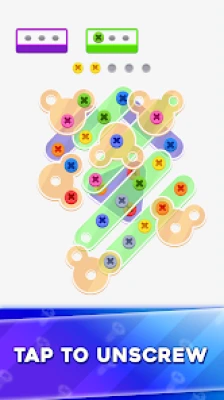
The game's published description focuses on screw-out challenges, tangled pins, jammed screws, nuts and bolts, and puzzles designed to test logic and patience. It also promotes hundreds of levels and a system where careful planning is important.
Game Information
| Feature | Details |
|---|---|
| Game | Screw Out: Nuts and Bolts |
| Developer | iKame Games - Zego Studio |
| Package | com.ig.screw.jam.nuts.bolts |
| Genre | Puzzle |
| Platform | Android |
| Gameplay | Screw, pin, nut and bolt puzzles |
| Levels | Hundreds of challenges |
| Hints | Available |
| Power-Ups | Available |
| Monetization | Free with in-app purchases |
| Latest indexed version | 2.90.1 |
| Android requirement | Android 7.0+ |
The current indexed information identifies the developer as iKame Games - Zego Studio and lists version 2.90.1 as the latest version, with a March 19, 2026 update date.
What Is Screw Out: Nuts and Bolts?
Screw Out: Nuts and Bolts takes the familiar mechanics of screws and bolts and turns them into a brain-teasing puzzle experience.
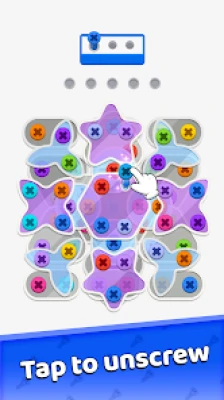
Each stage presents a mechanical arrangement that must be dismantled. Screws can hold pieces in place, pins can become tangled, and some sections cannot be reached until another part of the structure has been removed.
That means solving a level is not simply about finding something that can be unscrewed. You need to determine what should be removed first.
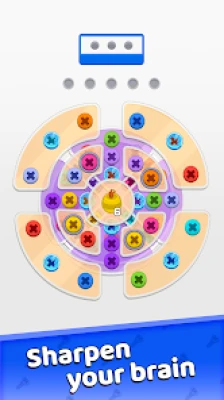
The game specifically promotes tricky pins, jammed screws, complex screw puzzle setups and hundreds of levels that test logic and patience.
How to Play Screw Out: Nuts and Bolts
1. Study the Entire Board
Before making your first move, take a moment to examine the complete puzzle.
Look for:
- Exposed screws
- Blocked screws
- Overlapping pieces
- Tangled pins
- Open spaces
- Pieces controlling access to other sections
- Potentially useful removal routes
The first screw you notice is not necessarily the best one to remove.
2. Find the Key Screw
Some screws are much more important than others.
Removing one screw may expose several pieces, while another might only release a single object.
Try to identify the screw that has the biggest effect on the structure.
3. Plan the Removal Order
Think about your moves as a sequence:
Remove → expose → release → clear → repeat
Instead of asking only, "Can I remove this screw?", ask:
"What will happen after I remove it?"
That question is particularly useful on harder levels.
4. Free Tangled Pins
Some stages contain pins that appear trapped.
Do not always try to move the trapped pin directly.
Look around it and identify the screw, board or piece that is preventing it from moving.
Removing the correct surrounding piece can create the opening you need.
5. Clear the Puzzle
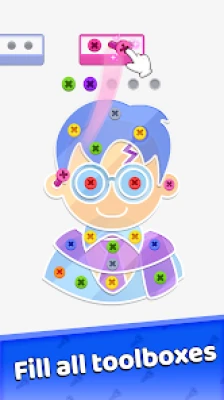
Continue removing screws and releasing pieces until the complete structure has been cleared.
The game is designed around increasingly difficult screw-out challenges, so later puzzles require more careful planning.
Complete Screw Out Strategy Guide
Strategy 1: Don't Rush the First Move
The first available screw is not automatically the correct starting point.
Before tapping it, ask:
What changes if I remove this screw?
If it only releases one isolated piece, another screw may provide a much better opening.
Strategy 2: Find the Main Blocker
Look for a screw that prevents access to several other pieces.
For example:
Screw A → blocks B and C
Removing A may immediately open two new routes.
That makes it more valuable than a screw that has little effect on the rest of the board.
Strategy 3: Work Backward
If you cannot figure out where to begin, identify the piece you ultimately want to release.
Then work backward:
- What is blocking the target?
- What is blocking that piece?
- Which screw controls the blocker?
- Can that screw be accessed now?
This turns a complicated arrangement into a sequence of smaller problems.
Strategy 4: Look for Safe Moves
A strong move usually gives you more options.
Look for actions that:
- Open a new section
- Expose hidden screws
- Release several pieces
- Create additional space
- Simplify the arrangement
Avoid moves that unnecessarily reduce your available choices.
Strategy 5: Don't Close Your Own Route
A move can be technically possible but strategically bad.
Before removing a screw, check what remains accessible afterward.
If the move leaves only one possible continuation, make sure that continuation is actually useful.
Strategy 6: Pay Attention to Colors
Color can help you recognize related pieces and potential groups.
When several pieces share a color, consider whether they can be handled together.
However, never let color alone determine your move order.
A matching piece may still be an important structural blocker.
Strategy 7: Examine the 3D Arrangement
The game's puzzle presentation requires spatial awareness.
Check for:
- Pieces behind other pieces
- Screws underneath boards
- Overlapping objects
- Hidden connections
- Narrow openings
Something that looks inaccessible from one angle may become obvious once you understand how the pieces interact.
Strategy 8: Plan Three Moves Ahead
You do not need to memorize an entire level.
Instead, try to plan the next three moves.
For example:
Remove blue screw → release panel → expose red screw.
Then reassess the board.
This makes difficult levels easier to manage.
Strategy 9: Use Hints Strategically
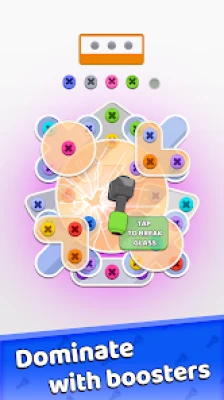
The game includes hints and power-ups for difficult screw and pin challenges.
Do not use them immediately just because a level looks complicated.
First check:
- Which screws are accessible?
- What is blocking the target?
- Where will the removed piece go?
- Which move opens the most options?
If you still cannot identify a workable sequence, assistance can be useful.
Strategy 10: Learn From Failed Attempts
A failed attempt can reveal where your strategy went wrong.
Ask:
- Which move created the problem?
- Did I remove a blocker too early?
- Did I ignore another route?
- Did I leave myself with no useful move?
- Did I focus too much on one section?
Then change that part of the sequence on your next attempt.
How to Solve Hard Screw Out Levels
When a level becomes difficult, use this simple process.
Step 1: Stop Random Tapping
Pause and inspect the board.
Step 2: Identify Your Target
Choose the piece or section you need to release.
Step 3: Find the Blocker
Determine exactly what prevents access to the target.
Step 4: Trace the Blocker
If that blocker is also trapped, find the piece holding it.
Step 5: Build a Sequence
Create a chain such as:
Starting screw → blocker → target → release
Step 6: Execute Carefully
Make one move at a time and reassess whenever the structure changes significantly.
Screw Out Tips for Beginners
If you are new to screw and bolt puzzle games, these habits can make the early stages easier:
- Examine the complete board before moving.
- Don't automatically choose the easiest screw.
- Look for pieces blocking several others.
- Think about where each removed piece will go.
- Keep multiple options available.
- Inspect overlapping pieces carefully.
- Plan two or three moves ahead.
- Avoid random tapping.
- Save hints for genuine dead ends.
- Learn from failed sequences.
Advanced Screw Puzzle Techniques
The Blocker Chain
When a target cannot be reached, think:
Target → Blocker → Blocker's blocker → Starting move
Once you understand this chain, a complicated puzzle becomes much more manageable.
The Opening-Move Test
Compare the available first moves.
Ask which one:
- Opens the most space
- Exposes the most pieces
- Creates the most future options
- Reduces the number of blockers
This gives you a more logical starting point.
The Space Test
Before removing a piece, ask:
Where will it go?
Don't focus only on what is being removed. Consider the position of the remaining pieces too.
The Two-Route Rule
Whenever possible, keep more than one potential route open.
If a move leaves you with only one possible continuation, make sure that continuation is safe before committing.
The Reset-and-Review Method
If you become stuck, restart the level and carefully examine the opening sequence.
The mistake that causes a later dead end often happens several moves earlier.
Common Screw Out Mistakes
Choosing the First Visible Screw
An exposed screw is not automatically the most useful screw.
Ignoring the Structure
A screw that appears independent may actually control another section.
Thinking Only About the Current Move
A move that works now can create a problem two or three moves later.
Forgetting About Space
Always consider where removed pieces will end up.
Repeating the Same Failed Sequence
If the same approach fails repeatedly, change the opening rather than simply repeating it.
Using Power-Ups Too Early
Keep useful assistance for situations where the puzzle genuinely leaves you without a clear route.
Screw Out: Nuts and Bolts Features
The published game information highlights:
- Screw-out puzzles
- Nuts and bolts
- Tangled pins
- Jammed screws
- Hundreds of levels
- Increasing difficulty
- Logic and problem-solving challenges
- Hints
- Power-ups
- Complex screw puzzle setups
- Satisfying screw-removal mechanics
The current indexed package is com.ig.screw.jam.nuts.bolts, and the developer is iKame Games - Zego Studio.
Is Screw Out: Nuts and Bolts Difficult?
The difficulty varies from level to level.
The basic mechanics are easy to understand, but later puzzles require more careful planning. The game's description specifically emphasizes increasingly challenging screw arrangements, tangled pins and jammed obstacles.
The hardest stages are better approached as logic problems rather than speed challenges.
If you find yourself stuck, slow down and look for the piece controlling the largest part of the board.
Is Screw Out: Nuts and Bolts Good for Puzzle Players?
Screw Out: Nuts and Bolts is built around a simple concept that gradually becomes more complex.
It can appeal to players who enjoy:
- Screw puzzles
- Nuts-and-bolts games
- Pin puzzles
- Screw jam challenges
- 3D logic puzzles
- Brain teasers
- Casual puzzle games
- Short puzzle sessions
The published description positions the game for both casual players and puzzle enthusiasts.
Screw Out: Nuts and Bolts Progression
The game advertises hundreds of screw-out challenges.
As players advance, the arrangements become more complicated, requiring stronger spatial awareness and better move planning.
A useful way to think about the progression is:
Early levels: Learn the basic mechanics.
Middle levels: Understand the importance of move order.
Hard levels: Combine spatial awareness, blockers, sorting and multi-step planning.
Game Performance and Current Version
The package is currently indexed as version 2.90.1, with a March 19, 2026 update that included minor bug fixes. The app requires Android 7.0 or later according to the indexed package information.
The game has also accumulated a large number of player ratings. One current app-market tracker reports more than 366,000 ratings/reviews and an average rating around 4.7, although store metrics can vary by country and change over time.
Pros and Cons
Pros
- Simple controls
- Easy-to-understand core concept
- Hundreds of puzzle challenges
- Increasing difficulty
- Screw, pin, nut and bolt mechanics
- Hints and power-ups
- Satisfying removal mechanics
- Suitable for short sessions
- Strong focus on logical problem solving
Cons
- Some puzzles can require repeated attempts
- Later stages demand more planning
- Ads and optional purchases may be present depending on the current store configuration
- Players who prefer fast-paced games may find the deliberate puzzle style slow
Frequently Asked Questions
What is Screw Out: Nuts and Bolts?
Screw Out: Nuts and Bolts is a puzzle game from iKame Games - Zego Studio focused on removing screws, untangling pins and solving nuts-and-bolts obstacles.
How do you play Screw Out?
Study the puzzle, identify accessible screws, determine which pieces are blocking others, and remove them in a carefully planned sequence.
Does Screw Out have hundreds of levels?
Yes. The published description promotes hundreds of screw-out levels and progressively challenging puzzles.
Does Screw Out have hints?
Yes. The game description mentions hints and power-ups for difficult screw and pin challenges.
What is the best strategy for Screw Out?
Look for the main blocker first. Then work backward from the piece you want to free and create a short sequence before making your first move.
Why do I get stuck on Screw Out puzzles?
You may have removed a screw in the wrong order or opened one section without considering the remaining structure. Restart the puzzle and examine the opening moves more carefully.
Is Screw Out: Nuts and Bolts free?
The game is listed as free, with in-app purchase information appearing in current market data for some regions.
Who developed Screw Out: Nuts and Bolts?
The game is developed by iKame Games - Zego Studio.
What Android version does Screw Out support?
The current indexed package information indicates Android 7.0 or later.
What is the package name for Screw Out: Nuts and Bolts?
The Android package name is com.ig.screw.jam.nuts.bolts.
Final Thoughts
Screw Out: Nuts and Bolts takes a familiar collection of screws, pins, nuts and bolts and turns them into a progressively harder logic challenge.
The key to success is not speed. It is planning the correct order.
Study the board, identify the important blocker, think a few moves ahead and keep track of how each action changes the structure. When a level becomes difficult, work backward from the piece you need to free instead of randomly testing screws.
Once you start viewing the board as one connected mechanical puzzle rather than a collection of individual screws, difficult levels become much easier to break down.
Rate the Game
User Reviews











Popular Games



















 Android
 iOS
iOS Windows
 Xbox
Xbox