

Latest Version
August 09, 2026
Short Circuit Studio
Puzzle
iOS
0
Report a Problem
More About :game
Tiny Connections – Complete Game Guide
Tiny Connections is a minimalist puzzle game built around a deceptively simple idea: connect every house to the infrastructure it needs without creating an inefficient or tangled network.
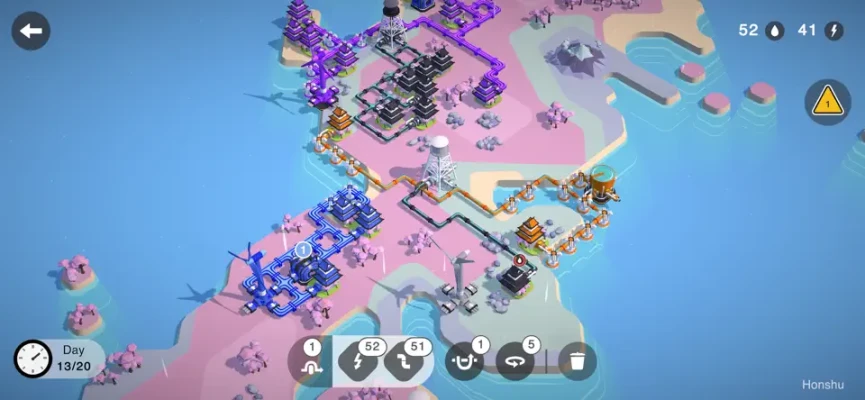
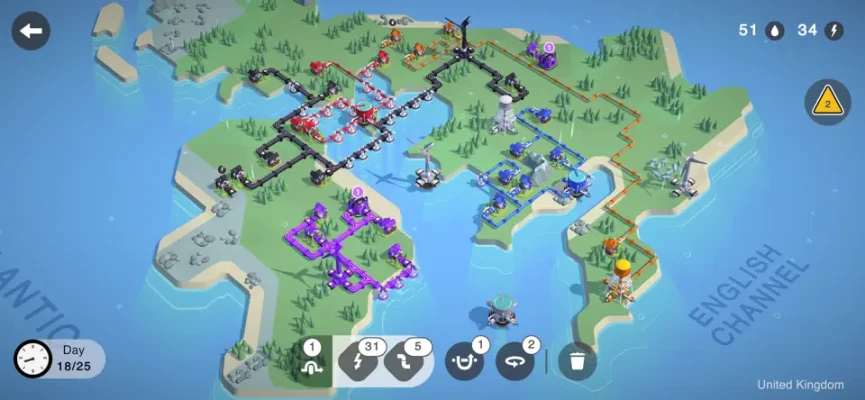
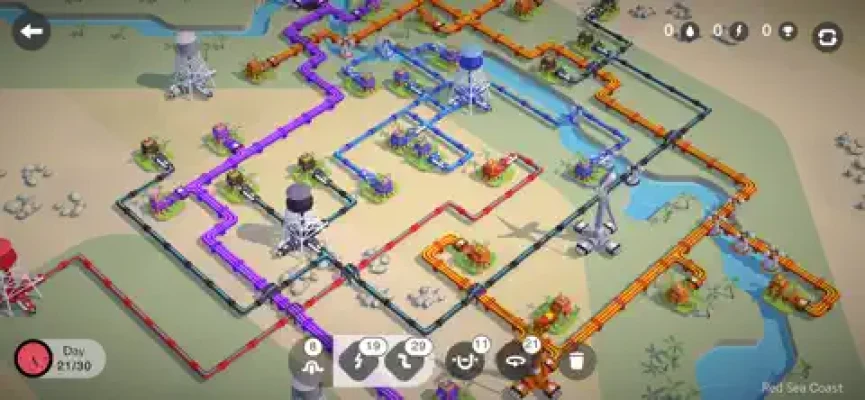
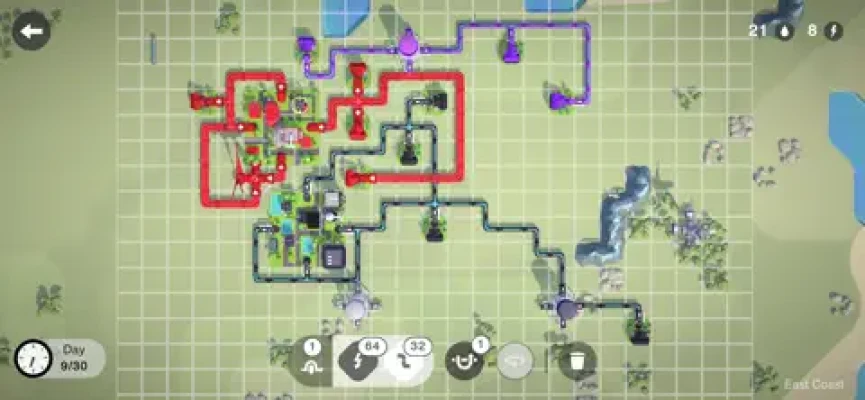
Players work with compact maps where houses and service stations must be connected according to their matching colors. As the puzzles become more complicated, you need to think carefully about routes, available space, intersections and the order in which connections are created.
The game combines logic puzzles, network planning and relaxing minimalist gameplay, making it a good fit for players who enjoy games that are easy to understand but progressively harder to master.
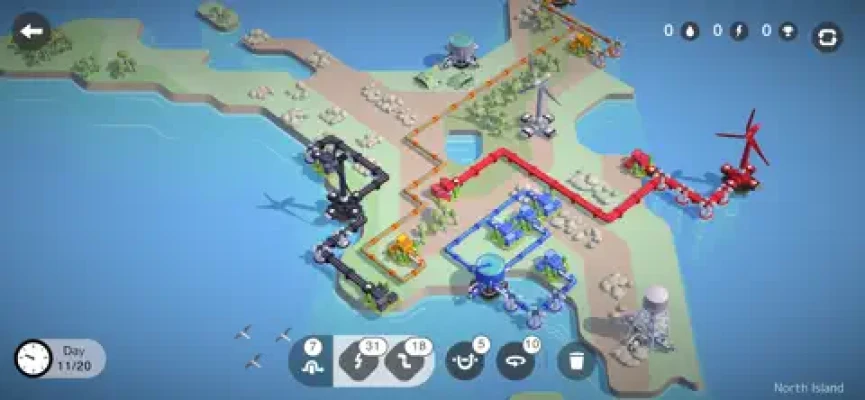
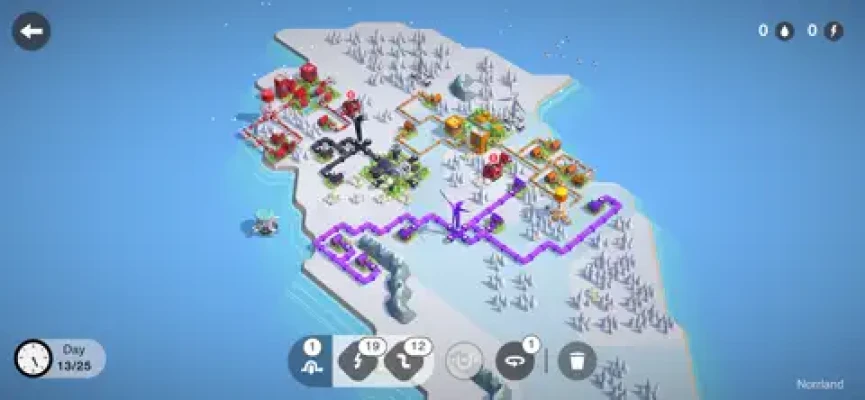
Tiny Connections is a connection-based puzzle game in which players build infrastructure networks between houses and matching service stations.
The objective sounds straightforward: make sure every home receives the required services.
The challenge comes from the limited space available on each map.
Lines cannot simply cross wherever you want, so every connection needs to be planned carefully.
The official App Store description highlights power and water connections, color matching, tight spaces and increasingly difficult layouts.
Tiny Connections Gameplay
The core gameplay revolves around connecting houses to infrastructure.
Each house has a specific color, and players need to connect it to the corresponding infrastructure station.
The most important rule is to create a working network without allowing connections to cross unnecessarily.
This transforms a simple drawing mechanic into a genuine spatial-logic challenge.
The Basic Gameplay Loop
Identify the Houses → Find Matching Stations → Plan Routes → Build Connections → Solve the Network → Move to the Next Challenge
As the layouts become more complicated, successful solutions require more careful planning.
Connecting Houses and Infrastructure
The central mechanic is connecting homes to their matching infrastructure.
For example, a house requiring a particular service needs to be connected to the appropriately colored station.
You must consider the entire map before committing to a route.
A connection that looks convenient at first may block another route later.
This means planning ahead is more important than simply drawing the shortest possible line.
Power and Water Networks
Tiny Connections focuses on essential services such as power and water.
The goal is to make sure homes receive the services they need while maintaining a functional and efficient network.
This infrastructure theme gives the game a distinctive identity compared with conventional connect-the-dots puzzle games.
Color Matching
Color is an important part of the puzzle system.
Players must match houses with their corresponding infrastructure.
This creates an immediately understandable visual language:
House Color → Matching Station → Correct Connection
The game also includes a colorblind mode with multiple variations, making the color-based mechanics more accessible.
Avoiding Crossed Lines
One of the biggest challenges in Tiny Connections is preventing routes from interfering with one another.
A seemingly correct connection can make another connection impossible.
Before drawing a route, consider:
- Where the other houses are located
- Where matching stations are positioned
- Whether another route needs the same space
- Whether an intersection will block future connections
- Whether a power-up could create a better solution
This turns each level into a small network-planning problem.
Power-Ups
Tiny Connections includes several tools that can help solve more complicated layouts.
The current game description specifically mentions:
- Tunnels
- Junctions
- House rotations
- Swaps
These power-ups give players additional ways to work around difficult layouts and create solutions that wouldn't otherwise be possible.
Tunnels
Tunnels can provide a way to move infrastructure through areas where a normal connection would create an obstacle.
They become particularly useful when several routes compete for the same limited space.
Junctions
Junctions add another strategic option for handling infrastructure networks.
They can help organize complicated layouts and provide additional flexibility when a straightforward connection isn't enough.
House Rotation
House rotation allows players to change the orientation of a house to improve the available connection routes.
This can be especially helpful when the starting position makes a direct route awkward.
Swaps
Swaps provide another way to modify the arrangement and solve situations where the existing configuration is preventing progress.
Together, these tools add depth without making the basic mechanics difficult to understand.
Real-World Maps
Tiny Connections features maps inspired by real countries and locations, with different layouts providing different challenges.
This gives the game a sense of progression beyond an endless collection of abstract puzzle boards.
Each map can introduce a new arrangement of homes and infrastructure, requiring players to rethink their approach.
Daily Challenges
The game includes daily challenges designed to provide additional puzzles outside the regular progression.
Daily challenges are particularly useful for players who enjoy having a small puzzle to solve regularly.
They also add another reason to return to the game after completing standard levels.
Weekly Challenges
Weekly challenges expand the same concept over a longer period.
Instead of focusing only on normal puzzle progression, players can compete in limited-time challenges and work toward rewards.
This adds a competitive and recurring element to an otherwise relaxing puzzle experience.
Achievements and Leaderboards
Tiny Connections includes achievements and global leaderboards.
Players can track their accomplishments and compare their performance with other players around the world.
The Game Center integration also supports leaderboards and achievements.
How to Play Tiny Connections
1. Examine the Entire Map
Before connecting anything, look at the positions of every house and infrastructure station.
2. Match the Colors
Identify which house belongs to which service station.
3. Find the Most Difficult Route
Some connections have fewer possible paths than others.
Solve those first when possible.
4. Leave Space for Other Connections
Don't use all available space for one route.
Remember that other houses still need connections.
5. Avoid Crossings
Plan routes that allow every network to remain separate and functional.
6. Use Power-Ups When Necessary
Tunnels, junctions, rotations and swaps can help when a normal solution isn't practical.
7. Check the Whole Network
Before finalizing your solution, make sure every home has the required service.
Beginner Tips
Start With the Most Restricted Connections
If one house has only one realistic route to its matching station, solve that connection first.
Don't Always Choose the Shortest Path
The shortest route isn't necessarily the best route.
A longer connection may leave enough room for other infrastructure.
Think About Future Routes
Every line you create changes the available space for the remaining connections.
Use the Edges of the Map
Outer areas can sometimes provide useful routes that leave the center open.
Don't Waste Power-Ups
Try to solve a puzzle naturally before using a special tool.
Save power-ups for situations where they provide a meaningful advantage.
Advanced Strategy
Tiny Connections becomes considerably more interesting once you stop treating each connection as an isolated problem.
The entire map is one network.
Identify Bottlenecks
Look for areas where several routes must pass through a limited amount of space.
These locations should influence your entire solution.
Solve the Most Constrained Pairs First
A house with several possible routes can usually wait.
A house with only one or two viable routes should receive priority.
Plan in Reverse
Sometimes it is easier to begin by considering the destination and working backward toward the house.
Preserve Central Space
If several connections need to pass through the center, avoid filling that area too early.
Use Power-Ups Strategically
A tunnel or rotation can completely change the geometry of a puzzle.
Don't use these tools merely because they're available.
Game Features
Tiny Connections offers:
- Minimalist infrastructure puzzles
- House-to-station connections
- Power and water networks
- Color-based matching
- Tight puzzle layouts
- Line-crossing challenges
- Tunnels
- Junctions
- House rotations
- Swaps
- Real-world-inspired maps
- Daily challenges
- Weekly challenges
- Achievements
- Global leaderboards
- Game Center support
- Colorblind accessibility modes
- Multiple languages
Difficulty and Progression
Tiny Connections begins with a straightforward concept, allowing players to understand the connection mechanic quickly.
The real challenge emerges when maps become more crowded.
As more homes and infrastructure points appear, there are fewer available routes and more opportunities to make an early decision that prevents a complete solution.
This creates a natural difficulty curve:
Simple Connections → More Houses → Tighter Spaces → More Complex Networks → Strategic Power-Up Use
Relaxing Gameplay
Despite its strategic depth, Tiny Connections is designed to be a relatively calm puzzle experience.
There is no need for fast reflexes.
The challenge comes from observation and planning rather than speed.
This makes it suitable for short sessions when you want something mentally engaging without the pressure of an action game.
Accessibility
Tiny Connections includes a colorblind mode with multiple variations, an important feature because color matching is central to the game's mechanics.
The current App Store listing also supports 13 languages:
- English
- Dutch
- French
- German
- Italian
- Japanese
- Korean
- Portuguese
- Russian
- Simplified Chinese
- Spanish
- Thai
- Turkish
Game Center Features
The game supports Apple Game Center, including:
- Achievements
- Leaderboards
- Friend challenges
This gives experienced players additional goals beyond simply completing the puzzles.
Replay Value
Tiny Connections gets much of its replay value from its variety of maps, increasing puzzle complexity, daily challenges and weekly events.
The combination means players can have several different reasons to return:
- Continue the main progression
- Complete daily challenges
- Participate in weekly challenges
- Improve leaderboard performance
- Unlock achievements
- Master difficult layouts
Graphics and Visual Style
Tiny Connections uses a clean, minimalist visual style that fits its infrastructure theme.
The uncluttered presentation makes it easy to identify houses, stations and connection paths.
This is especially important because the game depends heavily on spatial awareness. A visually complicated interface would make the puzzles unnecessarily difficult.
Sound and Atmosphere
The game's overall design is intended to feel calm rather than frantic.
The combination of minimalist visuals and thoughtful network planning creates a relaxed atmosphere while still providing enough strategic depth to keep puzzle fans engaged.
Player Experience
Tiny Connections works particularly well for players who enjoy logic puzzles with simple rules and increasingly complex solutions.
The basic mechanic can be understood almost immediately, but finding an efficient solution can require considerably more thought.
The UAE App Store currently shows a 4.3/5 rating from 23 ratings, although this is a relatively small review sample.
Pros and Cons
Pros
- Easy-to-understand mechanics
- Surprisingly deep network puzzles
- Relaxing gameplay
- Infrastructure theme
- Multiple power-ups
- Real-world-inspired maps
- Daily challenges
- Weekly challenges
- Achievements
- Global leaderboards
- Colorblind modes
- Game Center support
- Broad language support
Cons
- Some puzzles can become difficult quickly
- Color matching is central to gameplay, although accessibility options are available
- Some additional content and features are offered through in-app purchases
- The current UAE listing has a relatively small number of ratings, so its 4.3 score is based on limited local review data.
Who Should Play Tiny Connections?
Tiny Connections is a good choice for players who enjoy:
- Logic puzzle games
- Connection puzzles
- Infrastructure games
- Relaxing mobile games
- Strategy puzzles
- Brain teasers
- Minimalist games
- Spatial reasoning
- City and network planning
- Daily puzzle challenges
It's particularly appealing if you like games where simple rules hide increasingly complicated solutions.
Tiny Connections vs. Traditional Puzzle Games
Traditional puzzle games often focus on matching, arranging or eliminating objects.
Tiny Connections takes a different approach by turning the puzzle into a miniature infrastructure-planning problem.
You're not simply looking for a matching pair.
You're asking:
How can every house receive the correct service while keeping the entire network functional?
That distinction gives the game its strategic character.
Technical Information
| Information | Details |
|---|---|
| Game | Tiny Connections |
| Developer | Short Circuit Studio |
| Provider | Short Circuit Studios AB |
| Category | Puzzle |
| Secondary Genre | Strategy |
| Price | Free |
| In-App Purchases | Yes |
| Age Rating | 4+ |
| App Size | Approximately 472.9 MB |
| iPhone | iOS 15.0 or later |
| iPad | iPadOS 15.0 or later |
| Mac | macOS 12.0+ with Apple M1 or later |
| Apple Vision | visionOS 1.0 or later |
| Languages | 13 |
| Game Center | Yes |
| Family Sharing | Yes |
These specifications reflect the current UAE App Store listing.
Latest Update
The App Store page currently shows version 1.3.2 with a release note dated April 26, 2025, describing the update as focused on bug fixes.
A separate current app-data listing records version 1.3.4, dated December 20, 2025, with GameKit updates and fixes related to in-app purchases. Because the Apple UAE page currently displays 1.3.2 in its visible version history, it is safer for your published page to avoid presenting 1.3.4 as the current UAE App Store version unless you verify it directly in the store at publication time.
In-App Purchases
The UAE App Store currently lists optional purchases including a starter pack, full-game unlock, regional bundle, Journey Beginnings bundle and a no-ads option.
The listed prices include:
- Tiny Connection Starter Pack — AED 19.99
- Full Game Unlock — AED 19.99
- Lands Down Under Bundle — AED 7.99
- Journey Beginnings Bundle — AED 12.99
- Tiny Connections No Ads — AED 12.99
Expert Rating
Puzzle Design: 9/10
Strategy: 9/10
Accessibility: 9/10
Visual Clarity: 9/10
Replay Value: 8.5/10
Relaxing Gameplay: 9.5/10
Overall: 9/10
Final Verdict
Tiny Connections takes a very simple concept—connecting houses to infrastructure—and turns it into a surprisingly thoughtful logic puzzle.
Its strongest feature is the way difficulty develops naturally. Early puzzles teach you the basic rules, while later layouts force you to consider the entire network before making a single connection.
With power and water networks, color matching, tight spaces, tunnels, junctions, house rotations, swaps, real-world-inspired maps, daily challenges and global leaderboards, the game offers considerably more strategic depth than its minimalist presentation initially suggests.
If you enjoy relaxing puzzle games that reward patience, spatial reasoning and careful planning, Tiny Connections is well worth trying.
Frequently Asked Questions
What is Tiny Connections?
Tiny Connections is a puzzle game where you connect houses to matching infrastructure while managing limited space and avoiding problematic crossings.
Is Tiny Connections free?
Yes. The App Store lists Tiny Connections as free with optional in-app purchases.
What is the goal of Tiny Connections?
The goal is to connect homes to the appropriate infrastructure, such as power and water, while creating a functional network.
Does Tiny Connections have power-ups?
Yes. The game includes tunnels, junctions, house rotations and swaps to help solve more difficult layouts.
Does Tiny Connections have daily challenges?
Yes. Daily and weekly challenges are part of the game's feature set.
Does Tiny Connections have leaderboards?
Yes. The game supports global leaderboards and Apple Game Center features.
Does Tiny Connections have a colorblind mode?
Yes. It includes multiple colorblind-mode variations to make the color-based puzzles more accessible.
Is Tiny Connections available on iPad?
Yes. The game is designed for iPad as well as iPhone. It also supports Mac computers with an Apple M1 chip or later and Apple Vision according to the current App Store listing.
What iOS version does Tiny Connections require?
The current UAE App Store listing requires iOS 15.0 or later for iPhone and iPadOS 15.0 or later for iPad.
Who developed Tiny Connections?
Tiny Connections was developed by Short Circuit Studio, with Short Circuit Studios AB listed as the provider.
Rate the Game
User Reviews














Popular Games



















 Android
 iOS
iOS Windows
 Xbox
Xbox