


Latest Version
April 04, 2026
Mobility Ware
Puzzle
iOS
0
Report a Problem
More About :game
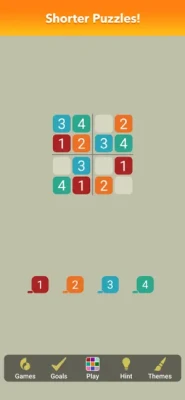
Players can start with smaller and easier puzzles before moving toward harder challenges. The game also lets experienced Sudoku fans switch to a more traditional black-and-white appearance.
What Is Sudoku Color - Classic Puzzle!?
Sudoku Color - Classic Puzzle! is a logic and number puzzle game built around the classic Sudoku formula.
The objective is straightforward: complete each puzzle by placing numbers correctly while ensuring that the same number does not appear more than once within the relevant rows, columns, and sections.
What makes this version different is its colorful presentation and progression system. Instead of immediately placing new players in front of a large, intimidating grid, the game introduces smaller puzzles and gradually increases the challenge.
For experienced Sudoku players, traditional gameplay is also available, including a classic black-and-white visual style.
Sudoku Color Gameplay
The core gameplay remains faithful to classic Sudoku.
You select an empty space and determine which number belongs there based on the information already present in the puzzle.
Every move requires logical reasoning.
A successful solution depends on understanding relationships between:
- Rows
- Columns
- Grid sections
- Existing numbers
- Empty cells
- Possible candidates
- Previously placed numbers
The colorful interface is designed to make the puzzle easier to approach visually while retaining the strategic depth that makes Sudoku popular.
How to Play Sudoku Color
The basic rules are easy to understand.
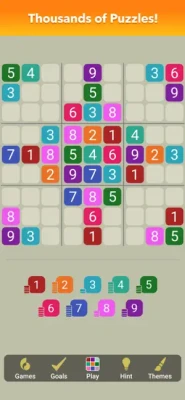
A standard Sudoku puzzle requires players to arrange numbers so that each number appears only once within its applicable row, column, and 3×3 section.
The challenge comes from determining which number can logically occupy each empty cell.
A good solving routine is:
- Look for obvious missing numbers.
- Examine each row.
- Check each column.
- Study the surrounding section.
- Eliminate impossible candidates.
- Place numbers only when the logic supports them.
- Continue until the entire grid is complete.
Avoid random guessing whenever possible. Sudoku rewards deduction rather than luck.
Colorful Sudoku Design
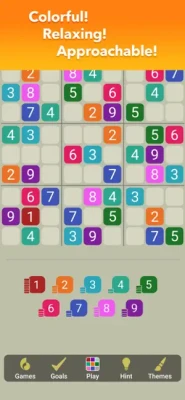
The defining feature of this version is its colorful presentation.
The game offers a gentler alternative to traditional black-and-white Sudoku boards, with color used throughout the puzzle experience. MobilityWare specifically presents the colorful design as an approachable way for players to interact with the grid.
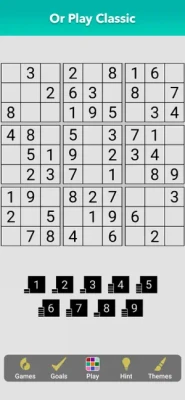
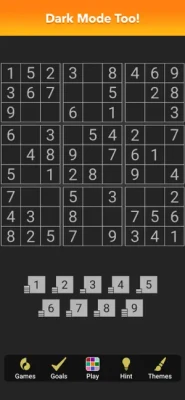
Players who prefer the traditional appearance can also customize the experience to use a classic black-and-white style.
Smaller Sudoku Puzzles for Beginners
New players do not necessarily need to begin with a full, intimidating Sudoku grid.
Sudoku Color introduces smaller puzzles to help players become comfortable with the logic behind number placement before progressing to more challenging boards.
This makes the game suitable for people who are learning Sudoku for the first time.
As confidence improves, players can increase the difficulty and tackle more demanding puzzles.
Difficulty Levels
Sudoku Color provides multiple difficulty options designed for different experience levels.
Beginners can start with easier puzzles and gradually develop their solving skills.
More experienced players can increase the challenge and work toward harder puzzles, including Expert difficulty. The App Store version history notes that Expert mode was added alongside additional goals and the Notes feature.
A typical progression can look like:
Beginner
Learn the fundamental rules and identify straightforward moves.
Intermediate
Work with more possibilities and fewer obvious placements.
Hard
Solve puzzles requiring more careful elimination and planning.
Expert
Use advanced logical thinking to work through difficult grids.
Daily Sudoku Challenges
Daily challenges give players a reason to return regularly.
The game has included daily challenges where players can solve a new puzzle and earn progression-related rewards such as crowns and trophies.
These challenges transform Sudoku from an occasional puzzle into a repeatable daily activity.
Weekly Events and Special Challenges
Sudoku Color has expanded beyond traditional standalone puzzles through events.
The current App Store description highlights weekly events, including special holiday puzzles, travel-themed destinations, and garden-related activities.
The Travel Events feature includes 53 destinations, giving players additional objectives alongside normal Sudoku solving.
These events add variety without removing the familiar Sudoku mechanics.
Travel Events
Travel Events provide a progression layer built around different destinations.
Players solve puzzles while progressing through a collection of locations.
The system gives regular Sudoku sessions an additional objective, making each completed puzzle feel connected to a larger journey.
Garden Activities
The game also includes garden-themed progression.
Players can complete Sudoku puzzles and earn watering cans used as part of the garden activity.
This gives players another reason to continue solving puzzles beyond simply completing the next grid.
Notes Feature
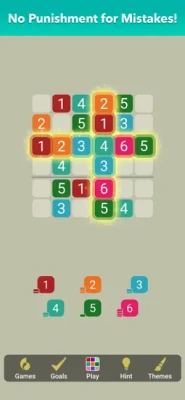
Sudoku Color includes a Notes feature designed to help players keep track of possible numbers in empty cells.
Notes are particularly useful when a puzzle becomes more complicated and several candidates remain possible.
Instead of trying to remember every possibility mentally, players can record potential numbers and gradually eliminate them as new information becomes available.
Classic Black-and-White Sudoku
Color is not mandatory.
Players who prefer the appearance of traditional Sudoku can switch to a classic black-and-white presentation.
This makes the game suitable for both players who want something visually different and longtime Sudoku fans who prefer the traditional board.
Sudoku Strategy
Strong Sudoku solving is based on elimination.
When examining an empty cell, ask:
Which numbers are impossible here?
Then consider the remaining candidates.
For example, if a row already contains several numbers, those numbers cannot be placed in the remaining empty cells.
The same principle applies to columns and grid sections.
By repeatedly eliminating impossible candidates, you can gradually identify the correct placements.
Beginner Sudoku Tips
Start With Easy Puzzles
Learning the basic logic is easier when the grid provides obvious moves.
Scan Rows
Look for rows that are almost complete.
Check Columns
A missing number may become obvious when you compare the column with its surrounding sections.
Study 3×3 Sections
The smaller sections can often reveal placements that are not immediately visible from the full grid.
Use Notes
When multiple candidates are possible, record them rather than guessing.
Avoid Guessing
A logical solution should allow you to determine the correct number.
Advanced Sudoku Tips
Experienced players can go beyond simple number scanning.
Candidate Elimination
Identify all possible candidates for a cell and eliminate them as new numbers are placed.
Hidden Singles
Sometimes a number can occupy only one position within a row, column, or section even when that position initially has multiple candidates.
Naked Pairs
If two cells in the same unit contain exactly the same two candidates, those numbers can be eliminated from other cells in that unit.
Locked Candidates
Use the relationship between a 3×3 section and its associated rows or columns to eliminate possibilities.
Advanced Patterns
Experienced Sudoku players may eventually explore techniques such as X-Wing and other advanced candidate patterns.
The game itself is designed to accommodate both casual solvers and experienced Sudoku players.
Progression System
Sudoku Color gives players progression beyond individual puzzle completion.
Repeated play can contribute to titles, goals, crowns, trophies, and event progress.
The App Store reviews also show that long-term players can complete a very large number of puzzles and continue progressing through the game's title system.
This creates a sense of long-term achievement for dedicated players.
Achievements and Game Center
The App Store listing states that the game supports Game Center, including leaderboards and achievements.
This allows players to compare progress and pursue additional accomplishments beyond simply solving puzzles.
Visual Experience
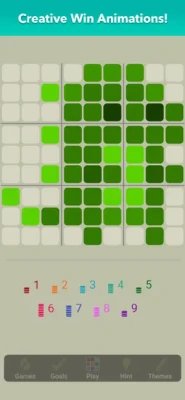
The colorful presentation is designed to make the Sudoku board feel less stark than a traditional black-and-white grid.
The visual approach is particularly useful for players who prefer a softer, more approachable interface.
At the same time, the classic visual option means experienced players can retain the traditional Sudoku appearance.
Audio and Atmosphere
Sudoku Color is primarily a quiet, focused puzzle experience.
Rather than relying on action, storytelling, or complex environments, its atmosphere is built around concentration and repeated problem-solving.
This makes it suitable for short sessions as well as longer puzzle-solving periods.
Game Modes and Activities
| Mode / Activity | Description |
|---|---|
| Classic Sudoku | Traditional number-placement puzzles |
| Color Sudoku | Colorful presentation of the classic formula |
| Smaller Puzzles | Beginner-friendly introduction |
| Difficulty Levels | Gradual increase in challenge |
| Expert Mode | More demanding Sudoku puzzles |
| Daily Challenges | New daily puzzle objectives |
| Weekly Events | Special recurring challenges |
| Travel Events | Puzzle progression through destinations |
| Garden Activity | Earn watering cans while solving puzzles |
| Game Center | Achievements and leaderboards |
These activities are based on the current App Store description and version history.
iPhone and iPad Experience
Sudoku Color is available for iPhone and iPad.
The current App Store listing requires iOS 15.0 or later on iPhone and iPadOS 15.0 or later on iPad. It is also listed for Apple Vision and compatible Apple Silicon Macs with the required operating system versions.
The game is particularly well suited to touchscreens because selecting cells and entering numbers is simple and direct.
Technical Details
| Detail | Information |
| Game | Sudoku Color - Classic Puzzle! |
| Developer | MobilityWare |
| Genre | Puzzle |
| Platform | iPhone, iPad |
| Age Rating | 4+ |
| Price | Free |
| iPhone Requirement | iOS 15.0 or later |
| iPad Requirement | iPadOS 15.0 or later |
| Languages | English + 7 more |
| Game Center | Yes |
| Leaderboards | Yes |
| Achievements | Yes |
| Advertising | Yes |
| In-App Purchases | Available |
| Developer | MobilityWare |
The App Store currently lists the game as free, with advertising, Game Center support, and the above compatibility information.
Updates and New Content
Sudoku Color has received continuing updates focused on stability, performance, bug fixes, and additional activities.
Recent App Store information lists version 1.7.1 with new events involving destinations and garden activities, while earlier updates introduced events, Expert difficulty, Notes, additional daily goals, and other improvements.
This continuing development helps keep the puzzle experience from becoming limited to a single static Sudoku mode.
Player Experience
Sudoku Color has built a strong player base on the App Store, with the current U.S. listing showing a 4.8 out of 5 rating from around 35,000 ratings.
Players particularly value the simple gameplay, colorful presentation, and ability to play Sudoku regularly.
Some recent reviews have also raised concerns about advertising and the usefulness of hints, showing that the player experience is not universally positive.
These mixed comments are worth mentioning because they provide a more balanced picture than focusing only on the overall rating.
Pros and Cons
Pros
- Classic Sudoku rules
- Colorful visual design
- Traditional black-and-white option
- Beginner-friendly smaller puzzles
- Multiple difficulty levels
- Expert mode
- Daily challenges
- Weekly events
- Travel Events
- Garden activities
- Notes feature
- Game Center achievements
- Game Center leaderboards
- Available on iPhone and iPad
- Free to download
Cons
- Contains advertising
- Some players have criticized the placement of ads
- Hint functionality may not satisfy advanced Sudoku players
- Long-term players may eventually find progression titles less rewarding
- Advanced Sudoku explanations are limited compared with specialist Sudoku training apps
Recent App Store reviews specifically mention advertising and requests for more informative solving hints.
Is Sudoku Color Good for Beginners?
Yes.
The game's smaller starting puzzles and gradual difficulty progression make it particularly approachable for people who have never played much Sudoku.
The colorful board can also feel less intimidating than a large traditional black-and-white grid.
Beginners can learn the fundamental rules before moving toward harder puzzles.
Is Sudoku Color Good for Experienced Players?
It can be.
Experienced players can use harder difficulty levels, Expert mode, traditional Sudoku presentation, Notes, daily challenges, and recurring events.
However, advanced Sudoku enthusiasts who specifically want detailed explanations of sophisticated solving techniques may prefer a specialized training-focused Sudoku application.
Is Sudoku Color Good for Daily Play?
Yes.
Daily challenges, progression, achievements, events, and additional activities give players several reasons to return.
The short-session nature of Sudoku also makes the game convenient for playing during breaks or whenever you have a few minutes available.
Who Should Play Sudoku Color?
Sudoku Color is a good choice for:
- Sudoku beginners
- Experienced Sudoku players
- Number puzzle fans
- Logic puzzle fans
- Casual gamers
- Daily puzzle players
- iPhone users
- iPad users
- Players who prefer colorful puzzle interfaces
- Players who enjoy traditional Sudoku
- Players looking for relaxing brain teasers
- Fans of daily challenges
- Players who enjoy achievement systems
Who May Prefer Another Sudoku Game?
Players looking for highly advanced Sudoku instruction may want an app focused specifically on teaching expert solving techniques.
Likewise, players who dislike advertisements may prefer a paid or subscription-based puzzle experience.
Sudoku Color is designed primarily as an accessible, colorful Sudoku game with additional events and progression rather than a dedicated professional Sudoku training tool.
Sudoku Color vs Traditional Sudoku
| Feature | Sudoku Color |
| Classic Sudoku Rules | Yes |
| Colorful Interface | Yes |
| Black-and-White Mode | Yes |
| Beginner Puzzles | Yes |
| Smaller Puzzles | Yes |
| Hard Difficulty | Yes |
| Expert Mode | Yes |
| Daily Challenges | Yes |
| Weekly Events | Yes |
| Travel Events | Yes |
| Garden Activities | Yes |
| Notes | Yes |
| Game Center | Yes |
| Leaderboards | Yes |
| Achievements | Yes |
Overall Rating
8.7/10
Puzzle Gameplay: 9/10
The classic Sudoku formula remains easy to understand but difficult to master.
Beginner Accessibility: 9/10
Smaller puzzles and gradual difficulty make the game welcoming to newcomers.
Variety: 8.5/10
Daily challenges, events, destinations, and garden activities add variety.
Visual Design: 9/10
The colorful presentation gives traditional Sudoku a distinctive look.
Long-Term Play: 8.5/10
Progression and recurring events provide reasons to keep playing.
Advanced Training: 7.5/10
Experienced solvers may want more detailed explanations of advanced solving techniques.
Final Verdict
Sudoku Color - Classic Puzzle! takes one of the world's best-known logic puzzles and gives it a brighter, more approachable presentation.
Its biggest strength is flexibility. Beginners can start with smaller puzzles and easier challenges, while experienced players can move toward harder and Expert-level Sudoku. Players who prefer the traditional appearance can also switch to a classic black-and-white board.
Daily challenges, weekly events, Travel Events, garden activities, achievements, and leaderboards provide additional reasons to return after completing the standard puzzles.
For anyone searching for a Sudoku game for iPhone or iPad, especially a colorful and beginner-friendly option that still retains classic Sudoku gameplay, Sudoku Color is a strong choice.
Frequently Asked Questions
What is Sudoku Color - Classic Puzzle!?
Sudoku Color is a number and logic puzzle game from MobilityWare that combines traditional Sudoku gameplay with a colorful interface, multiple difficulty levels, events, and progression features.
Is Sudoku Color free?
Yes. The App Store lists Sudoku Color as a free game, although it contains advertising and offers in-app purchases.
Is Sudoku Color available on iPhone?
Yes. It is available for iPhone and requires iOS 15.0 or later.
Is Sudoku Color available on iPad?
Yes. The game supports iPad and requires iPadOS 15.0 or later.
Does Sudoku Color have Expert mode?
Yes. Expert difficulty was added in an earlier update.
Does Sudoku Color have daily challenges?
Yes. The game has daily puzzle challenges and progression-related rewards.
Does Sudoku Color have events?
Yes. The game features weekly and special events, including Travel Events and garden-related activities.
Can I play traditional black-and-white Sudoku?
Yes. The game provides an option for players who prefer the classic black-and-white appearance.
Does Sudoku Color have a Notes feature?
Yes. A Notes feature was introduced in an earlier update to help players keep track of possible numbers.
Does Sudoku Color support Game Center?
Yes. The App Store listing says the game supports Game Center achievements and leaderboards.
Does Sudoku Color have ads?
Yes. The App Store identifies advertising as part of the app. Some recent player reviews have specifically discussed the placement of advertisements.
What makes Sudoku Color different from normal Sudoku?
The biggest difference is its colorful presentation and beginner-oriented approach, including smaller puzzles. At the same time, players can switch to a classic black-and-white appearance if they prefer traditional Sudoku.
Who developed Sudoku Color?
Sudoku Color was developed by MobilityWare.
Rate the Game
User Reviews










Popular Games




















 Android
 iOS
iOS Windows
 Xbox
Xbox