
Latest Version
September 12, 2026
Heseri Games Inc
Action
iOS
0
Report a Problem
More About :game
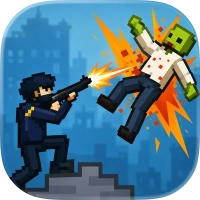
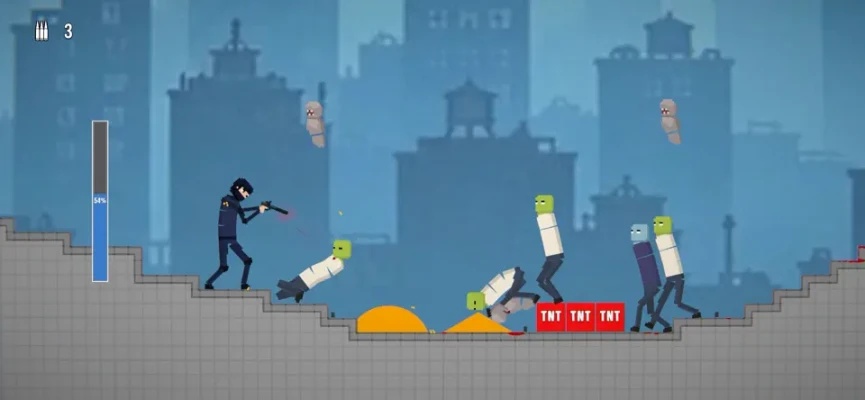
The game's main attraction is its active ragdoll-style combat and unforgiving progression. Every run gives you another opportunity to improve your aim, learn enemy behavior, earn more currency and travel farther than before. The App Store currently lists the game as an Action title for iPhone and iPad, while the Android version uses the same shoot, die, upgrade and repeat progression concept.
Rather than treating death as a traditional game-over screen, Shoot Die Repeat makes failure part of the progression system. The more effectively you play, the more useful each attempt becomes.
What Makes Shoot Die Repeat Different?
The game combines several ideas that make short combat attempts surprisingly demanding:
- Zombie and enemy shooting
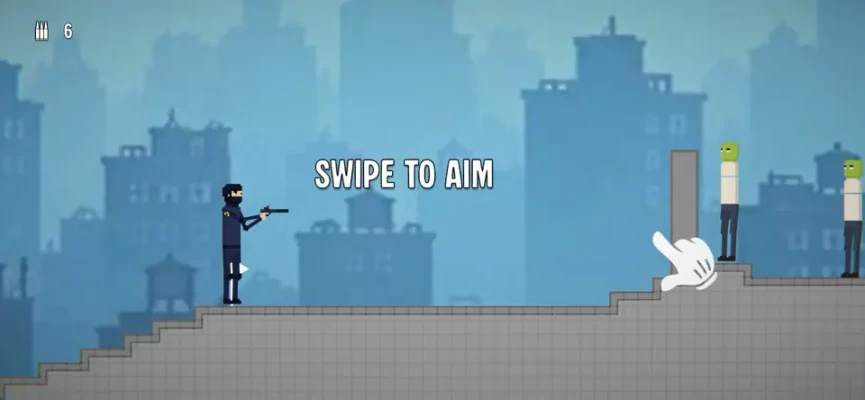
- Precise aiming
- Fast reactions
- Ragdoll-style enemy action
- Currency collection
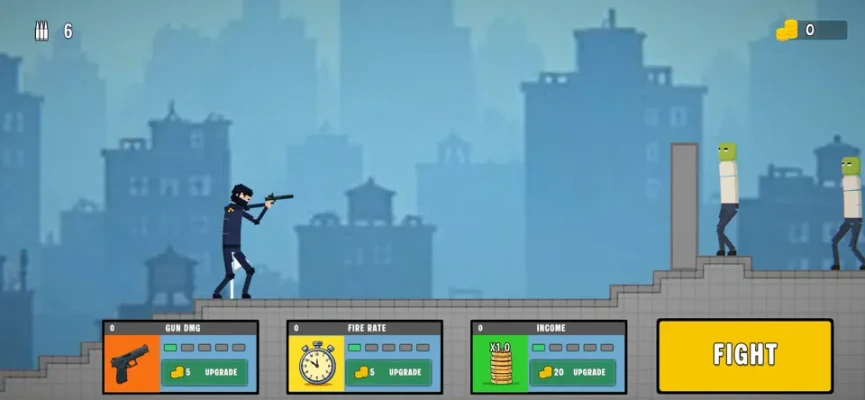
- Character upgrades
- Increasing difficulty
- Repeated attempts and progression
- Multiple weapons and combat situations
The official description summarizes the central philosophy well: every run is intended to make you stronger, with upgrades helping you travel farther.
The important thing to understand is that Shoot Die Repeat is not simply about shooting as quickly as possible. Accuracy and positioning can matter just as much as raw firepower.
Shoot Die Repeat Gameplay Guide
1. Learn the Shoot–Die–Upgrade Loop
Your first few attempts should be viewed as learning runs.
A typical progression looks like this:
Enter a level → eliminate enemies → collect rewards → push farther → die → upgrade → try again.
Don't become frustrated if your first attempts end quickly. The game's design intentionally makes repeated attempts part of progression.
Instead of asking, "How do I survive this entire level?" ask:
"What caused me to die this time?"
Maybe you missed too many shots. Maybe you attacked the wrong enemy first. Maybe you moved into a dangerous position. Identifying that mistake is more valuable than simply restarting immediately.
Best Shooting Strategy
2. Accuracy Comes Before Speed
One of the biggest challenges reported by players is aiming. Several recent reviews mention that missed shots can be extremely costly, especially during difficult encounters.
That makes accuracy one of your most important skills.
Practical aiming tips
- Don't panic when several enemies appear.
- Take a fraction of a second to line up important shots.
- Prioritize dangerous enemies instead of shooting randomly.
- Avoid wasting ammunition or attacks on targets that are already falling.
- Practice the aiming sensitivity until your movements feel predictable.
- Learn how far you need to move your finger to make small corrections.
If you're consistently dying after missing several shots, your first priority should be improving accuracy rather than immediately spending all your currency on upgrades.
3. Prioritize Dangerous Targets
When several enemies are attacking at once, don't automatically shoot the closest target.
Instead, identify which enemy represents the greatest immediate threat.
A useful priority system is:
Fast or dangerous enemy → enemy attacking from an awkward angle → nearby standard enemy → less threatening target
This prevents you from spending valuable shots on enemies that aren't currently putting you in danger.
If an enemy is approaching slowly while another is already within striking distance, deal with the immediate threat first.
4. Headshots and Precision
Player feedback suggests that precision shots can be particularly important for making meaningful progress. Some players report relying heavily on headshots when trying to push farther.
Don't interpret this as "every shot must be a headshot."
Instead, use headshots when:
- The target is clearly exposed.
- You have enough time to aim.
- The enemy is approaching quickly.
- A body shot would leave the enemy alive long enough to attack.
- You are trying to conserve your limited opportunities.
During chaotic situations, a reliable hit is often better than repeatedly attempting an extremely difficult precision shot.
Upgrade Strategy
5. Spend Currency With a Plan
Coins and upgrades are central to the game's progression system. The official game description emphasizes earning coins and becoming stronger through upgrades after each attempt.
The biggest mistake is spending currency simply because an upgrade is available.
Before purchasing anything, ask:
"What problem is preventing me from progressing?"
If enemies are reaching you before you can react, an offensive upgrade may not solve the real problem.
If your shots are accurate but enemies survive too long, additional offensive power may be more useful.
If you repeatedly die because you're struggling to control encounters, improving your general combat efficiency may be more valuable than blindly buying the most expensive upgrade.
6. Don't Expect Every Upgrade to Feel Dramatic
Some players have criticized the progression because upgrades can feel slow, particularly when enemy difficulty increases alongside player improvements.
Because of this, evaluate upgrades over several attempts rather than judging them after one run.
A small improvement can become significant when combined with:
- Better aim
- Better target selection
- Better positioning
- Fewer wasted shots
- More efficient enemy elimination
The strongest progression comes from combining character improvement with player improvement.
7. Upgrade Around Your Weakness
Use this simple decision-making system:
If you die because enemies reach you:
Improve your combat efficiency and prioritize threats sooner.
If you miss too many shots:
Practice aiming before spending heavily on upgrades.
If enemies take too long to defeat:
Prioritize offensive improvements when available.
If you make progress but suddenly hit a wall:
Farm several successful attempts and invest your currency carefully instead of repeatedly forcing the same failed run.
This approach prevents you from wasting resources on upgrades that don't address your actual problem.
Level Strategy
8. Study the Level Before Trying to Master It
Don't think of each attempt as a completely new challenge.
After several runs, you should start recognizing:
- Where enemies appear
- Which encounters cause the most trouble
- Which targets need immediate attention
- Where you tend to miss
- Where your run usually ends
- Which sections require faster reactions
The goal is to turn an unpredictable fight into a sequence you understand.
Once you know what is coming, you can prepare your aim instead of reacting at the last possible moment.
9. Don't Rush Difficult Sections
Fast movement doesn't necessarily mean fast progress.
If you rush into an encounter while your aim is poorly positioned, you can lose the run before you've had an opportunity to respond.
A better rhythm is:
Observe → aim → shoot → reassess → move → repeat
This is especially useful when the screen becomes crowded.
10. Use Death as Information
The title's "Die Repeat" philosophy is important.
When you die, identify one specific reason.
For example:
Attempt 1: Missed too many shots.
Attempt 2: Focused on the wrong enemy.
Attempt 3: Reacted too slowly.
Attempt 4: Better target priority and improved aim.
Attempt 5: Reached a new section.
This creates measurable improvement instead of endless repetition.
Weapon Strategy
11. Choose the Weapon That Fits Your Situation
The game features weapon variation, and players have specifically mentioned the variety as one of its enjoyable elements.
Don't automatically assume the newest or strongest-looking weapon is always the best choice.
Consider:
- Damage
- Firing speed
- Ease of aiming
- How quickly you can eliminate enemies
- Your ability to control the weapon
- The type of encounter you're facing
A weapon that feels comfortable and consistent can outperform a theoretically stronger option if it helps you land more accurate attacks.
Zombie Combat Tips
12. Control the Crowd
When multiple zombies or mobs are approaching, avoid shooting targets randomly.
Instead:
- Identify the closest threat.
- Eliminate or weaken it.
- Immediately identify the next threat.
- Keep your aim prepared for the next target.
- Repeat until the immediate danger is under control.
This reduces panic and prevents you from constantly switching between targets.
13. Don't Waste Your Best Opportunities
When an enemy gives you a clear opening, take advantage of it.
A good attack opportunity usually occurs when:
- The enemy is exposed.
- Its movement is predictable.
- You have a clean line of sight.
- You're not simultaneously dealing with a more dangerous target.
Save your attention for moments where a precise shot can make the biggest difference.
How to Progress Faster
14. Stop Repeating Failed Runs the Same Way
If you have died in the same place several times, don't simply repeat the exact strategy.
Change one thing.
Try:
- Different target priority
- Slower aiming
- Earlier attacks
- Different positioning
- A different weapon
- Another upgrade
- More careful resource management
If the result improves, you've discovered something useful.
15. Build a Consistent Routine
A good progression routine is:
Step 1
Play a run without worrying about reaching the end.
Step 2
Identify the point where you consistently fail.
Step 3
Determine why you're failing there.
Step 4
Earn enough currency for a useful upgrade.
Step 5
Return with a specific goal.
Step 6
Repeat until that section becomes manageable.
This is much more efficient than spending currency randomly and hoping the next run works.
Beginner Mistakes to Avoid
Mistake 1: Shooting Too Quickly
Fast shots aren't useful if they're inaccurate.
Mistake 2: Ignoring Enemy Priority
Attacking the wrong enemy can give the most dangerous target enough time to reach you.
Mistake 3: Spending Every Coin Immediately
Save currency when you're not sure which upgrade solves your problem.
Mistake 4: Repeating the Same Failed Strategy
If you have died several times in exactly the same situation, change your approach.
Mistake 5: Expecting Instant Progress
Some upgrades may require multiple purchases or repeated attempts before the difference feels significant, something that has been a recurring point in player feedback.
Mistake 6: Blaming Every Death on the Upgrade System
Sometimes the problem is simply aim, timing, or target selection. Improving your own mechanics can be just as valuable as improving your character.
Advanced Shoot Die Repeat Strategy
The Three-Part Progression Method
For experienced players, divide progression into three areas:
Mechanical Skill
Improve:
- Aim
- Reaction time
- Target selection
- Timing
- Movement
Character Progression
Improve:
- Offensive power
- Useful upgrades
- Equipment and weapon choices
- Long-term progression
Level Knowledge
Learn:
- Enemy behavior
- Dangerous encounters
- Repeating patterns
- Difficult sections
- Your most common failure points
When all three improve together, difficult sections become considerably more manageable.
Is Shoot Die Repeat Difficult?
Yes. The game can be demanding, particularly because inaccurate shooting can quickly turn into a failed run.
Recent player reviews repeatedly mention the difficulty of aiming and the relatively small margin for error.
That difficulty can be enjoyable if you like retry-based shooters, but players looking for a relaxed action game may find the progression frustrating.
Is Shoot Die Repeat Worth Playing?
Shoot Die Repeat has an appealing core idea: shoot, die, earn currency, upgrade, and try again.
Its strongest qualities are the simple progression loop, action-focused combat, weapon variety and chaotic ragdoll-style presentation. The App Store currently lists it at 3.6/5 from more than 300 ratings, while recent reviews also point out issues with repetition, upgrade pacing, aiming and advertising.
The game is therefore best suited to players who enjoy:
- Challenging action games
- Zombie shooters
- Retry-based progression
- Upgrade systems
- Short repeatable runs
- Improving through practice
Players who dislike repeated attempts, slow progression or difficult aiming may find it less appealing.
Shoot Die Repeat Tips at a Glance
Best beginner tip: Learn the aiming system before worrying about speed.
Best combat tip: Eliminate the most dangerous enemy first.
Best upgrade tip: Spend currency according to your biggest weakness.
Best progression tip: Change your strategy when you repeatedly die in the same location.
Best accuracy tip: Don't panic-fire.
Best advanced tip: Treat every failed run as information.
Best resource tip: Don't waste currency on upgrades that don't solve your current problem.
Best overall strategy: Combine better aim, smarter target selection and carefully chosen upgrades.
Shoot Die Repeat Game Information
Game: Shoot Die Repeat
Developer: Heseri Games Inc
Genre: Action
Platform: iPhone and iPad
Age Rating: 13+
App Size: Approximately 178.7 MB
Price: Free with in-app purchases
Latest iOS Version: 1.4.9
Latest listed update: September 3, 2026
Languages: English, French, German, Japanese, Korean, Simplified Chinese, Spanish and Traditional Chinese
In-App Purchases: Includes optional purchases such as No Ads and gem packs.
The current iOS version history shows frequent bug-fix updates following the game's launch, with additional content also added earlier in the version history.
Final Thoughts
Shoot Die Repeat is built around a straightforward idea, but succeeding consistently requires more than simply firing at everything on screen. The most effective players learn to control their aim, identify dangerous targets, spend upgrades intelligently and use every failed attempt to improve the next one.
The key is to remember that progress comes from two upgrades at once: your character gets stronger, and you become a better player.
Master the aim, stop wasting shots, prioritize threats and make every death teach you something. That's the real strategy behind Shoot Die Repeat.
Rate the Game
User Reviews











Popular Games



















 Android
 iOS
iOS Windows
 Xbox
Xbox