







Latest Version
September 12, 2026
SQUARE ENIX
Action
iOS
0
Report a Problem
More About :game
That objective gives every match an interesting PvPvE structure. You need to manage monsters and crystals while watching the other team and deciding when it is worth interrupting their progress.
The game is free to play with in-app purchases and is available on iPhone, iPad and Android. The App Store currently lists it as an Action game from SQUARE ENIX.
What Is DISSIDIA DUELLUM FINAL FANTASY?
DISSIDIA DUELLUM FINAL FANTASY is a mobile 3v3 team boss battle arena featuring characters from different FINAL FANTASY games.
The basic match objective is straightforward:
Fight monsters → collect Bravery → purify crystals → activate Bravery Burst → damage the boss → defeat it before the enemy team.
The boss cannot simply be defeated by repeatedly attacking it from the beginning. Building Bravery and creating the correct damage window is a central part of every battle.
This makes the game less about chasing enemy players and more about understanding when to farm, when to contest objectives and when to commit to the boss.
DISSIDIA DUELLUM FINAL FANTASY Story
The game takes place in a modern-day version of Tokyo rather than a traditional fantasy kingdom.
A mysterious crystal appears in the city, and monsters begin emerging as its corruption spreads. Warriors from across the FINAL FANTASY universe are brought together to confront the threat.
Characters such as Cloud Strife, Lightning, Warrior of Light, Terra Branford, Rinoa Heartilly, Zidane Tribal, Kain Highwind and others appear in this new setting.
The modern setting is one of the game's biggest departures from previous FINAL FANTASY adventures. Characters also receive new outfits designed around their lives in the contemporary world.
The story is presented through fully voiced scenes and chat-style episodes that show interactions between the characters.
Main Gameplay Features
3v3 Team Battles
Each match places two teams of three against one another.
The important difference is that the enemy team isn't your only concern. Monsters and crystals are essential parts of the battlefield.
A team that spends all of its time fighting opponents can fall behind a team that efficiently clears monsters and controls the crystals.
Boss Race
The central objective is defeating the Arena Boss before the opposing team.
The boss is extremely difficult to damage normally, so teams must first build enough Bravery to enter the damage phase.
This creates a natural rhythm:
Farm → build Bravery → Burst → boss damage → reset → repeat.
Bravery
Bravery is one of the most important mechanics to understand.
You can gain Bravery by defeating monsters and purifying crystals, while interactions with enemy players can also affect the resource.
Once your team reaches the required threshold, you can activate Bravery Burst and begin dealing meaningful damage to the boss.
Understanding Bravery is far more important than simply memorizing character statistics.
Bravery Burst Explained
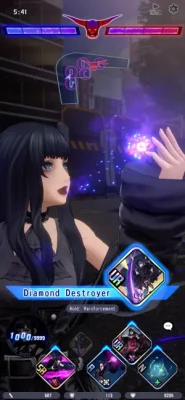
Bravery Burst is the turning point of a match.
Before the Burst phase, your priority is building the resource needed to challenge the boss.
Once you have enough Bravery, activate the Burst at the right moment and immediately convert that advantage into boss damage.
A common beginner mistake is activating Bravery Burst without being ready to attack the boss.
A better approach is:
- Build Bravery.
- Check where your teammates are.
- Make sure your important abilities are available.
- Confirm the boss is accessible.
- Activate Bravery Burst.
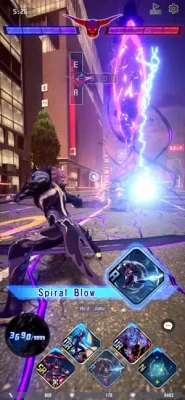
- Commit your strongest abilities.
- Deal as much boss damage as possible during the window.
The official battle system specifically describes the flow as accumulating Bravery, activating Bravery Burst and then launching a full attack against the boss.
Character Roles
DISSIDIA DUELLUM FINAL FANTASY currently uses four major character roles:
- Melee
- Ranged
- Agile
- Support
Each role approaches the battlefield differently.
Melee
Melee characters are designed to fight closer to enemies and generally have strong offensive statistics.
They are useful when you want a character who can confidently enter the frontline and clear monsters quickly.
Best for: aggressive players who enjoy close combat.
Ranged
Ranged characters have greater attack reach and can contribute from farther away.
They are particularly useful when you want to maintain distance while dealing consistent damage.
Best for: players who prefer safer positioning.
Agile
Agile characters emphasize movement and mobility.
Their ability to move quickly around the battlefield makes them useful for rotating between crystals, monsters, teammates and objectives.
Best for: players who enjoy fast movement and map control.
Support
Support characters help teammates through defensive or utility-oriented abilities.
Their value isn't always visible on the damage scoreboard, but good support play can keep a team alive long enough to win the boss race.
Best for: players who enjoy teamwork and enabling other characters.
Featured Characters
The roster includes characters from many different FINAL FANTASY games.
Some of the available heroes include:
- Warrior of Light
- Firion
- Onion Knight
- Kain Highwind
- Krile Mayer Baldesion
- Terra Branford
- Cloud Strife
- Rinoa Heartilly
- Zidane Tribal
- Rikku
- Iroha
- Balthier
- Lightning
- Gaia
- Prompto Argentum
- Clive Rosfield
The official character roster continues to expand as new characters are introduced.
Best Beginner Character
There isn't one character that is automatically the best choice for every player.
The better question is:
Which role fits the way you want to play?
If you like straightforward frontline combat, try a Melee character.
If you prefer attacking from safety, Ranged characters may feel more comfortable.
If movement and fast rotations appeal to you, Agile characters are worth learning.
If you enjoy helping teammates and controlling the flow of a fight, Support is a natural choice.
The starting selection also gives new players several recognizable heroes to choose from, including Warrior of Light, Cloud, Lightning and Terra.
Abilities and Loadouts
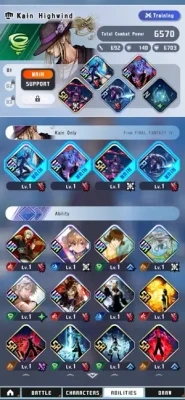
Abilities are another major part of character development.
You can acquire different abilities and create a loadout that complements your chosen character and playstyle. The official game site highlights abilities with artwork created specifically for the game by a variety of artists.
When building a loadout, don't simply equip the highest rarity abilities you own.
Consider:
- Damage
- Range
- Cooldown
- Utility
- Defensive value
- Synergy with your character
- Your team's composition
A slightly weaker ability that you can use at exactly the right moment can be more useful than a powerful skill with awkward timing.
Ability Build Strategy
A good beginner loadout should cover several situations rather than doing one thing extremely well.
Try to have a mixture of:
Damage
Useful for clearing monsters and contributing during boss phases.
Mobility
Helpful for reaching crystals, escaping danger or rotating toward teammates.
Defensive Utility
Useful when you are being pressured or need to survive long enough to complete an objective.
Team Support
Particularly valuable when playing Support or when your team relies heavily on coordinated boss attacks.
Full Beginner Strategy Guide
Step 1: Learn the Objective
The first thing to understand is that this is not a traditional PvP arena.
Your objective isn't simply to get more player eliminations.
The real goal is to defeat the boss first.
Every action should ultimately help your team reach that objective.
Step 2: Start Farming Monsters
At the beginning of a battle, clear monsters efficiently.
Don't wander around looking for enemy players.
Monsters are valuable because they help your team generate Bravery and prepare for the boss phase.
Step 3: Control Crystals
Crystals are central objectives.
Purifying them can provide a major Bravery advantage, so controlling the area around them is extremely important.
When your team controls a crystal:
- Clear nearby monsters.
- Protect teammates.
- Watch for enemy rotations.
- Prepare for the next objective.
- Avoid unnecessary fights.
Crystal Control Strategy
A crystal should not be viewed as a simple resource node.
It is also a strategic location.
Controlling a crystal gives your team an opportunity to build Bravery while forcing the opposing team to react.
If the enemy approaches, don't automatically chase them.
Ask whether fighting them actually improves your position.
Sometimes the correct decision is to maintain control and continue progressing toward the boss.
Step 4: Watch the Enemy Team
Keep an eye on the opposing team's progress.
If they are close to their Bravery threshold, you should become more cautious.
This is where the PvPvE nature of the game becomes important.
You may need to stop farming temporarily and interfere with their progress.
A successful interruption can be more valuable than another few monsters.
Step 5: Prepare Before Bravery Burst
Don't press Burst automatically the instant it becomes available.
Before activating it, check:
- Are your teammates nearby?
- Is the boss ready?
- Are your strongest abilities available?
- Is the enemy team positioned to interrupt you?
- Can you safely reach the boss?
If the answer is yes, activate Bravery Burst.
Step 6: Attack the Boss Immediately
Once the Burst window begins, don't waste time.
Use your strongest abilities and focus on converting Bravery into boss damage.
The official battle system describes this as the final stage of the core match flow: build Bravery, unleash the Burst, then attack the boss with powerful abilities.
Step 7: Coordinate Your Team
The strongest teams understand that three players working together are more valuable than three strong players acting independently.
Try to coordinate:
- Crystal control
- Monster clearing
- Enemy disruption
- Burst timing
- Boss attacks
- Retreats
Even without voice communication, watching your teammates' positions can dramatically improve your decisions.
Advanced Boss Strategy
Boss damage is where many new players lose matches.
The key is to maximize the amount of useful damage you produce during the Burst window.
Before Burst
Farm Bravery.
Just Before Burst
Move toward the boss and regroup.
During Burst
Use offensive abilities in sequence.
After Burst
Don't continue attacking mindlessly.
Return to objective control and start preparing for the next opportunity.
This creates a repeating cycle that keeps your team moving forward.
How to Use Abilities Efficiently
Don't immediately spend every ability as soon as it becomes available.
Instead, think about what is happening around you.
Use offensive abilities when:
- You are clearing a dangerous group.
- The enemy team is contesting a crystal.
- The boss enters a damage window.
- You can combine several abilities for greater pressure.
Save defensive abilities when:
- You're being focused.
- You need to escape.
- Your teammate needs protection.
- The enemy team is preparing a coordinated attack.
Positioning Tips
Positioning is one of the easiest ways to improve without upgrading your character.
Stay Near Your Team
Being too far away makes you vulnerable.
A teammate may be unable to help you, while the opposing team can isolate you.
Don't Stand Directly on Top of Everyone
Your team still needs room to move.
Spread enough to avoid allowing one enemy ability to affect everyone at once.
Protect Your Ranged Characters
Ranged characters can be extremely valuable during objective and boss phases.
Don't leave them completely exposed.
Agile Characters Should Rotate
Agile characters can make excellent objective runners because their mobility allows them to move between important areas quickly.
Best Team Composition Strategy
A balanced team is generally easier to use than a team filled with identical roles.
A practical setup might include:
Melee + Ranged + Support
This provides frontline pressure, ranged damage and utility.
Another option is:
Melee + Agile + Support
This gives the team stronger movement and objective control.
A more aggressive group could use:
Melee + Ranged + Agile
The downside is reduced defensive support.
The ideal composition depends on the characters and abilities available to your team.
Progression Guide
Don't try to upgrade everything at once.
Build a reliable core roster.
A good progression strategy is:
- Pick your main character.
- Build a useful ability loadout.
- Develop two or three additional characters.
- Improve their equipment and abilities.
- Experiment with different team compositions.
- Expand your roster as your resources grow.
Community guides also recommend building a small core group rather than spreading resources too thinly across the entire roster.
Ability and Medal Progression
Abilities and passive character development are important parts of long-term growth.
Job-related progression can help specialize characters toward particular roles, while abilities determine how you actually approach battles.
When investing resources, prioritize upgrades that support your preferred playstyle.
For example:
Aggressive character: prioritize damage and offensive abilities.
Agile character: emphasize mobility and objective control.
Support character: prioritize utility, survival and team-enhancing effects.
Challenges and Practice
If competitive matches feel overwhelming, use the game's single-player Challenges to practice.
Challenges provide a safer environment for learning the controls and improving your character progression before taking those skills into more competitive matches.
This is particularly useful for learning:
- Movement
- Ability timing
- Crystal routes
- Monster clearing
- Burst timing
- Boss positioning
Practice these fundamentals before worrying too much about advanced team tactics.
Common Beginner Mistakes
Chasing Player Kills
This is probably the biggest mistake.
The match is a boss race, not a conventional deathmatch.
Better approach: Fight players when doing so helps secure an objective or prevents their team from reaching the boss phase.
Ignoring Crystals
A player who ignores crystals is ignoring one of the most important sources of Bravery.
Better approach: Treat crystals as strategic objectives.
Using Burst Too Early
Activating Burst without being ready to damage the boss wastes your biggest opportunity.
Better approach: Coordinate Burst with your team.
Fighting Alone
Even a powerful character can be overwhelmed when isolated.
Better approach: Stay close enough to your team to receive assistance.
Spending Every Ability Immediately
This can leave you with nothing when the boss window arrives.
Better approach: Save important abilities for meaningful moments.
Upgrading Too Many Characters
Spreading resources across the entire roster can slow your strongest characters.
Better approach: Develop a reliable core roster first.
Free-to-Play Progression Tips
DISSIDIA DUELLUM FINAL FANTASY is free to play but includes in-app purchases and randomized virtual items.
If you prefer to play without spending heavily:
- Concentrate on a small core roster.
- Take advantage of free rewards.
- Complete available challenges.
- Avoid upgrading equipment you rarely use.
- Think carefully before spending premium currency.
- Build characters around the abilities you already own.
- Focus on learning combat rather than trying to instantly match high-spending players.
A strong understanding of the Bravery system can compensate for a lot of inefficient play.
DISSIDIA DUELLUM FINAL FANTASY Tips and Tricks
Tip 1: Learn the Bravery Cycle
Think of every match as a cycle:
Farm → Burst → Boss Damage → Reset → Farm Again
Once this becomes automatic, the game becomes much easier to understand.
Tip 2: Watch Both Teams
Don't focus exclusively on your own character.
Keep track of the enemy team's progress whenever possible.
Tip 3: Fight With a Purpose
Before attacking an enemy player, ask what you gain.
If the answer is “nothing,” keep working toward the objective.
Tip 4: Save Burst for the Boss
The purpose of Bravery Burst is to create a boss-damage opportunity.
Don't waste the window.
Tip 5: Practice Movement
Good movement lets you survive longer, reach objectives faster and avoid unnecessary damage.
Tip 6: Build Around Roles
Don't force every character to perform the same job.
Use each role for what it does best.
Tip 7: Learn Your Character's Unique Ability
Every character has distinctive strengths.
For example, Lightning is designed around quick movement and monster-clearing pressure, while Warrior of Light provides defensive utility for teammates.
DISSIDIA DUELLUM FINAL FANTASY Best Beginner Strategy
If you want a simple game plan to remember, use this:
1. Clear nearby monsters.
2. Move toward the crystal.
3. Help purify the crystal.
4. Build Bravery.
5. Watch the enemy team's progress.
6. Regroup with teammates.
7. Activate Bravery Burst when the boss window is ready.
8. Spend your strongest abilities on the boss.
9. Return to objective control.
10. Repeat until the boss falls.
This is much more reliable than simply running around the map looking for enemy players.
DISSIDIA DUELLUM FINAL FANTASY Pros and Cons
Pros
- Large FINAL FANTASY crossover roster
- Fast real-time mobile combat
- Unique 3v3 boss-race format
- PvPvE gameplay creates strategic decisions
- Modern Tokyo setting gives the series a fresh identity
- Four distinct character roles
- Extensive ability customization
- Full Japanese voice acting
- Character outfits and customization
- FINAL FANTASY music collection
- Cooperative team-focused gameplay
Cons
- The learning curve can be confusing for newcomers
- Randomized progression may not appeal to everyone
- Free-to-play systems require careful resource management
- Team coordination can strongly affect match results
- Players focused only on traditional Dissidia fighting may expect a different experience
The App Store currently lists the game at 4.4/5 from about 2.4K ratings, while the Android listing shows a larger review base, so player opinions naturally vary between platforms.
Is DISSIDIA DUELLUM FINAL FANTASY Worth Playing?
DISSIDIA DUELLUM FINAL FANTASY is an unusual addition to the FINAL FANTASY lineup.
It isn't simply another traditional fighting game. Its biggest idea is the combination of 3v3 teamwork, monster farming, crystal control and boss racing.
That structure makes every match a tactical contest.
You need to know when to farm, when to rotate, when to contest the enemy and when to stop everything and burn the boss.
For FINAL FANTASY fans who enjoy mobile action games and team-based competition, there is plenty to learn and master.
DISSIDIA DUELLUM FINAL FANTASY FAQ
Is DISSIDIA DUELLUM FINAL FANTASY free?
Yes. The game is free to play with optional in-app purchases.
Is DISSIDIA DUELLUM FINAL FANTASY multiplayer?
Yes. Its primary battle format is 3v3 team combat, with players competing against another team while fighting monsters and the Arena Boss.
What is the objective of a match?
The objective is to defeat the Arena Boss before the opposing team.
What is Bravery?
Bravery is a key battle resource. Players build it through activities such as defeating monsters and purifying crystals, then use the resulting advantage to enter the Bravery Burst phase.
What is Bravery Burst?
Bravery Burst is the phase that allows your team to turn accumulated Bravery into significant boss damage.
What are the character roles?
There are four main roles: Melee, Ranged, Agile and Support.
Can I play as Cloud?
Yes. Cloud Strife is one of the playable FINAL FANTASY characters.
Is Lightning playable?
Yes. Lightning is part of the roster and is designed around fast movement and attacking enemies efficiently.
Does the game have a story?
Yes. The game features a new story set in modern-day Tokyo, with FINAL FANTASY characters interacting in the new setting.
Can I customize characters?
Yes. Players can acquire outfits, memorable scenes known as Memorias, and FINAL FANTASY music tracks. Memorias can also provide character-stat benefits.
Does the game have boss battles?
Boss battles are the central focus of the 3v3 format. Both teams compete to defeat the powerful Arena Boss first.
What is the best way to win?
Focus on the objective. Build Bravery efficiently, control crystals, coordinate with teammates, time your Bravery Burst correctly and maximize boss damage during the Burst window.
Final Verdict
DISSIDIA DUELLUM FINAL FANTASY offers a fresh take on the famous series by turning FINAL FANTASY's legendary heroes into a fast-paced 3v3 team boss battle experience.
The most important lesson for beginners is simple: don't confuse player combat with the real objective.
The team that manages Bravery, crystals, positioning and Burst timing better will usually have the advantage.
Master that rhythm, learn your character's role and build a focused ability loadout, and the game's seemingly complicated systems become much easier to understand.
Rate the Game
User Reviews










Popular Games



















 Android
 iOS
iOS Windows
 Xbox
Xbox