
Latest Version
November 28, 2026
Go Dreams
Simulation
0
com.Danilov.Rusttruck
Report a Problem
More About :game
Introduction to Rust Truck: Wasteland Delivery
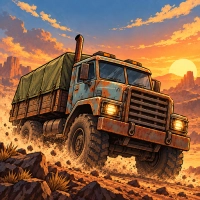
Imagine a world where cities have fallen into ruins, dangerous radioactive areas cover the landscape, and survivors depend on truck drivers to bring them essential supplies. This is the setting of Rust Truck: Wasteland Delivery, a 2D driving simulation game that combines offroad challenges, cargo transportation, vehicle management, and post-apocalyptic exploration.
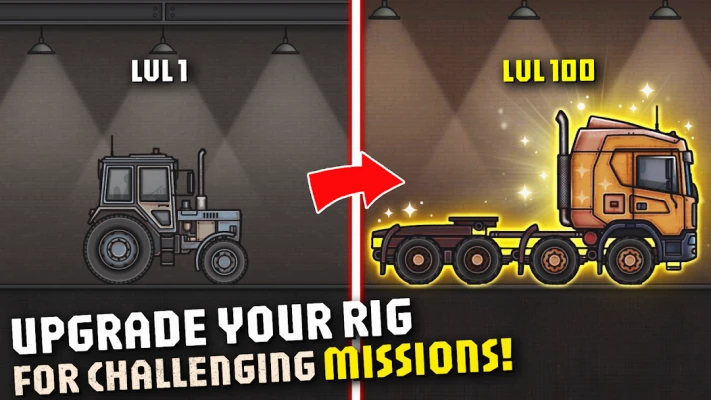
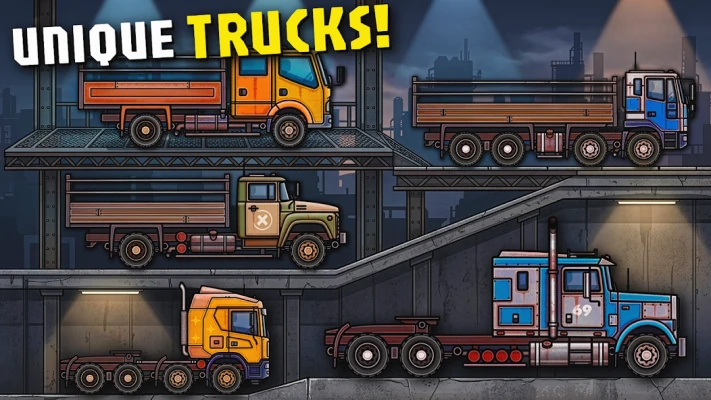
Your responsibility is to deliver important goods across difficult routes. You begin with basic vehicles and gradually gain access to a larger fleet, including tractors, small trucks, pickups, heavy rigs, and multi-axle semi-trucks.
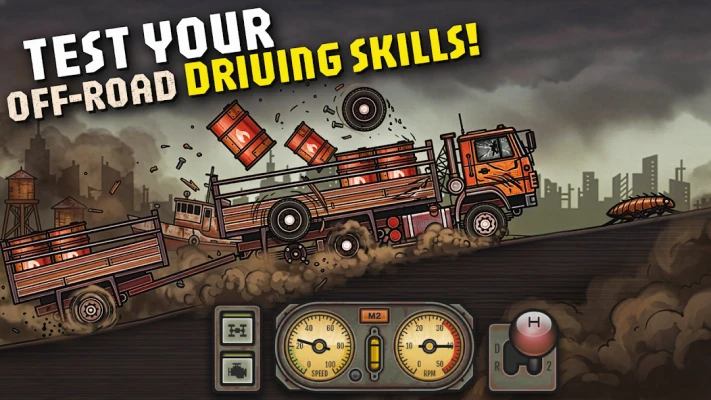
Every journey presents a different driving challenge. Steep hills, deep craters, rough dirt roads, and snowy surfaces can make even a short delivery difficult. You must control your speed, select the correct gear, and keep your cargo balanced to avoid losing valuable supplies.
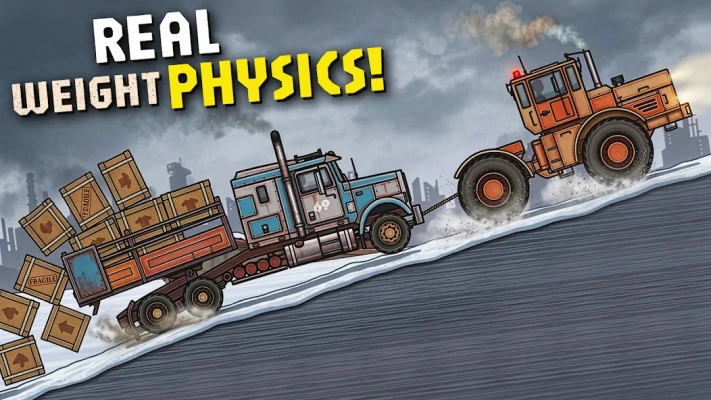
The driving physics are an important part of the experience. Accelerating too aggressively can damage your engine, while taking a bumpy road too quickly may cause cargo to fall from the trailer. Manual transmission and four-wheel-drive features add another layer of control, making successful deliveries depend on more than simply holding the accelerator.
With several environments, different vehicles, customizable trucks, and challenging transportation missions, Rust Truck: Wasteland Delivery offers a distinctive experience for fans of truck simulators and survival-themed driving games.
Main Features of Rust Truck: Wasteland Delivery
A Fleet of Wasteland Vehicles
The game offers a collection of vehicles designed for different transportation challenges.
You can drive:
An old rusty tractor.
A compact mini truck.
A pickup truck.
A large cargo lorry.
A heavy big rig.
Multi-axle semi-trucks.
Each vehicle has its own driving characteristics and physics. Some are more suitable for smaller deliveries, while heavier trucks are designed for transporting larger loads across demanding routes.
You can also attach different scrap-built trailers to your vehicles, giving you additional cargo transportation options.
Post-Apocalyptic Environments
Rust Truck: Wasteland Delivery takes place in a dangerous world affected by a nuclear catastrophe.
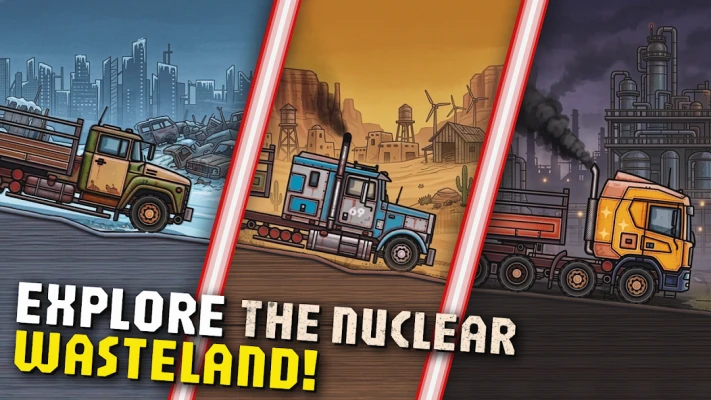
The game features several distinct environments:
Snowy city ruins: Navigate abandoned urban areas and deal with difficult snowy roads.
Scorched desert: Cross dry landscapes where fuel management and rough terrain become important.
Radioactive zones: Drive through hazardous areas surrounding abandoned nuclear facilities.
Each environment introduces different obstacles, including steep climbs, deep craters, and uneven roads.
Manual Transmission System
Unlike simple driving games where vehicles automatically handle every gear change, Rust Truck: Wasteland Delivery includes manual transmission.
You must choose suitable gears according to the terrain and driving conditions.
Using the correct gear is particularly important when climbing steep hills. Pushing the engine too hard can cause overheating, while choosing an unsuitable gear can make difficult climbs even more challenging.
Four-Wheel Drive and Differential Lock
Offroad driving becomes more demanding when your vehicle encounters loose dirt or difficult terrain.
The game includes 4x4 capabilities and a differential lock to help vehicles maintain traction in challenging conditions.
Knowing when to activate these features can help you escape difficult situations and continue your delivery.
Physics-Based Cargo Transportation
Cargo transportation is more than carrying objects from one location to another.
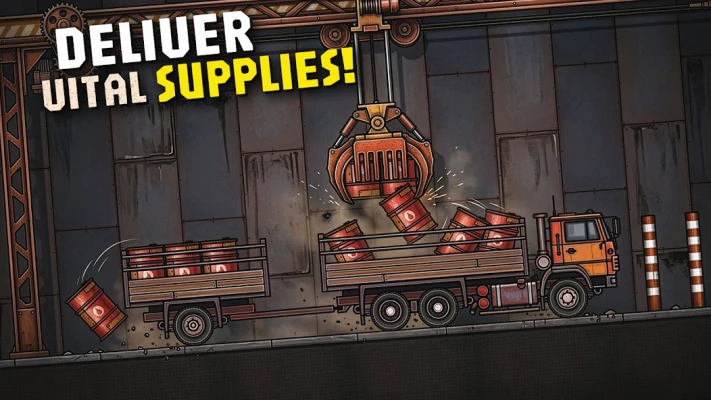
The game features physical cargo behavior, meaning that boxes, barrels, and construction materials can move or fall from your trailer if you drive carelessly.
Available cargo includes:
Wooden crates.
Heavy fuel barrels.
Construction materials.
Radioactive loads.
Other essential survival supplies.
You must consider the weight and loading height of your cargo before attempting difficult roads.
Upgrade and Customize Your Trucks
Vehicle improvements are essential for handling more demanding routes.
The game lets you improve several important components:
Engine power for stronger performance.
Gearbox for better control on steep hills.
Tires for improved traction.
Suspension for difficult offroad surfaces.
Fuel tank capacity for longer deliveries.
You can also repair your vehicles when they become damaged and refuel them before starting another journey.
Challenging Offroad Routes
The roads across the wasteland are filled with obstacles.
Steep hills, uneven surfaces, craters, and difficult slopes require careful driving. You must control acceleration and maintain a stable vehicle position to reach your destination without losing your cargo.
Towing and Vehicle Recovery
Sometimes a truck can become trapped or overturn during a difficult delivery.
The game includes a towing button that provides a recovery option when your vehicle gets stuck or flips over.
This feature helps you recover from dangerous situations and continue your journey.
Offline Truck Driving
Rust Truck: Wasteland Delivery supports offline gameplay, so you can enjoy its transportation missions without needing a Wi-Fi connection.
This makes it convenient for players who want to complete driving challenges while traveling or when an internet connection is unavailable.
Understanding the Gameplay
The main objective is to transport essential supplies across dangerous post-apocalyptic routes.
Each delivery begins with a vehicle and a cargo load. You must drive through the designated terrain, overcome obstacles, and reach the destination without losing your shipment.
The game requires a combination of driving skill and vehicle management.
Manual gear changes help you control engine performance, while 4x4 and differential lock features support offroad traction. Vehicle upgrades improve your ability to handle difficult terrain, and cargo balancing helps prevent valuable goods from falling out of the trailer.
A successful delivery depends on several important factors:
Choosing a suitable vehicle for the job.
Selecting the correct transmission gear.
Maintaining a controlled speed.
Balancing cargo properly.
Managing fuel and vehicle condition.
Using offroad features when necessary.
Avoiding obstacles that could damage the truck or shipment.
As you become more experienced, you can take on more demanding transportation challenges and develop your collection of wasteland vehicles.
How to Play Rust Truck: Wasteland Delivery
Choose Your Truck
Begin by selecting an available vehicle. Consider the size of the cargo and the difficulty of the route before deciding which truck to use.
A smaller vehicle may be suitable for lighter deliveries, while a powerful lorry is more appropriate for heavy transportation.
Load Your Cargo
Prepare your trailer and check the position of the goods.
Try to keep heavy objects balanced rather than placing all the weight at one side or too high above the trailer.
Start Driving
Accelerate carefully and pay attention to the road ahead.
Use the manual gearbox to select an appropriate gear for your current speed and terrain.
Handle Difficult Hills
When approaching a steep climb, reduce your speed and choose a suitable lower gear.
Avoid forcing the engine to work beyond its limits. Watch for signs of engine stress, including black smoke.
Activate 4x4 When Needed
If your truck struggles on loose dirt or becomes stuck, use the available four-wheel-drive and differential-lock features.
These systems can help improve traction when ordinary driving is not enough.
Protect Your Cargo
Drive slowly over bumps and avoid sudden movements.
Remember that cargo can fall from the trailer if you take obstacles too quickly or approach steep slopes carelessly.
Complete the Delivery
Continue along the route until you reach your destination.
Successful deliveries allow you to progress through the transportation challenges and improve your driving operation.
Upgrade and Repair Your Vehicle
Use your available resources to improve the engine, gearbox, tires, suspension, and fuel tank.
Repair damaged vehicles and refuel before starting another demanding mission.
Full Strategy Guide and Advanced Tips
Choose the Right Vehicle for Each Delivery
Not every truck is equally suitable for every transportation task.
Before starting a mission, consider the weight of the cargo and the difficulty of the route. Heavy loads require a vehicle capable of handling additional weight, while smaller deliveries may not need a large semi-truck.
Experiment with different vehicles to understand their handling characteristics and strengths.
Master Manual Transmission
Manual transmission is one of the most important systems to understand.
Do not rely on high gears when climbing steep hills. Lower gears provide better control when the vehicle needs to move slowly through difficult terrain.
Change gears according to your speed and the road conditions. Smooth gear selection can help prevent unnecessary engine stress.
Watch for Black Smoke
Black smoke is an important warning that the engine is being pushed too hard.
If you notice this warning, reconsider your gear selection and driving approach. Avoid continuously forcing the engine to climb a difficult slope at an unsuitable speed.
Taking a more controlled approach can help protect your vehicle.
Use the Differential Lock on Difficult Terrain
Loose dirt and other challenging surfaces can make it difficult for a heavy truck to maintain traction.
When your vehicle struggles or becomes stuck, activate the 4x4 differential lock if appropriate.
However, do not treat it as a replacement for good driving. You still need to choose a sensible gear and control your acceleration.
Balance Your Cargo Before Driving
Cargo stability is essential for successful deliveries.
Heavy objects placed too high can make your truck or trailer unstable, particularly when crossing steep slopes or uneven roads.
Try to keep the load balanced and avoid unnecessary height. A stable cargo arrangement reduces the risk of losing supplies during difficult sections.
Slow Down Before Obstacles
One of the easiest ways to fail a delivery is driving too quickly over bumps and rough terrain.
Approach deep craters, steep slopes, and uneven surfaces carefully. Reduce speed before reaching the obstacle rather than waiting until the vehicle is already struggling.
Controlled driving is often more effective than maximum acceleration.
Upgrade the Engine for Steep Hills
Engine improvements can make difficult climbs more manageable.
If you regularly struggle with heavy cargo or steep roads, consider investing in engine upgrades.
However, remember that engine power alone does not solve every problem. Your gearbox, tires, and suspension also influence how effectively the truck handles difficult terrain.
Improve the Gearbox
A better gearbox can help you manage different driving conditions.
Prioritize gearbox improvements when you frequently encounter steep climbs or difficult routes that require careful gear selection.
Combine these upgrades with sensible driving habits for better results.
Invest in Tires and Suspension
Different environments create different traction and handling challenges.
Better tires can improve grip on dirt and snow, while suspension upgrades help your vehicle handle uneven roads.
These improvements are particularly useful when transporting cargo across rough landscapes.
Expand Your Fuel Tank
Fuel management is another important part of long-distance transportation.
Running out of fuel during a delivery can interrupt your progress and create unnecessary problems.
Increasing fuel tank capacity is a useful investment when you begin taking on longer routes.
Make refueling part of your preparation routine rather than waiting until the vehicle is nearly empty.
Repair Your Truck Before It Breaks Down
Vehicle maintenance should never be ignored.
A damaged truck may struggle to complete demanding missions, so repair it before starting another difficult delivery.
Checking your vehicle condition and fuel level before departure helps prevent avoidable setbacks.
Use Towing When Your Truck Gets Stuck
If your vehicle overturns or becomes trapped, do not waste too much time trying the same movement repeatedly.
Use the towing option to recover your truck when necessary.
After recovering, reconsider your approach to the obstacle. You may need a different gear, a slower speed, or better traction.
Adapt Your Driving to Different Environments
Snowy ruins, deserts, and radioactive areas present different challenges.
Do not expect the same driving technique to work equally well everywhere.
On difficult dirt surfaces, traction becomes especially important. On snowy roads, avoid aggressive movements that could destabilize the vehicle. In long desert deliveries, pay close attention to fuel consumption.
Understanding the environment is just as important as understanding the truck.
Practice With Smaller Vehicles First
If you are unfamiliar with manual transmission or cargo physics, begin with an easier vehicle and lighter loads.
Practice gear changes, acceleration, and trailer control before attempting difficult missions with heavy trucks.
This helps you develop the skills needed for larger transportation challenges.
Common Mistakes to Avoid
Driving too fast over bumps: Cargo can fall from the trailer, causing mission failure.
Using the wrong gear: Poor gear selection can make hill climbs difficult and put unnecessary stress on the engine.
Ignoring black smoke: This warning indicates that the engine is being pushed too hard.
Loading cargo too high: An unstable load can cause the vehicle to flip.
Forgetting to refuel: Running out of fuel can interrupt an otherwise successful delivery.
Ignoring vehicle repairs: Damaged trucks may struggle during demanding missions.
Avoiding 4x4 assistance: Difficult dirt terrain may require additional traction.
Upgrading only the engine: Tires, suspension, gearbox, and fuel capacity are also important for reliable transportation.
Frequently Asked Questions
What is Rust Truck: Wasteland Delivery?
Rust Truck: Wasteland Delivery is a 2D offroad truck simulator set in a post-apocalyptic world. Players transport essential supplies across dangerous terrain using different vehicles and trailers.
Who developed Rust Truck: Wasteland Delivery?
The game is published by Go Dreams, with the Google Play listing identifying APPWILL COMPANY LTD as the developer organization.
Is Rust Truck: Wasteland Delivery a 2D or 3D game?
It is a 2D truck driving simulator with physics-based vehicle and cargo behavior.
What vehicles can you drive?
The available fleet includes an old tractor, mini truck, pickup truck, large lorry, big rig, and heavy multi-axle semi-trucks.
Does the game have manual transmission?
Yes. Players must manage the manual gearbox and select suitable gears according to speed and terrain.
Can you use four-wheel drive?
Yes. Vehicles include 4x4 offroad capabilities and a differential-lock feature to help with difficult surfaces.
What types of cargo can you transport?
Deliveries include wooden crates, fuel barrels, construction materials, and radioactive loads.
Can cargo fall off the truck?
Yes. Cargo responds to the game's physics. Driving too quickly over bumps or taking steep hills carelessly can cause goods to fall from the trailer.
Can you upgrade your vehicles?
Yes. You can improve the engine, gearbox, tires, suspension, and fuel tank capacity. You can also repair and refuel your trucks.
What happens if your truck gets stuck?
You can use the towing button to recover a truck that becomes trapped or flips over.
What environments are available?
The game features snowy city ruins, scorched desert landscapes, and hazardous zones around abandoned nuclear facilities.
Can you play Rust Truck: Wasteland Delivery offline?
Yes. The Google Play description confirms that the game supports offline play without requiring Wi-Fi.
Is Rust Truck: Wasteland Delivery free?
The game is available as a free download on Google Play. The listing also indicates that it contains advertisements and in-app purchases.
Final Verdict
Rust Truck: Wasteland Delivery is a distinctive truck simulator that combines challenging offroad driving with cargo transportation and vehicle management. Its post-apocalyptic setting gives every journey a sense of purpose, while the different vehicles and environments provide variety throughout the experience.
The manual transmission system, 4x4 capabilities, cargo physics, and vehicle upgrades make driving more engaging than a simple point-to-point delivery game. Players must think about their gear selection, engine condition, fuel supply, cargo balance, and route conditions before attempting difficult missions.
The game is particularly appealing to fans of truck simulators who enjoy realistic driving challenges and gradual vehicle progression. If you want to transport supplies through dangerous wastelands, master heavy trucks, and prove your driving skills on difficult offroad routes, Rust Truck: Wasteland Delivery is worth exploring.
Rate the Game
User Reviews











Popular Games


















 Android
 iOS
 Windows
 Xbox