

Latest Version
November 28, 2026
Go Dreams
Simulation
0
com.Lumberjack.LoggingWoodcutterSimulator3D
Report a Problem
More About :game
Lumberjack Simulator 3D: Complete Game Overview
Lumberjack Simulator 3D offers an immersive opportunity to experience the life of a professional lumberjack. Developed by Go Dreams, this 3D simulation game combines realistic tree-cutting activities, wood transportation, forestry management, woodworking, and construction into one satisfying experience. Instead of simply tapping buttons to collect resources, players participate directly in different stages of the logging process.
The adventure begins in a beautiful forest with nothing more than a basic axe. Players must explore their surroundings, select suitable trees, cut them down, remove branches, and transform the fallen trunks into usable timber. Every activity contributes to building a successful logging operation.
What makes the experience particularly interesting is its hands-on approach. Trees are harvested manually rather than through automatic idle production. Players control the cutting process, work with different tools, and gradually improve their abilities and equipment.
As the operation grows, transportation and wood processing become increasingly important. Players can restore an abandoned pickup truck, repair it, and use it to carry logs across forest roads. The vehicle makes moving larger quantities of timber easier and introduces an additional driving element.
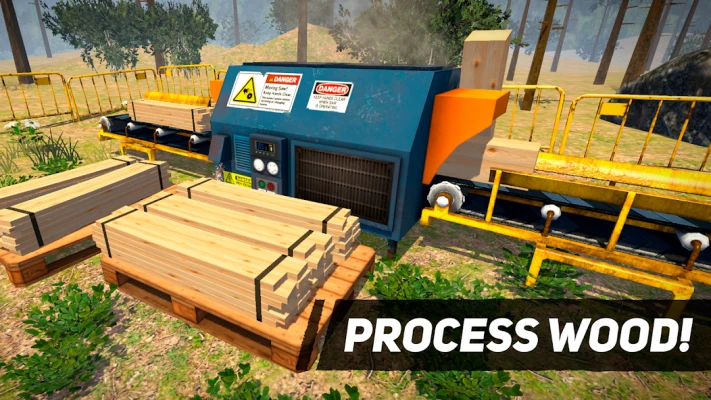
The sawmill is another major part of the experience. Players can construct and expand their production facilities, unlock industrial equipment, remove bark from logs, and transform raw wood into useful materials such as boards and beams.
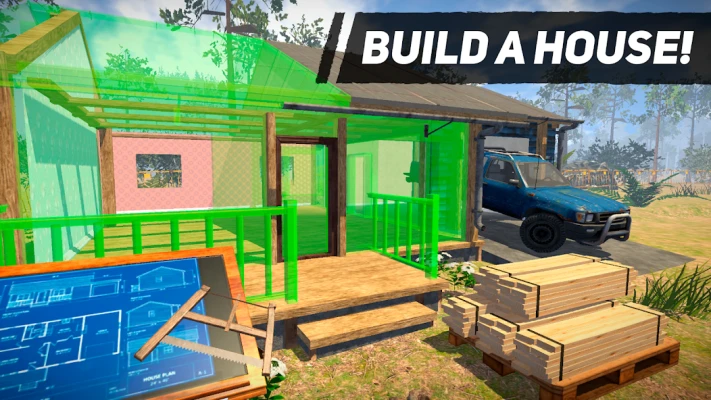
However, Lumberjack Simulator 3D is not limited to running a logging business. It also allows players to build a personal home in the forest. Using harvested and processed materials, they can gradually construct their house, furnish different rooms, and add decorations.
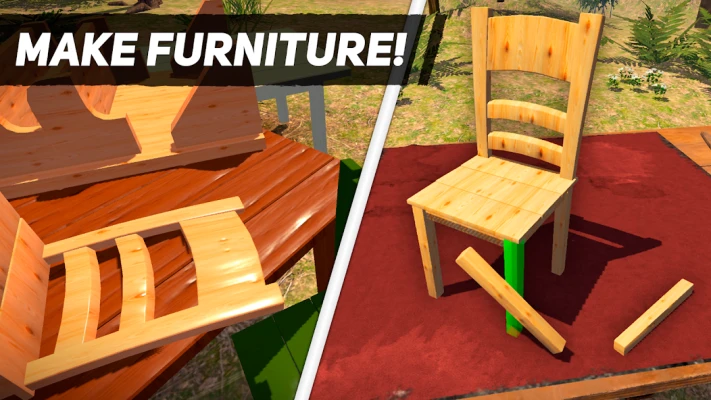
Furniture production adds another layer of creativity. Players can establish a furniture workshop and create different household items, including chairs, tables, beds, sofas, cabinets, and shelves.
With its combination of forestry activities, vehicle transportation, industrial production, and construction, the game offers a varied simulation experience for players who enjoy building something from the ground up.
Main Features of Lumberjack Simulator 3D
Realistic First-Person Tree Cutting
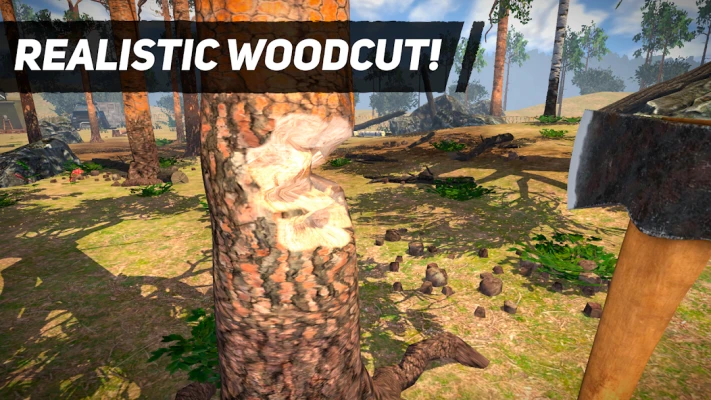
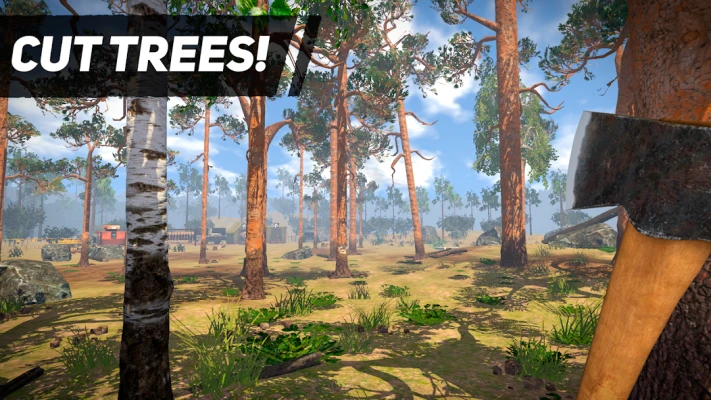
The central activity involves cutting down trees using different tools. Players experience hands-on axe mechanics and must work on the trunk to create a notch and influence the direction in which a tree falls.
Manual Logging Gameplay
Unlike traditional idle simulation games, harvesting requires direct player participation. Each tree must be cut down and processed, making the logging process an important part of the overall experience.
Tree Felling and Branch Removal
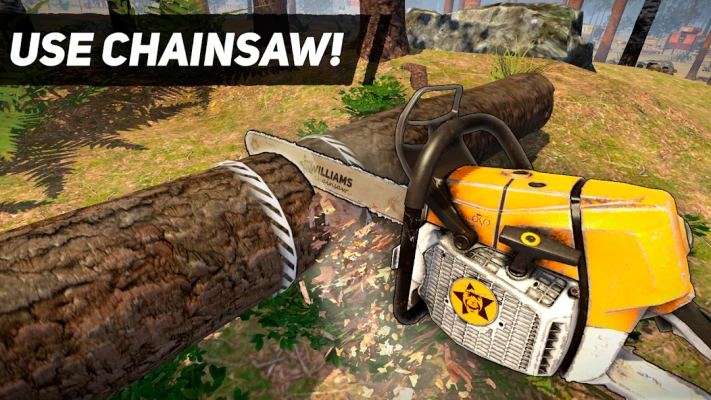
After cutting down a tree, players must prepare the fallen trunk. Removing branches and dividing the trunk into manageable logs helps prepare the wood for transportation and further processing.
Pickup Truck Restoration
An abandoned pickup truck provides an important transportation option. Players can repair the vehicle and use it to carry timber across rough forest terrain.
Realistic Timber Transportation
Players can carry individual logs by hand or load them onto their vehicle. Proper transportation becomes increasingly valuable as the logging operation expands.
Sawmill Construction and Expansion
The sawmill allows players to turn harvested wood into more useful products. New processing stations and industrial machines introduce additional production possibilities.
Woodworking and Timber Processing
Raw logs can be debarked and processed into materials such as wooden beams and boards. These materials are essential for construction and other production activities.
Forest House Construction
Players can use their harvested timber to build a personal home. Construction progresses through different stages as the required materials become available.
Furniture Crafting
The furniture workshop introduces hands-on crafting activities. Players can create different household products and use their creations to improve their living space.
Home Decoration
Furniture placement and decorative items allow players to personalize their forest home and make it feel more comfortable.
Equipment and Tool Upgrades
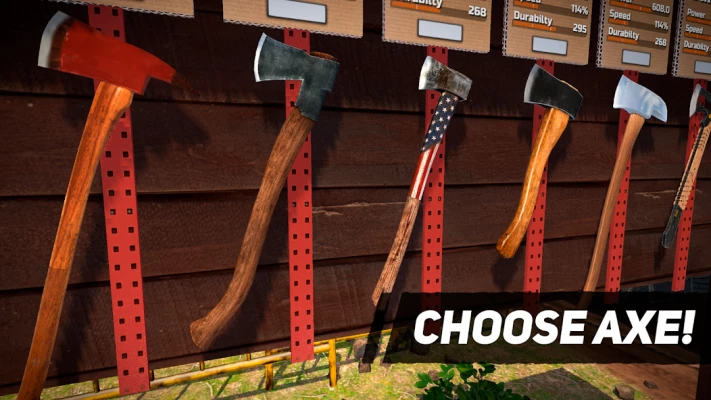
New axes, tools, vehicles, machinery, and production systems become available as the operation develops.
Conveyor and Transportation Systems
Additional equipment helps improve the movement of materials between different production stages and makes the growing timber operation more efficient.
Large Forest Sandbox Environment
The forest provides an open environment for exploration, logging, transportation, and development. Players can gradually expand their activities and discover additional areas.
Understanding the Main Gameplay Systems
Tree Cutting and Harvesting
Tree cutting is the foundation of everything in Lumberjack Simulator 3D. Players begin with a basic axe and must learn how to harvest trees efficiently.
The cutting process involves more than simply hitting a trunk. Creating the notch and controlling the intended falling direction are important parts of the activity.
After a tree falls, the next step is preparing its trunk. Branches must be removed, and the remaining wood needs to be divided into manageable pieces.
Learning this process early makes the rest of the game considerably easier because nearly every major development activity depends on a reliable supply of timber.
Wood Transportation
Once trees have been harvested, the wood needs to reach the appropriate processing area.
Initially, players can move logs manually. This works for smaller quantities but becomes less practical as production increases.
The pickup truck provides a more convenient transportation solution. After restoring it, players can load timber into its cargo bed and transport materials across forest roads.
Careful loading is important because poorly positioned logs can make transportation more difficult.
Sawmill and Industrial Production
The sawmill transforms ordinary logs into valuable construction materials.
Players can gradually unlock processing stations and industrial machinery to expand their production capabilities.
Debarking is one of the important stages of timber preparation. After removing the outer bark, logs can move through additional processing equipment to produce usable wooden materials.
Boards and beams are particularly useful because they support different construction and manufacturing activities.
Building a Forest Home
House construction introduces a personal development objective beyond commercial logging.
Players collect the necessary materials, process their timber, and use the resulting products to complete different parts of their home.
Once construction progresses, furniture and decorations help transform the building into a comfortable living space.
This system gives harvested resources another purpose and makes the overall experience more rewarding.
Furniture Manufacturing
Furniture production expands the available woodworking activities.
Players can establish a workshop and create a variety of household products.
Chairs, tables, beds, sofas, cabinets, and shelves are among the furniture items available in the game.
The workshop creates an additional use for processed timber and connects resource gathering with creative production.
Complete Strategy Guide for Lumberjack Simulator 3D
Starting Your Logging Adventure
The beginning of Lumberjack Simulator 3D is all about understanding the environment and learning the basic harvesting process.
Rather than immediately attempting to unlock every available feature, concentrate on becoming familiar with the axe, tree-cutting mechanics, and timber preparation.
Start by selecting accessible trees and practicing the cutting process. Pay attention to the notch and the direction in which each tree falls.
After harvesting a tree, remove its branches and divide the trunk into manageable sections.
Keep your first activities simple. Understanding the complete process from standing tree to usable log provides a strong foundation for everything that follows.
Master the Art of Tree Felling
Efficient tree cutting can save considerable time.
Before starting, inspect the surrounding area and identify a suitable falling direction. Avoid positioning the tree toward vehicles, buildings, machinery, or other obstacles.
Work on the cutting notch carefully instead of rushing through the process.
Try to maintain enough open space around the tree so that the falling trunk does not create unnecessary complications.
Once the tree reaches the ground, concentrate on processing it properly. A clean harvesting routine makes collecting and transporting timber much easier.
Choose Trees Strategically
Not every tree needs to be harvested immediately.
Develop a simple harvesting routine by choosing trees that are easy to access and convenient to transport.
Avoid cutting trees in locations where moving the resulting logs would require unnecessary effort.
As you become more familiar with the forest, you can explore additional areas and experiment with different tree types.
A particularly useful approach is to complete several nearby harvesting activities before moving to another section of the forest. This reduces unnecessary movement and helps keep your work organized.
Restore the Pickup Truck Early
The pickup truck is one of the most useful tools for expanding your operation.
Although carrying logs manually is manageable at the beginning, transportation becomes more demanding when you start producing larger quantities of timber.
Prioritize restoring the abandoned vehicle when the necessary resources and requirements become available.
Once the truck is operational, use it to transport multiple logs instead of repeatedly carrying individual pieces.
Drive carefully on uneven forest roads. Avoid unnecessary collisions and pay attention to the vehicle's condition because the game includes visual damage mechanics.
Improving your transportation routine can make every subsequent production activity more convenient.
Improve Your Log Loading Technique
Loading timber properly is an important part of efficient transportation.
Place logs carefully in the pickup's cargo bed and avoid creating unstable arrangements.
Try to keep the load organized rather than stacking pieces randomly.
A balanced load makes driving more manageable and reduces the likelihood of logs falling during transportation.
For longer trips, make sure the vehicle is positioned on suitable ground before loading.
These small habits can save time and prevent repeated trips between the forest and processing facilities.
Develop Your Sawmill Gradually
The sawmill should become one of your main priorities once you have established a dependable supply of raw timber.
Begin by unlocking the processing equipment needed for your current production requirements.
Learn how each station works and understand the relationship between the different processing stages.
For example, raw logs must first be prepared before they can become useful finished materials.
Expand the facility gradually instead of purchasing every available machine immediately.
A well-organized sawmill is more useful than a large collection of equipment that you cannot supply with enough raw materials.
Understand the Value of Processed Wood
Raw logs and finished wooden products serve different purposes.
Processed boards and beams are particularly important for construction and other manufacturing activities.
Before selling or using your timber, consider what materials you will need for upcoming projects.
Keep enough processed wood available for house construction and furniture production rather than selling every available resource.
A balanced approach between selling materials and saving them for development helps prevent unnecessary shortages.
Manage Your Money Carefully
Financial management is essential when expanding a logging business.
New tools, vehicles, processing machines, and production systems require resources.
Avoid spending everything on equipment simply because an upgrade becomes available.
Instead, consider whether the purchase will improve your current activities.
For example, a transportation improvement can be especially valuable if moving logs is taking too much time. Similarly, upgrading processing equipment makes sense when you have enough timber to keep it useful.
Pay attention to the different ways your harvested and processed materials can contribute to your progress.
Selling suitable timber can provide additional funds, while retaining essential materials helps support long-term development.
Prioritize Useful Tool Upgrades
Better equipment can make manual harvesting more comfortable and efficient.
When choosing an upgrade, consider how often you use the tool and how much time it could save.
Axes and other forestry equipment directly affect your everyday logging activities.
Avoid spending valuable resources on upgrades that do not support your current objectives.
A practical upgrade order is to improve the equipment that you use most frequently, strengthen transportation capabilities, and then expand industrial production.
Expand Your Production Chain
A successful logging operation involves several connected activities.
The general production process follows this pattern:
Tree harvesting leads to branch removal and trunk preparation. Prepared logs are transported to the sawmill, where they are debarked and processed into wooden products. These finished materials can then support construction, furniture manufacturing, or timber sales.
Try to keep each stage supplied with the materials it needs.
If your sawmill is waiting for logs, concentrate on harvesting and transportation. If raw timber is accumulating, focus on processing it.
Identifying bottlenecks is one of the most effective ways to improve your overall production efficiency.
Build Your Forest House Efficiently
Your personal home is one of the most rewarding long-term projects.
Instead of collecting materials randomly, approach construction as a separate development objective.
Identify which wooden materials are required and organize your harvesting activities around those needs.
Prepare the necessary logs, beams, and boards before concentrating on individual construction stages.
Avoid selling materials that you already need for the house.
Once the basic structure is complete, you can concentrate on furniture and decorations.
Make the Most of the Furniture Workshop
Furniture manufacturing provides a creative alternative to ordinary logging.
The workshop allows you to transform processed wood into useful household products.
Start by understanding the different crafting activities and the materials needed for each item.
Create furniture that supports your home-decoration goals and organize production around your available resources.
Rather than treating furniture manufacturing as an unrelated activity, consider it another part of your overall timber operation.
The more effectively you connect harvesting, processing, and crafting, the more productive your gameplay becomes.
Use Machinery to Save Time
As your operation grows, additional equipment becomes increasingly important.
Conveyors and transportation systems help move materials between production stages.
These systems can reduce unnecessary manual handling and make the sawmill easier to manage.
Prioritize machinery that solves a specific problem in your existing production chain.
For instance, equipment that improves material movement is particularly useful when you are handling large quantities of logs.
Do not expand machinery without considering whether your current timber supply can support it.
Explore the Forest Carefully
Exploration is another important part of the experience.
Different areas provide opportunities to discover new trees, resources, and development possibilities.
Move around the environment carefully and become familiar with the available routes.
Look for convenient transportation paths between harvesting locations and your production facilities.
As your progress continues, additional areas and opportunities can make the forest feel more rewarding to explore.
A useful habit is to remember which locations are easiest to access and organize your harvesting activities accordingly.
Avoid Common Beginner Mistakes
One common mistake is spending too much money on equipment before establishing a dependable income.
Another is cutting down trees without considering how the resulting logs will be transported.
Players should also avoid selling all their timber without checking their construction and manufacturing requirements.
Poor vehicle loading can create unnecessary transportation problems, while expanding the sawmill too quickly can leave expensive equipment without enough resources.
Rushing through tree cutting is another mistake. Learning to control falling direction and prepare trunks properly makes the entire process smoother.
Finally, avoid ignoring your long-term objectives. Balancing logging, processing, construction, and furniture manufacturing creates a much more satisfying experience.
Advanced Tips for Efficient Progression
Establish a Consistent Work Routine
Follow a repeatable cycle of harvesting, preparing logs, transporting timber, and processing materials. A consistent routine helps reduce wasted movement.
Keep Transportation Routes Clear
Choose practical routes between your harvesting locations and sawmill. Avoid unnecessary detours and difficult terrain whenever possible.
Maintain a Healthy Timber Supply
Do not allow your production facilities to remain without raw materials. Regular harvesting keeps your operation moving.
Separate Commercial and Construction Materials
Maintain a reasonable supply of timber for selling while reserving essential processed materials for your house and workshop.
Upgrade Based on Actual Needs
Choose tools and machines according to the activities that currently slow you down. Useful improvements are more valuable than unnecessary purchases.
Use the Pickup Whenever Practical
Transporting several logs together is generally more convenient than making repeated trips with individual pieces.
Develop the Sawmill Before Expanding Too Much
A dependable processing facility provides the foundation for producing construction materials and expanding furniture manufacturing.
Take Your Time With Construction
Building a forest home is a long-term objective. Collect materials systematically and complete the available construction stages without disrupting your main production activities.
Experiment With Furniture Production
Try different furniture items and use the workshop to make your home more personal.
Explore New Areas as You Progress
Expanding your knowledge of the forest helps you identify additional harvesting opportunities and improve your overall operations.
Is Lumberjack Simulator 3D Worth Playing?
Lumberjack Simulator 3D is an interesting choice for players who enjoy realistic work simulations, resource management, and creative construction.
Its biggest strength is the connection between different activities. Cutting down a tree is only the beginning. Players must prepare the trunk, transport the logs, process the timber, and decide how to use the resulting materials.
The pickup truck adds a driving element, while the sawmill introduces industrial management. House construction and furniture crafting provide additional goals that make the experience more varied.
Another appealing aspect is the manual gameplay. Players actively participate in harvesting rather than relying entirely on automatic resource generation.
The game is particularly suitable for people who enjoy lumberjack games, forestry simulators, woodworking activities, sawmill management, and relaxing sandbox experiences.
However, players should be aware that the game includes advertisements and optional in-app purchases. Progression can also require patience when saving resources for expensive equipment and upgrades.
Overall, it offers a satisfying combination of tree cutting, timber production, transportation, and building activities.
Frequently Asked Questions
What is Lumberjack Simulator 3D?
Lumberjack Simulator 3D is a first-person forestry simulation game in which players cut trees, process timber, transport logs, operate a sawmill, manufacture furniture, and build a forest home.
Who developed Lumberjack Simulator 3D?
The game is developed by Go Dreams.
Is Lumberjack Simulator 3D an idle game?
No. Its main logging activities require direct player participation. Trees are harvested manually rather than through automatic idle production.
Can you drive vehicles in Lumberjack Simulator 3D?
Yes. Players can restore an abandoned pickup truck and use it to transport logs across the forest.
Can you build a house in the game?
Yes. Players can collect and process wood to construct their own forest home, furnish rooms, and purchase decorations.
Does Lumberjack Simulator 3D include woodworking?
Yes. The game includes a furniture workshop where players can create items such as chairs, tables, beds, sofas, cabinets, and shelves.
Can you upgrade equipment?
Yes. Players can unlock new axes, tools, vehicles, machinery, and production systems as their logging operation develops.
What is the purpose of the sawmill?
The sawmill transforms harvested logs into useful wooden materials. Players can remove bark, process timber, and produce boards and beams for other activities.
Is the game suitable for casual players?
Yes. Its relaxed forest environment and hands-on activities make it suitable for players who prefer a slower-paced simulation experience.
Does Lumberjack Simulator 3D have a construction system?
Yes. Players can build a forest home using materials obtained through logging and wood processing.
Final Verdict
Lumberjack Simulator 3D combines the satisfying experience of cutting trees with the challenge of developing a complete timber business. From restoring a pickup truck and operating a sawmill to manufacturing furniture and building a comfortable forest home, every activity contributes to a larger progression system.
Its combination of manual logging, realistic transportation, woodworking, and construction makes it more than a basic tree-cutting simulator. Players who enjoy forestry games, lumberjack adventures, industrial management, and creative building will find plenty of activities to explore.
Whether you want to become an efficient lumberjack, expand a successful sawmill, or create your own woodland home, Lumberjack Simulator 3D provides an enjoyable opportunity to build a forest operation one tree at a time.
Rate the Game
User Reviews















Popular Games



















 Android
 iOS
 Windows
 Xbox