









Latest Version
February 04, 2025
CAPCOM Co., Ltd
Action
iOS
0
Report a Problem
More About :game
The game combines first-person exploration, tense combat, resource management, environmental puzzles, cinematic storytelling, and atmospheric horror. Its mobile version delivers a console-style Resident Evil experience with support for compatible controllers and Apple's high-performance hardware.
What Is Resident Evil Village?
Resident Evil Village is the eighth major installment in Capcom's Resident Evil series and continues the story of Ethan Winters following the events of Resident Evil 7.
The game moves the action from the isolated Baker estate to a remote European village surrounded by forests, mountains, castles, and mysterious settlements.
Ethan's search for his missing daughter quickly turns into a fight for survival as he encounters four powerful figures controlling different areas of the region.
The result is a mixture of survival horror, first-person action, exploration, puzzles, and cinematic storytelling.
The Story of Ethan Winters
The story begins after Ethan Winters has attempted to rebuild his life following the traumatic events of Resident Evil 7.
His new life is shattered when his daughter, Rose, is taken from him.
Ethan finds himself in a remote village where something is deeply wrong. The villagers are terrified, strange creatures roam the surrounding areas, and a mysterious group of powerful enemies appears to control the region.
Determined to find his daughter, Ethan explores the village and discovers that the kidnapping is connected to a much larger mystery.
The journey takes him through castles, underground areas, laboratories, forests, factories, and other disturbing locations.
The Village
The central village acts as a hub connecting many areas of the adventure.
It is not simply a background location. As Ethan progresses, previously inaccessible areas can become available, revealing new paths, items, puzzles, enemies, and secrets.
The village also creates a strong sense of uncertainty because danger can appear in places that initially seem familiar.
Exploration rewards careful observation and encourages players to remember locations they could not previously access.
Castle Dimitrescu
One of the game's most recognizable locations is Castle Dimitrescu.
The enormous gothic castle is home to Lady Dimitrescu and her daughters and provides some of the adventure's most memorable exploration and horror sequences.
Its maze-like rooms, hidden passages, locked doors, puzzles, and enemies create an atmosphere that combines classic Resident Evil exploration with first-person horror.
Lady Dimitrescu
Lady Dimitrescu is one of the most recognizable characters in Resident Evil Village.
She is a towering figure who controls Castle Dimitrescu and relentlessly hunts Ethan through parts of the game.
Her presence creates a different style of tension from ordinary combat because players often need to think about escape and positioning rather than simply attempting to defeat her immediately.
The Four Lords
The village is controlled by four powerful figures commonly known as the Four Lords:
- Lady Alcina Dimitrescu
- Karl Heisenberg
- Salvatore Moreau
- Donna Beneviento
Each lord controls a distinct territory and introduces a different atmosphere, gameplay style, enemies, and challenges.
This structure helps Resident Evil Village continually change its tone as Ethan moves deeper into the story.
First-Person Survival Horror
Resident Evil Village uses a first-person perspective throughout the main adventure.
This perspective places the player directly into Ethan's surroundings and makes close encounters considerably more intense.
Dark corridors, sudden enemy attacks, narrow spaces, environmental sounds, and limited resources all contribute to the feeling that danger can appear at any moment.
The first-person camera also makes exploration more immersive, particularly when examining detailed environments.
Combat and Weapons
Combat combines traditional Resident Evil gunplay with resource management.
Players can use different weapons depending on the situation, including:
- Handguns
- Shotguns
- Rifles
- Explosives
- Special weapons
- Melee attacks
Ammunition and healing resources are not unlimited, so blindly firing at every enemy can create problems later.
Good players learn when to fight, when to avoid danger, and when to conserve valuable resources.
Weapon Upgrades
Weapons can be improved during the adventure.
The Duke, a mysterious merchant, provides access to weapons, ammunition, upgrades, supplies, and other useful services.
Choosing which weapons to upgrade can affect how comfortable different encounters become.
Players who prefer a particular weapon should consider investing in it rather than spreading resources too thinly.
The Duke
The Duke serves as Ethan's primary merchant.
He is one of the game's most memorable supporting characters and provides a valuable break from the surrounding horror.
Players can use his services to:
- Purchase weapons
- Buy ammunition
- Upgrade weapons
- Sell valuables
- Purchase supplies
- Prepare certain meals
The Duke's presence creates an important resource-management layer between major encounters.
Crafting System
Resident Evil Village includes a crafting system that allows Ethan to create useful items from resources collected throughout the environment.
Depending on the available materials, players can craft ammunition, healing items, and other supplies.
This makes exploration important because apparently insignificant resources can become valuable later.
Cooking and Permanent Benefits
The Duke can also prepare meals using ingredients found around the village.
These recipes can provide permanent improvements to Ethan's abilities.
For example, certain dishes can improve defensive capabilities, health, or movement-related attributes.
This gives exploration another purpose beyond simply finding ammunition and valuables.
Exploration and Puzzles
Resident Evil Village combines combat with environmental exploration.
Players will encounter locked doors, hidden rooms, keys, combination puzzles, mechanical devices, and objects that must be examined carefully.
Some areas cannot be fully explored the first time you visit them.
Remembering inaccessible locations can therefore help later in the game when new items or abilities make additional areas reachable.
Treasure Hunting
Valuable objects can be discovered throughout the village.
Some treasures can be sold to the Duke for Lei, the game's currency.
Others can be combined to increase their value.
This creates an additional exploration incentive: searching carefully can provide more resources for weapon upgrades, ammunition, and other purchases.
Enemy Variety
The village contains a wide range of hostile creatures.
Enemies include:
- Lycans
- Armored creatures
- Mutated monsters
- Large bosses
- Specialized enemies
- Dangerous supernatural creatures
Different enemies require different tactics.
Some are best handled from a distance, while others can force close-range combat or careful movement through the environment.
Boss Battles
Major boss encounters are central to Resident Evil Village.
Each of the Four Lords provides a distinctive confrontation rather than simply functioning as a stronger version of an ordinary enemy.
Boss fights often combine environmental hazards, weapon management, movement, and recognition of attack patterns.
Learning how a boss behaves is frequently more valuable than simply carrying more ammunition.
Horror and Atmosphere
Resident Evil Village deliberately shifts between different types of horror.
Some sections emphasize combat and monster attacks, while others focus on psychological tension, exploration, darkness, isolation, and disturbing imagery.
This variety prevents the adventure from feeling like a single repeated horror scenario.
The result is a campaign that can move from intense gunfights to quiet exploration and then suddenly become deeply unsettling.
Graphics and Visual Quality
One of the major attractions of the iPhone and iPad release is its attempt to bring a visually demanding console-quality Resident Evil experience to Apple hardware.
The game features detailed environments, realistic character models, lighting effects, atmospheric locations, and cinematic sequences.
Apple's App Store currently highlights the game's detailed graphics and lists it as an Editors' Choice title.
Controls and Controller Support
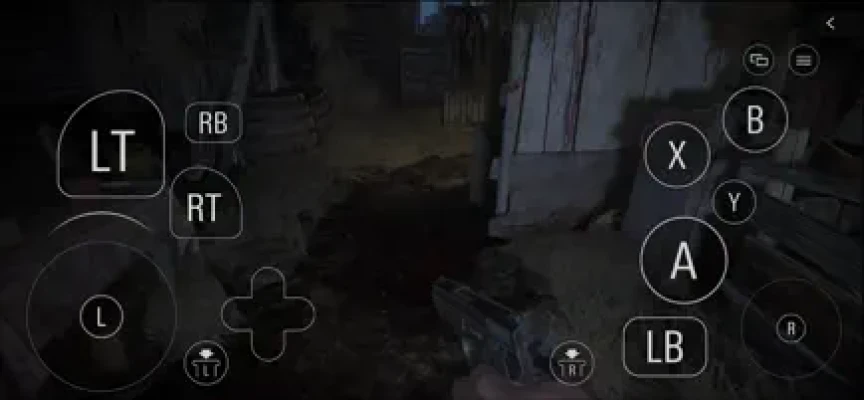
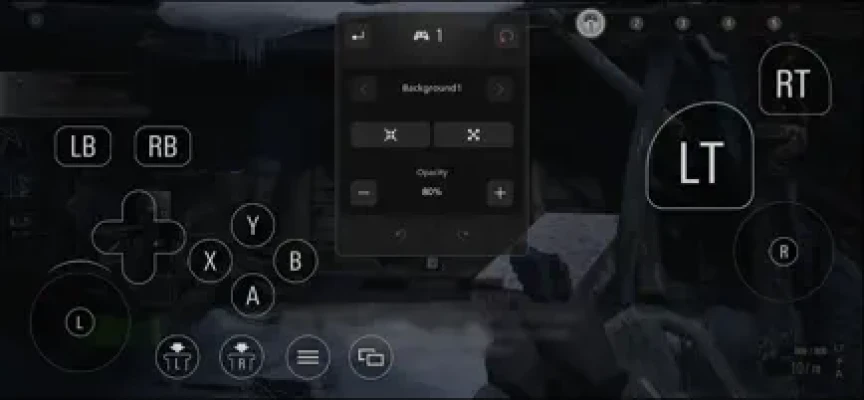
Resident Evil Village supports touchscreen controls on compatible Apple devices and also supports compatible game controllers.
The App Store specifically lists compatibility with PlayStation, Xbox, and MFi controllers.
For players accustomed to console Resident Evil games, a physical controller can provide a more familiar experience, especially during combat and precise movement.
Beginner's Guide
Explore Before Moving Forward
Do not rush through every area.
Search rooms carefully for ammunition, healing items, crafting materials, valuables, and documents.
Save Resources
Ammunition can become extremely valuable during difficult encounters.
Avoid wasting powerful ammunition on ordinary enemies when weaker weapons can handle them.
Upgrade Selectively
Focus your money on weapons you actually use.
A few well-developed weapons are often more useful than many partially upgraded ones.
Search for Treasures
Valuables can provide additional money for upgrades and supplies.
Look carefully around unusual objects, hidden rooms, and areas that seem difficult to reach.
Use the Map
The map can help identify rooms you have not fully explored.
Returning to previously inaccessible locations can uncover useful items and secrets.
Learn Enemy Patterns
Not every encounter should be solved by simply shooting as quickly as possible.
Watch enemy behavior and learn when they attack, stagger, retreat, or expose weaknesses.
Advanced Strategy
Manage Your Inventory
Resident Evil Village's inventory system forces players to make decisions about what to carry.
Prioritize ammunition, healing items, crafting materials, and valuable resources while avoiding unnecessary clutter.
Know When to Run
Some encounters do not require immediate combat.
If an enemy is blocking your path but can be avoided safely, conserving ammunition can be the smarter decision.
Upgrade Your Preferred Weapon
Rather than spreading money evenly across every weapon, consider creating a core loadout around your preferred combat style.
Use Crafting Strategically
Do not automatically craft everything as soon as materials become available.
Think about what upcoming encounters may require and preserve resources when appropriate.
Search Thoroughly
Some of the game's best resources are hidden behind optional exploration.
A careful player can enter major encounters with considerably better equipment than someone who rushes through the story.
Game Progression
Resident Evil Village follows a mostly linear story while allowing considerable exploration within individual areas.
Progression generally involves:
Explore → Find Resources → Solve Puzzles → Fight Enemies → Defeat Bosses → Unlock New Areas → Upgrade Equipment → Continue the Story
This structure keeps the campaign focused while still providing enough freedom to reward exploration.
Game Modes
The main story is the centerpiece of Resident Evil Village, but the overall game also contains additional content and unlockable experiences.
The mobile App Store listing focuses primarily on the base game and available additional purchases.
Players should distinguish the iOS version's available content from the complete package offered on other platforms because features and DLC availability can differ between releases.
Mercenaries Mode
Resident Evil Village also includes The Mercenaries, an arcade-style combat mode built around defeating enemies efficiently and achieving high scores.
Unlike the slower exploration-focused campaign, Mercenaries emphasizes combat performance, movement, score optimization, and replayability.
Availability of specific additional content should be checked against the current Apple version and its purchases.
DLC and Additional Content
The current App Store listing includes several optional purchases associated with Resident Evil Village.
These include:
- The Trauma Pack DLC
- Samurai Edge – AW Model-01
- Resident Evil 7 Found Footage Filter
- Resident Evil 7 Tape Recorder Save Point
- Saferoom Music
- Mr. Everywhere Weapon Charm
- Village of Shadows Difficulty unlock
- The Tragedy of Ethan Winters Artwork
- The Baker Incident Report
- Survival Resources Pack
- Street Wolf Outfit
- DLC Pack
- All Access Voucher
The App Store currently lists the Base Game at $39.99, alongside separate optional purchases.
Difficulty
Resident Evil Village offers different difficulty levels designed for different types of players.
Beginners can start with a more approachable experience, while higher difficulties demand much stronger resource management, combat awareness, and knowledge of enemy patterns.
The App Store also lists an optional purchase for unlocking Village of Shadows Difficulty.
Game Atmosphere
Few parts of Resident Evil Village feel completely safe.
Even quiet areas can contain hidden dangers, while the game's environmental design constantly suggests that something is watching or waiting nearby.
The contrast between beautiful European-inspired scenery and disturbing creatures gives the game much of its visual identity.
Audio Design
Sound plays a major role in the horror experience.
Enemy noises, environmental sounds, footsteps, distant screams, machinery, and atmospheric effects can all increase tension before an enemy even appears on screen.
Playing with headphones can make the atmosphere considerably more immersive.
Technical Information
- Game: Resident Evil Village
- Developer: CAPCOM
- Publisher: CAPCOM
- Genre: Action / Survival Horror
- Perspective: First-person
- Players: Single-player
- Platforms: iPhone and iPad
- Controller Support: PlayStation, Xbox, and MFi controllers
- Age Rating: 18+
- App Store Price: Free download with in-app purchases
- Base Game: $39.99 on the current US App Store listing
- App Size: Approximately 1.4 GB
- Languages: English plus 12 additional languages
- Game Center: Supported
- Category: Action
These specifications come from the current Apple App Store listing.
iPhone Requirements
The current App Store listing requires:
- iOS 17.0 or later
- A17 Pro chip or later
Compatible iPhone models currently listed include the iPhone 15 Pro and 15 Pro Max, as well as newer supported iPhone generations.
Because Resident Evil Village is a demanding AAA game, compatibility is much more restricted than with ordinary mobile games.
iPad Requirements
The iPad version requires:
- iPadOS 17.0 or later
- M-series or A17 Pro chip
The current listing includes compatible iPad Pro and iPad Air models with the required Apple silicon.
Privacy and Data
The current App Store listing indicates that the developer reports data not collected for the app's privacy practices.
Player Experience
Resident Evil Village works particularly well for players who enjoy a combination of story-driven exploration and action.
The campaign continually changes its environment and gameplay rhythm, preventing the experience from becoming a simple sequence of shooting galleries.
Some sections are combat-heavy, while others rely heavily on exploration, puzzles, atmosphere, or psychological horror.
That variety is one of the game's strongest qualities.
Pros and Cons
Pros
- Excellent survival horror atmosphere
- High-quality first-person presentation
- Strong cinematic storytelling
- Detailed environments
- Varied enemy designs
- Memorable boss encounters
- Weapon upgrades and crafting
- Exploration and puzzles
- Treasure hunting
- Atmospheric sound design
- Controller support
- Impressive mobile hardware adaptation
Cons
- Requires powerful Apple hardware
- Large storage requirement
- Touch controls may not suit every player
- Base game is a premium purchase
- Additional DLC costs extra
- Horror content is not suitable for younger players
Who Should Play Resident Evil Village?
Resident Evil Village is particularly suited to players who enjoy:
- Survival horror games
- First-person horror
- Resident Evil games
- Story-driven action games
- Horror exploration
- Boss battles
- Puzzle solving
- Resource management
- Dark fantasy settings
- AAA mobile gaming
- Console-quality iPhone games
- Controller-supported mobile games
Players looking for a casual mobile game may find it too demanding, both technically and emotionally.
Resident Evil Village on iPhone vs Console
The iPhone and iPad version is notable because it brings a major Resident Evil title to Apple's mobile hardware.
The core attraction remains the same: first-person survival horror, Ethan's story, exploration, combat, puzzles, and the mysterious village.
However, the mobile release has specific hardware requirements and a separate App Store purchasing model.
The current Apple version supports compatible controllers, making it possible to play with a setup that feels closer to a traditional console experience.
Ratings and Player Reception
The current US App Store listing shows 3.9 out of 5 stars from approximately 1.7K ratings and features an Editors' Choice designation.
The rating should be considered alongside the game's demanding hardware requirements, mobile controls, and premium purchasing model.
Expert Rating
Overall: 9.0/10
- Story: 9.2/10
- Horror Atmosphere: 9.5/10
- Combat: 9.0/10
- Exploration: 9.2/10
- Graphics: 9.5/10
- Sound: 9.1/10
- Mobile Adaptation: 8.9/10
- Replay Value: 8.7/10
Final Verdict
Resident Evil Village remains one of the most ambitious survival horror games available on Apple's mobile platform.
Its combination of first-person combat, exploration, puzzles, resource management, disturbing enemies, memorable villains, and cinematic storytelling gives the game far more depth than a typical mobile action title.
The iPhone and iPad release is especially impressive from a technical perspective, although its strict hardware requirements mean that only relatively recent Apple devices can run it. The current App Store listing requires iOS 17 with an A17 Pro-equipped iPhone or an iPad with an M-series or A17 Pro chip.
For fans searching for a Resident Evil Village iPhone game, survival horror on iPad, or a premium AAA horror experience on mobile, this is one of the most substantial options available.
Frequently Asked Questions
What is Resident Evil Village?
Resident Evil Village is the eighth major Resident Evil game and a first-person survival horror adventure starring Ethan Winters.
Is Resident Evil Village available on iPhone?
Yes. Capcom's Resident Evil Village is available for compatible iPhone models through the App Store.
Is Resident Evil Village available on iPad?
Yes. The game supports compatible iPad models equipped with Apple's M-series or A17 Pro chips.
Is Resident Evil Village free on iPhone?
The App Store lists the application as free to download, but the full base game is currently offered as a $39.99 in-app purchase in the US store.
What iPhone is required for Resident Evil Village?
The current App Store listing requires an iPhone with an A17 Pro chip or later and iOS 17 or later.
Can I play Resident Evil Village with a controller?
Yes. The App Store lists support for compatible PlayStation, Xbox, and MFi controllers.
Is Resident Evil Village multiplayer?
The main Resident Evil Village campaign is a single-player experience.
Who is the main character?
The protagonist is Ethan Winters, who searches for his kidnapped daughter in a mysterious and dangerous village.
Who is Lady Dimitrescu?
Lady Alcina Dimitrescu is one of the major antagonists of Resident Evil Village and the ruler of Castle Dimitrescu.
What are the Four Lords?
The Four Lords are Lady Dimitrescu, Karl Heisenberg, Salvatore Moreau, and Donna Beneviento. Each controls a different area and represents a major part of Ethan's journey.
Does Resident Evil Village have puzzles?
Yes. Exploration includes environmental puzzles, locked areas, keys, hidden objects, and mechanisms that players must solve to progress.
Does Resident Evil Village have weapon upgrades?
Yes. Players can purchase and upgrade weapons through the Duke, using resources and currency collected throughout the adventure.
Does Resident Evil Village have DLC?
Yes. The current iOS App Store listing includes multiple optional DLC and additional purchases.
How large is Resident Evil Village on iPhone?
The current App Store listing reports an app size of approximately 1.4 GB.
Rate the Game
User Reviews















Popular Games



















 Android
 iOS
iOS Windows
 Xbox
Xbox