

Latest Version
January 03, 2025
Trophy Games - Animal Games
Simulation
0
com.tivola.wildlife.free
Report a Problem
More About :game
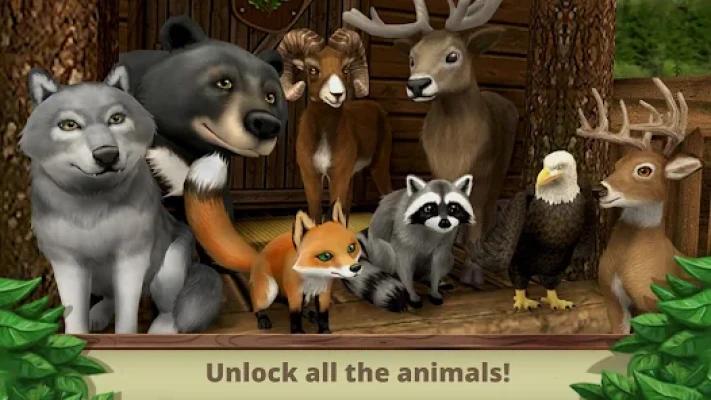
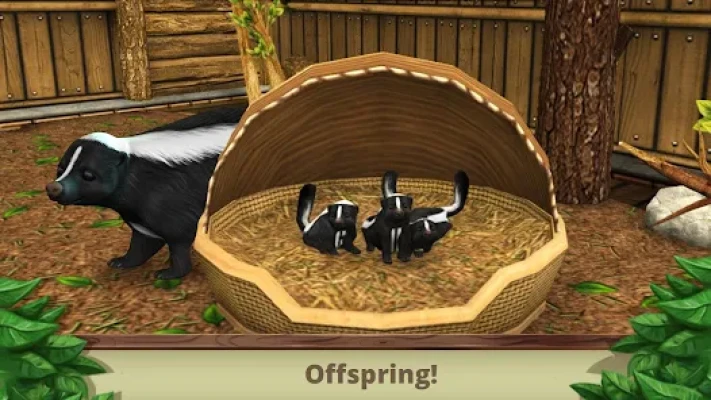
The game features animals including squirrels, raccoons, skunks, wolves, bears, otters and Mustang horses. As you gain experience, you can unlock better objects and use them to improve and customize the animals' enclosures.
What Is Pet World: WildLife America?
In Pet World: WildLife America, you take on the role of an animal keeper working at a wildlife rescue center.
Instead of simply collecting animals, you are responsible for their well-being while they are in your care. Some arrive injured, others become sick, and you need to identify what they require before helping them recover.
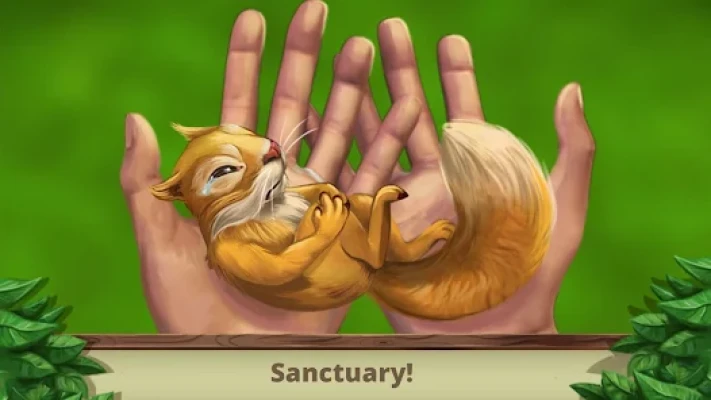
The ultimate goal is to prepare each animal for its next stage. Depending on the situation, a recovered animal can move to a new home with suitable owners or return to the wild.
The game is set around the wildlife of North America, including environments inspired by the forests and tundra of Canada and Alaska.
Pet World: WildLife America Features
Wildlife Rescue Center
Your wildlife park acts as a rescue center for animals that need assistance.
You must care for incoming animals, identify their problems and help them recover before they can move on to a new home or return to the wilderness.
Wild Animal Care
The game focuses on caring for wild animals rather than traditional household pets.
You can encounter animals such as:
- Squirrels
- Raccoons
- Skunks
- Wolves
- Bears
- Otters
- Mustang horses
The current Google Play description specifically highlights these animals.
Diagnose Animal Problems
Animals can arrive with illnesses and injuries.
Your responsibility is to identify what each patient needs and provide the appropriate care. Wolves may arrive injured, while bears can require diagnosis and treatment.
Build Better Habitats
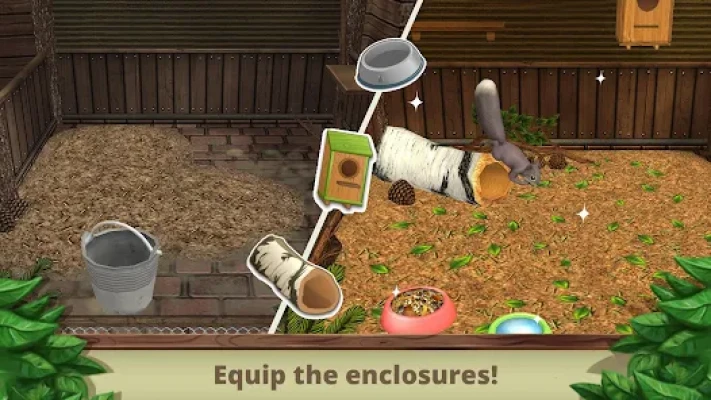
As you gain experience, you unlock better objects for your enclosures.
This allows you to create habitats that are more appropriate for the animals living in them.
Customize Animal Enclosures
You can customize the enclosures around your wildlife park.
For example, you can add trees to create a more natural environment for squirrels or arrange suitable spaces for raccoons and other animals.
North American Wildlife
The game focuses on wildlife from North America, with the setting extending into wilderness areas inspired by Canada and Alaska.
Relaxed Simulation Gameplay
Google Play currently categorizes the game as Simulation, Care, Pet and Casual, with single-player and offline support.
Pet World: WildLife America Gameplay Guide
1. Start by Understanding Each Animal
Every animal that enters the rescue center has different needs.
Instead of treating every patient in exactly the same way, first observe the animal and determine what is wrong.
Your basic workflow should be:
Observe → Identify the Problem → Treat → Care → Recover → Rehome or Release
This simple cycle is the foundation of the game.
2. Pay Attention to Injuries
Some animals arrive with obvious physical injuries.
An injured wolf, for example, needs care before it can move on to its next destination.
When an animal appears injured, concentrate on its immediate needs before spending time on enclosure decoration or other secondary tasks.
3. Diagnose Illnesses Carefully
Not every animal problem is immediately visible.
The game specifically describes diagnosing illnesses in animals such as bears.
Take your time when determining what a patient needs. Correctly identifying the problem is the first step toward successful treatment.
4. Give Animals Time to Recover
Rescue is not simply about bringing an animal into the park and immediately sending it somewhere else.
Animals need to be nursed back to health first. Only after they are ready can they move to a suitable new home or potentially return to the wild.
Think of every animal as a temporary patient rather than a permanent collection item.
Wildlife Enclosure Strategy
Create Natural Habitats
A good enclosure should feel appropriate for the animal living inside it.
The game allows you to customize habitats with objects such as trees and other environmental decorations.
When designing an enclosure, consider the animal first and decoration second.
For example:
Squirrels → Trees and natural surroundings
Raccoons → Appropriate enclosure objects and space
The goal is to make the habitat feel more like a suitable wildlife environment.
Upgrade Enclosures With Experience
Experience is important because it unlocks better objects for your animal habitats.
Rather than trying to obtain every decorative item immediately, let your wildlife park develop gradually.
A practical progression is:
Basic habitat → Gain experience → Unlock better objects → Improve enclosure → Create a more natural environment
Animal Rescue Strategy
Prioritize Sick and Injured Animals
When multiple animals require attention, focus first on patients that clearly need medical care.
Once their immediate problems are handled, you can spend more time improving habitats and customizing the park.
Keep Animals Comfortable
Recovery is easier to manage when animals have appropriate surroundings.
Use your available enclosure objects to create habitats that fit the animals in your care. The game's description specifically emphasizes making enclosures feel as natural as possible.
Prepare Animals for Their Next Destination
The rescue center is not necessarily the animal's final home.
Some animals can be transferred to new owners, while others can eventually be released back into the wild.
Think about the entire rescue process rather than only the treatment stage.
Pet World: WildLife America Animal Guide
Squirrels
Squirrels are among the smaller animals featured in the wildlife center.
Their enclosure can be customized with trees and other natural elements, giving them a more suitable environment.
Raccoons
Raccoons are another featured species.
Their enclosures can be customized as part of the wildlife park management system.
Skunks
Skunks are included among the game's North American wildlife.
They add variety to the rescue center and give players another animal type to care for.
Wolves
Wolves are among the larger animals in the game and can arrive with injuries that require treatment before they can move on.
Bears
Bears can require medical attention and diagnosis.
They are one of the more recognizable large-animal patients featured in the game.
Otters
Otters were added as a newer animal type highlighted by the developer's current Google Play description.
Mustang Horses
Mustang horses are another animal type available to care for in the wildlife reserve.
How to Progress Faster
Gain Experience
Experience is one of the main progression systems.
The more experience you gain, the better the objects you can unlock for your animal enclosures.
Focus on completing your animal-care responsibilities rather than spending all your attention on decoration.
Improve Habitats Gradually
You do not need to completely redesign every enclosure immediately.
Improve your habitats as better objects become available.
This gives your wildlife park a natural sense of progression.
Focus on Animal Recovery
Your main responsibility is caring for the animals.
When choosing between a cosmetic improvement and something that helps you manage your animals, consider the animal-care task first.
Advanced Wildlife Park Tips
Tip 1: Learn the Rescue Cycle
Remember the complete process:
Arrival → Diagnosis → Treatment → Recovery → New Home or Release
Knowing this cycle helps you understand what every animal is ultimately working toward.
Tip 2: Observe Before Acting
Do not rush into random actions. First determine what the animal needs.
Tip 3: Treat Injuries Promptly
Injured animals should receive attention before you focus heavily on park decoration.
Tip 4: Build Habitats Around the Animals
Use enclosure objects that make sense for the species rather than simply filling every available space.
Tip 5: Save Your Experience for Useful Improvements
As experience unlocks better objects, use the new options to make your habitats more suitable and interesting.
Tip 6: Think Like a Wildlife Keeper
The objective is not just to collect animals. You are caring for temporary wildlife patients and preparing them for their next stage.
Tip 7: Explore Your Park
Take time to look around your reserve and check the condition of your different enclosures.
Tip 8: Be Patient With Progression
Some player reviews have described progression as slow or repetitive, while other recent reviews praise the approachable tasks and animal-focused gameplay. These are individual player experiences rather than universal characteristics.
Pet World: WildLife America Management Guide
Running the reserve can be thought of in three main areas.
Animal Care
Make sure patients receive the attention they need.
Habitat Management
Create suitable spaces where animals can stay during their recovery.
Progression
Gain experience and unlock better objects for your wildlife enclosures.
Keeping these three areas balanced gives you a straightforward way to manage the reserve.
How to Build Better Animal Habitats
A good wildlife enclosure should have a purpose.
Instead of randomly placing objects, consider the environment you want to create.
Step 1: Choose the Animal
Decide which species the enclosure is designed for.
Step 2: Consider Its Natural Environment
Think about forests, vegetation and open areas that make sense for the animal.
Step 3: Add Suitable Objects
Use the available habitat items to create a more natural-looking space.
Step 4: Avoid Overcrowding
A habitat does not necessarily become better simply because it contains more objects.
Step 5: Upgrade Over Time
As your experience increases, replace basic objects with better options.
Rehoming and Releasing Animals
One of the game's distinctive features is that the animals do not necessarily stay at the rescue center forever.
Once an animal has recovered, it can move to a new home with suitable owners or potentially be released back into the wild.
This makes the rescue process feel different from a conventional zoo-management game.
You are helping animals through a temporary stage in their lives rather than simply building a permanent collection.
Is Pet World: WildLife America Offline?
Yes. The current Google Play listing identifies Pet World: WildLife America as an offline, single-player game.
This makes it suitable for players looking for a wildlife simulation that can be played without continuous online connectivity.
Is Pet World: WildLife America Free?
The Google Play version is listed with ads and in-app purchases.
The exact availability and pricing of optional purchases can vary by region and may change over time.
Pet World: WildLife America Platforms
The current Google Play listing identifies the game as available on Android and Windows.
The game is also available on Apple's App Store for iPhone and iPad, where it is listed as free with in-app purchases.
Pet World: WildLife America Ratings and Downloads
The current Google Play listing shows:
- 5M+ downloads
- 4.6-star rating
- 53K+ total reviews
- Everyone content rating
- Single-player
- Offline
- Android and Windows availability
Google Play's displayed review count and rating can change as new users submit reviews.
Player Feedback
Player experiences vary.
Some reviews praise the game's cute animals, accessible tasks and relaxing nature, while other reviews criticize slow progression or the amount of content available early in the game.
That makes the game particularly interesting for players who enjoy gradual animal-care simulation rather than fast-paced action.
Pet World: WildLife America Pros and Cons
Pros
- Large variety of wildlife
- Animal rescue gameplay
- Wildlife rehabilitation theme
- Animal illness and injury care
- Customizable enclosures
- Experience-based progression
- North American wilderness setting
- Wolves, bears, raccoons and other wildlife
- Otters and Mustang horses
- Single-player gameplay
- Offline support
- Relaxed simulation style
Cons
- Progression may feel slow to some players
- The gameplay is focused heavily on animal care
- Players looking for action or multiplayer gameplay may find it too relaxed
- Some optional content is connected to in-app purchases
Who Should Play Pet World: WildLife America?
This game is a good match for players interested in:
- Wildlife games
- Animal rescue games
- Animal care games
- Wildlife simulation
- Zoo games
- Animal sanctuary games
- Pet simulation
- Casual simulation games
- Wildlife park management
- North American animals
- Relaxing animal games
It is particularly suited to players who enjoy looking after animals and gradually improving their habitats.
Beginner's Recommended Progression
If you are starting Pet World: WildLife America for the first time, use this approach:
Step 1
Learn how to identify what each animal needs.
Step 2
Prioritize injured and sick animals.
Step 3
Complete their recovery process.
Step 4
Gain experience through normal animal-care activities.
Step 5
Unlock better enclosure objects.
Step 6
Improve habitats with natural-looking decorations.
Step 7
Continue caring for new animals arriving at the reserve.
Step 8
Prepare recovered animals for new homes or release.
This approach keeps your attention on the game's main rescue loop instead of spending too many early resources on decoration.
Frequently Asked Questions
What is Pet World: WildLife America?
Pet World: WildLife America is a wildlife rescue simulation game where you care for North American wild animals, treat injuries and illnesses, improve habitats and help recovered animals move to new homes or return to the wild.
What animals are in Pet World: WildLife America?
The game features squirrels, raccoons, skunks, wolves, bears, otters and Mustang horses, among other wildlife.
Can you rescue wolves?
Yes. Wolves are among the animals that can arrive at the wildlife rescue center and require care for injuries.
Can you care for bears?
Yes. Bears can require diagnosis and treatment as part of the wildlife-care gameplay.
Can you customize animal habitats?
Yes. Players can customize their enclosures with objects and create habitats that are closer to natural environments.
Can animals be released into the wild?
Yes. After recovering, animals can potentially be released back into the wild or transferred to suitable new owners.
Can you play Pet World: WildLife America offline?
Yes. Google Play currently lists the game as offline.
Is Pet World: WildLife America multiplayer?
No. Google Play currently categorizes it as a single-player game.
Is Pet World: WildLife America available for Windows?
Yes. Google Play currently lists Android and Windows availability.
Is Pet World: WildLife America free?
The game is listed with ads and optional in-app purchases.
Final Thoughts
Pet World: WildLife America takes the animal-care formula into a wildlife rescue setting. Instead of simply looking after domestic pets, you become responsible for wild animals from North America that need medical attention, recovery and appropriate habitats.
The combination of wildlife rescue, animal treatment, habitat customization and gradual progression gives the game a distinct identity within the animal simulation genre.
If you enjoy wildlife games, animal rescue simulators, animal sanctuary games, pet-care games or relaxing management experiences, Pet World: WildLife America offers a gentle experience centered around helping animals recover and preparing them for their next home or return to nature.
Rate the Game
User Reviews












Popular Games



















 Android
 iOS
 Windows
 Xbox