

Latest Version
June 08, 2026
F Permadi
Puzzle
iOS
0
Report a Problem
More About :game
Peg Solitaire Ultra – Complete Game Guide
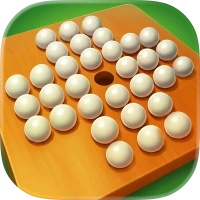
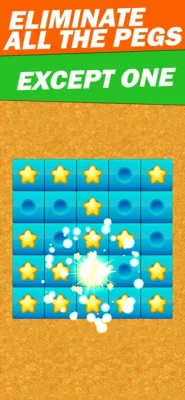
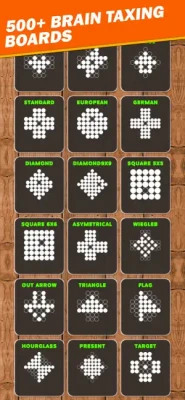
Peg Solitaire Ultra brings one of the world's most enduring logic puzzles to mobile devices. Known as Marble Solitaire, Solo Noble, or Peg Solitaire, the objective remains simple: eliminate pegs until only one remains on the board. While the rules are easy to understand, mastering advanced boards requires planning, pattern recognition, and strategic thinking. The game includes more than 500 puzzles across multiple board styles, offering hundreds of hours of challenging gameplay.
Whether you're a newcomer looking to learn the basics or an experienced puzzle fan trying to perfect your solutions, this guide covers everything you need to know.
About Peg Solitaire Ultra
Developed by F Permadi, Peg Solitaire Ultra modernizes the traditional peg solitaire formula with:
- More than 500 unique puzzles
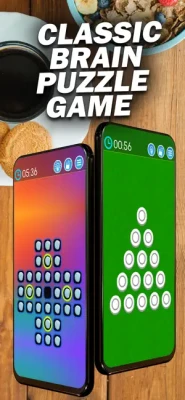
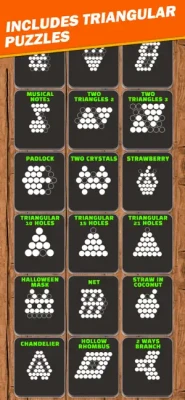
- English, European, German, Diamond, and Triangular boards
- Unlimited undo functionality
- Move recording and replay systems
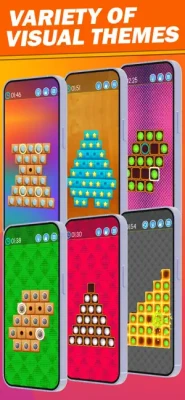
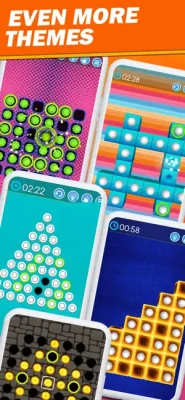
- Customizable visual themes
- Performance tracking and best-score records
- Beginner-friendly tutorial levels
Unlike many modern puzzle games, Peg Solitaire Ultra focuses entirely on strategic thinking rather than luck.
How to Play Peg Solitaire Ultra
Basic Rules
The gameplay follows classic peg solitaire rules:
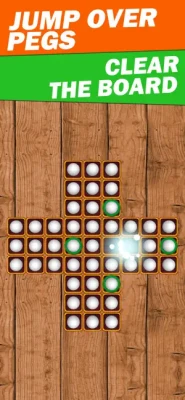
- Select a peg.
- Jump over an adjacent peg.
- The jumped peg is removed.
- Land in an empty space.
- Continue removing pegs.
- Finish with a single peg remaining.
Valid jumps can be made:
- Horizontally
- Vertically
- Diagonally (on triangular boards)
Beginner Walkthrough
Step 1: Start With Standard Boards
New players should begin with traditional English boards before attempting advanced layouts.
Focus on understanding:
- Move chains
- Board symmetry
- Endgame positioning
- Central peg control
Step 2: Think Backward
One of the best Peg Solitaire strategies is reverse planning.
Ask yourself:
"Where do I want the final peg to end?"
Then work backward from that position.
This technique dramatically improves success rates.
Step 3: Keep the Center Active
The center area usually provides the greatest mobility.
Avoid removing central pegs too early.
Players who maintain center control generally create more future move opportunities.
Step 4: Avoid Isolated Pegs
A peg trapped by itself becomes impossible to remove later.
Before every move, check whether you're creating isolated pieces.
Peg Solitaire Ultra Walkthrough Strategy
Early Game
Your primary goal is board organization.
Recommended Actions
- Remove outer pegs first
- Create open movement lanes
- Maintain board symmetry
- Avoid corner traps
Common Mistakes
- Random jumping
- Ignoring future moves
- Creating isolated pegs
Mid Game
This is where most puzzles are won or lost.
Focus Areas
- Building multi-jump opportunities
- Preserving central positions
- Planning 3–5 moves ahead
Strong players rarely think only one move ahead.
End Game
The final phase determines victory.
Winning Principles
- Reduce clusters efficiently
- Guide pegs toward the target area
- Preserve at least one escape route
Most failed attempts occur because players close off the final jumping path.
Board Types Explained
English Board
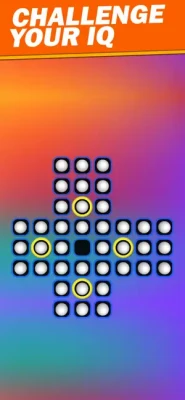
The classic cross-shaped layout.
Best for beginners because solutions are easier to visualize.
European Board
Features extra edge positions.
Provides additional complexity and strategic depth.
German Board
Larger than the English board.
Requires longer planning sequences.
Diamond Board
Diamond-shaped puzzle layout.
Excellent for advanced players.
Triangular Board
One of the most unique puzzle styles.
Allows diagonal jumps and introduces entirely new solving patterns.
Advanced Peg Solitaire Strategies
Use Symmetry
Many boards contain symmetrical solutions.
If one side works effectively, similar moves may work on the opposite side.
Create Move Chains
Instead of thinking about individual jumps, think in sequences.
A good chain can remove multiple pegs efficiently.
Minimize Dead Zones
Dead zones are sections of the board where future moves become impossible.
Advanced players constantly evaluate which areas may become trapped.
Count Remaining Moves
As the puzzle nears completion:
- Count possible jumps
- Identify critical pegs
- Plan the final five moves
This improves consistency dramatically.
Best Tips for Solving Difficult Levels
Tip 1: Use Unlimited Undo
The undo feature allows experimentation without penalties.
Tip 2: Replay Successful Solutions
Study your winning paths.
Look for patterns that can be reused elsewhere.
Tip 3: Focus on Efficiency
Winning is good.
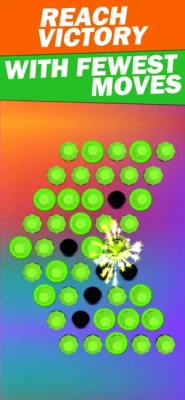
Winning with fewer moves is better.
Tip 4: Take Breaks
Many difficult puzzles become easier after stepping away and returning with fresh perspective.
Tip 5: Learn Common Endgames
Most advanced boards eventually reduce to a small number of recurring endgame patterns.
Why Peg Solitaire Ultra Is Great for Brain Training
Peg Solitaire Ultra develops:
- Logical reasoning
- Strategic planning
- Problem-solving skills
- Pattern recognition
- Concentration
- Decision-making under constraints
Because every move permanently changes the board, players must constantly evaluate consequences before acting.
Frequently Asked Questions
Is Peg Solitaire Ultra suitable for beginners?
Yes. The game includes tutorial levels and easier boards that teach core mechanics.
How many puzzles are included?
The game contains more than 500 puzzle boards across multiple layouts.
Are all levels unlocked from the beginning?
Yes. Players can choose any puzzle and play in any order.
Does the game support replaying solutions?
Yes. Winning solutions can be recorded, saved, and replayed for analysis.
Can I customize the game appearance?
Yes. Various peg styles, boards, and background themes are available.
Final Verdict
Peg Solitaire Ultra successfully modernizes a timeless logic puzzle while preserving the depth that has made peg solitaire popular for centuries. With over 500 puzzles, multiple board styles, unlimited undo functionality, customizable themes, and replay features, it provides both casual players and dedicated puzzle fans with a rich strategic experience. Success requires patience, foresight, and careful planning, making every completed puzzle feel genuinely rewarding.
Rate the Game
User Reviews







Popular Games


















 Android
 iOS
iOS Windows
 Xbox
Xbox