





Latest Version
September 16, 2026
ABI GLOBAL LTD.
Casual
iOS
0
Report a Problem
More About :game
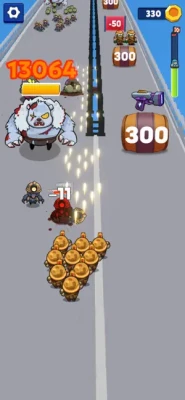
The core experience revolves around shooting zombie hordes, surviving challenging missions, improving your equipment, and becoming stronger as the stages become more demanding. The App Store describes the game as featuring diverse weapons, upgrade options, survival-focused missions, hazardous locations, and simple controls designed around accessible action.
The game is free to play with optional in-app purchases and is available for iPhone and iPad. The current App Store listing also supports Apple Vision and Macs with Apple silicon under the stated compatibility requirements.
What Makes Last Stand: Zombie Defense Fun?
The appeal is straightforward: zombies keep coming, and your job is to stay alive.
Rather than relying on a complicated control system, the game focuses on fast shooting action and progression. You gradually improve your equipment and abilities while facing increasingly difficult situations.
The main gameplay loop is:
Enter a mission → fight zombie waves → survive → improve your equipment → tackle harder missions.
That simple structure makes it easy to pick up for a quick session while still giving you reasons to improve your strategy.
Main Features
Zombie Shooting Action
The main attraction is fighting large groups of undead enemies. Positioning, target selection, weapon strength, and timing become increasingly important as the pressure increases.
Multiple Weapons
The game features a range of weapons with upgrade options. Improving your equipment is an important part of progressing through more challenging missions.
Challenging Missions
Missions provide the main progression structure. Each successful stage gives you an opportunity to become better prepared for what comes next.
Post-Apocalyptic Locations
The game uses ruined and hazardous environments to create its survival atmosphere. The setting reinforces the feeling that you are fighting to survive after civilization has collapsed.
Simple Controls
The controls are designed to keep the focus on the action rather than complicated input combinations. This makes the game accessible even if you are new to zombie shooters.
Full Strategy Guide for Last Stand: Zombie Defense
1. Upgrade Your Damage Before Spreading Resources
When a weapon upgrade directly improves your ability to eliminate zombies, it can have a major impact on survival.
Avoid spreading resources too thinly across every available improvement. Focus on upgrades that make your primary combat setup noticeably stronger.
A stronger weapon can reduce the amount of time zombies remain alive, which indirectly reduces the pressure on your defense.
2. Eliminate the Most Dangerous Threats First
Do not automatically attack whichever zombie is closest.
During a crowded wave, identify which enemies are creating the greatest immediate danger. Deal with those targets before spending too much time on weaker enemies.
A useful priority system is:
- Fast or dangerous enemies
- Zombies closest to your defensive position
- Large groups that can overwhelm you
- Remaining weaker targets
The exact enemy types can vary by mission, so adjust your priority according to what the stage throws at you.
3. Avoid Wasting Firepower
A common mistake in zombie games is continuing to attack an enemy that is already effectively defeated.
Once a target is no longer a meaningful threat, shift your attention toward the next danger.
Efficient targeting becomes especially important when several zombies are approaching simultaneously.
4. Learn the Rhythm of Each Mission
If you fail a stage, do not immediately assume that you simply need more power.
Pay attention to how the mission develops.
Ask yourself:
- When does the pressure increase?
- Which enemies cause the most trouble?
- Where did your defense start collapsing?
- Were you spending too much damage on low-priority targets?
- Did you enter the mission without enough equipment improvement?
Understanding the pattern of a difficult stage can make the next attempt much more effective.
5. Upgrade Before Repeating a Difficult Stage
If a mission repeatedly defeats you, stop and strengthen your equipment instead of making identical attempts.
Even a modest improvement can change the outcome when your damage output is close to the level required for the stage.
Use unsuccessful attempts as information: identify what caused the failure, make the relevant improvement, then try again.
6. Balance Offense and Survival
More damage is valuable, but survival remains the ultimate objective.
If your attacks are strong but you cannot withstand the later part of a mission, your build needs better balance.
Think of progression in three areas:
Damage: How quickly can you eliminate threats?
Survivability: How long can you remain effective under pressure?
Efficiency: How effectively are you using your available upgrades and resources?
A balanced setup is generally more reliable than maximizing only one area.
7. Do Not Rush Difficult Waves
Fast action does not always mean better action.
When several enemies appear, take a moment to understand the threat before committing your attacks. Panic can lead to poor target selection and wasted firepower.
Stay focused on the immediate danger and work through the wave systematically.
8. Use Every Upgrade With a Purpose
Before investing in an improvement, consider what problem it solves.
If you are losing because enemies survive too long, prioritize offensive improvements.
If you can defeat enemies but eventually become overwhelmed, look for improvements that increase your ability to survive sustained pressure.
The best upgrade is often the one that directly fixes the reason you are losing.
Advanced Zombie Survival Strategy
Build Around Your Main Weakness
Instead of upgrading randomly, keep track of your most common failure.
If you consistently lose near the end of a stage, your overall strength may be close to sufficient, but your setup may lack enough endurance.
If enemies overwhelm you almost immediately, you may need a larger improvement in combat efficiency before attempting the stage again.
Think in Waves, Not Individual Zombies
A successful run is about surviving the entire encounter.
One zombie is rarely the real problem. The danger comes when several threats reach you together.
Always consider what is coming next rather than focusing exclusively on the enemy currently in front of you.
Save Resources for Meaningful Improvements
Do not spend everything simply because an upgrade is available.
If you know that a major equipment improvement is close, conserving resources can allow you to make a more noticeable jump in power.
Replay With a Specific Goal
When replaying a mission, give yourself a reason for the attempt.
For example:
- Test a stronger weapon
- Improve targeting efficiency
- Reduce damage taken
- Reach the final wave
- Learn the enemy pattern
- Determine whether another upgrade is necessary
This makes repeated attempts more productive.
Beginner Tips and Tricks
- Upgrade your most important combat equipment first.
- Watch how zombie waves develop before deciding where to focus.
- Prioritize dangerous targets instead of simply attacking the nearest enemy.
- Avoid wasting attacks on enemies that are already under control.
- If you repeatedly fail, upgrade before trying again.
- Learn from every failed mission.
- Keep your strategy focused on surviving the complete wave.
- Do not spread resources across upgrades without a clear purpose.
- Use difficult stages to identify weaknesses in your current setup.
- Keep improving gradually rather than expecting one upgrade to solve everything.
Common Mistakes to Avoid
Spending Resources Randomly
An upgrade is not automatically useful just because it is available. Choose improvements that address your current weakness.
Ignoring Threat Priority
A weak zombie that is far away may be less important than a dangerous enemy already approaching your position.
Repeating the Same Failed Strategy
If the same approach fails several times, change something. Upgrade your equipment, alter your target priority, or approach the wave differently.
Focusing Only on Damage
High damage is useful, but a successful mission requires you to survive long enough to use it.
Panicking During Large Waves
Crowded attacks can make players react without thinking. Stay organized and handle the most immediate threats first.
How to Progress Faster
A practical progression routine is:
Complete available missions → collect rewards → improve your equipment → replay difficult stages if necessary → move forward when your setup is ready.
Do not judge your progress only by how quickly you reach the next stage. Consistent upgrades and better understanding of the combat flow will make later missions easier to manage.
Weapons and Equipment
Weapons are one of the central progression systems in Last Stand: Zombie Defense. The App Store specifically highlights diverse weapons and upgrade options, making equipment improvement an important part of the game's survival loop.
When evaluating an upgrade, consider:
- Damage potential
- Ability to handle groups
- Effectiveness against tougher enemies
- How well it fits your current stage
- Whether it solves your biggest weakness
Rather than looking for one universally perfect setup, build around the challenges you are actually facing.
Missions and Survival Progression
The game combines missions with survival-oriented combat. As you advance, the challenge becomes more important than simply learning the controls.
The best long-term approach is to treat each new stage as a test of both equipment and decision-making.
When a new mission feels difficult, ask whether the problem is:
Equipment + Target Selection + Timing + Survival
Improving the weakest part of that combination is usually more useful than making random changes.
Current Updates
The App Store currently lists version 1.0.15, with the latest update described as an SDK update. Previous releases have repeatedly added or updated levels, including versions 1.0.14 and 1.0.13. The game's version history shows continued level updates since its December 2025 launch.
Because levels have been updated over time, exact stage layouts and progression details can change between versions.
Platforms and Requirements
According to the current App Store listing:
- iPhone: iOS 15.0 or later
- iPad: iPadOS 15.0 or later
- Mac: macOS 12.0 or later with an Apple M1 chip or later
- Apple Vision: visionOS 1.0 or later
- Category: Casual
- Age Rating: 9+
- Developer: ABI GLOBAL LTD.
- Languages: English plus 13 additional languages
- Size: approximately 531.7 MB
The listing also indicates advertising and optional in-app purchases.
Ratings and Player Feedback
The U.S. App Store listing currently shows 4.5 out of 5 from more than 8,000 ratings. Player feedback is mixed in its details: some reviewers praise the straightforward zombie-shooting experience and say it resembles the advertising, while other recent reviews complain about increasing difficulty and the frequency or length of advertisements.
That means players should expect a simple action-focused experience, while also being aware that opinions differ on difficulty and advertising.
Frequently Asked Questions
Is Last Stand: Zombie Defense free?
Yes. The App Store lists the game as free with optional in-app purchases.
What type of game is Last Stand: Zombie Defense?
It is a casual zombie-shooting survival game focused on fighting undead waves, completing missions, and upgrading equipment.
Can I upgrade weapons?
Yes. The App Store specifically lists diverse weapons with upgrade options as one of the game's main features.
Is Last Stand: Zombie Defense available on iPhone?
Yes. It is available for iPhone and requires iOS 15.0 or later.
Is it available on iPad?
Yes. The game supports iPad with iPadOS 15.0 or later.
Does the game contain advertisements?
Yes. The App Store identifies the game as containing advertising and also lists optional purchases for removing ads and purchasing other items.
What is the best strategy for difficult levels?
Focus on the reason you are losing. Upgrade the equipment that addresses your weakness, prioritize dangerous enemies, avoid wasting attacks, and learn the pattern of each difficult wave before attempting it again.
Does the game receive updates?
Yes. The App Store version history shows repeated level updates, with version 1.0.15 currently listed as the latest release in the available listing data.
Final Thoughts
Last Stand: Zombie Defense keeps its concept simple: fight through zombie attacks, improve your equipment, and survive increasingly demanding missions.
Its straightforward controls make the game easy to start, while the increasing pressure of zombie waves gives the progression some additional depth. The most effective approach is not simply to shoot faster, but to understand which threats matter most, upgrade with a purpose, and learn from failed attempts.
For new players, the key formula is:
Upgrade smart → prioritize threats → control the wave → survive → improve → advance.
With that approach, difficult missions become easier to understand and each failed run can provide useful information for the next attempt.
Rate the Game
User Reviews















Popular Games



















 Android
 iOS
iOS Windows
 Xbox
Xbox