


Latest Version
September 14, 2026
NEOWIZ
Casual
iOS
0
Report a Problem
More About :game
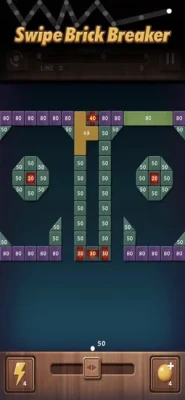
The basic idea is easy to understand, but later stages demand considerably more planning. Brick durability increases, the arrangement of the board becomes more difficult, and a poorly chosen shooting angle can leave dangerous bricks alive for another turn.
The game combines simple one-handed controls with multiple stages, game modes, special balls and bombs. It can also be played offline, making it suitable for short sessions when you do not have an internet connection.
How to Play Swipe Brick Breaker: The Blast
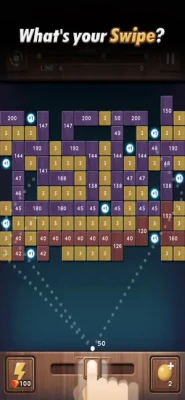
Each turn begins with you choosing the direction of your shot.
Swipe from the shooting area toward the direction you want the balls to travel. The balls then bounce around the board, striking bricks and reducing their durability.
Your main objectives are:
- Break as many bricks as possible.
- Collect useful items when they appear.
- Create favorable bouncing angles.
- Prevent bricks from reaching the bottom.
- Plan each shot instead of simply targeting the closest brick.
- Use special balls and bombs when they can make a meaningful difference.
A brick disappears once its durability reaches zero. If a brick eventually reaches the bottom of the playing area, the run can end.
The Most Important Skill: Aiming
Good aiming is more important than simply hitting a high-value brick.
A direct shot may look attractive, but a shot that produces several rebounds can be much more effective. Try to send the first ball into an angle that keeps the balls moving across the board rather than stopping them in one small area.
Look for rebound angles
Walls are extremely useful because they can redirect your balls into areas that would otherwise be difficult to reach.
Before releasing a shot, imagine:
- Where the first ball will hit.
- Where it will bounce afterward.
- Which bricks it can reach on the return path.
- Where the final balls are likely to finish.
The best shot is often the one that creates several opportunities rather than the one that destroys one brick immediately.
Full Strategy Guide
1. Do not always attack the strongest brick
A brick with high durability can consume many hits.
If several weaker bricks are nearby, clearing them first can open additional paths for your balls. Once the board becomes less crowded, future shots become easier to control.
2. Prioritize dangerous positions
Pay close attention to bricks that are approaching the bottom.
A high-durability brick near the lower part of the board can be a bigger threat than a stronger brick near the top.
When deciding between targets, consider position as well as durability.
3. Use the walls intelligently
Wall rebounds can turn an ordinary shot into a powerful clearing attack.
Try to create trajectories that cross the board horizontally or diagonally. The longer the balls remain active, the more opportunities they have to strike bricks.
4. Avoid extremely narrow shots
A very narrow trajectory can cause many balls to follow nearly the same path.
That may produce repeated hits on a small group of bricks while leaving most of the board untouched.
Whenever possible, create an angle that spreads the balls through different sections of the board.
5. Think about the return path
Do not only look at where the ball goes initially.
The return path is often more important.
A shot that hits the upper wall at the right angle can send balls back through several rows of bricks. This is one of the easiest ways to turn a modest opening into a large clearing.
6. Clear space before the board becomes crowded
As the brick formation becomes more difficult, keeping open space becomes increasingly valuable.
If you spend too many turns attacking isolated high-value bricks while ignoring the overall formation, you may eventually have very little room to recover.
A good general rule is:
Create space first, then maximize damage.
7. Make special items work for you
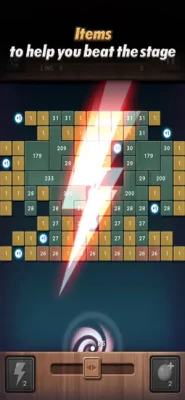
Swipe Brick Breaker includes different balls and bombs that add more tactical possibilities to the basic brick-breaking system.
Do not use a special ability automatically.
Instead, consider:
- How many bricks it can affect.
- Whether it can remove a dangerous cluster.
- Whether it opens a new shooting angle.
- Whether saving it would provide more value on the next turn.
The strongest item is not always the one that deals the most immediate damage. Sometimes the best use is the one that improves your next several shots.
Bomb Strategy
Bombs can be particularly valuable when several bricks are grouped together.
Instead of wasting a bomb on a single isolated target, look for situations where its effect can influence multiple nearby bricks.
Good opportunities include:
- Dense brick formations.
- Several high-durability bricks grouped together.
- Dangerous lower-row clusters.
- Situations where normal angles cannot reach enough targets.
- A board position that needs to be opened quickly.
Think of bombs as board-control tools, not emergency buttons that should automatically be used whenever available.
Ball Management Tips
Different balls can change how effectively you deal with the board.
When deciding how to approach a stage, consider whether you need:
- More direct damage.
- Better coverage.
- More rebounds.
- A way to handle concentrated brick formations.
- A way to recover from a poor board position.
The right ball at the right time can make a difficult stage considerably more manageable.
How to Survive Difficult Stages
Later stages require more patience.
One common mistake is trying to finish the board as quickly as possible. That can produce an attractive-looking shot but leave several dangerous bricks untouched.
Instead:
Step 1: Identify the lowest or most threatening bricks.
Step 2: Find an angle that can hit several targets.
Step 3: Look for rebounds that carry the balls back into the formation.
Step 4: Use special items when they improve the overall board position.
Step 5: Check where the balls will finish before committing to the shot.
This approach is slower, but it reduces unnecessary losses.
Advanced Aiming Technique
One of the best habits to develop is predicting the first few rebounds before shooting.
You do not need to predict every ball perfectly.
Focus on the initial trajectory:
Launch → First brick → Wall → Second brick group → Return path
If that sequence looks productive, the shot is usually worth taking.
If the first rebound sends the ball toward an empty part of the board, reconsider the angle.
How to Deal With Bad Board Positions
Sometimes the board becomes difficult because previous shots did not produce the desired result.
Do not panic.
Look for the single action that creates the most space.
This may mean:
- Targeting a low brick rather than a strong upper brick.
- Using a bomb to break a cluster.
- Choosing a wider trajectory.
- Using a wall rebound to reach an otherwise inaccessible area.
- Accepting slightly less immediate damage in exchange for a safer board.
Recovery is part of the strategy.
Common Mistakes to Avoid
Shooting only at the strongest brick
High durability does not automatically mean high priority.
Ignoring lower bricks
A dangerous brick near the bottom deserves immediate attention.
Using every special item immediately
Saving a powerful item for a difficult formation can be much more valuable.
Repeating the same angle
If a particular trajectory keeps leaving the same section untouched, change your approach.
Playing too quickly
The controls are simple, but the game rewards careful aiming. Take a moment before every important shot.
Focusing only on the first impact
The first hit is only the beginning. The rebound pattern determines much of the shot's eventual value.
Beginner Tips
If you are just starting Swipe Brick Breaker: The Blast, keep these five rules in mind:
- Aim for multiple hits rather than one target.
- Use walls to create longer trajectories.
- Keep dangerous bricks away from the bottom.
- Save useful special items for difficult situations.
- Think about where the balls will return before shooting.
Once these habits become natural, the game becomes much more strategic.
Is Swipe Brick Breaker: The Blast Offline?
Yes. The official game description states that the game is playable offline.
That makes it a convenient choice for quick puzzle sessions while traveling or when a connection is unavailable.
Game Modes and Content
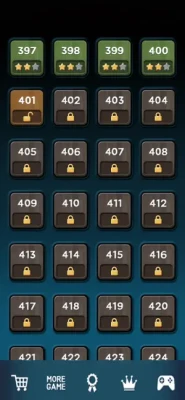
Swipe Brick Breaker: The Blast offers multiple stages and play modes rather than relying on a single endless brick-breaking format. The game also includes special balls and bombs that expand the basic mechanics.
The combination of stages, different mechanics and increasingly difficult brick formations gives the game more depth than its simple swipe controls initially suggest.
Platforms and Requirements
The current App Store listing supports iPhone and iPad and requires iOS/iPadOS 15.6 or later. The listing identifies the game as a Casual title and rates it 4+.
The game is free to download and includes advertising and optional in-app purchases.
Ratings and Player Feedback
The U.S. App Store currently lists the game at 4.5 stars from about 1.3K ratings.
Player feedback highlights the game's satisfying long-session progression and strategic aiming, while some players have criticized the aiming sensitivity and monetization, particularly at higher stages.
That is worth keeping in mind: the game starts with an extremely simple concept, but advanced play can become much more demanding.
Pros and Cons
Pros
- Simple one-handed controls.
- Easy to understand but difficult to master.
- Multiple stages and game modes.
- Different balls and bombs.
- Offline gameplay.
- Strategic aiming and rebound mechanics.
- Suitable for short or extended sessions.
Cons
- Higher stages can become challenging.
- Aiming requires precision.
- Poor shots can have a large effect on later turns.
- Advertising and optional purchases are part of the free-to-play experience.
Who Should Play Swipe Brick Breaker: The Blast?
This game is a good fit for players who enjoy casual puzzle games, classic brick breakers and games where a simple control system hides deeper tactical decisions.
It is particularly appealing if you enjoy trying to improve a previous run, finding better angles and solving increasingly difficult board layouts.
Final Verdict
Swipe Brick Breaker: The Blast takes the familiar brick-breaker concept and turns it into a swipe-based puzzle experience where angle, positioning and patience matter.
The controls are accessible enough for beginners, but the later challenge comes from making each shot count. Learning to use rebounds, protect the lower area of the board and choose the right moment for special balls or bombs is the key to consistent progress.
If you enjoy casual arcade games with a strategic edge, Swipe Brick Breaker: The Blast is worth trying.
Frequently Asked Questions
What is Swipe Brick Breaker: The Blast?
Swipe Brick Breaker: The Blast is a casual brick-breaking puzzle game developed by NEOWIZ. Players swipe to launch balls, destroy bricks and prevent them from reaching the bottom.
How do you play Swipe Brick Breaker?
Swipe to choose the direction of your balls, then use rebounds and special mechanics to reduce brick durability and clear the board.
Is Swipe Brick Breaker: The Blast free?
Yes. The App Store lists it as free with optional in-app purchases and advertising.
Can you play Swipe Brick Breaker offline?
Yes. Offline gameplay is specifically listed among the game's features.
Is Swipe Brick Breaker available on iPhone?
Yes. The App Store listing supports iPhone and iPad.
What is the best strategy for Swipe Brick Breaker?
Focus on creating useful rebound angles, clearing dangerous lower bricks, spreading your shots across the board and saving powerful special items for situations where they can affect multiple targets.
Does Swipe Brick Breaker have different game modes?
Yes. The official description mentions multiple stages and play modes.
Does the game have special balls and bombs?
Yes. Special balls and bombs are part of the game's mechanics and provide additional ways to deal with difficult brick formations.
Rate the Game
User Reviews












Popular Games



















 Android
 iOS
iOS Windows
 Xbox
Xbox