






Latest Version
September 19, 2025
TINYBUILD LLC
Adventure
iOS
0
Report a Problem
More About :game
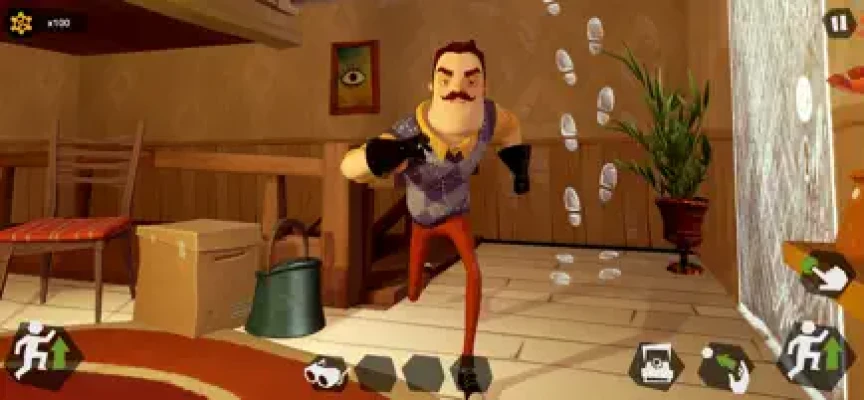
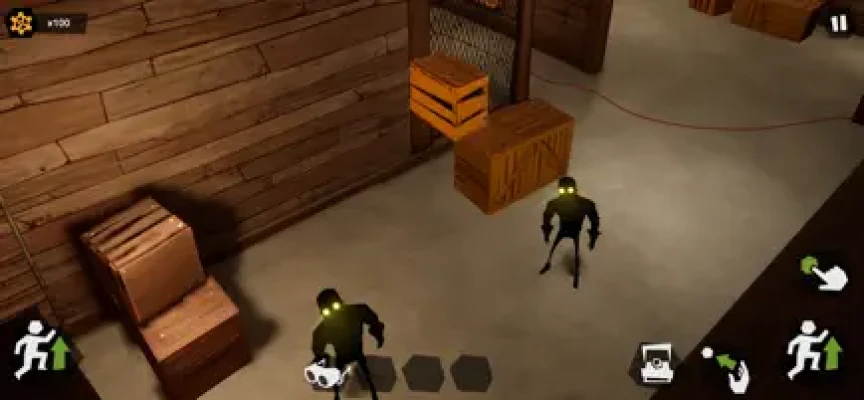
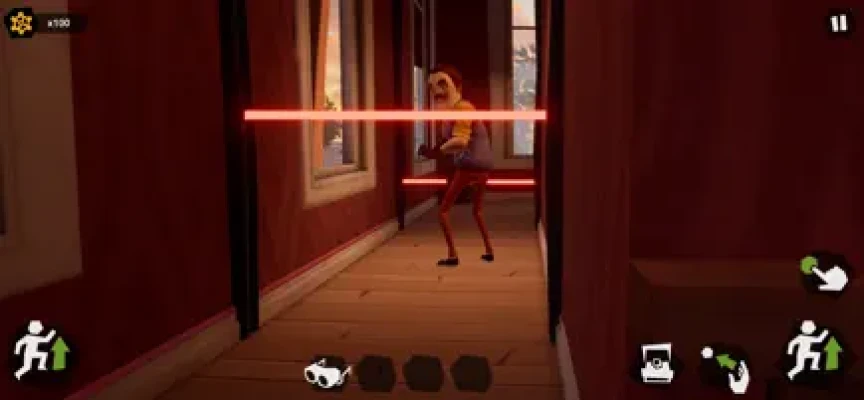
The game combines exploration, stealth, platforming, item-based puzzles, and the distinctive atmosphere of the Hello Neighbor series. Rather than relying entirely on combat, success depends on observing your surroundings, finding useful objects, learning the environment, and deciding when it is safer to hide or move.
What Is Hello Neighbor: Nicky’s Diaries?
Hello Neighbor: Nicky’s Diaries is a stealth-focused adventure built around Nicky's childhood experiences.
The game expands the Hello Neighbor story while giving players a compact environment filled with secrets, puzzles, obstacles, and opportunities for exploration.
Your main challenge is not simply reaching the end of an area. You need to understand how the environment works while avoiding detection.
That means almost every room can contain something useful:
- A hidden object
- A new route
- A puzzle clue
- A collectible
- A hiding place
- An item needed somewhere else
- A shortcut
The game rewards curiosity, patience, and careful observation.
Hello Neighbor Nicky’s Diaries Gameplay
The core gameplay revolves around three connected activities:
Explore → Solve → Escape
You explore an area looking for clues and useful objects. Then you solve environmental puzzles to unlock new sections. Finally, you need to move through dangerous areas without being caught.
The Neighbor makes the process more difficult because you cannot assume that a familiar route will remain safe.
Main Gameplay Features
Stealth Exploration
Stealth is one of the most important mechanics.
Instead of confronting every threat directly, you should observe patrol patterns and look for opportunities to move when the Neighbor is distracted or away from the area.
The safest route is not always the shortest route.
Sometimes a longer path with better cover is much safer.
Environmental Puzzles
The game uses environmental puzzles to block progression.
You may need to:
- Find a missing object
- Activate a mechanism
- Locate a key
- Move objects
- Discover a hidden entrance
- Reach an inaccessible platform
- Combine clues
- Use an item in an unexpected location
The solution is often somewhere nearby, but not necessarily in the room where you first encounter the problem.
Item-Based Exploration
Items are extremely important.
Whenever you find a new object, don't immediately assume you have used it for its obvious purpose.
Think about where it could be useful later.
If an item appears unusual, keep track of it mentally. You may eventually encounter a mechanism that explains its purpose.
Hidden Areas
Exploration is rewarded.
Look behind objects, check unusual corners, inspect elevated areas, and pay attention to suspicious gaps in walls or structures.
If a room seems too empty, there may be a reason.
Platforming
Some areas require careful movement and platforming.
When navigating elevated sections, slow down rather than rushing.
A failed jump can sometimes force you to repeat a section or attract unwanted attention.
Full Hello Neighbor: Nicky’s Diaries Strategy Guide
1. Observe Before You Move
The biggest mistake beginners make is running immediately after entering a new area.
Stop first.
Look around.
Identify:
- Where the Neighbor is
- Possible hiding places
- Doors and locked passages
- Objects you can interact with
- High platforms
- Alternate routes
- Suspicious environmental details
A few seconds of observation can prevent a long chase.
2. Learn the Neighbor's Behavior
The Neighbor is the game's main threat.
Don't think of him as a random obstacle that simply appears whenever you make progress.
Instead, learn his behavior.
Watch where he travels and how quickly he reacts to disturbances.
Once you understand his routine, you can begin planning movement around it.
3. Don't Run Unless You Need To
Running can be useful when escaping, but constantly moving at full speed is not a good stealth strategy.
If the Neighbor is nearby, unnecessary movement can make your position easier to detect.
Move carefully when you're trying to remain unnoticed.
4. Use Hiding Places Intelligently
A hiding place is most useful when you understand the surrounding area.
Don't enter a hiding spot simply because it is available.
Ask:
If the Neighbor comes here, where will I go next?
A good hiding location should give you enough time to wait and then continue toward your objective.
5. Explore Rooms Thoroughly
If you cannot find the solution to a puzzle, don't immediately assume the puzzle is broken.
Check the surrounding area again.
Look for:
- Small objects
- Openings
- Buttons
- Switches
- Hidden platforms
- Doors
- Climbable surfaces
- Items placed in unusual locations
Hello Neighbor games often expect players to notice environmental details.
6. Think Beyond the Current Room
One of the most important puzzle-solving habits is remembering where you have seen locked doors, empty slots, unusual mechanisms, and inaccessible areas.
You may find the required item several rooms away.
If you encounter something that clearly looks like it needs an object, remember it.
When you later discover a strange item, think back to that location.
7. Keep Track of Important Items
Don't randomly drop useful objects around the environment.
If you are carrying an item that could have several possible uses, keep it somewhere safe until you understand what it does.
This prevents unnecessary backtracking.
8. Look Up and Down
Players often search at eye level and miss important clues.
Check:
- Ceilings
- Rooftops
- Upper platforms
- Under furniture
- Behind boxes
- Lower corridors
- Floor openings
- Elevated ledges
Vertical exploration is particularly important in stealth-puzzle games.
9. Use the Environment
The environment is not simply decoration.
Objects, doors, platforms and structures can create routes or barriers.
If a direct route appears impossible, ask whether the environment provides another way around.
10. Don't Panic During a Chase
Getting discovered does not automatically mean you have failed.
If the Neighbor spots you, immediately think about your escape route.
Don't simply run in a straight line.
Turn corners, use obstacles, change levels, and move toward an area you already understand.
The best escape is usually planned before the chase begins.
How to Solve Difficult Puzzles
When you become stuck, use this process.
Step 1: Identify the Blockage
Ask exactly what prevents you from progressing.
Is it:
- A locked door?
- A missing item?
- A height problem?
- A mechanism?
- A blocked passage?
Step 2: Search Nearby
Look around the immediate area for clues.
Step 3: Retrace Your Steps
Think about locations you previously visited.
Was there a door you couldn't open?
An empty slot?
A mechanism that looked incomplete?
Step 4: Experiment Safely
Try interacting with suspicious objects.
Step 5: Think About Alternative Routes
If the obvious path doesn't work, the game may expect you to approach the objective from another direction.
Stealth Tips
Stay Out of Sight
Use walls, objects and room layouts to break the Neighbor's line of sight.
Avoid Unnecessary Noise
If your movement or interaction creates a distraction, think about where the Neighbor is likely to investigate.
Don't Repeat the Same Escape Route
If the Neighbor has already discovered your path, consider using another route.
Learn Safe Zones
Once you discover areas where you can safely regroup, remember them.
Create Distance Before Exploring
If you have just escaped, don't immediately return to the same dangerous area.
Give yourself time to understand where the Neighbor went.
Beginner Tips
Tip 1: Explore Slowly
Rushing makes environmental clues easy to miss.
Tip 2: Memorize Important Locations
Locked doors and strange mechanisms may matter later.
Tip 3: Watch the Neighbor
Understanding his movement is more useful than simply running away.
Tip 4: Search Vertically
Look above and below normal eye level.
Tip 5: Don't Waste Items
Keep important objects somewhere you can find them again.
Tip 6: Look for Alternate Routes
The obvious path isn't always the intended solution.
Tip 7: Use Cover
Walls and objects can give you valuable protection.
Tip 8: Think Before Interacting
Some actions may attract attention.
Tip 9: Retrace Your Steps
A newly discovered item may solve an earlier problem.
Tip 10: Stay Patient
The game rewards observation more than speed.
How to Avoid Getting Caught
The most effective strategy is prevention.
Before entering a dangerous area:
- Find a potential escape route.
- Identify nearby hiding locations.
- Watch the Neighbor's position.
- Wait for a safe opportunity.
- Move quickly through exposed areas.
- Stop once you reach cover.
If you are constantly being caught, the problem may not be your movement speed.
You may simply be moving through the wrong area at the wrong time.
What to Do When You're Stuck
Getting stuck is normal in a game built around environmental puzzles.
Instead of repeatedly trying the same action, change your perspective.
Ask:
What have I not investigated?
Then check:
- Previous rooms
- Locked doors
- High platforms
- Hidden corners
- Strange objects
- Unused mechanisms
- Alternate routes
Often the solution is not a complicated combination. It is simply an object or route you overlooked.
Exploration Strategy
Exploration should be systematic.
When entering a new area, mentally divide it into sections.
Check the lower level first, then elevated areas, then doors and mechanisms.
This makes it much less likely that you will miss an important object.
If the area contains multiple exits, remember which ones are accessible and which ones require additional items.
Item Management Strategy
Good item management saves time.
When you find a useful object:
Identify → Remember → Test Carefully → Use → Continue
Avoid carrying unnecessary objects for long periods if you already know their purpose.
At the same time, don't abandon an unusual item simply because it doesn't immediately seem useful.
Puzzle games frequently introduce objects before explaining their purpose.
Advanced Stealth Strategy
Experienced players should stop treating the Neighbor as something to avoid randomly.
Instead, think of him as part of the level's timing system.
If he is currently on the opposite side of the area, that creates an opportunity.
If he is moving toward you, that is a warning.
If he has just investigated a distraction, you may have a short window to move.
The goal is to recognize these windows before you act.
Common Mistakes to Avoid
Exploring While the Neighbor Is Nearby
You may find something interesting, but getting caught can erase your progress.
Ignoring High Areas
Important routes can be above normal walking level.
Forgetting Earlier Locations
A key item may solve a problem you encountered much earlier.
Running Without a Destination
Running away without knowing where you're going can lead directly into another danger.
Assuming Every Door Is Decorative
If a door looks suspicious, remember it.
It may become important later.
Searching Only for Keys
Not every puzzle is solved with a conventional key.
Look for environmental solutions too.
Is Hello Neighbor: Nicky’s Diaries Difficult?
The difficulty comes primarily from combining exploration, stealth and environmental puzzles.
The individual mechanics are relatively easy to understand, but the game becomes more challenging when you have to solve a puzzle while also avoiding the Neighbor.
Players who enjoy observation-based games should find the challenge manageable, while players who prefer direct action may find the slower pace more demanding.
Story and Atmosphere
Nicky's childhood memories provide the foundation for the game's story.
The atmosphere combines mystery, suspense and surreal environments with the series' recognizable visual style.
The result is a game that feels unsettling without relying entirely on traditional horror mechanics.
Much of the tension comes from knowing that the Neighbor may be somewhere nearby while you're trying to understand what the environment is asking you to do.
Honest Review
Hello Neighbor: Nicky’s Diaries is a good choice for players who enjoy stealth, exploration and environmental puzzle games.
Its strongest feature is the combination of puzzle solving and avoidance. You are not simply solving a puzzle in a quiet room; you have to consider the threat surrounding you while searching for the answer.
The game also works well for fans of the wider Hello Neighbor universe because it explores Nicky's past and gives the series another perspective.
The main weakness is that stealth-puzzle gameplay can sometimes feel trial-and-error heavy. If you prefer games that clearly explain every objective, some sections may require patience and experimentation.
For players who enjoy discovering solutions on their own, that ambiguity is part of the appeal.
Pros
- Stealth-focused gameplay
- Environmental puzzles
- Exploration and hidden areas
- Mystery-driven atmosphere
- Familiar Hello Neighbor universe
- Interesting item interactions
- Platforming and vertical exploration
- Encourages observation and experimentation
- Suitable for short exploration sessions
Cons
- Some puzzles can be unclear
- Trial and error may be necessary
- Getting caught can interrupt exploration
- Players who dislike stealth may find it frustrating
- Some solutions require careful environmental observation
Is Hello Neighbor: Nicky’s Diaries Worth Playing?
Yes, especially if you enjoy stealth games, puzzle adventures, mystery games and exploration-focused gameplay.
It is a particularly good fit for players who like discovering the solution themselves rather than following a constant stream of objective markers.
The combination of Nicky's story, environmental puzzles and the Neighbor's unpredictable presence gives the game a distinctive atmosphere.
Hello Neighbor: Nicky’s Diaries on iPhone and iPad
The App Store version is designed for mobile play and brings the Hello Neighbor experience to iPhone and iPad.
For mobile players, the game is a good fit for people who enjoy puzzle adventures that can be played in focused sessions rather than requiring constant multiplayer interaction.
Frequently Asked Questions
What is Hello Neighbor: Nicky’s Diaries?
It is a stealth and puzzle adventure centered around Nicky's childhood memories and his experiences involving the mysterious Neighbor.
Is Nicky’s Diaries a horror game?
It contains suspense and unsettling elements, but its main gameplay focuses on stealth, exploration and puzzle solving rather than traditional survival horror.
What do you do in Nicky’s Diaries?
You explore environments, solve puzzles, find useful items, discover hidden areas and avoid being caught by the Neighbor.
How do you avoid the Neighbor?
Watch his movements, stay behind cover, use hiding places and plan escape routes before entering dangerous areas.
What should I do if I get stuck?
Retrace your steps, examine previously inaccessible locations, search vertically, inspect unusual objects and look for alternative routes.
Are there hidden areas?
Exploration is an important part of the experience, so players should carefully inspect rooms, elevated locations and unusual environmental spaces.
Is Hello Neighbor: Nicky’s Diaries suitable for beginners?
Yes, although some puzzles and stealth situations require patience and experimentation.
Is Nicky’s Diaries part of the Hello Neighbor series?
Yes. It expands the story around Nicky, a central character in the Hello Neighbor universe.
Game Information
Game: Hello Neighbor: Nicky’s Diaries
Genre: Adventure, Puzzle, Stealth
Perspective: First-person
Main Gameplay: Exploration, stealth, puzzle solving and item-based interactions
Setting: Hello Neighbor universe
Main Character: Nicky
Core Challenge: Solve environmental puzzles while avoiding the Neighbor
Platform: iPhone and iPad
Mode: Single-player
Final Strategy Checklist
Before entering a dangerous area, remember:
- Watch the Neighbor first.
- Identify a hiding place.
- Find an escape route.
- Search the environment carefully.
- Check high and low areas.
- Remember locked doors.
- Keep track of unusual objects.
- Think about where an item could be used later.
- Don't rush through puzzles.
- If you get caught, change your route.
- If you're stuck, retrace your steps.
- Always look for the solution hidden in the environment.
The key to Hello Neighbor: Nicky’s Diaries is patience. Don't treat every obstacle as something that needs to be forced open. Observe the environment, learn the Neighbor's behavior, remember important objects, and look for the route the game is quietly encouraging you to discover.
Rate the Game
User Reviews














Popular Games


















 Android
 iOS
iOS Windows
 Xbox
Xbox