






Latest Version
September 19, 2025
TINYBUILD LLC
Adventure
iOS
0
Report a Problem
More About :game
The basic idea sounds simple: find the required objects and bring them back to the basket. In practice, the large environments, limited inventory, dangerous obstacles and pursuing brother make every trip an exercise in planning.
The iOS version is published by tinyBuild LLC and currently lists a 4.0/5 rating from around 29,000 ratings. It is available on iPhone and iPad and is rated 9+.
What Is Hello Neighbor Hide & Seek?
Hello Neighbor Hide & Seek is both a prequel and a standalone stealth puzzle adventure.
Instead of simply sneaking around the Neighbor's house, the game places you inside imaginative environments created from the children's perspective. Each stage changes the rules and objectives, giving the adventure a different feel as the story progresses.
The main gameplay loop is:
Explore → Find objects → Avoid danger → Return to the basket → Repeat → Complete the stage
You need to learn the environment while staying mobile and watching for your brother.
The five main stages are:
- The Wild
- Thief and Police
- The Firefighter
- Zombie and Hunter
- Game House
Each stage has its own theme and collection objective.
Story and Setting
The story takes place before the original Hello Neighbor and focuses on the Neighbor's children.
The imaginative worlds are connected to the children's games, but beneath the colorful environments is a much darker family story.
The game gradually explains what happened to the Peterson family and provides additional context for the events that lead into the original Hello Neighbor.
This contrast between colorful childhood imagination and an increasingly tragic story is one of the game's defining characteristics.
How the Gameplay Works
Your primary objective in most stages is to collect a specific set of objects and bring them back to a large basket.
The challenge is that you cannot simply collect everything at once.
Your inventory is limited to four items, meaning you need to make regular decisions about what to carry and where to leave things. Apple specifically recommends choosing a consistent drop-off location because dropped objects do not simply return to their original positions after you are caught.
At the same time, Aaron is constantly looking for you.
That creates a gameplay rhythm where exploration and escape are equally important.
Main Features
Five Imaginative Stages
Every stage changes the environment and the collection objective, keeping the game from becoming a repetitive scavenger hunt.
Stealth and Pursuit
Aaron acts as the main threat. You must keep moving, use the environment intelligently and avoid getting trapped in enclosed areas.
Large Exploration Areas
The stages contain elevated areas, hidden objects, platforms and routes that are easy to miss if you only look from ground level.
Limited Inventory
You can carry four items at a time, making organization an important part of successful runs.
Hints
If you are stuck, the game includes a hint option that can point you toward undiscovered items.
Friendly Mode
Friendly Mode makes the pursuit easier by slowing the brother down. The App Store version history also notes that fewer toys are required in Friendly Mode.
Controller Support
The iOS version added Bluetooth controller support in version 1.8.1.
Full Hello Neighbor Hide & Seek Strategy Guide
1. Start by Studying the Environment
Don't immediately start collecting.
Spend the first minute looking around.
Find:
- The basket
- High ground
- Major landmarks
- Ladders
- Large platforms
- Safe hiding areas
- Possible shortcuts
- Areas where the brother frequently travels
Knowing the environment makes every later collection trip faster.
Apple recommends climbing onto objects such as dressers, rocks and ladders to get a better view of the area. Binoculars can also help reveal distant objects.
2. Establish a Permanent Drop Zone
This is one of the most useful strategies in the entire game.
Don't randomly throw collected objects onto the ground.
Choose a recognizable location close to the basket and use it consistently.
Good landmarks include:
- A large rock
- A distinctive platform
- A corner beside the basket
- A visible structure
- The area immediately around the objective basket
When your inventory becomes full, return to the basket rather than continuing deeper into the map.
This prevents you from becoming confused about where you left important objects.
3. Use the Four-Slot Inventory Properly
You can carry only four objects.
That means every collection trip should have a purpose.
A good cycle is:
Find four objects → Return to basket → Deposit them → Start the next search
Don't carry one object across the entire map if you can safely deposit it sooner.
Efficient inventory management also reduces the amount of time you spend traveling while being pursued.
4. Don't Search Randomly
Random exploration wastes time.
Instead, divide the map into sections.
For example:
Area A → Area B → Area C → High Ground → Hidden Corners
Finish searching one region before moving to another.
This prevents the classic problem of repeatedly walking through the same locations while wondering where the final missing object is.
5. Search Vertically
Many players search only at eye level.
That's a mistake.
Look:
- Above platforms
- Behind structures
- On rocks
- On elevated walkways
- Around ladders
- Near rooftops
- Behind large objects
- In distant areas visible through binoculars
The game's large environments make vertical exploration especially important.
Stage 1 – The Wild
Objective
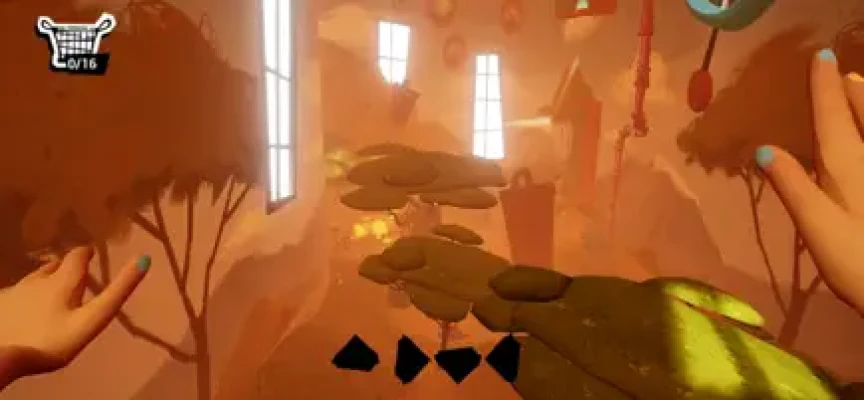
The first stage takes place in an imaginary safari-style environment and requires collecting animal toys.
The standard version requires 16 stuffed animals, while Friendly Mode reduces the collection requirement.
Stage 1 Strategy
The Wild is a good introduction to the game's basic collection system.
Start by learning the geography rather than rushing toward every toy.
Recommended approach
- Find the basket.
- Identify the major high-ground locations.
- Search one section at a time.
- Collect up to four animals.
- Return to the basket.
- Repeat.
- Use elevated positions to locate distant toys.
The biggest mistake is repeatedly crossing the entire map for individual toys.
Think in four-item trips.
How to Handle the Brother
If Aaron approaches, don't panic.
Move toward open space rather than allowing yourself to become trapped between rocks or structures.
Use the terrain to create distance.
The goal isn't always to hide completely. Sometimes simply staying mobile is enough to prevent him from catching you.
Stage 2 – Thief and Police
Objective
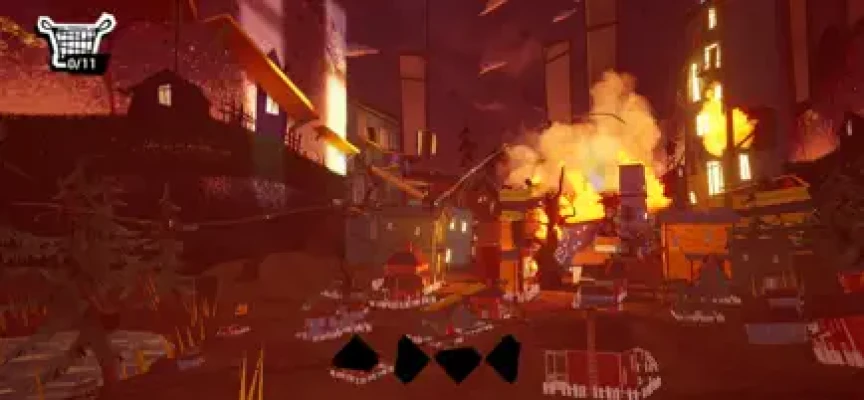
The second stage transforms the game into a cops-and-robbers scenario.
The collection objective involves money bags, with the standard stage requiring a much larger number of objects than Stage 1.
Stage 2 Strategy
This stage can feel significantly harder because of the larger collection requirement and additional obstacles.
Don't try to memorize every money bag individually.
Instead, divide the city into districts.
Search Pattern
District 1 → collect four → basket
District 2 → collect four → basket
District 3 → collect four → basket
Continue until the objective is complete.
The cardboard police figures and the main pursuer make movement more complicated, so avoid committing yourself to narrow routes unless you already know the escape path.
Best Stage 2 Tip
Don't let the larger number of collectibles make you rush.
The stage is designed to take longer.
Consistency is more valuable than repeatedly getting caught and having to recover your route.
Stage 3 – The Firefighter
Objective
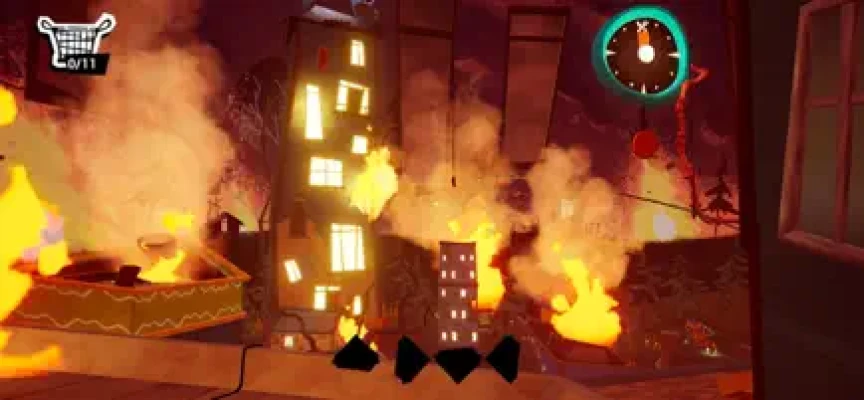
The third stage changes the environment again, placing you in an imaginative wildfire setting where the objective involves rescuing the dolls.
Stage 3 Strategy
This is where environmental awareness becomes increasingly important.
Look for:
- Elevated platforms
- Safe routes around hazards
- Objects that can be used as visual landmarks
- Areas that allow you to escape the brother
- Alternative paths between objectives
Don't assume that the most direct route is the safest route.
If a route forces you into a dangerous area with limited escape options, take the longer path.
Stage 4 – Zombie and Hunter
Objective
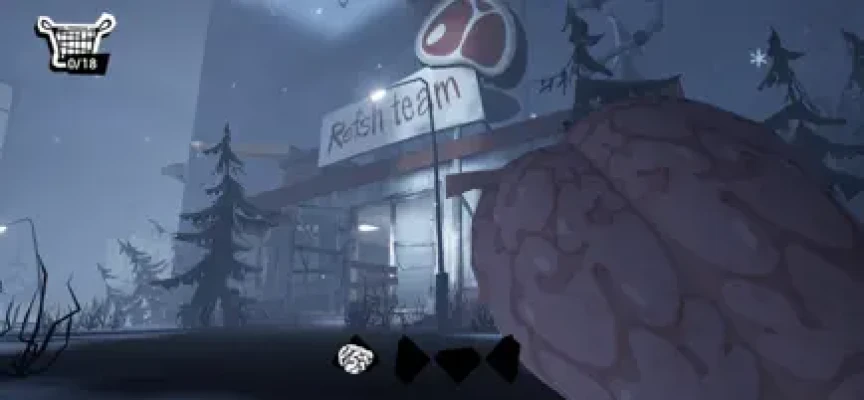
Stage 4 takes place in an imaginary snowy cemetery and revolves around collecting brains.
Stage 4 Strategy
The darker environment can make navigation more confusing.
Use landmarks aggressively.
Whenever you find a useful structure, mentally associate it with a direction:
Basket → large structure → cemetery area → elevated section
This creates a mental map that makes returning home much easier.
Keep Moving
Apple's own guidance for the game emphasizes movement rather than standing still while trying to solve a difficult section.
If you need to think, keep moving through a safe area rather than stopping in an exposed location.
Stage 5 – Game House
Objective
The final stage moves back toward the Peterson family's real environment.
The main objective is to find Mya's doll, making this stage substantially different from the large collection-focused earlier stages.
Stage 5 Strategy
Don't approach the final stage like another collection mission.
Instead, pay attention to:
- Keys
- Doors
- Switches
- Vertical routes
- Familiar rooms
- Objects that can change access
- The relationship between different areas
The final stage is much more about understanding the environment and following the game's sequence than simply collecting dozens of objects.
How to Avoid Aaron
Keep Moving
Standing still gives the pursuer an easy target.
If you are searching an area, keep moving between nearby positions.
Apple's official tips specifically recommend staying mobile rather than stopping to think in an exposed area.
Don't Run Into Dead Ends
Before entering a narrow area, ask:
Where will I go if Aaron appears?
If the answer is "nowhere," find another route.
Use High Ground
Elevated terrain gives you more visibility and can help you understand where the pursuer is before committing to your next move.
Learn His Approach
After playing a stage several times, you'll start recognizing the areas where you're most likely to encounter him.
That knowledge is valuable.
Instead of reacting to every chase, you can begin planning around likely encounters.
Best Way to Find Missing Items
When only one or two objects remain, stop searching randomly.
Use this method:
Step 1: Check Your Known Areas
Think about every section you've already searched.
Step 2: Search High Ground
Look above your normal field of view.
Step 3: Use Binoculars
Distant objects can be difficult to notice from ground level.
Step 4: Check Behind Large Objects
Look around rocks, structures and other environmental obstacles.
Step 5: Turn On Hints
If you're genuinely stuck, activate Hints to reveal directions toward undiscovered objects.
Friendly Mode Strategy
Friendly Mode is useful if you want to concentrate on exploration and puzzles rather than constantly escaping Aaron.
It slows him down and reduces the collection burden in certain stages.
It's especially useful when:
- You're learning a stage
- You're unfamiliar with the map
- You're struggling with a particular objective
- You want to understand the environment
- You are more interested in the story than the chase
For a first playthrough, there's nothing wrong with using it.
Common Mistakes
Carrying Items Without a Plan
Four inventory slots disappear quickly.
Deposit your items regularly.
Dropping Items Randomly
You can make your next collection trip much harder if you leave objects in confusing locations.
Ignoring High Ground
Some objects are far easier to spot from above.
Standing Still
The game rewards movement. Remaining stationary while searching can give Aaron an easy opportunity to catch you.
Repeating the Same Route
If a route keeps getting you caught, change it.
Trying to Collect Everything in One Trip
The four-item inventory limit makes this inefficient.
Refusing to Use Hints
Hints are there for players who get stuck. Using them after you've genuinely searched the area doesn't ruin the experience.
Beginner Tips
- Learn the map before collecting aggressively.
- Find the basket immediately.
- Use a consistent item drop area.
- Never carry more than you need.
- Search above and below eye level.
- Use binoculars in large environments.
- Keep moving when Aaron is nearby.
- Avoid dead ends.
- Break large stages into smaller search zones.
- Return to the basket after filling your inventory.
- Turn on Friendly Mode if the pursuit becomes frustrating.
- Use Hints when you have exhausted your own search.
Difficulty
Overall difficulty: Moderate to challenging
The controls are relatively straightforward, but the challenge comes from combining exploration, item management and stealth.
The later stages can feel substantially harder because they introduce larger environments and more complicated objectives.
The App Store reviews also show that some players found the game confusing or difficult, particularly because of the number of objects that need to be collected.
Honest Review
Hello Neighbor Hide & Seek is at its best when you enjoy exploration and figuring things out for yourself.
The imaginative environments are its biggest strength. Every stage has a distinct identity, and the collection objectives give you a reason to explore every corner.
The main weakness is that the large environments can become frustrating when you cannot find the final few objects. The limited inventory also means you spend a considerable amount of time traveling back to the basket.
There is another important consideration on iOS: the App Store currently offers the first portion for free, while the full game unlocks Stages 2–5 through a $14.99 in-app purchase.
For fans of the Hello Neighbor universe, however, the game adds meaningful story context and provides a very different style of gameplay from the original.
Pros
- Creative imaginative worlds
- Strong connection to the Hello Neighbor story
- Five distinct stages
- Interesting exploration mechanics
- Stealth and puzzle gameplay work together
- Large environments to explore
- Friendly Mode for easier progression
- Hint system for difficult searches
- Controller support on iOS
- Strong atmosphere despite its colorful presentation
Cons
- Some stages require a lot of collecting
- Large maps can become confusing
- Limited inventory creates repeated trips
- The pursuit can become frustrating
- Full game requires an in-app purchase
- Some objectives are not immediately obvious
Is Hello Neighbor Hide & Seek Worth Playing?
Yes, especially if you enjoy stealth games, puzzle adventures, exploration and story-driven horror games.
It is also worth playing if you want to understand more of the Neighbor family's history.
The game isn't simply a smaller version of Hello Neighbor. Its collection-based structure, imaginative stages and unusual environments give it its own identity.
If you prefer fast action and obvious objectives, some sections may feel slow. But if you enjoy exploring a strange environment and gradually figuring out what the game wants you to do, there is plenty to appreciate.
Hello Neighbor Hide & Seek on iPhone and iPad
The current App Store listing supports iPhone and iPad and requires iOS 10.0 or later. Apple lists support beginning with iPhone 6s and iPad 5th generation, with newer compatible devices also supported.
The listed download size is approximately 992.8 MB, so players should make sure they have sufficient storage before installing.
The game also supports Game Center achievements.
Frequently Asked Questions
Is Hello Neighbor Hide & Seek a horror game?
It is primarily a stealth horror and puzzle adventure, but its presentation uses colorful, imaginative environments rather than relying entirely on traditional horror imagery. Apple classifies it with horror/fear themes and cartoon or fantasy violence.
How many stages are in Hello Neighbor Hide & Seek?
There are five main stages, ranging from The Wild to Game House.
Can I play the first stage for free?
Yes. The iOS listing is free to download, while the full game unlocks Stages 2, 3, 4 and 5 through an in-app purchase.
How many items can I carry?
Your inventory holds four items at a time.
How do I make the game easier?
Enable Friendly Mode. It slows down the brother and can reduce the number of required collectibles in certain stages.
What should I do if I can't find an item?
Search from high ground, use binoculars and check behind or above environmental objects. If you're still stuck, activate Hints to reveal the direction of undiscovered objects.
Can I use a controller on iPhone or iPad?
The App Store version history states that Bluetooth controller support was added in version 1.8.1.
Is Hello Neighbor Hide & Seek connected to the original game?
Yes. It is a prequel that explores the Neighbor family's history and events leading toward the original Hello Neighbor.
Game Information
- Game: Hello Neighbor Hide & Seek
- Genre: Stealth Horror / Puzzle / Adventure
- Developer: tinyBuild LLC
- Platforms: iPhone, iPad
- Age Rating: 9+
- Language: English
- Size: 992.8 MB
- Current App Store Rating: 4.0/5
- Ratings: Approximately 29K
- Price: Free with in-app purchases
- Full Game Unlock: $14.99
- Stages: 5
- Inventory: 4 items
- Controller: Bluetooth controller support
- iOS Requirement: iOS 10.0 or later
Final Strategy Checklist
Before starting your next stage:
- Find the basket first.
- Choose a recognizable drop zone.
- Carry four objects whenever practical.
- Return to the basket regularly.
- Search vertically, not just at ground level.
- Use binoculars to inspect distant areas.
- Keep moving when Aaron is nearby.
- Avoid dead-end routes.
- Divide large maps into search zones.
- Use Friendly Mode when you want a less aggressive chase.
- Use Hints only after you've genuinely searched.
- Learn each stage's layout instead of relying on random exploration.
The key to Hello Neighbor Hide & Seek is not simply running faster than the brother. It is learning the environment well enough that every collection trip has a purpose. Once you combine a reliable route, organized inventory management and constant movement, the seemingly chaotic stages become much easier to control.
Rate the Game
User Reviews















Popular Games


















 Android
 iOS
iOS Windows
 Xbox
Xbox