

Latest Version
December 29, 2024
AI GAMES FZ LLC
Simulation
iOS
0
Report a Problem
More About :game
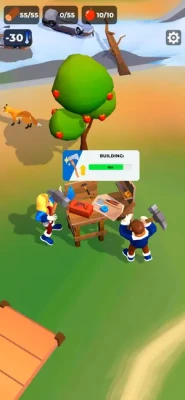
The game combines survival management, resource gathering, crafting, exploration, research, and city development. The central challenge is deciding which resources should be collected first and how your limited survivors should be assigned to keep the settlement functioning.
The App Store currently lists Frost Land Survival as a Simulation game with a 4.4/5 rating from 205 ratings in the US store.
What Is Frost Land Survival?
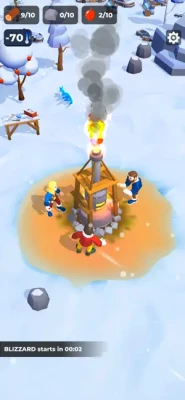
Frost Land Survival places you in charge of a community struggling to survive in an extremely cold post-apocalyptic world.
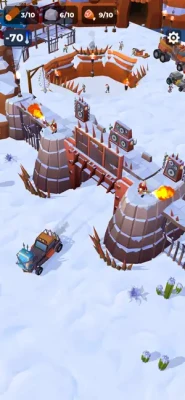
Your settlement begins as a modest shelter, but the long-term goal is to develop it into a powerful fortified base.
The game revolves around several connected systems:
- Resource gathering
- Survivor management
- Crafting
- Research
- Exploration
- Base construction
- Settlement upgrades
- Expedition management
- Threat management
- Story progression
Every improvement depends on resources, which means efficient management is essential.
The game describes survival as a strategic challenge where players must decide which resources to gather and how to distribute them among survivors.
The Story and Setting
The world has entered an icy apocalypse.
Snow and ice cover the planet, leaving survivors to struggle against freezing conditions and an increasingly hostile environment.
You become the leader of the last remaining settlement.
Your responsibility is much larger than simply keeping your own character alive.
You must make sure that the entire community has enough resources, useful equipment, shelter, and protection.
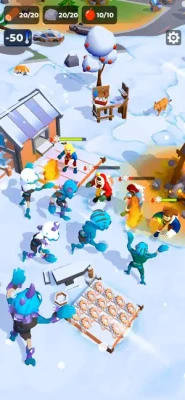
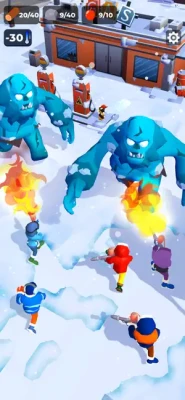
The surrounding world is dangerous as well. Wild nature, icy storms, snowy creatures, and other threats can put your settlement at risk.
The result is a survival experience where the success of the town depends on careful decisions rather than combat alone.
Main Features
Resource Gathering
Resources are the foundation of your settlement.
You need materials to construct buildings, create equipment, develop technology, and keep your community progressing.
The most important early-game skill is learning which resources deserve immediate attention.
Don't simply collect whatever is closest.
Think about what your settlement needs next.
Survivor Management
Your survivors are your most valuable workforce.
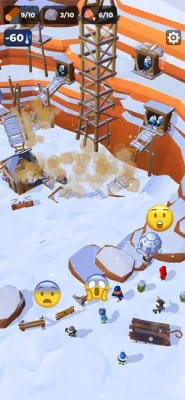
They can contribute to gathering, production, exploration, and other settlement activities.
Because your workforce is limited, assigning the right people to the right jobs is important.
A settlement with plenty of resources can still struggle if its survivors are poorly distributed.
Crafting
Crafting is one of the game's main survival mechanics.
Resources can be transformed into useful tools and weapons that help your community survive the frozen environment.
Crafting therefore creates another reason to gather materials beyond simple construction.
Research System
Frost Land Survival includes a research system that allows you to discover new survival methods, technologies, and tools.
Research is important because it provides long-term improvements.
Instead of thinking only about your next building, think about how your research choices can make future progression easier.
Base Building
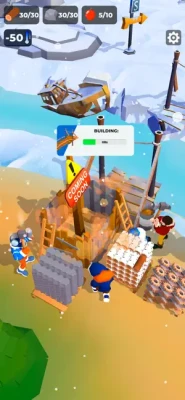
Your settlement develops gradually.
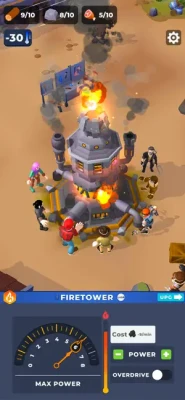
You begin with a relatively small shelter and work toward a much stronger fortress.
Building is therefore directly connected to survival.
A stronger settlement gives your survivors a better foundation for dealing with the dangers outside.
Exploration
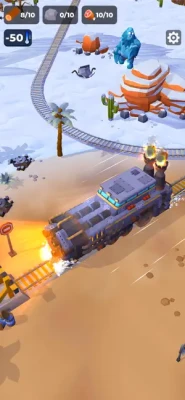
The frozen world contains resources and locations that cannot be fully understood from inside your settlement.
Exploration allows you to discover new areas and obtain useful materials.
It also exposes survivors to additional dangers.
The safest settlement is not necessarily the most successful one.
You eventually need to take calculated risks outside your base.
Expeditions
Expeditions provide another way to explore the frozen world and develop your community.
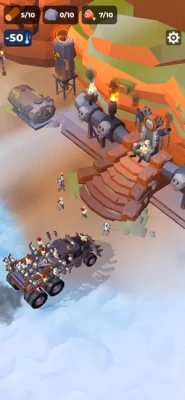
The game's later content has added new expeditions and characters, along with additional locations and a new type of opponent.
This makes expedition planning an important part of longer-term progression.
How to Play Frost Land Survival
The basic gameplay loop is:
Gather → Produce → Build → Research → Explore → Survive → Expand
You start by collecting essential resources.
Those resources allow you to build and craft.
Your settlement then becomes more productive.
Research unlocks better possibilities.
Exploration provides access to additional resources and encounters.
The stronger your settlement becomes, the further you can progress.
Full Frost Land Survival Strategy Guide
1. Establish Your Basic Resource Economy First
Don't rush into unnecessary construction.
Your first objective should be establishing a reliable supply of essential resources.
A settlement that constantly runs out of basic materials will struggle no matter how advanced its buildings become.
Before making a major upgrade, ask:
Do I have enough resources to maintain my settlement after completing it?
If the answer is no, gather first.
2. Prioritize the Resources You Need Next
One of the game's central strategic decisions is choosing which resources to gather first.
Don't collect resources simply because they are available.
Instead, identify your next objective.
For example:
Need a building?
Gather the materials required for construction.
Need equipment?
Prioritize crafting resources.
Need expansion?
Prepare the resources required for the next settlement upgrade.
This prevents your survivors from spending valuable time gathering materials that aren't immediately useful.
3. Keep Your Survivors Productive
Idle workers are lost productivity.
Whenever possible, make sure your available survivors have meaningful jobs.
However, don't assign everyone to one resource.
A balanced workforce is usually more useful than maximum production of a single material.
Try to maintain enough production across the resources needed by your current objectives.
4. Don't Overexpand Too Early
A larger settlement may look impressive, but expansion creates additional demands.
Every new development can increase the resources and workforce required to keep the settlement functioning.
Expand when your resource economy is ready.
A smaller but stable settlement is better than a large settlement constantly running out of supplies.
5. Research With a Long-Term Plan
Research should support your settlement's biggest weakness.
If resource production is slowing you down, prioritize research that improves your economy.
If exploration is becoming dangerous, look for improvements that make expeditions more effective.
If construction is slowing progression, focus on technologies that help development.
Don't research simply because something is available.
Research should solve a problem.
Resource Management Strategy
6. Maintain a Reserve
Avoid spending your entire stockpile immediately.
Unexpected requirements can appear during progression.
A reserve gives you flexibility.
Try to keep some basic materials available after completing major construction or crafting projects.
7. Avoid Resource Bottlenecks
A bottleneck occurs when one resource prevents you from doing everything else.
For example, you might have plenty of one material but constantly lack another.
When this happens, redirect your survivors toward the missing resource.
Your objective isn't to maximize every resource equally.
Your objective is to keep the entire settlement moving.
8. Upgrade Production Before Demand Becomes Too High
If you know your next development will consume a large amount of materials, prepare for it.
Increase production before beginning the project rather than waiting until you are completely empty.
This reduces downtime.
Survivor Management Guide
9. Match Survivors to Important Tasks
Think of survivors as a limited workforce.
Assign them according to the settlement's current priorities.
If construction is your main objective, make sure enough workers support the necessary production.
If exploration is essential, don't commit every capable survivor to base production.
10. Don't Send Everyone on Expeditions
Exploration is useful, but the settlement still needs people at home.
Before launching an expedition, check whether your remaining survivors can maintain essential production.
A successful expedition is not useful if your settlement collapses while everyone is away.
11. Build a Flexible Workforce
Try to avoid making your settlement completely dependent on one activity.
When circumstances change, you should be able to redirect workers.
This flexibility becomes increasingly important as the settlement grows.
Crafting Strategy
12. Craft for a Purpose
Don't craft items simply because you have enough materials.
Ask what the item will accomplish.
Useful crafting priorities include:
- Tools needed for progression
- Weapons needed for threats
- Equipment required for exploration
- Items that directly improve survival
This keeps your resources focused.
13. Prepare Before Dangerous Expeditions
Before sending survivors into a difficult area, make sure they have the necessary equipment.
An expedition should begin with preparation rather than hope.
Check your resources, available equipment, and settlement workforce first.
Base Building Strategy
14. Improve the Settlement Step by Step
Frost Land Survival is designed around gradual development from a small shelter toward a mighty fortress.
Don't try to reach the final stage immediately.
Treat each upgrade as a foundation for the next one.
15. Focus on Function Before Size
A large settlement isn't automatically efficient.
Prioritize buildings and improvements that directly support:
- Resource production
- Survivor needs
- Crafting
- Research
- Defense
- Progression
A functional settlement will usually outperform a poorly organized one.
16. Strengthen Your Base Before Major Exploration
As you explore farther from home, the potential rewards increase—but so do the risks.
Make sure your settlement can continue operating while expeditions are away.
This creates a safer foundation for exploration.
Exploration Strategy
17. Explore When You Have a Reason
Exploration should have a purpose.
Before sending an expedition, identify what you want from the journey.
Possible objectives include:
- Finding resources
- Discovering new locations
- Progressing the story
- Completing missions
- Finding useful characters
- Advancing toward the next area
18. Don't Treat Every Expedition as a Race
You don't have to explore as quickly as possible.
Preparation matters.
If an expedition repeatedly fails, strengthen your settlement and equipment before trying again.
19. Bring Enough Support
An expedition should not leave your settlement unable to function.
Maintain a balance between exploration and home production.
Surviving the Frozen Environment
20. Prepare for Environmental Threats
The game includes icy storms, wild nature, and snowy creatures as threats.
These dangers make preparation important.
Don't wait until your settlement is already struggling before preparing for the next challenge.
21. Keep Your Economy Stable During Bad Conditions
Environmental problems can interrupt your normal progression.
A healthy resource reserve gives you time to recover.
This is another reason not to spend everything immediately.
Research Strategy
22. Research Your Biggest Weakness
A simple rule works well:
Research what is currently slowing you down.
If you constantly lack materials, improve production.
If exploration is inefficient, improve the systems supporting expeditions.
If your settlement is struggling to expand, prioritize technologies that support development.
23. Think Beyond the Next Upgrade
Research often has value beyond the immediate improvement.
A technology that seems modest now may become much more valuable as your settlement grows.
Consider how the upgrade will affect your future economy.
Chapter and Story Progression
Frost Land Survival uses location and chapter progression to expand the adventure.
The version history records additional content including a new location, improved camp-management mechanics, a new enemy type, new expeditions, and additional characters.
This means progression is not simply about making one settlement stronger.
You are also preparing for the next stage of the journey.
How to Avoid Getting Stuck
If progression slows down, use this checklist:
Check Your Resources
Identify the material preventing your next objective.
Check Your Workforce
Make sure survivors are assigned efficiently.
Check Your Research
Look for technology that addresses your current weakness.
Check Your Buildings
Improve the production systems that are limiting progress.
Check Your Exploration
Look for missions or expeditions that can provide useful resources.
Check Your Equipment
Make sure your survivors are properly prepared for dangerous activities.
Advanced Strategy
Create a Resource Priority List
At the beginning of each session, identify your three most important resources.
For example:
- Resource required for the next building
- Resource required for crafting
- Resource needed for exploration
Then assign your workforce around those priorities.
This prevents random resource gathering.
Build Before You Run Out
One of the biggest mistakes in survival management games is waiting until supplies are nearly empty.
If you know production is slowing down, respond before the shortage becomes critical.
Use Exploration to Complement Your Economy
Exploration shouldn't replace your settlement economy.
It should supplement it.
Your base provides stability.
Your expeditions provide opportunities.
The strongest strategy combines both.
Common Mistakes
Spending Everything
A completely empty stockpile leaves you vulnerable to unexpected requirements.
Overbuilding
Constructing too much too quickly can create unnecessary resource pressure.
Ignoring Research
Research can unlock better survival methods, tools, and technologies.
Sending Too Many Survivors Away
Your settlement still needs workers while expeditions are active.
Gathering Without a Goal
Collecting random resources wastes valuable workforce time.
Expanding Before Stabilizing
Growth is useful only when your economy can support it.
Ignoring Long-Term Planning
Every major upgrade should help prepare you for the next stage.
Frost Land Survival Review
Frost Land Survival has an appealing premise: humanity is trapped in a frozen world, and the player must turn a small settlement into a functioning community capable of surviving the apocalypse.
Its strongest feature is the combination of several management systems. Resource gathering, survivor assignments, crafting, research, exploration, and construction all contribute to the same objective—keeping the settlement alive and moving forward.
The App Store currently shows a 4.4/5 rating from 205 ratings in the US storefront.
Player feedback is generally positive about the atmosphere and story, but some reviews criticize slow progression. One reviewer complained that resources such as charcoal and steel did not continue producing while the game was closed. Another reported waiting for new chapters or locations after completing available objectives.
On the other hand, another player praised the game's story and its approach to advertising, noting that optional ads can provide rewards and that the game offers purchases to remove advertisements.
The game's update history shows that additional content was added in 2024, including a new location, improved camp-management mechanics, another enemy type, new expeditions, and additional characters. Later listed updates primarily contain bug fixes, with version 1.50.23 dated November 14, 2024.
Overall, Frost Land Survival is best suited to players who enjoy post-apocalyptic survival games, city building, resource management, crafting, exploration, and settlement strategy.
Pros and Cons
Pros
- Frozen apocalypse setting
- Strong survival atmosphere
- Resource management
- Survivor management
- Crafting system
- Research system
- Base construction
- Settlement progression
- Exploration
- Expeditions
- Story-driven progression
- Additional locations
- New enemy types
- Character progression
- iPhone and iPad support
Cons
- Progression can become slow
- Some players have reported long waits between chapters
- Resource production while away from the game has been criticized
- Ads are part of the free experience
- Some progression points may feel repetitive
- Later content availability may depend on the game's update schedule
Frost Land Survival Game Information
Game Name: Frost Land Survival
Developer: AI Games FZ
Seller: AI GAMES FZ LLC
Publisher/Copyright: Azur Games
Category: Simulation
Genre: Survival / City Building / Resource Management
Platforms: iPhone and iPad
Age Rating: 13+
Price: Free with in-app purchases
Size: 874.8 MB
Compatibility: iOS 13.0 or later
Languages: English plus 31 additional languages
Main Setting: Frozen post-apocalyptic world
Core Gameplay: Resource gathering, crafting, exploration, research, survivor management, city development
Base Building: Yes
Research: Yes
Expeditions: Yes
Crafting: Yes
In-App Purchases: Yes
Current Listed Version: 1.50.23
Latest Listed Version Date: November 14, 2024
US App Store Rating: 4.4/5 from 205 ratings
Frequently Asked Questions
What is Frost Land Survival?
Frost Land Survival is a survival simulation game set during a frozen apocalypse. Players manage the last surviving settlement, gather resources, craft equipment, explore the world, research technologies, and develop their base.
What is the goal of Frost Land Survival?
The main goal is to keep your survivors alive while developing the settlement from a small shelter into a stronger fortified community.
What resources do you collect?
The game revolves around gathering resources needed for construction, crafting, research, and general settlement progression.
Can you build a city in Frost Land Survival?
Yes. Settlement development is one of the game's main mechanics, with progression from a small shelter toward a much stronger fortress.
Does Frost Land Survival have crafting?
Yes. Crafting allows survivors to create tools and weapons needed to deal with the harsh environment and dangerous encounters.
Does Frost Land Survival have research?
Yes. The game includes a research system for discovering survival methods, tools, and technologies.
Can you explore the frozen world?
Yes. Exploration and expeditions are important parts of progression, allowing survivors to discover resources and new areas.
What makes Frost Land Survival difficult?
Resource shortages, survivor management, environmental dangers, exploration risks, and gradual progression all contribute to the challenge.
How can I progress faster?
Prioritize the resources required for your next objective, keep survivors productive, research technologies that solve your biggest problems, maintain resource reserves, and prepare carefully before expeditions.
Is Frost Land Survival free?
Yes. The game is free to download with optional in-app purchases. The App Store lists several purchases, including ad-removal options, starter packs, gems, and other bonuses.
Does Frost Land Survival have ads?
Yes. The App Store lists purchases that remove banners and video advertisements.
Final Strategy Tips
The key to Frost Land Survival is balance.
Don't focus entirely on gathering, building, research, or exploration. Your settlement works best when these systems support one another.
Keep your workforce productive, maintain a reserve of essential resources, research technologies that solve your current problems, and avoid expanding faster than your economy can support.
When you send survivors into the frozen wilderness, make sure your settlement can continue functioning without them. And when progress slows, don't simply wait—look for the resource, workforce, research, or building that is creating the bottleneck.
The strongest settlement isn't the one that grows the fastest.
It's the one that can keep growing without collapsing.
Rate the Game
User Reviews













Popular Games



















 Android
 iOS
 Windows
 Xbox