


Latest Version
February 12, 2025
Habby
Action
0
com.habby.flamingcore
Report a Problem
More About :game
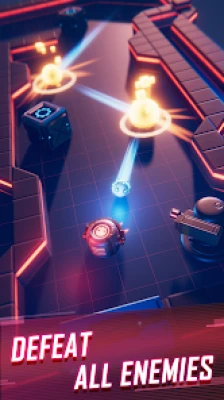
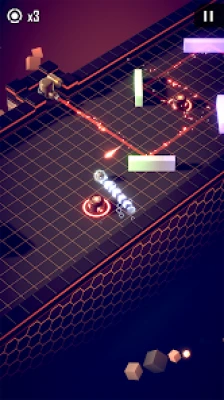
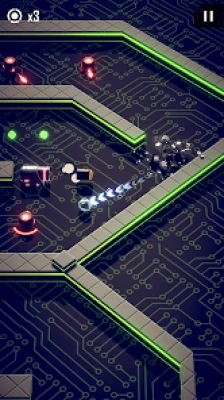
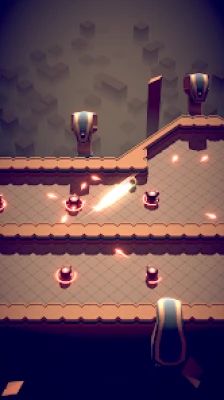
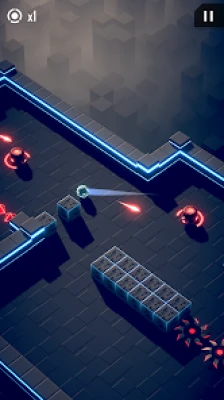
The concept is simple: survive the hazards, eliminate the enemies and reach the end of the level. The execution is considerably harder.
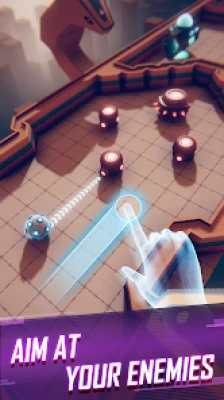
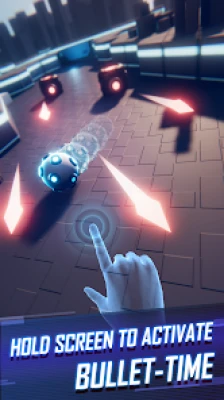
The game's defining mechanic is Bullet-Time. Holding the screen slows the action, giving you an opportunity to analyze enemy positions, adjust your trajectory and decide where the Core should travel next. The ability can be used repeatedly, making timing and planning more important than reflexes alone.
Flaming Core originally launched as HABBY's second title and was developed by four Chinese university students. HABBY describes it as an indie game built around action and experimentation.
What Makes Flaming Core Different?
Flaming Core stands out because movement and combat are essentially the same thing.
You do not simply walk toward an enemy and attack. Instead, you must think about:
- Where the Core will bounce
- Which wall gives you the best angle
- When to activate Bullet-Time
- Which enemy should be eliminated first
- How to avoid incoming attacks
- Whether your current trajectory is safe
- How the next bounce will affect your position
This creates a puzzle-like quality underneath the arcade action.
A successful run often feels less like conventional combat and more like solving a moving geometry problem.
Flaming Core Gameplay Explained
The basic gameplay loop is straightforward.
- Enter a level.
- Observe the arena.
- Move the Core toward useful angles.
- Activate Bullet-Time when precision is required.
- Bounce against walls to redirect yourself.
- Strike enemies without entering dangerous attack paths.
- Avoid traps and environmental hazards.
- Clear the stage and continue.
The original game contains 160 levels, with different enemy types and traps designed to test increasingly precise movement.
The difficulty comes from how quickly situations can change. A trajectory that looks safe at first may become dangerous after a single bounce.
How to Use Bullet-Time Properly
Bullet-Time is the most important mechanic in Flaming Core.
Many new players use it simply because the level feels fast. That wastes one of the game's greatest strategic advantages.
Instead, use Bullet-Time to make decisions.
Use Bullet-Time Before a Difficult Bounce
If several walls surround you, slow the action before committing to a direction.
Look at:
- Your current position
- Enemy locations
- Projectile paths
- Available walls
- Trap locations
- Your likely landing point
Then choose the safest trajectory.
Use It Before Entering a Crowded Area
Multiple enemies can create overlapping attack patterns.
Slowing the game allows you to identify an opening instead of rushing directly into danger.
Use It to Correct Your Aim
Sometimes the Core is heading toward the right area but at a poor angle.
Bullet-Time gives you more time to make a small adjustment rather than restarting the level.
Don't Hold It Constantly Without Thinking
Although Bullet-Time can be used repeatedly, slowing the game does not automatically solve the level.
You still need to understand the geometry of the arena.
The best players use Bullet-Time as a planning tool, not simply as permanent slow motion.
Mastering Wall Bounces
Wall bouncing is the heart of Flaming Core.
A wall is not merely an obstacle. It is part of your attack system.
Think Two Bounces Ahead
Beginners often think:
"Where should I go now?"
A stronger approach is:
"Where will this bounce put me, and what can I do from there?"
This small change dramatically improves your control.
Before committing to a bounce, consider the next position.
Use Walls as Shields
A wall can sometimes separate you from an enemy's attack.
Rather than immediately attacking, use the geometry of the stage to create a safer route.
Avoid Random Bouncing
Rapid movement can feel exciting, but uncontrolled bouncing often creates unnecessary deaths.
If you cannot explain why a bounce is useful, slow down and reassess.
Enemy Strategy
Different enemies require different approaches.
The safest general rule is to study an enemy before trying to destroy it.
Watch for:
- Movement direction
- Firing patterns
- Attack timing
- Safe approach angles
- Nearby environmental hazards
- Whether another enemy blocks your route
Eliminate Dangerous Enemies First
If one enemy creates a large area of danger while another is relatively harmless, target the dangerous one first.
Removing a major threat can transform the entire arena into a much safer environment.
Don't Always Attack Immediately
Sometimes waiting is the correct move.
If an enemy's attack creates a temporary opening, use that window rather than forcing an unsafe attack.
Patience is particularly valuable in difficult levels.
How to Deal With Traps
Traps are designed to punish players who concentrate only on enemies.
Before moving quickly through an unfamiliar section, identify:
- Static hazards
- Moving obstacles
- Narrow passages
- Dangerous walls
- Enemy fire combined with environmental hazards
The most dangerous situations are usually combinations.
An enemy may be easy to avoid on its own, but much harder when its attack pushes you toward a trap.
Flaming Core Level Strategy
Early Levels
Use the early stages to learn the physics rather than simply rushing through them.
Practice:
- Controlled bouncing
- Small trajectory corrections
- Bullet-Time activation
- Enemy positioning
- Reading the arena before moving
These skills become increasingly important later.
Mid-Game Levels
Start planning complete routes.
Instead of reacting to individual enemies, identify the sequence of movements required to clear the room.
A good habit is to pause mentally before entering a complicated section and decide:
Entry → Bounce → Attack → Redirect → Escape
Difficult Levels
When a stage repeatedly defeats you, stop trying to play it faster.
Play it more deliberately.
Identify exactly what kills you:
- Bad angle?
- Enemy projectile?
- Poor timing?
- Trap?
- Unsafe landing?
- Overaggressive attack?
Then change only that part of the strategy.
This is much more effective than repeating the entire level without analyzing the mistake.
Best Beginner Tips for Flaming Core
1. Learn the Physics First
Spend time understanding how the Core moves before worrying about speed.
2. Slow Down Before You Need To
Bullet-Time is most useful when activated before a dangerous situation, not after it has already started.
3. Watch Enemy Patterns
Enemies often become easier once you understand their behavior.
4. Use the Arena
Walls, corners and open spaces all have strategic value.
5. Plan Your Exit
Destroying an enemy is not enough if your next position is dangerous.
6. Don't Rush the Finish
A safe final movement is better than an unnecessary death after clearing most of the level.
7. Learn From Repeated Deaths
If you die in exactly the same place several times, the problem is probably your approach rather than bad luck.
Advanced Flaming Core Strategy
Once you understand the basic mechanics, start thinking in terms of trajectory control.
Control the Angle, Not Just the Direction
The difference between a successful and unsuccessful attack can be a very small change in angle.
Use Bullet-Time to make those corrections.
Create Safe Zones
After eliminating an enemy, identify the safest area of the arena.
Move toward that space before dealing with the next threat whenever possible.
Chain Your Attacks
A good bounce can position you to attack one enemy and immediately redirect toward another.
Look for opportunities to turn one movement into multiple advantages.
Predict the Landing Position
Do not focus exclusively on where the Core is going.
Think about where it will stop or bounce next.
This is one of the biggest differences between beginner and advanced play.
Reduce Unnecessary Movement
Every additional bounce is another opportunity to make a mistake.
Efficient movement is usually safer movement.
How to Beat Hard Flaming Core Levels
When stuck on a level, use this five-step method:
Step 1: Observe
Don't immediately launch into the stage.
Study enemy positions, traps and available surfaces.
Step 2: Identify the Biggest Threat
Find the enemy or hazard most likely to cause failure.
Step 3: Find the Safest Route
Look for a route that minimizes unnecessary exposure.
Step 4: Use Bullet-Time
Slow down during the most technical portion of the route.
Step 5: Repeat With One Improvement
If the attempt fails, change one thing.
This creates measurable progress instead of random repetition.
Flaming Core Special Modes and Content
Flaming Core has expanded beyond its original level structure over time.
Its update history includes Challenge Mode, Bounce Mode, Robot Mode, and the Neon chapter. The Neon chapter was introduced in a later update, while Robot Mode appeared earlier as an additional challenge.
These additions are important because they give experienced players different ways to test their control.
Challenge Mode
Challenge-style content is best approached with patience.
The goal is not simply to move quickly but to execute the required sequence consistently.
Bounce Mode
Bounce-focused gameplay emphasizes the game's physics and makes understanding trajectories especially important.
Robot Mode
Robot Mode adds another variation to the core gameplay and encourages players to adapt their usual movement strategies.
Neon Chapter
The Neon chapter provides additional content for players who have progressed beyond the earlier stages.
Common Mistakes Players Make
Rushing Through Levels
Speed is useful only after you understand the level.
Ignoring Enemy Patterns
Repeatedly attacking without learning enemy behavior makes difficult stages unnecessarily frustrating.
Using Poor Bounce Angles
A bad angle can turn a successful attack into a dangerous landing.
Forgetting the Next Position
Destroying an enemy is meaningless if the resulting trajectory sends you directly into another threat.
Overreacting
Fast corrections can be worse than doing nothing.
When the screen becomes chaotic, activate Bullet-Time and regain control.
A Strong Practice Routine
If you want to improve quickly, practice in this order:
Movement → Bouncing → Bullet-Time → Enemy patterns → Trap avoidance → Route planning
Do not try to master everything at once.
First learn how the Core behaves.
Then learn how to control its trajectory.
Then combine movement with enemy timing.
Finally, begin optimizing your routes.
Flaming Core Beginner Build Philosophy
Flaming Core does not rely on the traditional RPG-style build system found in many HABBY games.
Your greatest "build" is your movement strategy.
Think of your playstyle as having three priorities:
Safety: Stay away from unnecessary damage.
Precision: Use controlled trajectories.
Efficiency: Clear enemies with as few risky movements as possible.
A player who consistently survives is usually more successful than one who constantly attempts flashy attacks.
Is Flaming Core Difficult?
Yes — and that is part of its appeal.
The game's own presentation has long emphasized the idea that it is easy to understand but difficult to master, with its promotional description claiming that only a small percentage of players reach the end.
The controls are simple, but the challenge comes from combining:
- Physics
- Timing
- Enemy patterns
- Precision
- Spatial awareness
- Route planning
That combination gives Flaming Core a surprisingly deep arcade experience.
Flaming Core Controls
The control system is intentionally simple.
The important interaction is holding the screen to activate Bullet-Time and using the resulting control window to manage the Core's movement and bounce trajectory.
Because there are relatively few controls, success depends heavily on decision-making rather than complicated button combinations.
Is Flaming Core Worth Playing?
Flaming Core is a strong choice if you enjoy:
- Difficult arcade games
- Precision gameplay
- Physics-based movement
- Short challenge-based levels
- Puzzle-like combat
- Reaction and timing games
- Games that reward practice
It may be less appealing if you prefer relaxed progression, automatic combat or story-heavy RPG systems.
Its greatest strength is also its biggest challenge: the gameplay is easy to understand but demands precision to master.
Pros and Cons
Pros
- Simple controls
- Distinctive Bullet-Time mechanic
- Challenging physics-based gameplay
- Interesting enemy patterns
- Strong emphasis on skill
- Multiple gameplay variations
- Large level progression
- Stylish futuristic atmosphere
- Easy to understand but difficult to master
Cons
- Some levels can become highly demanding
- Repeated attempts are necessary for difficult sections
- Players who prefer relaxed gameplay may find it frustrating
- Precision is much more important than button-mashing
Flaming Core FAQ
What is Flaming Core?
Flaming Core is an arcade action game from HABBY where you control a Core, bounce around stages, defeat enemies and avoid traps.
How does Bullet-Time work?
Bullet-Time slows the action while you plan your next movement. It is especially useful when enemies, projectiles and traps make the normal pace difficult to read.
How many levels does Flaming Core have?
The game's original description lists 160 levels, featuring different enemies and traps.
Is Flaming Core easy to play?
The controls are simple, but mastering the physics, timing and enemy patterns can be challenging.
What is the best strategy for difficult levels?
Slow down, study the arena, identify the biggest threat and plan your bounce route before committing to the movement.
Does Flaming Core have additional game modes?
Yes. Its update history includes Challenge Mode, Bounce Mode and Robot Mode, along with the later Neon chapter.
Who developed Flaming Core?
Flaming Core was developed by an indie team of four Chinese university students and was HABBY's second title.
Final Flaming Core Strategy
The secret to Flaming Core is not speed. It is control.
Learn the physics, study enemy behavior and use Bullet-Time before the situation becomes dangerous. Treat every wall as part of your movement system and think about where your next bounce will take you.
Once you stop reacting randomly and begin planning trajectories, the game becomes much easier to understand.
Observe → Slow Down → Aim → Bounce → Attack → Reposition.
Master that cycle and even the hardest Flaming Core stages become manageable.
Rate the Game
User Reviews















Popular Games


















 Android
 iOS
iOS Windows
 Xbox
Xbox