

Latest Version
December 15, 2025
DongZ Game
Simulation
iOS
0
Report a Problem
More About :game
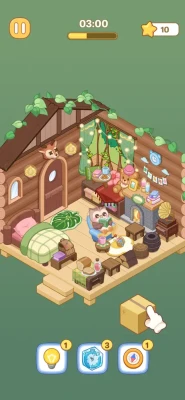
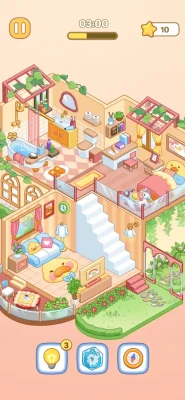
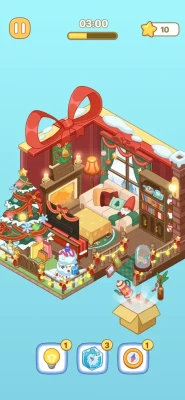
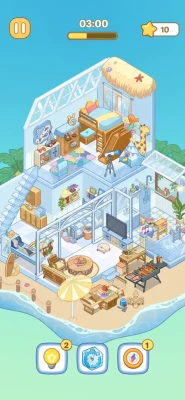
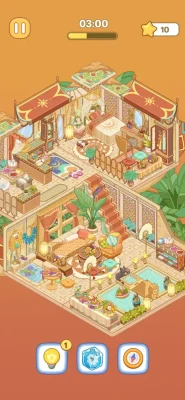
Players work through different room makeovers, placing furniture and decorative objects to complete each design. From comfortable bedrooms to attractive living spaces, every completed room provides a satisfying visual transformation.
What Is Fantasy Home: Deco Game?
Fantasy Home: Deco Game is a casual home design game developed by DongZ Game. Its central idea is simple: take an empty or unfinished room and turn it into a welcoming, fully decorated space.
The game combines interior decoration with light organization and puzzle-solving elements. Instead of focusing on fast reactions or competitive gameplay, it encourages players to examine each room, understand where objects belong, and carefully arrange the available furniture.
Its relaxed pace makes it suitable for short gaming sessions as well as longer periods of creative play. The App Store describes the experience as having no time pressure, with more detailed rooms becoming available as players progress.
Main Features of Fantasy Home
Creative home decoration
Arrange furniture and decorative objects to turn plain rooms into attractive interiors. Each makeover gives players a chance to create a more complete and comfortable-looking space.
A variety of furniture and decorations
The game advertises hundreds of furniture pieces in modern, classic, and cozy styles. This variety helps keep room arrangements visually interesting as players advance.
Simple tap-and-place controls
The basic interaction is designed to be accessible. Players can select objects and position them in the room without needing complicated controls.
Different room makeovers
The experience includes transformations involving living spaces, bedrooms, and other room designs. Each completed area offers a new visual result.
Progressive room challenges
As players advance, they encounter more detailed and complex rooms. This creates a gradual learning curve and encourages better attention to placement and organization.
Relaxing gameplay
There is no advertised time pressure, allowing players to work through decorating tasks at a comfortable pace.
Regular updates
The App Store listing mentions updates that introduce fresh content and improvements.
Gameplay and Core Mechanics
Fantasy Home revolves around arranging objects to complete interior designs. The main challenge is understanding how the available furniture and decorations fit into each room.
Room inspection
Each level presents a space that needs attention. Before placing objects, examine the room and identify its available areas, empty spaces, and likely furniture positions.
Furniture placement
Players use simple touch controls to arrange furniture and decorative items. Correct positioning is important because objects need to fit naturally into the room.
Organization and problem-solving
The game includes a satisfying organization element. Players must consider the placement of different objects rather than simply filling every empty area without thinking.
Room transformation
As the decorating task progresses, the room gradually becomes more complete. The final result provides a visual reward for successfully arranging the available items.
Increasing complexity
Later rooms introduce more detailed decorating challenges. Players benefit from developing a careful placement strategy instead of rushing through every task.
How to Play Fantasy Home: Deco Game
Getting started is straightforward, even for players who have never tried a home decoration puzzle game.
Start a room challenge and examine the empty or unfinished space.
Look carefully at the furniture and decorative objects available.
Identify where each item should naturally fit.
Use the tap-and-place controls to position the objects.
Check the arrangement and make adjustments when necessary.
Continue decorating until the room is complete.
Progress to additional rooms and more challenging designs.
The most important habit is to observe the room before placing anything. A little planning can make each decorating challenge easier.
Complete Strategy Guide for Fantasy Home
Study the Room Before Moving Furniture
Do not begin placing objects immediately. Take a moment to examine the entire room and understand its layout.
Look for large empty areas, corners, walls, and spaces that appear designed for specific furniture. This first inspection helps you avoid unnecessary adjustments later.
A good starting strategy is to identify the largest furniture pieces before thinking about smaller decorations.
Place Large Furniture First
Large objects usually determine how the rest of the room will be organized.
Start by considering major furniture pieces such as beds, sofas, tables, or other prominent items when they appear in a level. Their positions can influence where smaller decorations should go.
Once the main furniture is arranged, the remaining spaces become easier to understand.
Pay Attention to Object Size
One of the most useful skills in a room decoration puzzle is recognizing how much space an object occupies.
A large item may need a wider area, while a small decorative object can fit into a limited space. Placing items without considering their dimensions can make the room feel crowded or create unnecessary repositioning.
If an object looks difficult to place, inspect nearby spaces rather than repeatedly trying the same position.
Think About the Purpose of Each Area
Rooms are easier to organize when you think about how people would normally use them.
For example:
A bedroom should have a practical sleeping area.
A living room should feel comfortable and organized.
A seating area should leave enough room around its furniture.
Decorative objects should complement the main furniture rather than overwhelm it.
This practical approach can help you make better placement decisions.
Keep the Layout Balanced
A good interior design arrangement feels balanced rather than crowded on one side.
When positioning furniture, consider how the objects relate to one another. Avoid concentrating every large item in a single area if the room offers other suitable spaces.
Try to maintain a natural distribution of furniture and decorations.
Use Smaller Decorations to Complete the Room
After placing the main furniture, focus on the smaller objects.
Decorative items help make a room feel finished. Their placement should support the overall arrangement rather than interfere with the main furniture.
Look for available spaces on tables, shelves, corners, and other suitable areas.
Reconsider Difficult Placements
If an object does not seem to fit, do not assume that the entire room needs to be rearranged.
Instead, review the surrounding area and consider whether another object is occupying the more suitable position.
Sometimes moving one item can make several other placements easier.
Take Your Time With Complex Rooms
Later challenges can contain more detailed layouts and additional objects. Since the game is designed without time pressure, there is little reason to rush.
Work through the room in stages:
Understand the layout.
Position the major furniture.
Arrange secondary objects.
Add decorative details.
Review the completed design.
This approach makes complex decorating tasks feel more manageable.
Advanced Tips and Tricks
Think in groups: Arrange related objects together so that the room has a clear purpose and natural layout.
Avoid random placement: Consider the shape, size, and function of each object before positioning it.
Work from large to small: Major furniture establishes the structure of the room, while decorations complete the appearance.
Check the whole room regularly: Do not focus on one corner for too long. Look at the overall arrangement to maintain balance.
Learn from completed rooms: Each finished challenge can help you recognize useful placement patterns for future levels.
Be patient with small objects: Some decorations may be difficult to see or position. Zooming in, if the game provides that option, can make placement easier.
Make one adjustment at a time: If the room does not look right, change one object and review the result before moving several others.
Common Mistakes to Avoid
Placing objects too quickly
Rushing can lead to awkward arrangements and unnecessary repositioning. Inspect the room first.
Ignoring furniture dimensions
An object may appear suitable for a space but occupy more room than expected. Consider its size before placing it.
Focusing only on decoration
Small decorative items are important, but they should not take priority over the basic room layout.
Crowding the room
Filling every available area does not necessarily create a better design. A comfortable arrangement needs visual balance.
Repeatedly moving the same object
If an item does not fit, consider whether another piece should be moved first.
Overlooking the overall layout
A room can contain correctly placed individual objects but still feel disorganized. Review the complete space before finishing.
Is Fantasy Home: Deco Game Difficult?
Fantasy Home is designed as a casual experience with accessible controls and a gradual increase in room complexity.
New players can learn the basic decorating process quickly. The challenge becomes more interesting as rooms contain more detailed arrangements and require greater attention to object placement.
It is generally more about observation, organization, and patience than fast reactions or complicated controls.
Is Fantasy Home Suitable for Relaxing Gameplay?
Yes. Relaxation is one of the main ideas behind the game.
There is no advertised time pressure, and the decorating process gives players an opportunity to concentrate on arranging objects and improving a room.
The gradual transformation from an empty space into a finished interior also provides a satisfying sense of progress.
Is Fantasy Home Free to Play?
Fantasy Home: Deco Game is listed as a free download on the Apple App Store. However, it also contains advertisements and optional in-app purchases.
The listed purchases include coin packages, lives, boosts, revive bundles, and options for removing forced advertisements. Players should review purchase details before spending money.
Game Information
Category | Details |
|---|---|
Game title | Fantasy Home: Deco Game |
Developer | DongZ Game |
Provider | DongZ Future Technology Co., Ltd. |
Genre | Casual |
Main gameplay | Home decoration and room organization |
Main objective | Complete room makeovers |
Controls | Tap-and-place |
Design themes | Modern, classic, and cozy |
Difficulty | Gradually increasing |
Time pressure | No advertised time pressure |
Platform | iPhone |
Minimum iOS | iOS 13.0 or later |
Download price | Free |
Monetization | Advertisements and in-app purchases |
App Store age rating | 4+ |
App size | Approximately 326.5 MB |
Frequently Asked Questions
What is Fantasy Home: Deco Game?
Fantasy Home: Deco Game is a casual interior design game where players arrange furniture and decorations to transform empty rooms into attractive living spaces.
Who developed Fantasy Home?
The game was developed by DongZ Game, with DongZ Future Technology Co., Ltd. listed as its provider.
How do you play Fantasy Home?
Players examine a room, select available furniture and decorative items, and use tap-and-place controls to arrange them until the room is complete.
Does Fantasy Home have different rooms?
Yes. The game features different room makeovers, including living spaces and bedrooms, with more detailed challenges as players progress.
Does Fantasy Home have a time limit?
The App Store description presents the game as a relaxing experience without time pressure.
Is Fantasy Home suitable for beginners?
Yes. Its simple controls and gradual progression make it accessible to players who are new to home decoration games.
Does Fantasy Home include in-app purchases?
Yes. The game is free to download but offers optional purchases, including coins, lives, boosts, revive bundles, and advertisement removal.
Can you play Fantasy Home offline?
Offline availability is not clearly confirmed in the available store information, so players should not assume that every feature works without an internet connection.
Is Fantasy Home a traditional house-building game?
Not exactly. Its main focus is decorating and organizing individual rooms rather than constructing an entire house from the ground up.
What makes Fantasy Home enjoyable?
The combination of simple controls, furniture arrangement, room transformations, and relaxed progression makes it appealing to players who enjoy creative and casual puzzle experiences.
Final Thoughts
Fantasy Home: Deco Game offers a peaceful combination of interior decoration, organization, and light puzzle-solving. Its straightforward controls make it easy to approach, while its growing collection of furniture and increasingly detailed rooms gives players reasons to continue.
The most effective way to progress is to plan each room carefully, arrange large furniture before smaller decorations, and pay attention to the balance of the complete design. Whether you enjoy home makeover games or simply want a relaxing activity, Fantasy Home provides an enjoyable way to explore your creativity and transform ordinary spaces into welcoming interiors.
Rate the Game
User Reviews













Popular Games



















 Android
 iOS
 Windows
 Xbox