
Latest Version
October 05, 2025
Starwelds
Simulation
iOS
0
Report a Problem
More About :game
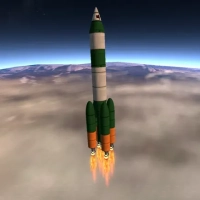
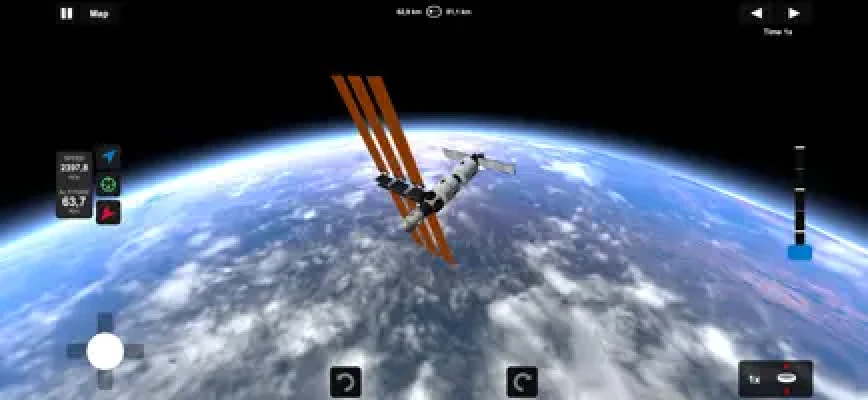
Ellipse: Rocket Simulator is a rocket-building and space-flight simulation game developed by Starwelds.
Instead of simply choosing a prebuilt spacecraft, the game gives players the opportunity to construct rockets from different parts and test their designs.
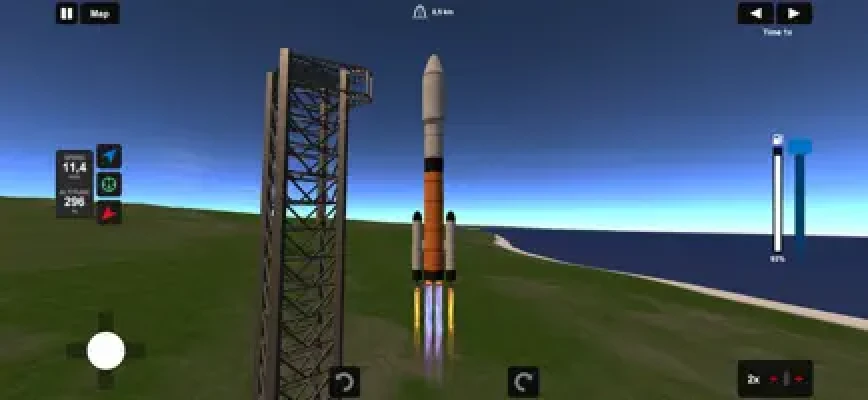
Once a rocket is built, the real challenge begins: getting it off the ground, controlling its trajectory and using orbital mechanics to reach other destinations.
The game is designed around experimentation, so there is plenty of room to build different spacecraft and learn from failed launches.
Game Theme and Atmosphere
Ellipse creates an atmosphere centered around space exploration, engineering and scientific experimentation.
The experience is less about traditional action and more about understanding how a spacecraft behaves under different physical forces.
Launching a rocket successfully can feel rewarding because the result depends on the decisions you made while designing and flying it.
Is There a Story?
Ellipse is primarily a simulation rather than a narrative-driven game.
Its focus is on rocket construction, spaceflight and exploration rather than characters or a traditional storyline.
The game's campaign structure gives players goals to work toward while leaving room for experimentation and custom rocket designs.
Core Gameplay Loop
The main gameplay cycle is:
Design Rocket → Test Launch → Adjust Design → Reach Orbit → Plan Transfer → Explore → Improve
Every launch can teach you something.
A rocket might fail because it lacks sufficient thrust, runs out of fuel, follows an inefficient trajectory or simply isn't designed for its intended mission.
Instead of treating failure as the end, Ellipse encourages you to modify the spacecraft and try again.
Rocket Building and Customization
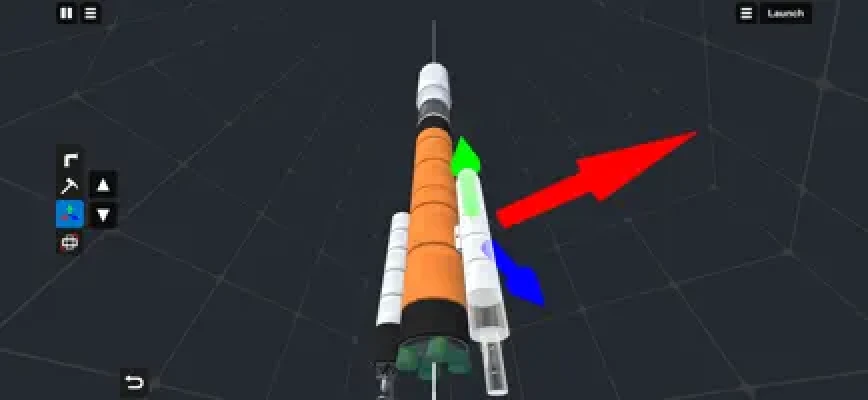
Rocket construction is one of the game's most important systems.
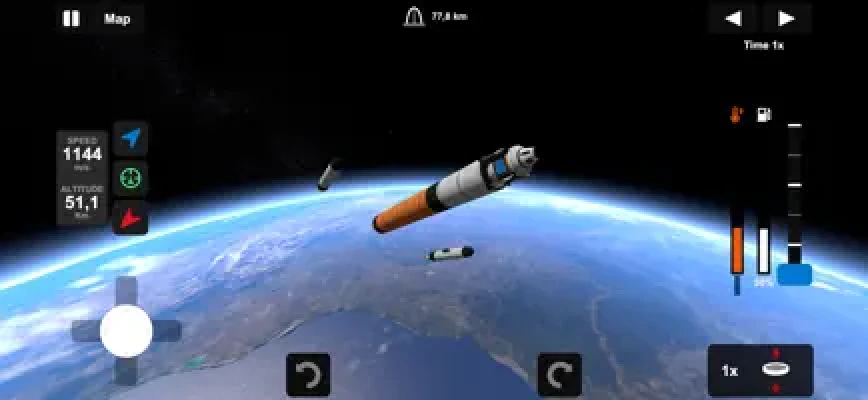
Players can construct rockets from different components and experiment with their designs to find an effective balance between power, efficiency and mission requirements.
A successful rocket isn't necessarily the biggest rocket.
The important question is whether the design is appropriate for the mission.
A spacecraft intended for a short orbital flight may need a very different configuration from one designed for an interplanetary journey.
Rocket Design Strategy
When creating a rocket, consider:
- Total mass
- Engine power
- Fuel capacity
- Number of stages
- Payload
- Aerodynamic efficiency
- Intended destination
- Required velocity
- Available fuel
A common beginner mistake is simply adding more engines.
More thrust can help, but excessive mass can create new problems.
The best design is usually the one that provides enough performance without carrying unnecessary weight.
Launching Your Rocket
A successful launch requires more than pointing a rocket upward.
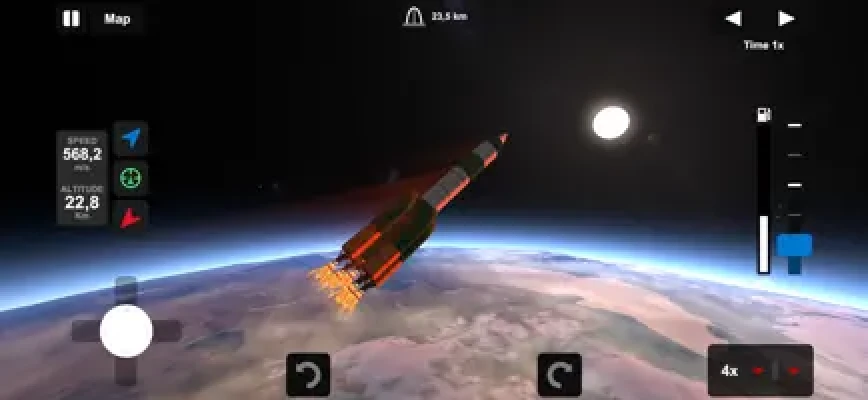
During launch, you need to manage acceleration and trajectory while accounting for gravity and atmospheric effects.
The goal is eventually to establish the velocity and direction required for the desired orbit.
This makes the launch phase an important part of the simulation rather than a simple cinematic sequence.
Orbital Mechanics
Orbital mechanics are central to Ellipse.
The game simulates trajectories involving:
- Gravity
- Spheres of influence
- Orbital transfers
- Interplanetary movement
- Atmospheric drag
- Buoyancy
These mechanics create a deeper experience than a simple arcade-style rocket game.
Gravity
Gravity affects every spacecraft and every trajectory.
A rocket doesn't simply travel in a straight line once it leaves the ground.
The gravitational influence of celestial bodies continually changes its path.
Understanding this is essential when planning long-distance space missions.
Spheres of Influence
Ellipse includes spheres of influence, an important orbital-mechanics concept.
A celestial body's sphere of influence represents the region in which its gravitational influence becomes particularly important when calculating a spacecraft's trajectory.
For beginners, this can initially seem complicated, but learning how gravitational regions interact is one of the most interesting aspects of the simulation.
Interplanetary Transfers
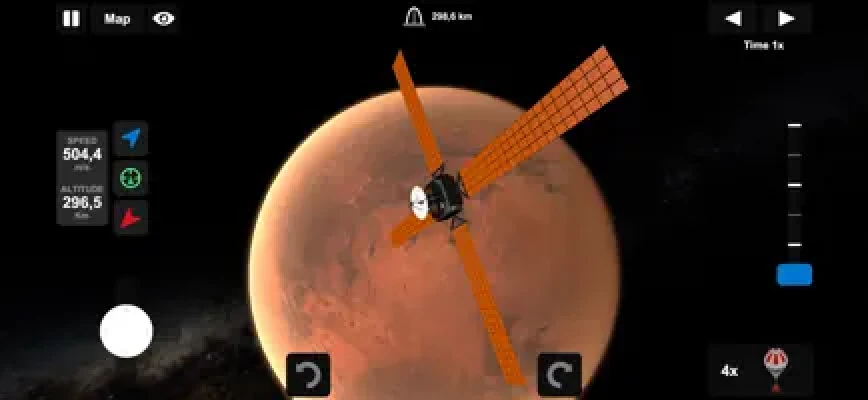
One of Ellipse's more advanced mechanics is interplanetary travel.
Reaching another planet isn't simply a matter of pointing your rocket toward it.
You need to consider the movement of both the spacecraft and the destination.
A successful interplanetary transfer therefore requires careful trajectory planning and an understanding of orbital movement.
Exploring Celestial Bodies
The game allows players to explore realistic planetary systems and experiment with missions involving different celestial destinations.
This creates a much broader objective than simply reaching orbit.
Once you understand basic launches, you can start thinking about:
Orbit → Transfer → Encounter → Approach → Landing or Flyby
Moon Missions
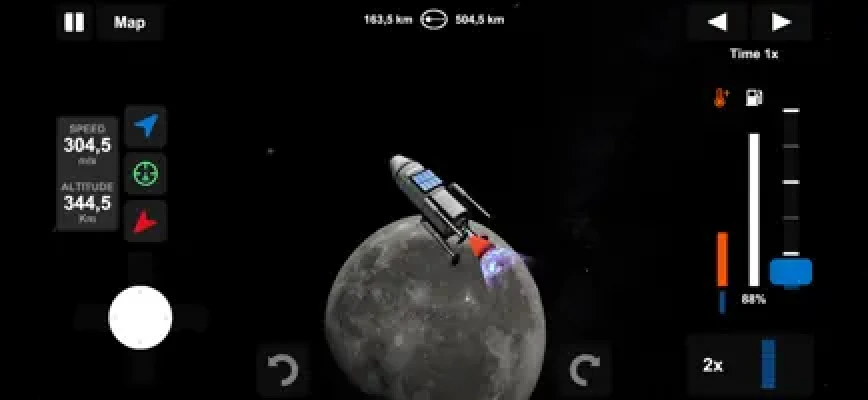
Planning a moon mission is one of the natural progression points for players learning the game.
A successful lunar mission requires more than reaching space.
You need enough performance and fuel to establish the required trajectory and interact with the Moon's gravitational environment.
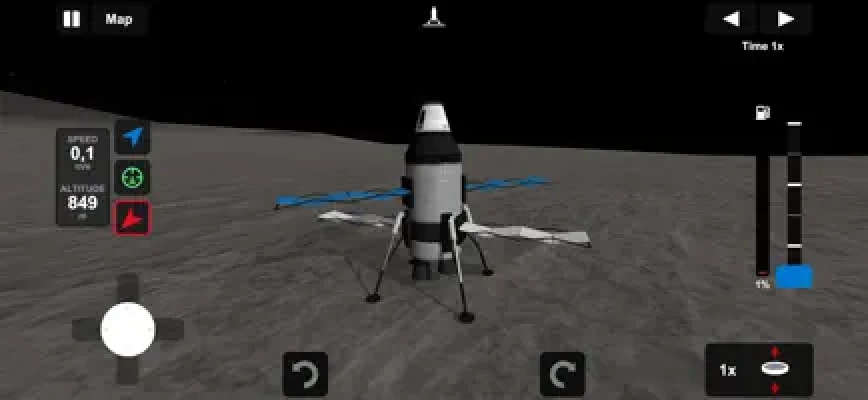
The App Store specifically highlights moon landings as one of the experiences players can attempt.
Interplanetary Missions
After learning orbital basics, players can attempt longer journeys.
Interplanetary missions place greater demands on rocket design and trajectory planning.
Fuel efficiency becomes increasingly important because every unnecessary maneuver can increase the amount of delta-v required.
Dynamic Physics Engine
Ellipse uses a physics system designed to simulate forces affecting spacecraft.
The App Store highlights:
- Drag
- Buoyancy
- Gravity
- Gravitational pulls
- Orbital trajectories
These systems contribute to the game's realistic spaceflight approach.
Atmospheric Drag
Atmospheric drag affects spacecraft traveling through an atmosphere.
During launch, a rocket needs to overcome aerodynamic resistance while gaining velocity.
This creates another reason to think carefully about rocket construction and flight paths.
Buoyancy
Buoyancy is also included in the physics simulation.
Although it is less central to ordinary orbital flight than gravity, its presence contributes to the broader physical model used by the game.
Rocket Efficiency
Building a powerful rocket is only half the challenge.
Efficiency matters.
A rocket that carries too much unnecessary mass may require significantly more fuel and thrust.
When designing spacecraft, think about the relationship between:
Mass + Thrust + Fuel + Payload + Destination
Optimizing these elements is where the engineering side of Ellipse becomes especially interesting.
Campaign and Progression
Ellipse provides structured gameplay while still encouraging experimentation.
Players can progress from relatively straightforward rocket launches toward more ambitious missions.
The natural learning curve is:
- Learn rocket construction.
- Perform basic launches.
- Understand orbital flight.
- Establish stable orbits.
- Plan transfers.
- Attempt lunar missions.
- Explore farther destinations.
- Optimize rocket designs.
The game's version history and player feedback indicate that a main campaign is part of the experience.
Tutorials
Tutorials are an important part of the learning experience.
Player feedback specifically mentions the tutorials as helpful for understanding the game.
New players should take advantage of them rather than immediately attempting complicated interplanetary missions.
Beginner's Guide
1. Start Small
Don't build a massive rocket immediately.
Begin with a simple design that is easy to understand.
2. Learn What Each Part Does
Understand the purpose of every component before adding more complexity.
3. Focus on Stable Flight
Your first goal should be learning how to get into a useful orbit rather than immediately reaching another planet.
4. Watch Your Fuel
Running out of fuel during a mission can leave your spacecraft stranded.
5. Learn From Failed Launches
A failed launch is useful information.
Look at what happened and modify your design.
6. Master Orbit Before Interplanetary Travel
Understanding basic orbital movement will make long-distance missions considerably easier.
Advanced Tips and Strategies
Build for the Mission
Don't create one universal rocket and expect it to perform perfectly everywhere.
Design spacecraft around their intended mission.
Reduce Unnecessary Mass
Every extra component can affect the rocket's performance.
Use only the parts you actually need.
Plan Before Launch
Think about the mission before pressing the launch button.
Determine where you want to go and what type of trajectory you need.
Prioritize Fuel Efficiency
A mission isn't successful simply because the rocket reaches space.
You also need enough fuel for future maneuvers.
Use Smaller Test Missions
Before attempting a difficult interplanetary mission, test individual components and flight strategies on shorter missions.
Common Beginner Mistakes
Mistake 1: Building Too Large
More parts don't automatically mean a better rocket.
Mistake 2: Ignoring Weight
Heavy spacecraft require greater performance.
Mistake 3: Flying Without a Plan
A destination alone isn't enough. You need an appropriate trajectory.
Mistake 4: Using Too Much Fuel
Poor trajectory planning can turn a simple mission into a fuel-consuming one.
Mistake 5: Attempting Interplanetary Flight Too Early
Learn basic orbital mechanics first.
Rocket Failure and Experimentation
Failure is part of the appeal.
A rocket may fail to reach orbit, miss its target or run out of fuel.
Instead of making the experience frustrating, these failures can become opportunities to understand the simulation.
Try changing one part of the design at a time so you can determine what actually improved the result.
Graphics and Visual Presentation
Ellipse uses a clean simulation-oriented presentation designed to make spacecraft and celestial bodies easy to follow.
The emphasis is on the rocket, its trajectory and the surrounding space environment rather than elaborate character animations.
This approach suits the game's engineering-focused identity.
Educational Value
Ellipse can provide an approachable introduction to several concepts associated with spaceflight.
Players encounter ideas involving:
- Gravity
- Orbits
- Trajectories
- Rocket design
- Atmospheric drag
- Interplanetary transfers
- Spheres of influence
- Fuel management
- Spacecraft efficiency
It shouldn't replace formal aerospace education, but it can make abstract concepts more intuitive through experimentation.
Player Experience
The current U.S. App Store listing shows 4.7/5 from approximately 1.9K ratings, indicating a strong reception from its player base.
Player feedback frequently praises the game's mobile-friendly approach to rocket simulation. One reviewer described it as a simplified but effective mobile alternative to more complex rocket-building games. Other reviews request additional rocket parts, better damage and breakup effects, and quality-of-life improvements such as a dedicated delete button.
Pros and Cons
Pros
- Detailed rocket construction
- Custom spacecraft designs
- Orbital mechanics
- Gravity simulation
- Interplanetary transfers
- Spheres of influence
- Realistic planetary systems
- Dynamic physics
- Atmospheric drag
- Buoyancy
- Educational gameplay
- Campaign progression
- Tutorials
- Strong player rating
- No data collection declared by the developer
Cons
- Some advanced parts require an expansion purchase
- The learning curve can be demanding for beginners
- Some players want more rocket components
- Players have requested improved destruction and breakup effects
- Some players want a dedicated delete function
- Only English is listed as a supported language
- The current App Store listing shows the last listed update as April 29, 2025.
Game Modes and Activities
Rocket Construction
Design and customize spacecraft using available components.
Launch Simulation
Test your rocket and observe its performance during launch.
Orbital Flight
Establish and manage spacecraft trajectories around celestial bodies.
Lunar Missions
Attempt missions involving the Moon and work toward successful lunar exploration.
Interplanetary Exploration
Plan transfers and travel between different celestial bodies.
Experimental Missions
Build unusual spacecraft and test designs simply to see what happens.
Progression System
Progression is based largely on increasing your understanding of rocket science and completing increasingly ambitious missions.
Rather than relying on conventional character levels, the game rewards:
- Better spacecraft designs
- More efficient launches
- Successful orbital insertion
- Longer missions
- Improved trajectory planning
- Successful celestial-body encounters
- Interplanetary exploration
Your biggest progression tool is knowledge.
In-App Purchases
The App Store currently lists paid expansions that provide access to additional rocket parts.
The Expansion is listed at $4.99, while Heavy Lift Program is also listed at $4.99.
This means the free version provides the core simulation, while additional purchases can expand the available construction options.
Technical Details
| Detail | Information |
|---|---|
| Game | Ellipse: Rocket Simulator |
| Developer | Starwelds |
| Category | Simulation |
| Price | Free |
| In-App Purchases | Yes |
| App Size | 288.1 MB |
| Language | English |
| Age Rating | 4+ |
| iPhone | iOS 13.0+ |
| iPad | iPadOS 13.0+ |
| Mac | macOS 11.0+ with Apple M1 or later |
| Apple Vision | visionOS 1.0+ |
| U.S. Rating | 4.7/5 |
| U.S. Ratings | 1.9K+ |
| Latest Listed Version | 0.8.9 |
| Latest Listed Update | April 29, 2025 |
These details are based on the current U.S. App Store listing.
Device Requirements
Ellipse requires iOS 13.0 or later on iPhone and iPadOS 13.0 or later on iPad.
The Mac version requires macOS 11.0 or later and an Apple M1 chip or newer. Apple Vision support requires visionOS 1.0 or later.
The app occupies approximately 288.1 MB of storage.
Updates and What's New
The latest listed version is 0.8.9, released April 29, 2025.
The update added Phobos and improved performance. Earlier version 0.8.8 introduced a new control system, while version 0.8.7 also added Phobos and included performance improvements.
Privacy
The developer's current App Store privacy disclosure states that no data is collected by the app. Apple notes that these privacy practices are developer-provided and have not been independently verified by Apple.
Age Rating
Ellipse: Rocket Simulator currently carries a 4+ age rating in the U.S. App Store.
Who Should Play Ellipse?
Ellipse is particularly suited to players who enjoy:
- Rocket simulator games
- Space exploration games
- Orbital mechanics
- Rocket-building games
- Physics simulation
- Aerospace engineering concepts
- Planetary exploration
- Interplanetary missions
- Science-based games
- Engineering games
- Space sandbox games
It is also a strong option for players who want a deeper simulation experience without needing a desktop computer.
What Makes Ellipse Different?
The biggest strength of Ellipse is its focus on orbital mechanics rather than simply launching rockets.
Many rocket games concentrate on the spectacle of liftoff.
Ellipse goes further by asking players to think about what happens after the rocket leaves the atmosphere.
You need to consider gravity, trajectories, orbital transfers and the movement of celestial bodies.
That makes every mission a small engineering problem.
Similar Games
Players who enjoy Ellipse may also want to explore:
- Kerbal Space Program
- Spaceflight Simulator
- Space Agency
- Tiny Space Program
- Rocket-building simulators
- Orbital mechanics games
- Space exploration simulators
The App Store itself currently recommends titles including Space Agency, Tiny Space Program, Idle Space Company and Rocket Star among related games.
Frequently Asked Questions
What is Ellipse Rocket Simulator?
Ellipse is a space simulation game where players design rockets, launch spacecraft and explore celestial bodies using orbital mechanics and physics-based simulation.
Is Ellipse Rocket Simulator free?
Yes. The game is free to download, with optional in-app purchases for additional content and rocket parts.
Can you build your own rockets?
Yes. Rocket construction and customization are core features of Ellipse.
Does Ellipse have realistic orbital mechanics?
The game simulates gravity, spheres of influence, trajectories and interplanetary transfers.
Can you travel between planets?
Yes. Interplanetary transfers are specifically listed as part of the game's orbital mechanics system.
Can you land on the Moon?
Moon missions are among the experiences highlighted by the developer, including planning a lunar landing.
Does Ellipse have a campaign?
Player feedback on the current App Store listing refers to completing the main campaign, indicating that structured campaign gameplay is part of the experience.
Does Ellipse have tutorials?
Yes. Player feedback specifically describes the tutorials as helpful for learning the game.
Does Ellipse have multiplayer?
The current App Store listing does not advertise multiplayer functionality, so it is best treated as a single-player simulation.
What platforms support Ellipse?
The current listing supports iPhone, iPad, iPod touch, Mac with Apple silicon and Apple Vision.
What iOS version does Ellipse require?
Ellipse requires iOS 13.0 or later on iPhone and iPadOS 13.0 or later on iPad.
How large is Ellipse Rocket Simulator?
The current U.S. App Store listing reports an app size of 288.1 MB.
What is the current rating?
The U.S. App Store currently shows 4.7 stars from approximately 1.9K ratings.
Final Verdict
Ellipse: Rocket Simulator is a compelling choice for anyone fascinated by rockets, spacecraft and the mechanics of spaceflight.
Its strongest feature is the combination of custom rocket construction and orbital simulation. You aren't simply watching a rocket launch—you are responsible for designing the vehicle and figuring out how to get it where you want it to go.
Gravity, spheres of influence, atmospheric drag and interplanetary transfers give the game considerably more depth than a basic rocket-launching simulator.
The strong 4.7/5 rating from around 1.9K U.S. App Store ratings also suggests that the concept has connected well with its audience.
For players searching for a rocket simulator, spaceflight simulator, rocket-building game or orbital mechanics game for iPhone and iPad, Ellipse is an appealing mobile option.
The best part is that every successful mission feels like something you engineered yourself.
Rate the Game
User Reviews













Popular Games


















 Android
 iOS
iOS Windows
 Xbox
Xbox