

Latest Version
April 26, 2026
Zplay (Beijing) Info. Tech. Co., Ltd.
Puzzle
iOS
0
Report a Problem
More About :game
The App Store listing describes Color Pop as a casual puzzle game suitable for all ages and highlights its custom puzzle editor, player-created maps, voting system, hints, offline mode, and Game Center features.
What Is Color Pop! Slide Puzzle?
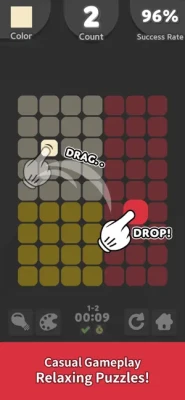
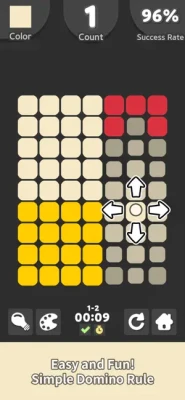
Color Pop! Slide Puzzle is a logic puzzle where players drag clusters of the same-colored blocks onto other colors and attempt to unify them with the required target color while staying within the allowed number of steps.
The basic gameplay involves:
- Examining the current board.
- Identifying matching color groups.
- Dragging clusters into the correct positions.
- Combining colors toward the target.
- Planning around the step limit.
- Completing the puzzle as efficiently as possible.
The challenge comes from choosing the correct order of moves. A move that looks useful at first can sometimes make the remaining puzzle more difficult.
Color Pop! Slide Puzzle Features
Color-Matching Brain Puzzles
The central mechanic revolves around moving clusters of colored blocks and combining them to achieve target colors.
Limited-Step Challenges
You need to solve puzzles within a defined number of steps. This makes efficient movement just as important as understanding the color relationships.
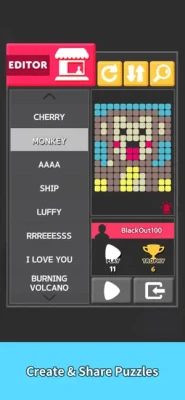
Custom Puzzle Creation
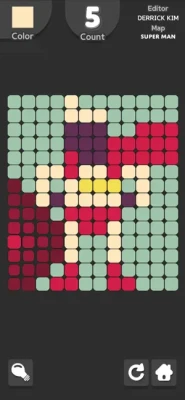
Color Pop allows players to create their own puzzles and share them with other players. This adds a creative side to the game beyond simply completing the built-in challenges.
Player-Created Maps
The community aspect allows players to experience puzzles created by other users and discover different approaches to the same basic mechanics.
Map Voting
Players can vote on interesting creations, giving the puzzle editor a competitive and community-driven element.
Hint System
Hints can provide additional clearance steps when a puzzle becomes difficult. The App Store listing also notes that Stars can be obtained through login rewards or purchased and are used for hints.
Offline Mode
Color Pop can be played without Wi-Fi. The listing notes that editing and ranking-list functions are unavailable while offline, but the core puzzle experience remains playable.
Game Center
The game supports Game Center, including leaderboards and achievements.
How to Play Color Pop! Slide Puzzle
The most important thing to understand is that every move should have a purpose.
You are not simply matching colors as quickly as possible. You are trying to reach the required target colors while working within the puzzle's step limit.
Before making a move, look at:
- The current color groups
- The target colors
- The position of each cluster
- The number of steps available
- What the board will look like after the move
This small amount of planning can prevent unnecessary moves.
Color Pop! Slide Puzzle Strategy Guide
1. Study the Entire Board First
Don't immediately drag the first matching cluster you see.
Take a few seconds to identify:
- Which colors are already close to their targets
- Which clusters need to move
- Which pieces are blocking useful routes
- Which moves could affect multiple future combinations
Understanding the board before moving is often more valuable than making a fast first move.
2. Work Backward From the Target
Instead of asking:
"What can I combine now?"
ask:
"What needs to happen for me to reach the target?"
This changes the way you approach difficult puzzles.
If the target requires a particular color, determine which combinations can produce it and then work backward to the pieces needed for that combination.
3. Count Your Steps
The step limit is one of the most important mechanics in Color Pop.
Before making a move, consider whether it actually advances the puzzle.
Avoid movements that:
- Don't contribute to a target
- Simply rearrange blocks without a purpose
- Create additional work
- Force you to undo a previous move
Efficient solving is often about eliminating unnecessary actions.
4. Solve the Simplest Color Relationships First
If one target color can be created with a straightforward combination, consider handling it before tackling a more complicated area.
Reducing one part of the puzzle can make the remaining board easier to understand.
However, don't automatically solve every easy color first. Sometimes a particular cluster needs to remain available for a later combination.
5. Look for Chain Reactions
A strong move can sometimes prepare the board for another useful move.
Try to identify sequences such as:
Move → combine → reposition → complete target
Rather than treating each move as an isolated action, think about the entire sequence.
6. Avoid Unnecessary Backtracking
Moving a cluster one way and then moving it back wastes steps.
Before committing to a movement, think about where that cluster ultimately needs to end up.
This is particularly important on puzzles with strict step limits.
Advanced Color Pop Puzzle Techniques
Plan Three Moves Ahead
On easy puzzles, one move of planning may be enough.
On harder puzzles, try to think:
Current move → next combination → target completion
You don't always need to predict the entire solution. Planning several moves ahead is enough to avoid many dead ends.
Preserve Useful Clusters
Don't combine every available color immediately.
Some clusters may be needed later to create a particular target. Combining them too early can remove an important option.
Separate Temporary Moves From Final Moves
Some movements are necessary simply to make room for the final combination.
When considering a temporary move, ask whether it actually creates a better position.
If it doesn't improve the board, it may be unnecessary.
Use the Board as a Sequence
Think of the puzzle as a chain of decisions rather than a collection of individual color matches.
A successful solution usually has a logical order:
Prepare → combine → reposition → finish.
How to Solve Difficult Color Pop Levels
When a puzzle seems impossible, don't immediately use a hint.
Try this process first.
Step 1: Identify the Targets
Determine exactly which colors need to be produced.
Step 2: Find the Required Combinations
Work backward and determine which existing clusters can contribute to those targets.
Step 3: Identify Obstacles
Look for pieces that must move before the important combination can happen.
Step 4: Calculate the Movement
Estimate how many actions are needed.
Step 5: Make the Least Wasteful Move
Choose the movement that advances the solution while preserving future options.
Step 6: Reassess
After every important move, look at the board again rather than blindly following your original plan.
Color Pop! Slide Puzzle Tips for Beginners
If you're new to the game, these tips are especially useful:
- Study the board before your first move.
- Always keep the target colors in mind.
- Avoid unnecessary movements.
- Think about the next two or three moves.
- Don't combine a color just because you can.
- Preserve clusters that may be useful later.
- Watch the step counter.
- Try solving difficult sections backward from the target.
- Use hints only when you have genuinely reached a dead end.
- Learn from failed attempts rather than repeating the same sequence.
Common Mistakes in Color Pop
Moving Too Quickly
Fast movement can lead to wasted steps.
Matching Without a Plan
A successful color combination isn't necessarily a successful puzzle solution.
Ignoring the Step Limit
A puzzle can be solved eventually but still fail if too many moves are used.
Destroying Useful Combinations
Combining a cluster too early can eliminate a route needed later.
Repeating the Same Failed Sequence
If a solution doesn't work, identify the first move that caused the problem and change the strategy there.
Using Hints Too Early
Hints are useful, but attempting to understand the puzzle yourself first can improve your ability to solve later levels.
How to Use Hints Effectively
Color Pop includes a hint system designed to help when a puzzle becomes difficult. The App Store listing says hints can provide clearance steps, while Stars are used to obtain hints.
A good approach is to use hints strategically.
If you're stuck, first determine exactly what you don't understand.
For example:
- You don't know which color to move.
- You know the color but not the destination.
- You have reached a dead end.
- You are one or two steps over the limit.
Understanding the problem before using a hint makes the assistance more useful.
Creating Your Own Color Pop Puzzles
One of the more unusual features of Color Pop is its puzzle editor.
Players can create their own challenges and share them with the wider community. The game also includes a voting system for player-created maps.
When designing a good puzzle, try to create:
- A clear objective
- A logical solution
- Meaningful choices
- Several possible-looking moves
- A solution that rewards careful planning
- A reasonable step limit
A good custom puzzle should be challenging without feeling random.
Color Pop Community Puzzle Tips
When playing player-created puzzles, don't assume that the first obvious solution is correct.
Community-created maps can use familiar mechanics in unusual arrangements.
Try to determine:
- What the creator wants you to notice.
- Which color is most important.
- Which movement opens the board.
- Whether the step limit suggests a specific solution.
- Whether an apparently useful combination is actually a trap.
This approach can make custom puzzles much more interesting.
Offline Gameplay
Color Pop supports offline gameplay, which makes it suitable for playing during travel or whenever an internet connection isn't available.
The App Store listing specifically notes that editing and ranking-list features are unavailable in offline mode.
The core puzzle-solving experience is therefore the main focus when playing offline.
Color Pop! Slide Puzzle on iPhone and iPad
The App Store lists Color Pop! Slide Puzzle for iPhone and iPad. It requires iOS 7.0 or later on iPhone and iPadOS 7.0 or later on iPad.
The listing also shows support for Game Center and identifies the game as a Puzzle title.
Is Color Pop! Slide Puzzle Easy?
The basic rules are easy to understand, but the puzzles become more demanding when the step limit and multiple color relationships are taken into account.
The game is designed around simple controls and increasingly challenging logical decisions.
That makes it accessible to casual players while giving puzzle fans room to improve their solving efficiency.
Color Pop! Slide Puzzle Pros and Things to Consider
Pros
- Simple color-based mechanics
- Easy-to-understand controls
- Strategic puzzle solving
- Limited-step challenges
- Custom puzzle creation
- Community-created maps
- Map voting
- Hint system
- Offline gameplay
- Game Center support
- Suitable for short puzzle sessions
Things to Consider
- Difficult puzzles require careful planning.
- The step limit can make seemingly simple puzzles challenging.
- Some advanced features depend on being online.
- The App Store listing includes optional in-app purchases for features such as removing ads and obtaining additional hints.
Color Pop! Slide Puzzle Gameplay Experience
Color Pop! Slide Puzzle focuses on logical thinking rather than complicated controls.
Its colorful presentation makes the game approachable, but the limited-step system adds depth. Players need to understand how one movement affects the next instead of simply matching colors whenever possible.
The custom puzzle editor also gives the game a community element, allowing players to move beyond the original puzzle experience and explore maps created by other users.
Color Pop! Slide Puzzle FAQ
What is Color Pop! Slide Puzzle?
Color Pop! Slide Puzzle is a color-based logic game where players move clusters of matching-colored blocks and combine them to reach target colors within a limited number of steps.
How do you play Color Pop?
Drag clusters of the same-colored blocks onto other colors and work toward the target colors while staying within the step limit.
Does Color Pop have hints?
Yes. The game includes a hint system that can provide additional clearance steps for difficult missions.
Can you play Color Pop offline?
Yes. Color Pop supports offline gameplay, although editing and ranking-list features are unavailable without Wi-Fi.
Can players create their own puzzles?
Yes. Players can create custom puzzles and share them with other players.
Can players vote on custom puzzles?
Yes. The game includes a voting system for player-created maps.
Does Color Pop support Game Center?
Yes. The App Store listing states that Color Pop supports Game Center, including leaderboards and achievements.
What is the best Color Pop strategy?
The most important strategy is to plan around the target colors and step limit. Avoid movements that do not contribute directly to the final solution.
How do I solve difficult Color Pop puzzles?
Study the entire board first, work backward from the target colors, preserve useful clusters, and calculate several moves ahead before committing to a sequence.
Final Color Pop! Slide Puzzle Tips
The key to mastering Color Pop! Slide Puzzle is thinking before moving.
Don't treat the game as a simple color-matching challenge. Every movement changes the puzzle, and the step limit means inefficient decisions can quickly make a solution impossible.
Study the target, identify the required color combinations, preserve useful clusters, and plan several moves ahead. When you learn to see the entire sequence instead of just the next move, difficult Color Pop puzzles become much easier to understand.
For custom maps, take the same approach: look for the creator's intended solution, experiment carefully, and use failed attempts to identify which movement needs to change.
Rate the Game
User Reviews











Popular Games



















 Android
 iOS
 Windows
 Xbox