

Latest Version
September 06, 2024
Outplay Entertainment Ltd
Strategy
0
com.outplayentertainment.castlecreepstd
Report a Problem
More About :game
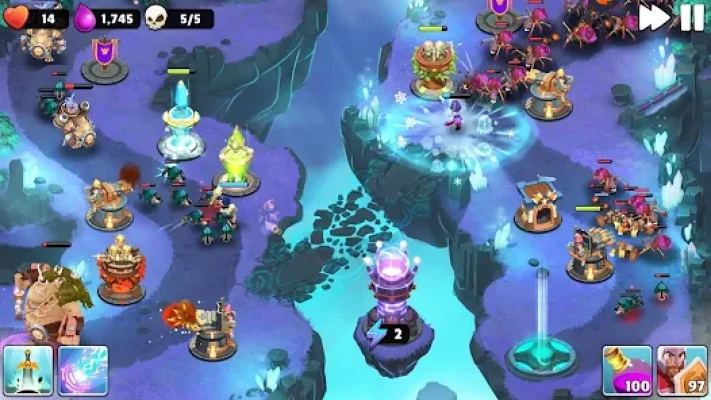
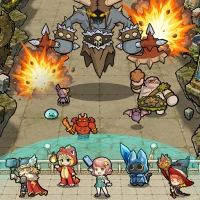
The game combines traditional tower defense with controllable Heroes and flexible tower management, giving you more direct control over the battlefield than a purely automated defense game. You can build, upgrade, sell, and repair towers during missions while using Heroes to handle dangerous situations.
Castle Creeps TD Game Information
Game Title: Castle Creeps TD
Developer: Outplay Entertainment Ltd
Genre: Strategy / Tower Defense
Platform: Android and Windows
Game Style: Fantasy, medieval, tower defense, strategy
Business Model: Free to play with optional in-app purchases and ads
Age Rating: Everyone 10+ on Google Play
Google Play Rating: 4.3 stars
Google Play Reviews: 132K+
Downloads: 1M+
Developer: Outplay Entertainment Ltd
Castle Creeps TD originally launched in 2017 and quickly became one of Outplay Entertainment's best-known original games. Outplay says the game reached five million downloads within its first seven months and reached the number-one strategy position in more than 60 countries.
What Makes Castle Creeps TD Different?
Castle Creeps TD uses familiar tower defense foundations but adds Heroes that can be actively deployed around the battlefield. This means success is not simply about placing towers and waiting for enemies to arrive.
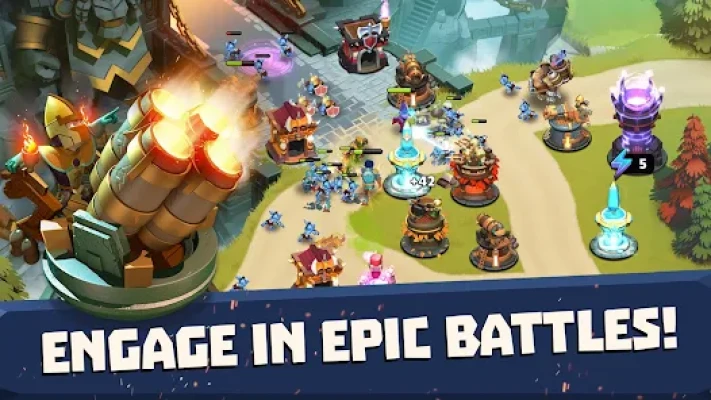
You need to decide where to spend your resources, which towers deserve upgrades, when to repair damaged defenses, where to position your Hero, and when to change your defensive setup.
The combination of towers, Heroes, enemies, and battlefield positioning creates plenty of room for tactical decisions.
Towers and Defensive Strategy
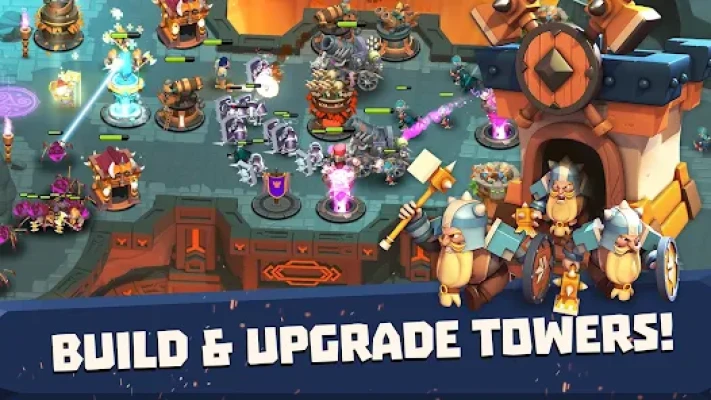
Towers are the foundation of your defense. During missions, you can tap available tower plots and choose the appropriate defensive structure. Towers can also be upgraded as you progress, increasing their Rank and improving their effectiveness.
A strong defense normally uses different tower roles instead of relying on one type.
Infantry Towers
Infantry defenses are particularly useful for slowing or holding enemies in important areas.
Place them near choke points where enemy units have limited room to move. Holding enemies in place gives your damage-dealing towers more time to attack.
Infantry towers are especially useful when a large group of enemies is approaching your castle.
Ranged Damage Towers
Ranged defenses are valuable for attacking enemies from a safe distance.
Position them where they can cover long sections of the enemy route. Avoid placing all your damage towers in one location because a single dangerous enemy wave can overwhelm that area.
Splash Damage
Area attacks become increasingly important when enemies appear in groups.
When several enemies are traveling close together, a splash-damage tower can produce much more value than a tower focused on a single target.
Anti-Air Defense
Do not concentrate entirely on ground enemies.
Flying enemies can bypass some of the defensive arrangements that work well against ground units, so make sure your defensive setup can deal with aerial threats when a mission introduces them.
How to Use Heroes Effectively
Heroes are one of the biggest differences between Castle Creeps TD and traditional tower defense games.
Instead of treating your Hero as another passive defensive structure, use the character actively to solve problems as they appear.
A Hero can:
Reinforce a weak section of the defense
Help stop a powerful enemy
Assist towers during difficult waves
Attack groups of enemies
Buy time while you upgrade defenses
Help protect important tower positions
The best Hero placement depends on the battlefield rather than following one fixed position.
Best Castle Creeps TD Strategy for Beginners
1. Study the Enemy Route
Before spending all your resources, look at the path enemies will follow.
Identify:
Narrow passages
Long attack lanes
Areas where enemies bunch together
Important tower plots
Sections close to your castle
These locations determine where your strongest defenses should go.
2. Build a Balanced Defense
Avoid spending everything on one tower type.
A balanced setup gives you tools for different situations:
Single-target damage for tough enemies
Area damage for groups
Infantry support for slowing enemies
Anti-air coverage when needed
Hero support for emergencies
The exact combination should change depending on the mission.
3. Upgrade Important Towers First
Upgrading every tower equally is not always the best use of resources.
Instead, identify the towers doing the most important work and improve them first.
A strategically positioned high-level tower can be more useful than several weak towers scattered across the map.
4. Save Resources for Dangerous Waves
One of the easiest mistakes for new players is spending everything immediately.
Keep some resources available whenever possible.
A reserve allows you to react when:
A powerful enemy appears
A large swarm arrives
A defense starts taking heavy damage
A new enemy type enters the battlefield
You need to build a counter quickly
5. Use Your Hero as a Tactical Tool
Do not deploy your Hero simply because the character is available.
Think about what the battlefield needs.
If one lane is about to collapse, move the Hero there. If a powerful enemy is approaching, prepare the Hero to support your towers.
Good Hero timing can turn a losing defense into a successful one.
How to Deal With Enemy Swarms
Large groups of enemies can quickly overwhelm a defense that focuses only on single targets.
When a swarm approaches, use area-damage options and combine them with units or defenses capable of holding enemies in place.
The official Outplay strategy material also emphasizes the importance of splash attacks against swarms.
The basic principle is simple:
Control the group, then destroy the group.
Trying to eliminate every enemy individually can waste valuable time and damage potential.
How to Defeat Powerful Enemies
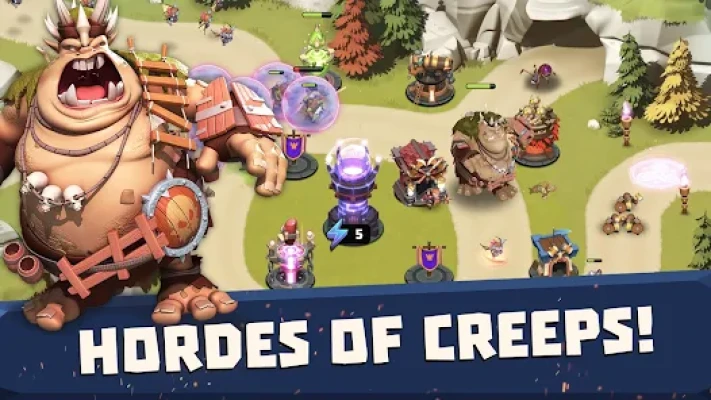
Large enemies such as Ogres have substantial health and can survive normal attacks for a long time.
Do not panic when one appears.
Instead:
Keep the enemy inside your strongest defensive zone.
Use supporting units to delay it.
Focus your highest-damage defenses on the target.
Use your Hero when additional damage or crowd control is needed.
Continue upgrading the defenses attacking the strongest threats.
Outplay's own strategy guide recommends using groups of troops against high-health targets such as Ogre Brutes rather than relying on a single unit.
Warlord Battle Strategy
Warlords require a different approach because they can introduce powerful abilities that disrupt normal defensive plans.
Watch the Warlord carefully instead of concentrating exclusively on ordinary enemies.
If a Warlord begins preparing an important spell, reacting quickly can prevent a major problem. The official support documentation specifically notes that certain Warlord spells can be interrupted by attacking the Warlord while the spell is being prepared with the appropriate Sentinel Tower attack.
Warlord Tips
Keep your strongest defenses active.
Watch for spell preparation.
Use your Hero at critical moments.
Do not ignore ordinary enemies while fighting the Warlord.
Protect the towers that provide the most battlefield control.
Adapt your strategy instead of repeating the same setup.
When Should You Sell a Tower?
Selling a tower is not necessarily a mistake.
Sometimes a tower that was useful during the early part of a mission becomes less valuable later.
Selling it can return resources that can then be invested in a more appropriate defense.
This becomes particularly useful when enemy types change during a mission.
For example, if your current defense is built primarily for one type of enemy and the next wave introduces a different threat, recycling an inefficient tower can give you the resources needed to respond.
Repairing Damaged Towers
Do not wait until every defense is almost destroyed before thinking about repairs.
A damaged tower may still be strategically important because of its location.
Ask yourself:
Is this tower covering a major choke point?
Is it providing important damage?
Does another tower depend on enemies being held here?
Would rebuilding the defense cost more than repairing it?
Repair strategically rather than automatically.
How to Earn Better Results on Missions
If you are trying to improve your performance, focus on consistency rather than rushing.
A reliable approach is:
Observe → Build → Upgrade → Control → Adapt
First understand the battlefield.
Then establish a basic defensive structure.
Upgrade the towers that matter most.
Use your Hero to control dangerous situations.
Finally, change your strategy whenever the enemy composition demands it.
Castle Creeps TD is designed around changing strategy during battles, so repeating exactly the same tower placement every time is often less effective than adapting to the current wave.
Advanced Tower Defense Tips
Create Kill Zones
A kill zone is an area where several defenses can attack the same enemy.
Look for locations where enemies remain exposed for a long period.
Put your strongest combination of defenses around these areas rather than spreading everything evenly across the map.
Protect Your Most Important Tower
Sometimes one tower contributes much more to your defense than the others.
If that tower is damaged or threatened, protecting it can be more important than upgrading another tower elsewhere.
Avoid Overbuilding
More towers do not automatically mean a stronger defense.
Every tower represents resources.
If a tower contributes very little because enemies rarely pass through its range, those resources may be better spent somewhere else.
Upgrade With a Purpose
Before upgrading, ask:
What problem will this upgrade solve?
If the answer is "nothing important," save your resources.
If the upgrade will stop a difficult enemy, strengthen a critical lane, or improve your ability to handle a swarm, it is probably worth considering.
Common Beginner Mistakes
Building Without Looking at the Map
Tower placement matters. Building immediately without considering enemy movement can waste resources.
Ignoring Flying Enemies
A defense that works perfectly against ground enemies may struggle when aerial enemies appear.
Spending Everything Early
Always try to maintain some flexibility.
Forgetting the Hero
The Hero is an active part of your strategy, not merely a decorative character.
Upgrading Everything Equally
Prioritize towers that are actually contributing to your current defense.
Refusing to Sell Towers
A tower that was useful five minutes ago may not be useful now. Selling and rebuilding can sometimes be the correct tactical decision.
Castle Creeps TD Strategy for Difficult Levels
When a level becomes difficult, do not immediately assume that you simply need stronger upgrades.
First diagnose the problem.
If Swarms Are Overwhelming You
Increase your area-damage capability and use defensive units to keep enemies grouped.
If Strong Enemies Reach the Castle
Create a concentrated damage zone and use your Hero to reinforce it.
If Flying Enemies Break Through
Review your anti-air coverage and make sure the appropriate defensive towers can reach the incoming enemies.
If Your Towers Keep Dying
Look at your tower placement and repair priorities. A tower positioned too aggressively may receive unnecessary pressure.
If You Run Out of Resources
Stop spending automatically. Save enough resources to respond to the next dangerous wave.
Hero Ability Tips
Different Heroes provide different tactical options.
Mason's Guillotine, for example, can be used against groups of enemies, while Ember's Volley is useful for dealing with enemy swarms from a distance. Kusk's Payload provides powerful damage against tougher targets, while Crypt Lord's Resurrect can create units in unexpected battlefield locations.
The important lesson is to use each ability according to its purpose rather than activating it as soon as it becomes available.
A Simple Winning Formula
For players who want a straightforward strategy, use this framework:
Early Battle
Establish your core defenses.
Protect the most important route.
Avoid unnecessary spending.
Middle Battle
Upgrade your strongest towers.
Watch for new enemy types.
Move your Hero where pressure is highest.
Repair important damaged defenses.
Late Battle
Save resources for major threats.
Concentrate damage against powerful enemies.
Use Hero abilities at decisive moments.
Sell ineffective towers if necessary.
Protect the final route to your castle.
Is Castle Creeps TD Worth Playing?
Castle Creeps TD remains a good choice for players who enjoy traditional tower defense but want more direct battlefield control.
Its combination of towers, Heroes, enemy waves, upgrades, repairs, and fantasy enemies gives each mission more tactical flexibility than a basic tower defense game.
The official Google Play listing currently shows a 4.3-star rating from more than 132,000 reviews, while Outplay describes the game as one of its original fantasy tower-defense titles.
It is particularly appealing if you enjoy:
Fantasy tower defense
Strategy games
Hero-based combat
Medieval settings
Tactical upgrades
Fast battles
Enemy wave management
Challenging defensive missions
Pros and Cons
Pros
Fun fantasy tower defense gameplay
Active Hero system
Multiple defensive strategies
Tower upgrades and repairs
Variety of enemy threats
Fast-paced battles
Strong visual personality
Easy to understand but difficult to master
Cons
Later battles can become challenging
Progression may require patience
Optional in-app purchases are available
Players who prefer completely passive tower defense may prefer simpler systems
Castle Creeps TD FAQ
What is Castle Creeps TD?
Castle Creeps TD is a fantasy tower defense strategy game developed by Outplay Entertainment. Players build and upgrade towers, deploy Heroes, and defend the kingdom from enemy forces.
Is Castle Creeps TD free to play?
Yes. The Google Play listing describes Castle Creeps TD as free to download and play, with optional in-app purchases.
Can you upgrade towers in Castle Creeps TD?
Yes. Towers can be upgraded during progression, increasing their Rank and improving their effectiveness.
Can you repair towers?
Yes. Repairing towers is part of the game's defensive management system.
Are Heroes important?
Yes. Heroes provide active battlefield support and can be used to reinforce defenses, attack enemies, and respond to dangerous situations.
How do you deal with enemy swarms?
Use area-damage attacks and defensive units that can hold enemies in place. Splash damage is particularly useful against groups.
How do you defeat powerful enemies?
Keep powerful enemies inside your strongest defensive zone and combine tower damage with Hero abilities and supporting units.
How do you stop Warlord spells?
Certain Warlord spells can be interrupted by attacking the Warlord while the spell is being prepared with the appropriate Sentinel Tower attack.
Does Castle Creeps TD have flying enemies?
Yes. Your defensive strategy needs to account for aerial threats as well as ground enemies.
Final Strategy Advice
The most important lesson in Castle Creeps TD is to adapt rather than simply build more towers.
A strong player watches the enemy route, understands which towers are performing the most important job, saves resources for dangerous waves, uses Heroes intelligently, and changes the defense when the battlefield changes.
Do not be afraid to sell an ineffective tower, reposition your strategy, or save resources for a later wave. The best defense is rarely the one with the most towers. It is the one that uses the right towers, upgrades, and Hero abilities at the right time.
Rate the Game
User Reviews











Popular Games



















 Android
 iOS
 Windows
 Xbox