




Latest Version
November 25, 2026
Netflix, Inc.
Action
iOS
0
Report a Problem
More About :game
Game Overview
Blood Line: A Rebel Moon Game takes players into a dangerous futuristic universe where freedom comes at a high price. Set on the planet Krypt, the adventure follows a group of rebels determined to resist the oppressive forces of the Motherworld. Players become part of this resistance, taking on challenging assignments, confronting powerful enemies, and helping ordinary people fight for their future.
Developed by Super Evil Megacorp in collaboration with Netflix Games, the game combines fast-paced top-down combat with role-playing progression and cooperative action. Its gameplay brings together elements of twin-stick shooting, melee fighting, character development, and tactical team coordination.
Rather than following the familiar story of the Rebel Moon films directly, the game introduces an original adventure featuring new characters and missions. This gives players an opportunity to explore another part of the franchise while experiencing a different perspective on the conflict between the rebels and the Imperium.
Every mission presents new challenges. Players may need to rescue civilians, eliminate dangerous enemies, sabotage enemy installations, or survive intense encounters against powerful mechanical opponents. Completing objectives advances the campaign and opens access to additional environments and adventures.
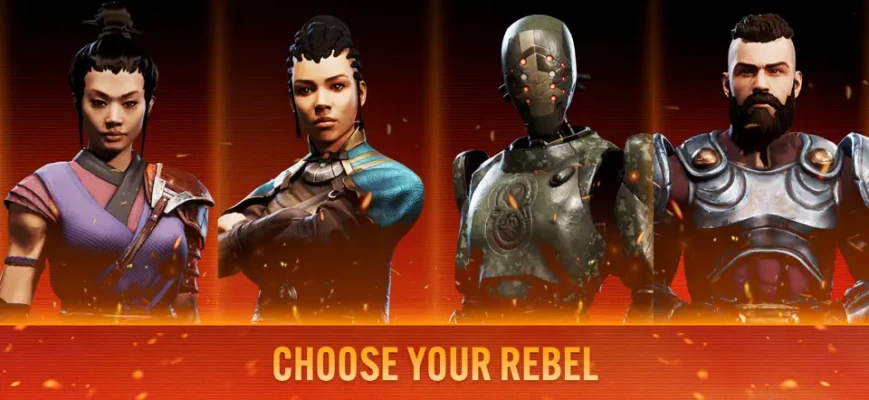
One of the game's biggest attractions is its class-based combat system. Players can choose between four different fighting styles, each offering unique weapons, abilities, and tactical advantages. Developing these characters, discovering suitable equipment, and learning how to use their abilities effectively are essential parts of the experience.
Main Features of Blood Line: A Rebel Moon Game
An Original Story in the Rebel Moon Universe
The game expands the science-fiction setting introduced in Zack Snyder's Rebel Moon films. It presents a new storyline centered on the resistance movement and the struggle to free Krypt from the control of the Motherworld.
Players encounter different locations, enemies, and characters while gradually discovering more about the conflict. The narrative provides an accessible starting point for newcomers while offering additional world-building for existing Rebel Moon fans.
Four Unique Character Classes
The four playable classes create different approaches to combat. Each character has a particular role, making class selection an important part of mission preparation.
Bannerguard focuses on defense and frontline combat, Forsaken specializes in fast melee attacks, Kindred provides precision damage from a distance, and Evoker supports the team with healing and mystical offensive abilities.
Experimenting with these characters allows players to discover which fighting style suits their preferences.
Exciting Top-Down Action Combat
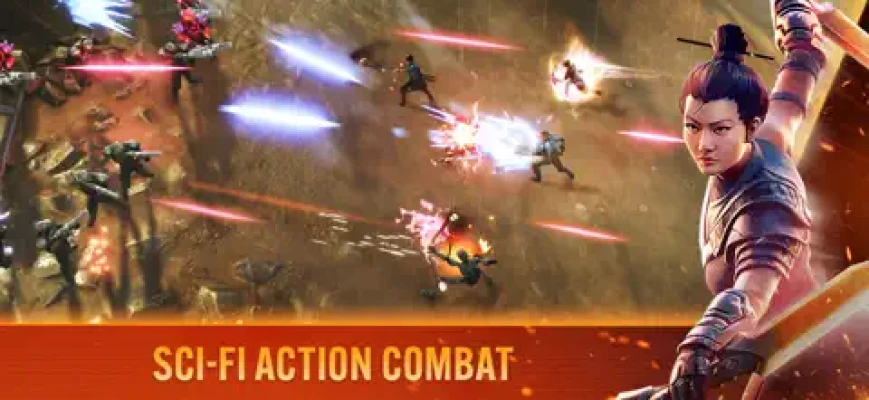
Combat takes place from a top-down perspective, allowing players to observe enemy movements, navigate dangerous areas, and respond to attacks from multiple directions.
The action combines ranged weapons, close-range attacks, special abilities, and tactical positioning. Players must keep moving, identify threats, and choose the right moment to use their strongest skills.
Solo and Cooperative Multiplayer
Players can complete missions alone or participate in online cooperative battles with teams of up to four fighters.
Online matchmaking makes it possible to find other players without organizing a private group. Cooperative gameplay also creates opportunities to combine different character abilities and develop effective team strategies.
The game's difficulty adjusts according to the number of players, helping maintain a suitable challenge for solo and multiplayer sessions.
Character Progression and Equipment Upgrades
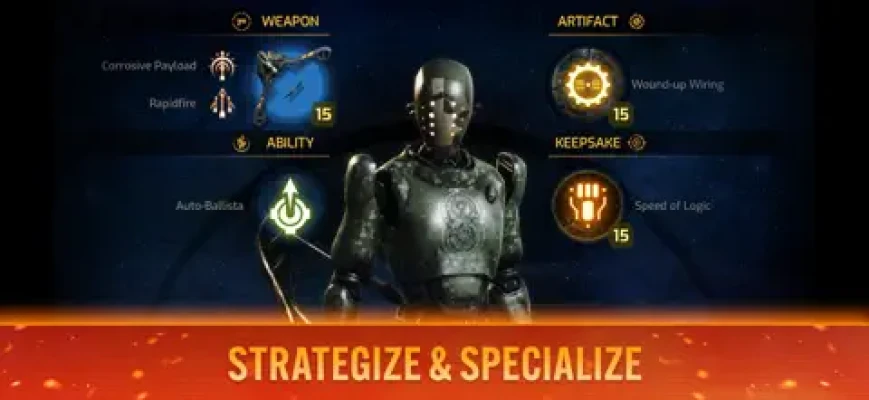
Developing your characters is an important part of the adventure. Players can unlock new weapons and items, improve their equipment, and customize their loadouts.
Different upgrades support different approaches to combat. Some are better suited to surviving powerful attacks, while others help increase offensive pressure or improve team support.
Tactical Mission Objectives
Not every mission is simply about defeating every enemy. Certain assignments require rescuing people, destroying specific targets, or disrupting important Imperium operations.
Understanding the objective is essential because the best strategy depends on what the mission requires.
Different Environments Across Krypt
As the campaign progresses, players discover new areas and environments. From dangerous industrial facilities to hostile landscapes, each location provides a different backdrop for the ongoing rebellion.
Exploring these areas can also reveal useful resources and hidden supplies.
Character Customization
Players can personalize their rebel fighters by changing their appearance, titles, equipment, and available loadouts.
These options make it possible to develop characters that reflect individual preferences while also improving their effectiveness during missions.
Controller Support
Blood Line supports compatible game controllers, giving players another way to experience its fast-paced combat.
Controller input can be particularly useful for players who prefer physical controls when moving, aiming, and activating abilities.
All Four Playable Classes Explained
Bannerguard – The Frontline Defender
Bannerguard is designed for players who enjoy entering dangerous situations and protecting their teammates. This class combines defensive capabilities with aggressive frontline combat.
Its ability to leap into battle makes it useful for drawing enemy attention and disrupting opposing forces. Bannerguard can help create opportunities for teammates by keeping dangerous opponents occupied.
Best playing style: Aggressive defense and frontline engagement.
Main strengths: Durability, enemy distraction, close-range pressure, and team protection.
Strategy: Move toward dangerous enemies when your team needs breathing room. Avoid charging too far ahead without support, especially when several powerful enemies are attacking simultaneously.
Forsaken – The Melee Assassin
Forsaken is a fast and aggressive class that uses twin blades to eliminate opponents at close range.
This character is particularly suitable for players who enjoy mobility, quick attacks, and direct confrontations. Rather than remaining behind the team, Forsaken excels at approaching vulnerable enemies and dealing concentrated melee damage.
Best playing style: Fast attacks and close-range elimination.
Main strengths: Mobility, melee damage, and aggressive combat.
Strategy: Look for opportunities to attack isolated enemies. Move away when surrounded, and avoid remaining in dangerous areas longer than necessary. Good positioning is essential because Forsaken must operate close to opponents.
Kindred – The Long-Range Specialist
Kindred offers a different combat experience by focusing on precision attacks from a distance.
Using powerful arrows, this class can damage enemies while maintaining space between itself and dangerous opponents. Kindred is especially useful when controlling enemy movement and eliminating threats before they reach the team.
Best playing style: Ranged attacks and precision targeting.
Main strengths: Long-range damage, battlefield control, and safer positioning.
Strategy: Maintain distance from aggressive enemies and focus on targets that threaten your teammates. Avoid getting surrounded because Kindred performs best when there is enough room to aim and attack effectively.
Evoker – The Battle Medic
Evoker plays an important supporting role by combining healing capabilities with mystical offensive powers.
This class is particularly valuable in cooperative missions because it can help teammates remain active during difficult encounters. Its offensive abilities also allow players to contribute damage rather than focusing exclusively on healing.
Best playing style: Team support and magical attacks.
Main strengths: Healing, defensive support, and mystical abilities.
Strategy: Pay attention to the condition and positioning of your teammates. Use healing abilities when they are needed most, while maintaining a safe distance from dangerous enemies. Supporting the group consistently can make a significant difference during difficult missions.
Complete Gameplay Guide
Getting Started
At the beginning of the adventure, players are introduced to the game's setting, combat mechanics, and central rebellion storyline.
New players should take time to understand movement, aiming, attacking, and using character abilities. Learning these basic controls early makes later missions easier to manage.
It is also worth experimenting with the available classes rather than immediately committing to one character. Each class provides a different perspective on combat, and understanding their abilities makes it easier to choose the right character for different situations.
Understanding Mission Objectives
Missions form the foundation of the entire experience. Each assignment has specific goals that determine how players should approach the battlefield.
Some missions emphasize eliminating enemies, while others require protecting people, completing rescue operations, or sabotaging Imperium facilities.
Before entering combat, understand the objective and identify what needs to be accomplished. Defeating every opponent is not always the most efficient way to complete an assignment.
Exploring the Rebel Base
The rebel base is an important location between missions. It serves as a central hub where players can interact with different stations, prepare characters, and manage progression.
Two particularly important areas are the Loadout and Domains stations.
The Loadout station allows players to manage equipment and customize their characters. The Domains station is associated with character development and progression.
Taking time to explore the base after completing missions can help players discover available improvements and prepare for upcoming challenges.
Collecting Resources
Resources are essential for developing stronger characters and improving equipment.
During missions, players should pay attention to destructible objects such as crates and barrels. These containers can hold useful salvage materials that contribute to character progression.
Instead of rushing directly toward the next objective, explore accessible areas and collect available supplies.
Resources become particularly important when developing several characters, so building a healthy supply early can make later progression more convenient.
Improving Characters
Character progression involves more than simply completing missions. Players should regularly review available upgrades, weapons, equipment, and abilities.
An effective upgrade strategy focuses on improving the areas that support a character's main role.
For example, Bannerguard benefits from improvements that support frontline survival, while Kindred players should prioritize equipment that complements ranged combat.
Evoker players should consider the value of team support, and Forsaken players should develop a setup that complements their aggressive melee style.
Full Strategy Guide: How to Become a Better Rebel Fighter
Choose Your Main Class Carefully
Your preferred class has a major influence on how you approach missions.
If you enjoy protecting teammates and fighting on the frontline, Bannerguard is an excellent starting choice.
If fast melee combat is more appealing, Forsaken offers an aggressive experience.
Players who prefer attacking from a safe distance may find Kindred more comfortable, while those who enjoy helping teammates should experiment with Evoker.
There is no single class that is perfect for every situation. Understanding your preferred fighting style is more important than choosing a character simply because it appears powerful.
Experiment With All Four Characters
One of the smartest approaches is to become familiar with every class.
Regularly switching between characters helps you understand their strengths, weaknesses, and different abilities. It also gives you greater flexibility when joining cooperative teams.
For example, a player who normally uses Kindred can switch to Evoker when a group needs additional support.
Developing several characters also creates more opportunities to experiment with different equipment combinations and combat strategies.
Build a Balanced Cooperative Team
When playing with other people, team composition can have a major effect on mission performance.
A balanced group should ideally include different combat roles rather than relying entirely on characters that perform similar functions.
Bannerguard can attract enemy attention and help protect the frontline. Forsaken can attack vulnerable opponents, Kindred can provide ranged damage, and Evoker can support the group through healing and offensive abilities.
This combination offers a useful balance between defense, damage, and support.
However, team composition should always reflect the mission's requirements and the strengths of the players involved.
Keep Moving During Combat
Remaining stationary for too long is a dangerous habit.
Enemies can attack from different directions, and crowded encounters can quickly become difficult to control. Moving regularly helps players avoid incoming attacks, maintain better positioning, and create opportunities to counterattack.
Use the available space to reposition yourself instead of continuously attacking from the same location.
Focus on Dangerous Enemies First
Not every opponent represents the same level of danger.
Some enemies can cause serious damage, while others may create problems by overwhelming the battlefield or interfering with your teammates.
Identify the most dangerous targets and prioritize them whenever possible.
Kindred can help eliminate distant threats, while Forsaken can take advantage of exposed opponents. Bannerguard can manage aggressive enemies, and Evoker can support teammates who are under pressure.
Use Special Abilities at the Right Time
Special abilities are valuable tools that can change the outcome of difficult encounters.
However, using them without considering the situation may reduce their effectiveness.
For example, healing abilities are particularly valuable when teammates are in danger, while offensive skills can be saved for groups of enemies or challenging encounters.
Learn how your character's abilities work and develop a habit of using them when they provide the greatest benefit.
Explore Every Mission Thoroughly
Exploration is an important part of long-term progression.
Look around the environment for destructible containers, hidden supplies, and accessible areas that may contain useful resources.
Even when the primary objective appears straightforward, taking time to investigate the surroundings can provide additional materials for upgrades.
Avoid unnecessary risks, though. Collecting resources is useful only when you can do so without putting the entire mission in danger.
Replay Completed Missions
Revisiting earlier missions is an effective way to collect additional resources.
As your characters become stronger, previously difficult assignments may become easier to complete. This creates an opportunity to gather salvage and improve characters without immediately facing the hardest available challenges.
Replay missions when you need additional materials or want to become more comfortable with a particular character.
Upgrade Equipment Regularly
Do not allow useful resources to accumulate without reviewing your available progression options.
Visit the appropriate stations in the rebel base and examine potential upgrades.
Prioritize improvements that address your character's weaknesses or strengthen its main role.
A defensive character should be developed differently from a ranged specialist, and a support character requires a different approach from an aggressive melee fighter.
Communicate With Your Team
Cooperative gameplay becomes much more effective when players understand their responsibilities.
Avoid having every teammate attack the same enemy while leaving other threats unattended.
Instead, coordinate attacks, protect vulnerable teammates, and use different character abilities to complement one another.
Even simple teamwork can make difficult encounters more manageable.
Adapt to Different Mission Types
A strategy that works during an elimination mission may not be suitable for a rescue operation.
When protecting civilians or completing an objective, avoid unnecessary fights that distract from the main task.
During sabotage missions, focus on completing the required objectives while managing nearby enemies.
For missions involving powerful opponents, pay closer attention to positioning, team support, and the timing of special abilities.
Flexibility is one of the most valuable skills a player can develop.
Advanced Tips for Difficult Missions
Learn enemy attack patterns. Observe how different opponents behave before committing to an aggressive attack. Recognizing dangerous movements helps you avoid unnecessary damage.
Maintain a safe position. Ranged characters should take advantage of distance, while melee fighters should avoid remaining surrounded by multiple opponents.
Protect your support player. Evoker can provide valuable healing and assistance. Keeping this character safe can improve the entire team's chances of completing a difficult mission.
Avoid unnecessary solo engagements. Even experienced players can become overwhelmed when facing large groups without proper positioning.
Develop your favorite characters. Experimentation is important, but concentrating on a few preferred characters can also help you build a strong and reliable loadout.
Manage resources wisely. Consider which upgrades will provide the greatest long-term benefit before investing materials.
Use matchmaking when necessary. If a mission becomes too difficult alone, online matchmaking offers an opportunity to join other players and approach the challenge as a team.
Revisit the rebel base regularly. Checking equipment, progression stations, and available character improvements can help prevent you from entering missions with an outdated loadout.
Is Blood Line: A Rebel Moon Game Worth Playing?
Blood Line: A Rebel Moon Game is an appealing choice for players who enjoy science-fiction adventures, cooperative action, and character-based progression.
Its strongest feature is the combination of four distinctive classes. Each character provides a different combat experience, making experimentation and team coordination important parts of the gameplay.
The ability to play alone or join cooperative missions also adds flexibility. Players who prefer independent progression can tackle missions solo, while those who enjoy multiplayer action can form groups of up to four fighters.
The game's original story is another advantage, particularly for people interested in exploring more of the Rebel Moon universe.
However, players should be aware that the game requires an active Netflix membership and an internet connection. It is not an offline adventure, so a reliable connection is necessary to enjoy its missions and multiplayer features.
Overall, the combination of fast combat, character development, tactical objectives, and cooperative gameplay makes Blood Line an interesting mobile action RPG.
Frequently Asked Questions
What is Blood Line: A Rebel Moon Game?
Blood Line: A Rebel Moon Game is a science-fiction action RPG set in the universe of Zack Snyder's Rebel Moon films. Players join a rebellion against the Motherworld and complete combat missions across the planet of Krypt.
Who developed Blood Line: A Rebel Moon Game?
The game was created by Super Evil Megacorp in collaboration with Netflix Games.
Is Blood Line: A Rebel Moon Game free to play?
The game is available as a free download, but an active Netflix membership is required to access and play it.
Can I play Blood Line alone?
Yes. The game supports solo missions, and its difficulty adjusts according to the number of players.
Does Blood Line support multiplayer?
Yes. Players can participate in online cooperative missions with teams of up to four fighters.
What are the four classes in Blood Line?
The four available classes are Bannerguard, Forsaken, Kindred, and Evoker. Each has different abilities, weapons, and combat responsibilities.
Which class is best for beginners?
The best starting class depends on your preferred play style. Bannerguard is suitable for players who enjoy frontline combat, Kindred is a good option for ranged fighters, and Evoker is ideal for those interested in supporting teammates.
Can I customize my character?
Yes. Players can personalize their fighters, customize loadouts, and unlock and upgrade class-specific weapons and items.
Does Blood Line have character upgrades?
Yes. Character progression is an important feature. Players can improve their fighters through available progression systems, equipment upgrades, weapons, and abilities.
Can I play Blood Line without an internet connection?
No. An internet connection is required to play because the game is designed around online gameplay.
Do I need to watch the Rebel Moon movies first?
No. The game introduces its own story and characters. Watching the movies can provide additional background about the universe, but it is not necessary to understand the main adventure.
Does Blood Line support controllers?
Yes. The game supports compatible controllers, offering an alternative to touchscreen controls.
What is the main objective of Blood Line?
The main objective is to help the rebellion fight the Motherworld by completing missions, defeating Imperium forces, rescuing people, sabotaging enemy operations, and developing stronger characters.
Final Verdict
Blood Line: A Rebel Moon Game combines science-fiction storytelling with fast-paced combat and meaningful character progression. Its four playable classes provide different approaches to battle, while its cooperative missions encourage teamwork and strategic thinking.
From the defensive strength of Bannerguard to the healing abilities of Evoker, every class has an important role in the rebellion. Exploring environments, collecting resources, upgrading equipment, and learning enemy behavior all contribute to becoming a stronger fighter.
Whether playing independently or joining friends online, players can experience an action-packed adventure in the Rebel Moon universe. For fans of mobile action RPGs, tactical combat, and cooperative science-fiction games, Blood Line offers an exciting opportunity to become part of the fight for Krypt's freedom.
Rate the Game
User Reviews









Popular Games



















 Android
 iOS
 Windows
 Xbox