

Latest Version
November 26, 2026
Alper Sarıkaya
Action
0
com.Alper.Manuganu
Report a Problem
More About :game
Specific Game Information
Game Title: Manuganu
Developer: Alper Sarıkaya
Game Genre: Action, Adventure, Platformer, Runner
Game Category: 3D Side-Scrolling Platformer
Main Character: Manuganu
Number of Levels: 30 uniquely designed levels
Environments: Three different 3D environments
Gameplay Style: Automatic running with interactive platforming controls
Main Objective: Complete levels, overcome obstacles, and collect rewards.
Main Abilities:
Running
Jumping
Double jumping
Wall sliding
Wall jumping
Hovering
Rolling
Rope climbing
Breaking stone blocks
Special Mechanic: Halt feature
Collectibles: Coins and medallions
Level Rewards: Three-star completion system
Graphics: Fully 3D characters and environments
Soundtrack: Original music composed by Tolga Yurdabak
Controls: Two-button controls and specific swipe gestures
Game Modes: Single-player level-based adventure
Languages: Turkish and English
Offline Support: Yes
Platform: Android
Monetization: Contains advertisements.
Content Rating: Everyone
All About Manuganu
An Exciting 3D Running Adventure
Manuganu offers a different approach to the traditional running game experience. Instead of simply moving forward and avoiding obstacles, players must actively control the character's movements to overcome a variety of environmental challenges.
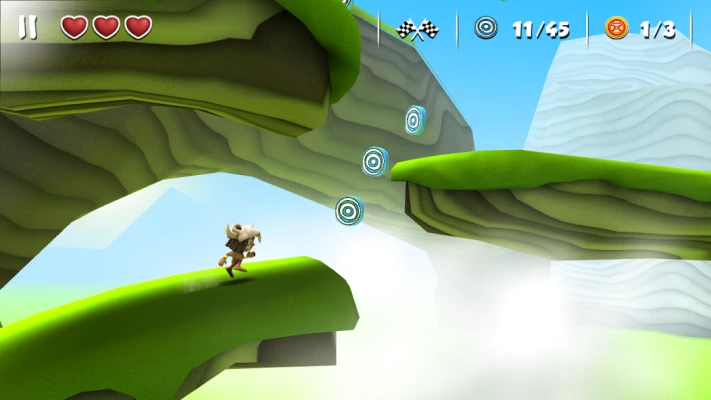
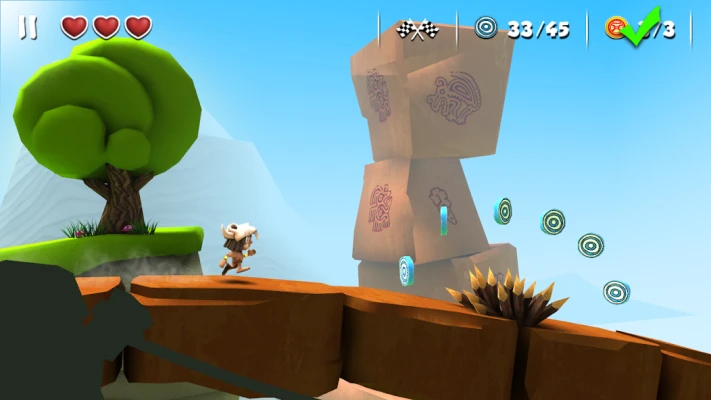
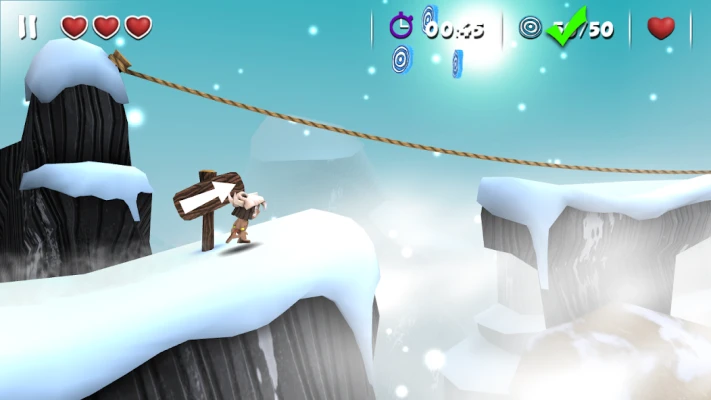
The adventure takes place across three visually distinct environments, each featuring its own level designs and obstacles. Players guide Manuganu through dangerous paths, jumping over gaps, avoiding swinging objects, climbing ropes, and collecting valuable items.
The game combines automatic running with carefully timed actions, creating an experience that is easy to understand but challenging to master.
Every level introduces opportunities to improve your reactions and discover more efficient ways to navigate the environment.
Thirty Handcrafted Levels
One of the main attractions of Manuganu is its collection of 30 uniquely designed levels.
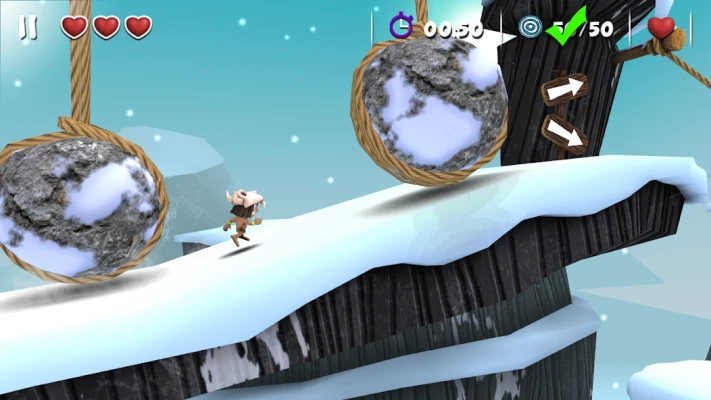
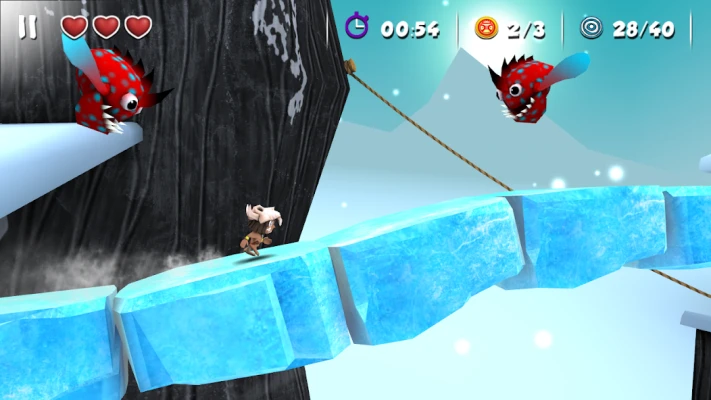
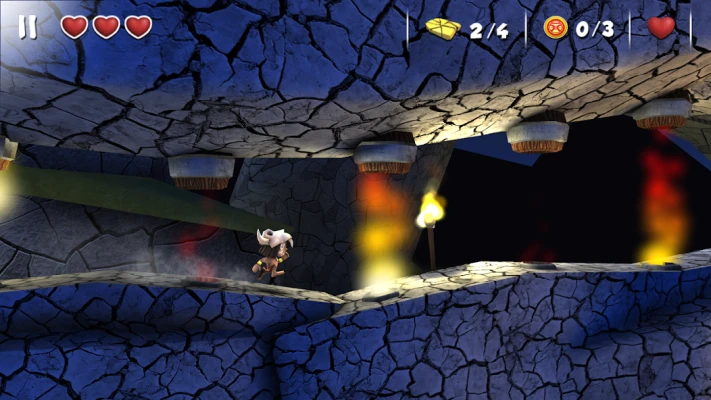
Each stage has its own layout and combination of platforming challenges. Some levels focus on jumping between platforms, while others introduce swinging hazards, moving ice blocks, flames, and complicated climbing sections.
The level-based structure gives players clear objectives and encourages them to improve their performance as they progress.
Unlike endless running games, Manuganu allows players to concentrate on completing individual stages and achieving better results.
The different level themes also help maintain variety throughout the adventure.
The Special Halt Feature
The halt feature is one of the most distinctive mechanics in Manuganu.
In many running games, the character constantly moves forward, leaving players with limited opportunities to prepare for upcoming obstacles.
Manuganu changes this approach by allowing players to stop the character temporarily.
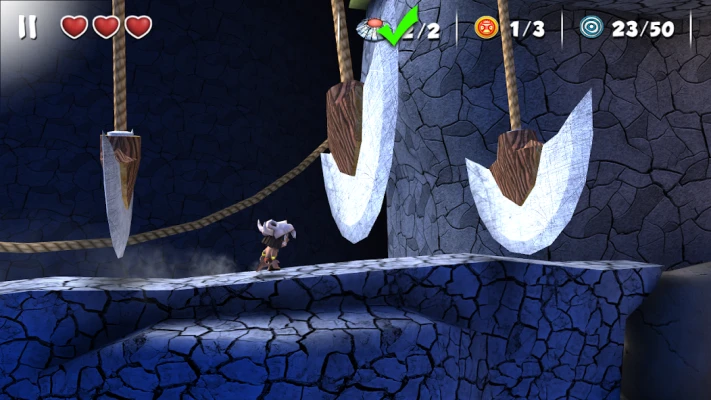
This feature is extremely useful when approaching swinging hammers, falling rocks, flames, and other dangerous obstacles.
Players can wait for the right moment before continuing their journey.
Learning when to stop and when to move is essential for completing difficult sections without unnecessary mistakes.
Exciting Platforming Abilities
Manuganu includes several movement abilities that make its gameplay more interesting than a conventional running game.
Double Jumping
Double jumping allows Manuganu to perform an additional jump while airborne. This ability is useful when crossing wider gaps or reaching platforms that cannot be accessed with a normal jump.
Wall Sliding
Wall sliding allows the character to move along vertical surfaces in specific sections. It introduces additional movement possibilities and helps players navigate more complicated environments.
Wall Jumping
Wall jumping allows Manuganu to use walls as part of his movement route. Players can combine this ability with jumping to overcome challenging platforming sections.
Hovering
Hovering provides additional control while airborne. It can help players manage difficult jumps and improve their chances of reaching certain platforms.
Rolling
Rolling allows Manuganu to pass through certain obstacles and avoid hazards that cannot be handled easily with ordinary jumping.
Breaking Stone Blocks
Some environmental objects can be broken to clear paths and access different areas. Recognizing these objects is important when exploring a level.
These abilities work together to create a varied platforming experience that rewards players who understand how to use each movement option.
Rope Climbing Challenges
Manuganu introduces a special rope-climbing mechanic that changes how the character moves through certain sections.
Players can switch from ordinary running to rope climbing when the level requires it.
These sections introduce their own challenges because the player must adapt to a different movement style while navigating dangerous surroundings.
Rope climbing can also provide access to areas that are difficult or impossible to reach through ordinary running.
Learning when to enter climbing mode and how to manage movement during these sections is an important part of mastering the game.
Three Different 3D Environments
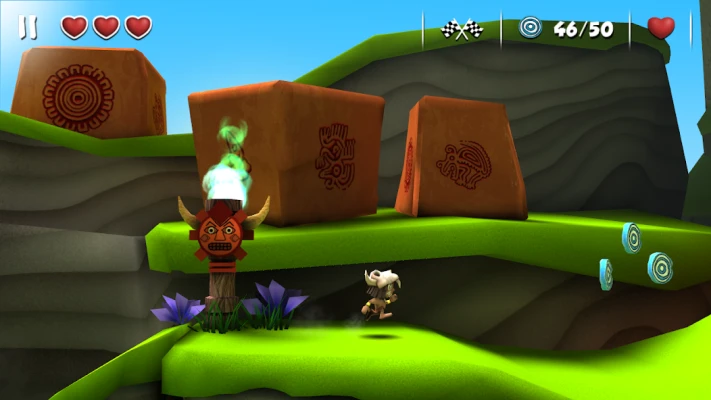
Manuganu features three different environments designed with full 3D graphics.
Each environment has its own visual identity and level layouts, helping the adventure feel varied rather than repetitive.
The colorful scenery, animated character, and environmental effects contribute to the game's distinctive presentation.
The three-dimensional perspective also gives the platforming sections more depth and makes obstacles easier to distinguish.
Coins and Medallions
Collecting items is another important part of Manuganu.
Coins and medallions appear throughout the levels, encouraging players to explore their surroundings instead of focusing exclusively on reaching the finish.
Some collectibles may require more accurate jumping or taking an alternative route.
Players who want to achieve the best possible results should pay attention to item locations and avoid missing opportunities during their runs.
Alternative Routes and Three-Star Rewards
Manuganu encourages exploration through its alternative paths and three-star level completion system.
Reaching the end of a stage is only part of the experience. Players who want to earn the best rewards must discover additional routes and collect the required items.
Some alternative paths may involve difficult jumps, wall movements, or carefully timed actions.
This system gives players a reason to revisit completed levels and improve their previous results.
It also adds replay value for anyone interested in completing the entire adventure.
Simple Controls and Responsive Gameplay
The game uses a straightforward control system based on two main buttons and specific swipe gestures.
This makes it accessible to players who are new to platforming games while still offering enough control options for experienced players.
The simple control arrangement allows players to concentrate on obstacle timing and movement decisions rather than complicated button combinations.
However, mastering the different abilities requires practice, especially when several obstacles appear close together.
Original Soundtrack
Manuganu features an original soundtrack composed by Tolga Yurdabak.
The music complements the colorful environments and fast-moving platforming sections.
Sound effects also help communicate important gameplay actions, making the overall experience more engaging.
The soundtrack contributes to the atmosphere of the adventure without distracting from the challenges.
Complete Manuganu Strategy Guide
Understanding the Basic Gameplay
Before attempting to complete all 30 levels, players should become familiar with the main movement mechanics.
Manuganu automatically runs through the environment, while the player controls his actions to avoid obstacles and collect items.
The most important skills include jumping, double jumping, rolling, hovering, wall sliding, and rope climbing.
Each ability has a particular purpose, so understanding when to use it is essential.
Start by practicing the basic controls in the early levels. Pay attention to the distance covered by each jump and the timing required to activate different actions.
Once you understand the basic movement system, more complicated sections become easier to manage.
Mastering the Halt Feature
The halt feature is one of the most valuable tools available to players.
Instead of continuing toward an obstacle without preparation, use the ability to stop and observe the situation.
This is particularly useful when dealing with swinging hammers, moving objects, falling rocks, and flames.
Watch the movement pattern of the obstacle and wait for a safe opening.
For example, when approaching a swinging hammer, avoid moving forward while it is directly blocking the path. Wait until it moves away before continuing.
The same principle applies to other moving hazards.
However, do not stop unnecessarily when the route is already clear. Learning when to use the halt feature is just as important as understanding how it works.
How to Master Double Jumping
Double jumping is essential for overcoming wider gaps and reaching elevated platforms.
The most common mistake is activating the second jump too early.
When approaching a difficult gap, first understand the distance between the starting and landing platforms.
Perform the initial jump and wait until the appropriate moment before activating the second jump.
This helps maximize your movement distance and reduces the chance of falling.
Practice this technique in different level environments to become more comfortable with its timing.
Using Wall Sliding and Wall Jumping
Wall movement is an important part of Manuganu's platforming system.
Wall sliding allows the character to move along certain vertical surfaces, while wall jumping helps him reach higher positions or move between walls.
When approaching a wall-based section, pay attention to the available space and the direction of movement.
Avoid performing unnecessary jumps before understanding the route.
If the stage requires movement between two walls, concentrate on maintaining a consistent rhythm.
The key is to combine jumping and wall interactions smoothly rather than treating them as separate actions.
Making Better Use of Hovering
Hovering provides additional control during airborne sections.
It can be particularly helpful when a normal jump does not provide enough control to reach a platform safely.
Use hovering carefully when approaching difficult landing areas.
Avoid activating it without considering the remaining distance because good timing is necessary to make the most of this ability.
Players should experiment with hovering in easier stages before relying on it in more challenging sections.
Knowing When to Roll
Rolling is useful when encountering obstacles that require a low movement profile.
Rather than jumping over every hazard, examine the obstacle and decide which movement ability is most appropriate.
Some sections are easier to handle by rolling than by attempting a jump.
Learning to recognize these situations helps reduce unnecessary mistakes.
Rope Climbing Strategy
Rope climbing introduces a different type of movement challenge.
When the game requires you to switch into climbing mode, pay attention to the surrounding environment.
Avoid rushing through these sections without understanding the route.
Watch for obstacles and identify the safest opportunities to continue climbing.
It is also important to recognize when the climbing section ends so you can return to ordinary running without losing control of the character.
Practice makes these transitions much easier.
Breaking Stone Blocks
Stone blocks can interfere with movement or prevent access to certain areas.
When encountering them, pay attention to the available breaking mechanic.
Destroying the correct blocks can open a path and allow Manuganu to continue safely.
Do not assume every obstacle can be passed by jumping or rolling.
Some sections require players to interact with the environment rather than simply avoid it.
Collecting Coins and Medallions
Collectibles are important for players who want to achieve high completion results.
Avoid focusing exclusively on the main route.
Look for coins and medallions positioned above platforms, near walls, or along alternative paths.
Some items require precise jumping or additional movement abilities.
If you miss a collectible, remember its position and consider replaying the stage.
A second attempt can be much easier because you already understand the obstacle layout.
How to Earn Three Stars in Every Level
The three-star system encourages players to complete additional objectives and explore alternative routes.
To improve your results, begin by completing the level normally.
Once you understand the main route, replay the stage and concentrate on finding missed items and alternative paths.
Look for opportunities to use double jumping, wall jumping, and other movement abilities to reach areas that are not immediately obvious.
Avoid rushing when approaching sections that contain collectibles.
A careful approach is often the best way to achieve full completion.
Avoiding Swinging Hammers
Swinging hammers are among the most recognizable hazards in Manuganu.
Their movement creates a timing challenge because the safe route changes continuously.
Use the halt feature to observe the hammer's movement.
Wait until it moves away from the path before continuing.
Avoid attempting to pass while the hammer is close to the character.
Patience is the most reliable way to deal with these obstacles.
Dodging Falling Rocks
Falling rocks require players to react quickly and pay attention to the environment.
Watch for signs that a rock is about to fall and prepare to move away.
Do not remain stationary in an area where falling objects can cause damage.
If the section allows you to stop safely, use the halt feature to understand the timing before continuing.
Surviving Flame Obstacles
Flames create dangerous sections where incorrect timing can quickly interrupt progress.
Observe when the flames appear and disappear.
Move through the dangerous area only when there is enough space to pass safely.
Avoid making unnecessary jumps if the route is already clear.
The best strategy is to understand the hazard pattern rather than relying on random movements.
Jumping Across Moving Ice Blocks
Moving ice blocks require players to combine accurate jumping with good timing.
Watch how the blocks move before attempting to cross.
Do not jump simply because a platform is visible. Make sure it will remain in a suitable position when Manuganu lands.
Double jumping and hovering can help in difficult sections when used correctly.
Practice is particularly important because moving platforms require players to judge both distance and timing.
Exploring All Three Environments
Each of the three environments introduces different visual settings and level layouts.
Players should avoid assuming that a strategy that works in one area will always work in another.
Pay attention to the obstacles and platform arrangements specific to each environment.
Take time to understand new hazards before moving quickly through unfamiliar sections.
This approach makes the overall adventure easier and helps prevent repeated failures.
How to Complete Difficult Levels
Some stages become challenging because they combine several movement mechanics.
You may need to jump over a gap, slide along a wall, avoid a swinging obstacle, and collect an item within a short section.
Instead of trying to complete everything at once, divide the stage into smaller challenges.
Focus on one obstacle at a time.
Remember the positions of difficult hazards and adjust your timing on subsequent attempts.
Do not become frustrated when a level requires several tries. Learning from mistakes is part of mastering the game.
Advanced Tips for Better Performance
Once you understand the basic mechanics, concentrate on improving your efficiency.
Try to anticipate obstacles instead of reacting only when they appear directly in front of Manuganu.
Use the halt feature whenever you need more time to study a dangerous section.
Combine double jumping, hovering, and wall movements when appropriate.
Explore alternative routes during replay attempts instead of following the same path repeatedly.
When collecting medallions, pay attention to the platforms and obstacles surrounding them.
The best players are not necessarily those who move the fastest. They are the ones who understand the environment and choose the right action at the right moment.
Common Mistakes to Avoid
Ignoring the halt feature: Continuing to run toward dangerous obstacles without checking their movement can lead to unnecessary failures.
Using double jumping too early: Poor timing can prevent Manuganu from reaching distant platforms.
Forgetting about alternative paths: Following only the main route can result in missed collectibles and stars.
Jumping over every obstacle: Some hazards are better handled with rolling, wall movement, or another ability.
Ignoring rope climbing: Failing to understand climbing mechanics can make certain sections much harder.
Rushing through moving hazards: Swinging hammers and falling rocks require observation and accurate timing.
Missing collectibles: Pay attention to coins and medallions when aiming for the best completion results.
Repeating the same unsuccessful strategy: Adjust your timing and movement whenever a particular section causes repeated problems.
Frequently Asked Questions About Manuganu
What is Manuganu?
Manuganu is a 3D side-scrolling running and platforming game featuring automatic movement, jumping, rolling, wall climbing, collectibles, and challenging obstacles.
Who developed Manuganu?
Manuganu was developed by independent game developer Alper Sarıkaya.
How many levels are available in Manuganu?
The game features 30 uniquely designed levels.
How many environments does Manuganu have?
Manuganu includes three different environments with full 3D graphics.
What is the main objective of the game?
The main objective is to guide Manuganu through each level, overcome obstacles, collect items, and achieve the best possible completion results.
Does Manuganu have double jumping?
Yes. Double jumping is one of the available platforming abilities and helps players cross wider gaps and reach elevated platforms.
What is the halt feature in Manuganu?
The halt feature allows players to stop Manuganu temporarily, making it easier to avoid swinging hammers, rocks, flames, and other dangerous obstacles.
Can players climb ropes in Manuganu?
Yes. The game includes a rope-climbing mechanic that allows players to switch from ordinary running to climbing sections.
Can players earn three stars?
Yes. Players can explore alternative paths and complete additional objectives to earn three-star rewards in the levels.
Does Manuganu have collectibles?
Yes. Coins and medallions are available throughout the adventure.
Can Manuganu be played offline?
Yes. Manuganu supports offline gameplay, so players can enjoy its main adventure without a continuous internet connection.
Is Manuganu a multiplayer game?
No. Manuganu is a single-player platforming adventure.
Is Manuganu suitable for beginners?
Yes. The simple controls make the game accessible to newcomers, while the different movement abilities and increasingly challenging levels provide opportunities to develop better skills.
Who composed the Manuganu soundtrack?
The original soundtrack was composed by Tolga Yurdabak.
Final Thoughts
Manuganu is an enjoyable 3D running adventure that combines automatic movement with traditional platforming challenges. Its 30 uniquely designed levels, three different environments, and collection of movement abilities provide plenty of variety for players who enjoy action-packed mobile games.
The halt feature gives the game a distinctive identity by allowing players to control their movement more carefully, while double jumping, wall sliding, hovering, rolling, and rope climbing create additional opportunities to overcome difficult obstacles.
The collectible system and alternative routes also encourage exploration and replayability. Whether you want to complete every level, collect all the coins and medallions, or achieve three stars throughout the adventure, Manuganu offers an entertaining experience that rewards patience, timing, and precise movement.
For fans of classic platformers and 3D running games, Manuganu is a memorable adventure worth exploring.
Rate the Game
User Reviews












Popular Games


















 Android
 iOS
 Windows
 Xbox