

Latest Version
February 15, 2025
Thomas Young
Action
iOS
0
Report a Problem
More About :game
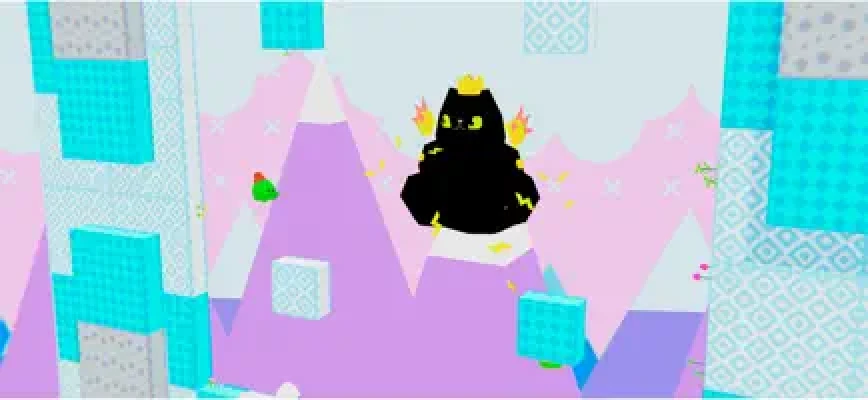
What makes the game unusual is its gravity-based movement. Barb can walk across walls and effectively ignore conventional gravity, turning ordinary platforming into a puzzle of positioning, timing and direction. Along the way, players can discover positive affirmations, secrets and other surprises while enjoying a playful story and humorous dialogue.
What Is Be Brave, Barb?
Be Brave, Barb is a single-player action-platformer centered around a simple but unusual idea: what if a cactus could walk on walls?
Barb's journey takes her through a series of compact platforming challenges where gravity isn't always pointing in the direction you expect.
Instead of simply jumping from one platform to another, you need to understand how Barb's movement interacts with walls, floors and other parts of the environment.
The game includes:
- 100 levels
- 5 bosses
- Positive affirmations to collect
- Secrets to discover
- Gravity-based platforming
- Wall walking
- Controller support
- Original music
- Stylized graphics
- Humorous dialogue
- Timed gameplay opportunities
Be Brave, Barb Story
Barb the cactus has lost her positive affirmations.
Without them, she must somehow face her fears and continue her adventure.
Her journey eventually leads toward King Cloudy and his evil henchmen, creating the game's main adventure framework. The story intentionally uses humor rather than taking itself too seriously, with the developer describing the game's approach as "questionable therapy."
The positive affirmations also give the game a collectible objective beyond simply reaching the end of each level.
Be Brave, Barb Gameplay Features
Gravity-Bending Platforming
The defining feature of Be Brave, Barb is its unusual gravity system.
Barb can walk across walls, allowing levels to function differently from conventional 2D platformers.
This means that a wall can effectively become:
- A floor
- A route to another section
- A launch point
- A way around an obstacle
- Part of a puzzle
Learning to recognize these possibilities is the key to progressing efficiently.
100 Levels
The game contains 100 levels, giving the adventure considerably more content than a short arcade platformer.
The later stages are particularly useful for testing whether you've really learned the game's gravity mechanics rather than simply memorizing basic jumps.
Positive Affirmations
Positive affirmations are collectible items scattered throughout the adventure.
Finding them adds an exploration element to the platforming. Instead of simply asking:
"How do I reach the exit?"
you can also ask:
"How do I reach that hidden affirmation?"
This often encourages you to examine areas that you might otherwise ignore.
Five Bosses
There are five bosses throughout the game.
Boss encounters change the rhythm of the game by combining movement skills with larger, more deliberate encounters.
Rather than treating bosses as conventional action-game fights, it's useful to think of them as movement challenges where understanding the arena is important.
Complete Be Brave, Barb Strategy Guide
1. Learn the Gravity System First
Before worrying about collectibles or speed, learn exactly how Barb moves.
Spend some time experimenting with:
- Walking on walls
- Changing direction
- Jumping near corners
- Moving between surfaces
- Recovering from mistakes
Once gravity stops feeling strange, the rest of the game becomes much easier to understand.
2. Think of Every Surface as a Possible Route
A common beginner mistake is seeing a wall and thinking:
"That's where the level ends."
In Be Brave, Barb, the wall may actually be part of the intended path.
When you reach a difficult section, inspect the entire area.
Ask:
- Can I walk up the wall?
- Can I reach the ceiling?
- Is there another route around the obstacle?
- Can gravity help me reach the next platform?
This mindset is essential.
3. Don't Always Jump Immediately
Because Barb can manipulate gravity through her movement, jumping isn't necessarily the solution to every obstacle.
Sometimes simply walking along a different surface provides the safer route.
Before jumping, check whether the environment gives you a gravity-based alternative.
4. Learn Direction Changes
Many of the game's trickier sections depend on changing direction at the correct moment.
Practice short, controlled movements instead of holding a direction continuously.
This is particularly useful when navigating narrow sections or trying to reach hidden collectibles.
5. Use Gravity to Reach Collectibles
When you see a positive affirmation in an apparently inaccessible position, don't assume you need a difficult jump.
Look for an alternative surface.
A collectible that appears to be:
Above you
may actually be accessible by:
Walking around a wall and approaching it from the side.
This is one of the most important concepts to learn.
Collectible Strategy
Don't Ignore Strange Areas
If a section of a level looks unusual, investigate it.
The game includes secrets as well as positive affirmations, so exploration can reveal things that aren't necessary for simply completing the level.
Look especially carefully around:
- Dead ends
- Unusual walls
- Small gaps
- Areas above the main route
- Sections that appear unnecessarily large
- Platforms that don't seem to serve an obvious purpose
Don't Sacrifice a Run for a Collectible
If you're struggling to reach an affirmation, don't repeatedly throw away successful attempts without understanding the route.
First determine:
- Where the collectible is.
- Which surface provides access.
- Where Barb needs to land.
- When to change direction.
- Whether the collectible requires a particular movement sequence.
Then attempt it.
How to Handle Difficult Levels
When a level seems confusing, divide it into sections.
Section 1
Identify the starting route.
Section 2
Find the first gravity transition.
Section 3
Determine where the next safe surface is.
Section 4
Look for collectibles or secrets.
Section 5
Find the exit.
Instead of trying to solve the entire level at once, solve one movement problem at a time.
Advanced Gravity Techniques
Wall-to-Wall Movement
Some sections can be approached by treating opposing walls as part of a single movement sequence.
Instead of thinking:
jump → land → jump
think:
wall → transition → opposite surface → transition
This changes the way you read the level.
Gravity-Based Shortcuts
Some players have reported finding alternate ways through certain sections using the gravity mechanics. One App Store reviewer specifically described discovering ways to skip parts of levels through clever use of the gravity system.
These routes can be fun to discover, but they aren't necessarily required for normal progression.
Precision Movement
Some sections require more careful timing than others.
When you encounter a difficult area:
- Slow down.
- Watch the movement cycle.
- Identify the safe position.
- Make one controlled movement.
- Reassess before continuing.
This is more reliable than repeatedly rushing into the same obstacle.
Boss Strategy
There are five bosses, but the most useful general strategy is to study the arena before trying to rush the encounter.
1. Learn the Arena
Look for:
- Walls
- Platforms
- Safe zones
- Gravity transitions
- Enemy movement
- Potential escape routes
2. Watch Before Acting
During your first attempt, concentrate on understanding what the boss does.
You don't necessarily need to win immediately.
3. Use the Environment
The game's gravity mechanics remain important during major encounters.
If a boss occupies one area, look for another route rather than repeatedly trying to pass directly through the danger.
4. Don't Panic
Boss sections can appear more complicated than they actually are.
Once you recognize the movement pattern, the encounter often becomes much more manageable.
Timed Mode Strategy
Be Brave, Barb also provides a reason to replay levels for faster completion times.
The App Store's version history notes a fix for an issue where times were not being saved on levels above 50, indicating that timed records are an established part of the game.
For time-based runs:
First Run
Learn the route.
Second Run
Remove unnecessary movement.
Third Run
Optimize gravity transitions.
Later Runs
Focus on precise timing.
Don't attempt to optimize a level before understanding it.
A slower route that you can execute consistently is more useful than a theoretically fast route that frequently fails.
How to Improve Your Level Times
Memorize Gravity Transitions
The biggest time losses often come from hesitation.
Once you know where you need to go, you can move more confidently.
Reduce Unnecessary Jumps
If walking across a wall is faster than jumping around an obstacle, use the gravity mechanic.
Avoid Collectibles During Speed Runs
If your goal is simply a fast completion time, don't take detours for optional collectibles unless they are part of your objective.
Practice Difficult Sections
Instead of restarting the entire level mentally after every mistake, focus on improving the specific section that causes the problem.
Secrets and Exploration
The game advertises secrets to unlock, making exploration an important secondary objective.
If you're trying to discover everything, don't assume that the obvious path is the complete level.
Explore:
- Behind unusual structures
- Above the main route
- Below platforms
- Along walls
- Around corners
- In areas that initially look unnecessary
The gravity mechanic makes vertical exploration especially important.
Beginner Tips
Tip 1: Learn Gravity
Understand how Barb interacts with walls before trying to speedrun levels.
Tip 2: Look Everywhere
Positive affirmations and secrets reward exploration.
Tip 3: Use Walls
A wall can be a path rather than an obstacle.
Tip 4: Don't Rush
Precision is often more useful than speed.
Tip 5: Study the Level
Look at the entire environment before making a difficult move.
Tip 6: Save Timed Runs for Later
Learn the route first, then optimize it.
Tip 7: Experiment
The gravity mechanics can allow alternative solutions.
Tip 8: Learn From Failed Jumps
A failed attempt often tells you exactly where your timing or positioning needs to change.
Difficulty and Player Feedback
The game currently has a 4.4/5 rating from 92 US App Store ratings, and Apple has featured it as an Editors' Choice title.
Player opinions on the movement are somewhat mixed. Some reviewers praise the game's progression and the satisfaction of discovering alternate routes, while others have reported that the gravity movement can occasionally feel unpredictable or difficult to time. These are individual player experiences rather than a universal assessment of the game.
One reviewer who completed the game highlighted the gradual introduction of new mechanics and its humorous messages, while also noting that some stages allow unconventional shortcuts.
The developer has continued issuing fixes; the App Store version history currently lists version 1.06 with a fix for level-time saving above level 50 plus minor tweaks and bug fixes.
Atmosphere and Presentation
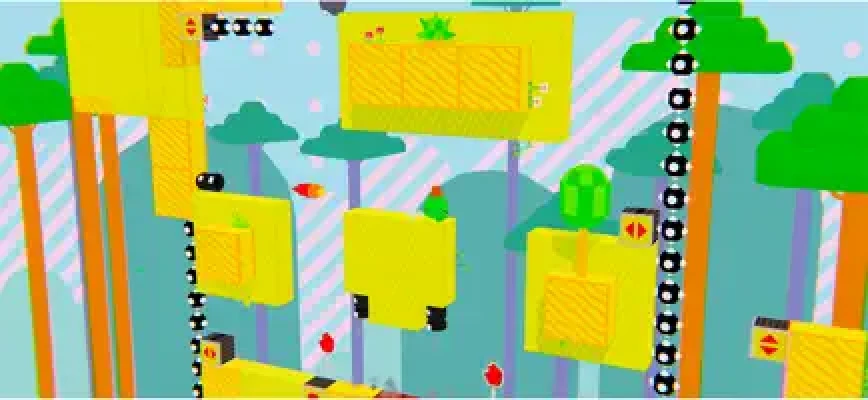
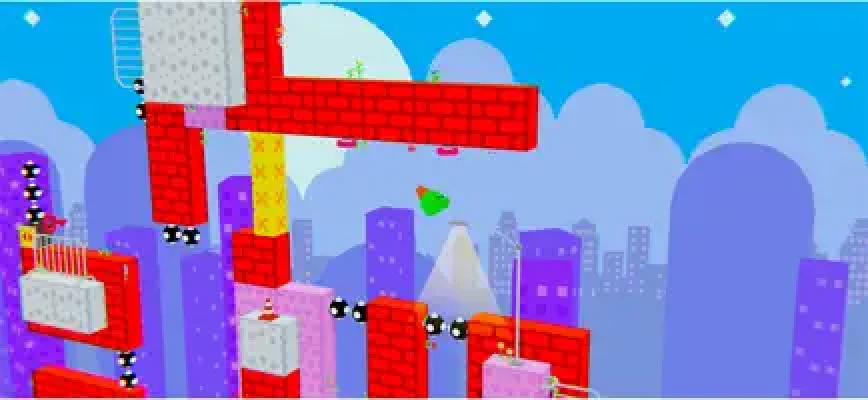
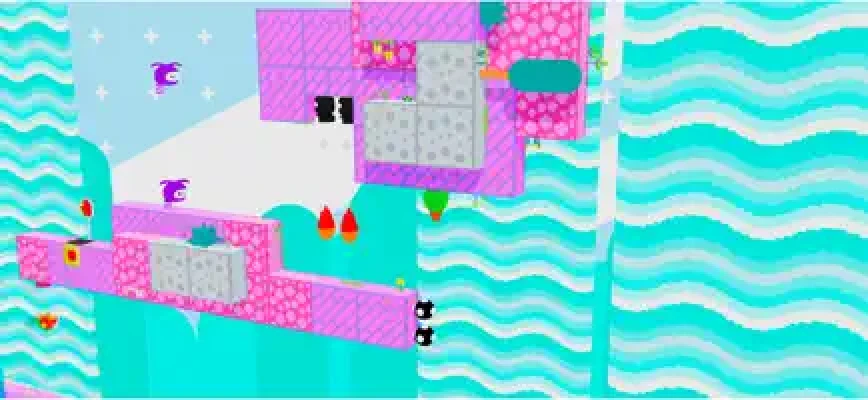
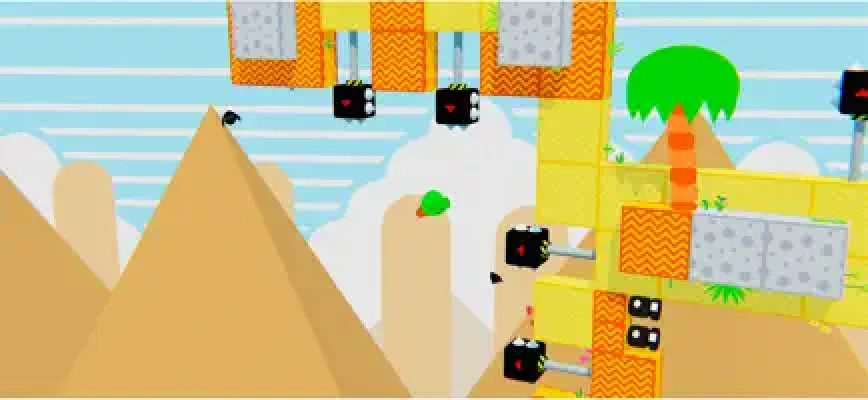
Be Brave, Barb has a cheerful, colorful presentation designed to contrast with the game's sometimes tricky platforming.
The game combines:
- Bright cartoon visuals
- A cactus protagonist
- Humorous dialogue
- Positive affirmations
- Playful enemies
- Funky music
- Stylized environments
The Steam listing categorizes it with tags including Action, Adventure, Platformer, Puzzle, Cartoon, Colorful, Cute, Funny, Controller and Singleplayer.
The combination gives the game a lighthearted identity even when a level becomes difficult.
Be Brave, Barb Game Information
| Feature | Details |
|---|---|
| Game | Be Brave, Barb |
| Developer | Thomas Young |
| Genre | Action / Platformer |
| Main Character | Barb |
| Platforming Style | Gravity-based |
| Levels | 100 |
| Bosses | 5 |
| Collectibles | Positive affirmations |
| Secrets | Yes |
| Timed Play | Yes |
| Controller Support | Yes |
| Multiplayer | Single-player |
| iPhone | Yes |
| iPad | Yes |
| iOS Requirement | iOS 15.0+ |
| App Size | 202.2 MB |
| Age Rating | 9+ |
| Language | English |
| Advertising | Yes |
| In-App Purchases | Yes |
Apple's current listing identifies Thomas Young as the developer, the Action category, 9+ rating, 202.2 MB size, and iPhone/iPad availability.
The game is also available on Android and Windows according to its current Google Play listing.
Pros and Cons
Pros
- Unique gravity-based platforming
- 100 levels
- Five bosses
- Positive affirmation collectibles
- Secrets to discover
- Fun cartoon presentation
- Humorous dialogue
- Controller support
- Timed replay value
- Multiple possible approaches in some stages
- Strong connection to the Dadish style of humor
Cons
- Gravity movement can take time to master
- Some precision sections may feel awkward
- Player reports have mentioned occasional restart/crash issues
- Some players have reported inconsistent-feeling movement
- Advertising is included in the free version
These points reflect a combination of documented game features and individual player reports; they should not be treated as universal experiences.
Frequently Asked Questions
What is Be Brave, Barb?
Be Brave, Barb is a gravity-bending platforming adventure starring Barb, a cactus searching for her lost positive affirmations while facing King Cloudy and his enemies.
How many levels are in Be Brave, Barb?
There are 100 levels.
What makes the gameplay different?
Barb can walk on walls and manipulate gravity, turning conventional platforming into a movement and positioning puzzle.
How many bosses are there?
The game contains five bosses.
What are positive affirmations?
They are collectibles found throughout the levels and form part of the game's exploration and progression.
Does Be Brave, Barb have secrets?
Yes. The game specifically advertises secrets to unlock.
Can I play Be Brave, Barb with a controller?
Yes. Controller support is listed among the game's features.
Is Be Brave, Barb available on Android?
Yes. Google Play currently lists the game for Android, and the listing also identifies Windows availability.
Is Be Brave, Barb free?
The iOS version is listed as free with in-app purchases and advertising.
Is Be Brave, Barb related to Dadish?
It is made by Thomas Young, the creator of Dadish, and the App Store describes it as a new platforming adventure from the creator of Dadish.
Final Thoughts
Be Brave, Barb takes the familiar 2D platforming formula and changes its central rule: gravity doesn't have to keep Barb on the floor. That one idea affects level navigation, collectibles, secrets, shortcuts and timed runs.
For beginners, the best approach is to stop thinking of walls as barriers and start treating the entire level as a connected movement space. Once you understand how Barb transitions between surfaces, the 100 levels become less about simply jumping and more about reading the environment, controlling movement and finding clever routes.
Rate the Game
User Reviews














Popular Games


















 Android
 iOS
iOS Windows
 Xbox
Xbox