
Latest Version
January 02, 2026
GoKids! publishing
Educational
0
com.gokids.livingletters
Report a Problem
More About :game
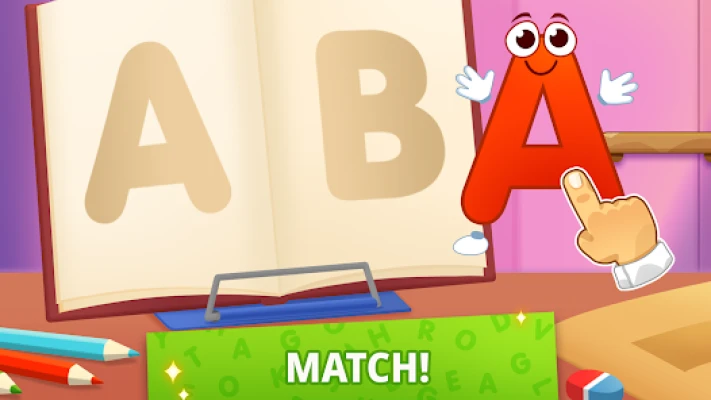
The main learning mechanic revolves around finding letters, tracing their shapes and connecting them with words. Rather than presenting alphabet practice as a traditional lesson, the game places children inside a playful world where letters become characters that need to be found and returned to their book.
The current Google Play listing describes the game as suitable for young children and includes offline play, single-player gameplay, cartoon presentation and Android and Windows availability.
What Is ABC Kids! Alphabet, Letters?
The game combines alphabet learning, letter tracing and early English vocabulary with an adventure-style presentation.
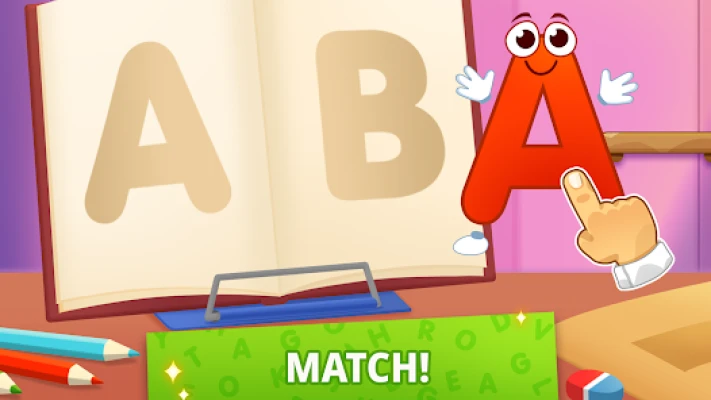
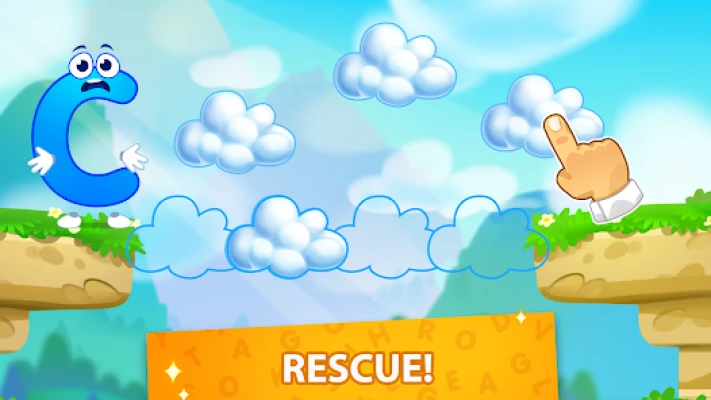
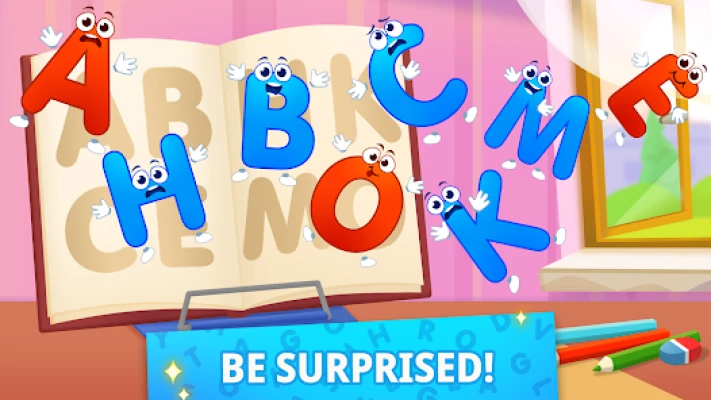
The story begins with a squirrel and an ABC book. A gust of wind sends the letters flying away, and the child joins the squirrel in searching for them. Each stage introduces a letter and gives the child an activity related to finding, recognizing or tracing it.
The concept is particularly focused on:
- Recognizing English capital letters
- Learning the alphabet from A to Z
- Practicing letter shapes
- Tracing letters with a finger
- Hearing letter names and words
- Connecting letters with vocabulary
- Developing fine-motor control
- Encouraging children to repeat sounds and words
The developer specifically describes the tracing mechanic as a way to support preschool writing skills and fine motor development.
How the Gameplay Works
ABC Kids! Alphabet, Letters is intentionally simple. Children interact primarily through touch rather than complicated controls.
1. Find the Missing Letters
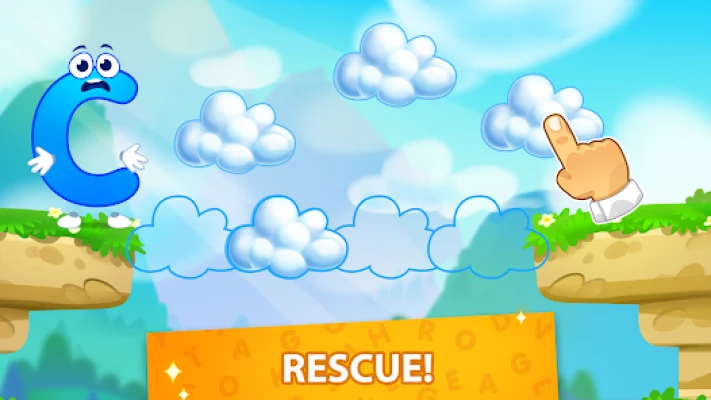
The adventure begins with the squirrel searching for letters that have escaped from the ABC book.
Each location presents a different activity designed around recovering or interacting with a particular letter.
2. Follow the Letter Outline
Tracing is one of the central mechanics.
Children follow the shape of a letter using their finger. The game uses visual guidance to make the process accessible to preschool learners.
This makes the activity feel more like play than handwriting homework.
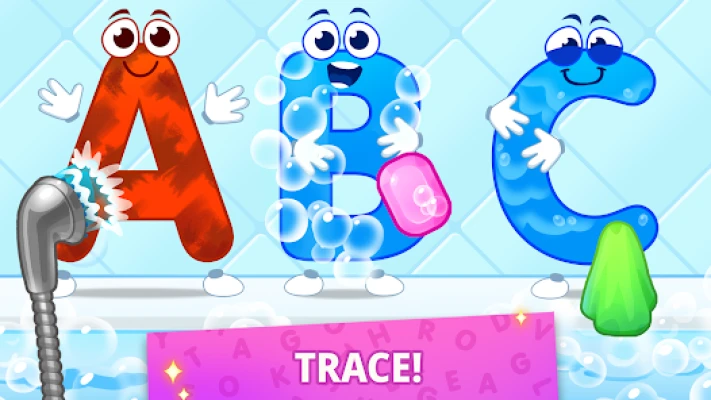
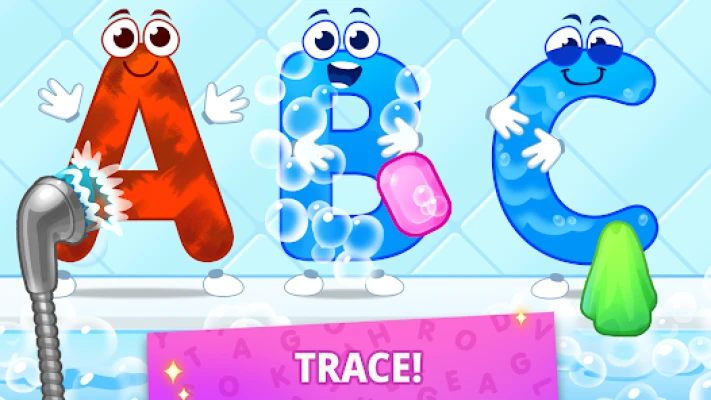
3. Wash and Trace the Letter
Some activities turn tracing into a playful cleaning sequence.
Children can wash the letter, trace its shape and wipe it clean. The repeated movement gives them additional opportunities to become familiar with the letter's shape.
4. Discover a Word
After recovering a letter, the game introduces a word associated with it.
The word is presented as part of the learning experience, while narration helps children connect what they see with what they hear.
5. Repeat and Practice
The strongest learning value comes from repetition.
Children can see the letter, hear its name, trace its shape and encounter a related word. Repeating these activities can reinforce recognition over time.
Complete Strategy Guide for Parents and Children
ABC Kids! Alphabet, Letters is not a traditional game where the goal is to achieve a high score. The most useful strategy is therefore a learning strategy: use the activities in a way that encourages recognition, tracing and verbal repetition.
Start With Short Sessions
Young children generally benefit from short, focused activities rather than long sessions.
A simple routine is:
- Play one or two letter activities.
- Ask the child to identify the letter.
- Let the child trace it independently.
- Say the letter together.
- Repeat the associated word.
- Stop before the activity becomes frustrating.
The goal is familiarity rather than speed.
Let the Child Trace Independently
It can be tempting for a parent to guide the child's finger immediately.
Instead, give the child an opportunity to follow the outline independently first.
If the tracing goes off course, gently demonstrate the movement and let the child try again.
This makes the activity more useful as a fine-motor exercise.
Say the Letter Out Loud
Don't rely only on the game's narration.
When a letter appears, say its name together with the child.
For example:
“A — A — apple.”
Then allow the child to repeat it.
The game's own description emphasizes connecting visual and auditory learning by hearing letters and words while seeing them on screen.
Connect Letters to Everyday Objects
The vocabulary becomes more meaningful when children encounter the same ideas away from the screen.
After learning a letter, look for something around the house that begins with that letter.
For example:
- A — apple
- B — ball
- C — cat
- D — dog
The exact vocabulary presented by the game can vary, so parents can simply use familiar examples when extending the lesson.
Don't Rush Through the Alphabet
Finishing all the letters quickly isn't necessarily the goal.
If a child is struggling with a particular letter, spend additional time tracing and recognizing it before moving on.
Repeated exposure is more useful than simply completing activities.
Encourage Correct Letter Shapes
When tracing, pay attention to the general direction and shape of the letter.
Children can first follow the game's visual guidance and later try drawing the letter themselves on paper.
This creates a natural transition from touchscreen practice to physical handwriting.
Letter Learning Progression
A useful way to approach the game is to divide learning into four stages.
Stage 1: Recognition
Ask the child:
“Which letter is this?”
Allow them to identify it visually.
Stage 2: Tracing
Let the child follow the letter outline.
Focus on controlled movement rather than speed.
Stage 3: Sound and Word Association
Say the letter and its associated word together.
This helps connect the visual symbol with spoken language.
Stage 4: Independent Practice
After finishing the digital activity, ask the child to draw the same letter on paper.
This is especially useful because the game's tracing activities are designed around developing early writing movements.
Tips and Tricks for Better Learning
Keep the Volume On
Narration is an important part of the learning experience because the game combines visual letters with spoken language.
Use Headphones Carefully
If headphones are used, keep the volume comfortable and supervise young children.
Repeat Difficult Letters
If a child repeatedly confuses two letters, don't force progression. Return to those letters during another short session.
Ask Questions
Parents can turn passive play into active learning by asking:
- “What letter is that?”
- “Can you trace it?”
- “What sound do you hear?”
- “Can you find something that starts with this letter?”
Follow Screen Time With Offline Practice
After completing a letter activity, give the child paper and a pencil or crayons.
This creates a bridge between digital tracing and handwriting.
Don't Focus on Speed
There is no reason to rush through the activities. Accuracy, recognition and repetition are more important for this type of educational game.
Atmosphere and Presentation
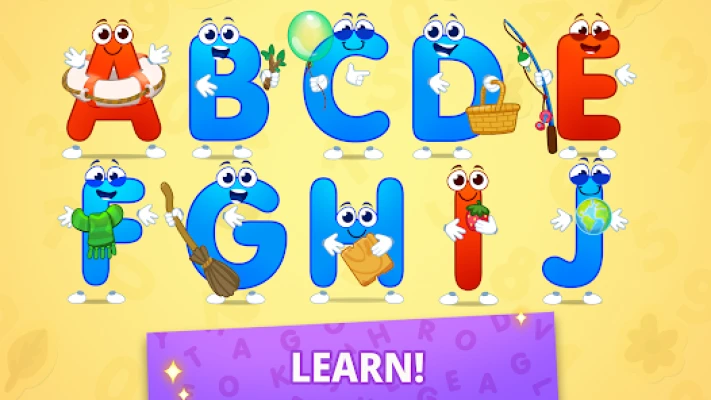
ABC Kids! Alphabet, Letters uses a colorful cartoon world rather than a classroom-style presentation.
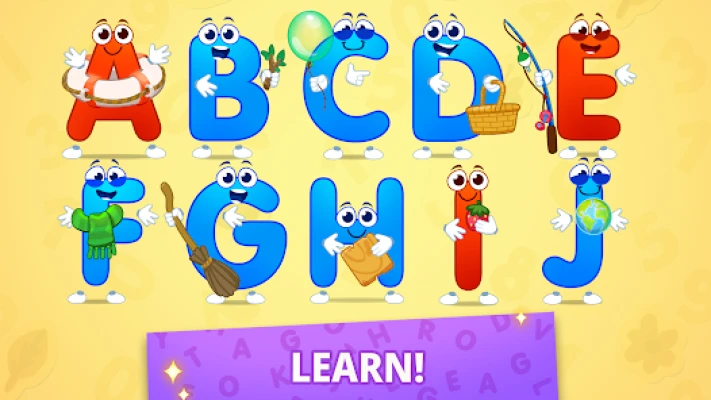
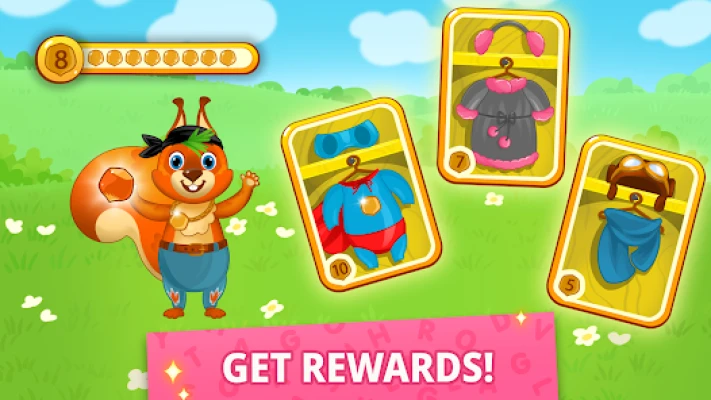
The squirrel acts as the child's companion during the adventure, while the letters themselves are presented as lively characters. The game moves through playful environments and activities instead of presenting a simple alphabet chart.
The current Google Play listing describes the presentation as stylized, cartoon and cute, with offline single-player support.
This approach gives the learning process a more playful atmosphere and can make repeated letter practice feel less formal.
Educational Value
The game's main educational areas are:
Alphabet Recognition
Children are introduced to the English alphabet and individual letter shapes.
Early Writing Practice
Tracing encourages controlled finger movements that resemble early handwriting practice.
Vocabulary
Letters are connected with English words, helping children begin associating symbols with vocabulary.
Listening
Narration gives children an opportunity to hear letter names and words.
Fine Motor Skills
Following outlines, washing letters and wiping them require controlled touch movements.
The developer presents these activities as educational techniques intended to combine visual, auditory and motor learning.
Parent's Corner
The game includes a Parents' Corner where adults can adjust certain settings.
According to the current listing, parents can:
- Change the game's language
- Adjust sound
- Adjust music
- Manage available learning options
- Choose subscription options when applicable
This makes the Parents' Corner an important place to configure the experience before giving the device to a child.
Features
- English alphabet learning
- A–Z letter activities
- Letter tracing
- Preschool writing practice
- Letter and word recognition
- Voice narration
- Vocabulary learning
- Squirrel adventure story
- Cartoon graphics
- Interactive letter characters
- Fine-motor activities
- Parents' Corner
- Language settings
- Sound and music controls
- Single-player gameplay
- Offline play
- Android support
- Windows availability
- Designed for young children
The Google Play listing currently shows the game as Everyone, with 1M+ downloads and a Teacher Approved designation.
Reviews and Player Feedback
The current Google Play listing shows 4.2 stars from about 3.31K reviews, indicating substantial player feedback.
Feedback is not completely uniform, however.
One detailed parent review praised the animations and tracing activities but criticized the focus on capital letters, the way letter sounds were presented, and the fixed progression through letters. The developer responded that the game had been developed with teacher advice and said the feedback would be considered for future updates.
Another reviewer criticized navigation and the lack of an obvious exit option, while the developer acknowledged the issue and said it would be investigated.
There is also positive feedback from parents who enjoy the game's presentation and educational concept.
Honest Assessment
The game's strongest area is its combination of tracing, animation and alphabet exploration.
The main consideration for parents is that it should be viewed as a supplementary learning activity rather than a complete early-reading curriculum. The game can provide useful practice, but parents may want to combine it with books, handwriting activities and spoken-language practice.
Pros and Cons
Pros
- Simple controls for young children
- Engaging cartoon presentation
- Letter tracing activities
- Combines visual and audio learning
- Introduces early English vocabulary
- Fine-motor practice
- Adventure structure gives context to letter learning
- Offline gameplay
- Parent settings
- Large installed user base
Cons
- Learning progression may feel restrictive for parents who want to select letters freely
- The emphasis on capital letters may not match every early-literacy teaching approach
- Some activities may feel more like animated interactions than traditional games
- Parents may need to supplement the app with offline reading and handwriting practice
Platforms and Requirements
The current Google Play listing supports:
Android
The latest third-party version information available for package com.gokids.livingletters identifies version 2.1.2 and Android 7.0+ requirements, with the update dated August 17, 2026 in that distribution record.
Google Play currently also lists Windows availability through Intel-powered compatibility.
The Google Play listing was updated on September 14, 2026.
Ads and In-App Purchases
The current Google Play listing identifies ads and in-app purchases.
The Parents' Corner also contains subscription-related options for families who want access to learning content and open levels.
Parents should therefore check the available options and configure the game before handing the device to a young child.
Data Safety
Google Play currently states that the app may share app activity and app info/performance with third parties and may collect those same categories of information.
Google Play also states that data is encrypted in transit and currently indicates that data cannot be deleted.
Parents should review the current Data Safety section and the developer's privacy policy if privacy is an important consideration.
Who Is ABC Kids! Alphabet, Letters For?
The game is primarily designed for:
- Toddlers
- Preschool children
- Children beginning to learn English letters
- Children practicing basic letter shapes
- Parents looking for interactive alphabet activities
- Early learners who enjoy cartoon-style educational games
It is less suitable as a standalone solution for children who are already reading independently.
Frequently Asked Questions
Is ABC Kids! Alphabet, Letters free?
The Google Play listing identifies the game as containing ads and in-app purchases. Additional learning access and subscription options are available through the parent area.
What age is ABC Kids! Alphabet, Letters designed for?
The developer describes the game primarily for young children around the toddler and preschool stage, including ages 2–5 in its description.
Does the game teach the English alphabet?
Yes. Its central purpose is teaching English letters from A to Z through interactive activities, tracing and associated words.
Does ABC Kids! Alphabet, Letters teach handwriting?
It provides letter-tracing activities intended to help children become familiar with letter shapes and early writing movements. It should be considered practice rather than a replacement for physical handwriting instruction.
Can children play offline?
Yes. Google Play currently lists the game as supporting offline play.
Is ABC Kids! Alphabet, Letters multiplayer?
No. The game is listed as a single-player educational experience.
Can parents change the language?
Yes. The Parents' Corner includes language settings according to the game's Google Play description.
Does the game include sounds?
Yes. Narration introduces letters and words, while parents can also adjust sound and music settings.
Is ABC Kids! Alphabet, Letters a reading course?
No. It is better understood as an alphabet and early-learning game. Children can benefit from combining it with books, phonics activities, conversation and handwriting practice.
Final Thoughts
ABC Kids! Alphabet, Letters turns early alphabet practice into a colorful adventure built around a squirrel, living letters and interactive tracing.
Its biggest strength is the way it combines several simple activities: children find letters, interact with them, trace their shapes, hear words and repeat what they see. That combination gives the game more structure than simply displaying an alphabet chart.
Parents should keep its role in perspective. It works best as one part of an early-learning routine rather than a complete reading or phonics curriculum. Pairing the game with physical handwriting, picture books and conversations about letter sounds can make the digital activities more meaningful.
For families looking for an approachable way to introduce young children to English letters, tracing and basic vocabulary, the game offers a playful learning environment with simple controls and a clear educational focus.
Rate the Game
User Reviews






Popular Games


















 Android
 iOS
iOS Windows
 Xbox
Xbox