More Than a Glitch: Why AI is Gaming’s Ultimate Power-Up
4 min read In 2026, we’ve moved past the "hype" phase of AI in gaming and into a period of deep, foundational integration. It’s no longer just a buzzword; it’s the engine running under the hood of both the games you play and the studios that make them. February 25, 2026 20:49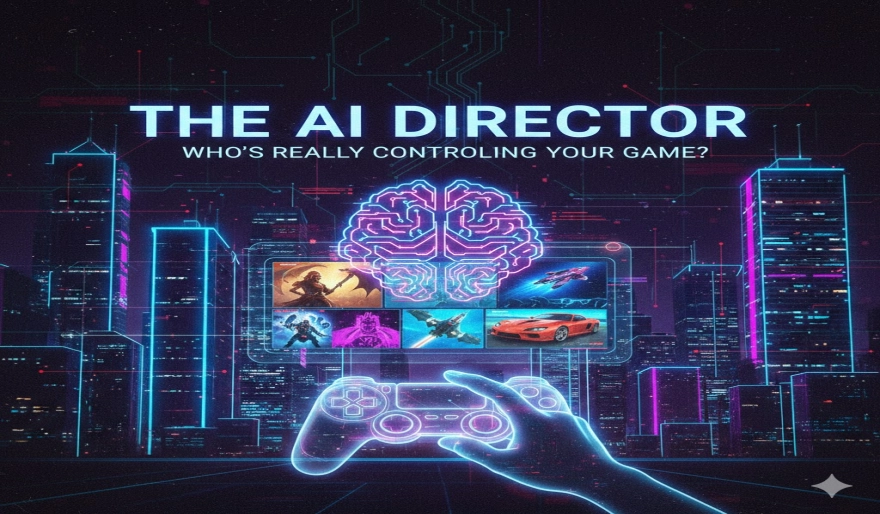
1. The Death of the "Static" NPC
Gone are the days when a shopkeeper only had three lines of dialogue.
Intelligent NPCs: Modern NPCs now feature "genuine memory" and adaptive behavior. They remember how you treated them in previous sessions and adjust their personality accordingly.
Dynamic Dialogue: Using Natural Language Processing (NLP), you can often speak or type to characters in real-time, receiving unscripted, contextually relevant responses that still align with the game's lore.
2. "Infinity" Content and Procedural Worlds
The scale of game worlds has exploded because developers no longer have to hand-place every rock or tree.
World Building: AI-driven procedural content generation allows for vast, detailed environments that evolve. In some titles, the world literally changes based on player choices or real-world data.
Endless Quests: AI can now generate "infinite" side quests, unique items, and localized stories on the fly, ensuring that two players never have the exact same experience.
3. Hyper-Personalized Gameplay
AI acts as a "silent director" behind the scenes, tailoring the game to your specific skill level and mood.
Dynamic Difficulty Adjustment (DDA): If the AI senses you’re getting frustrated, it might subtly drop an extra health pack; if you’re breezing through, it will coordinate enemy tactics to keep you on your toes.
Tailored Rewards: Battle passes and in-game challenges are now frequently personalized, offering rewards that actually match your playstyle rather than a generic list.
4. The "Democratization" of Development
AI has significantly lowered the barrier to entry for making games
Indie Superpowers: Small teams can now achieve "AAA" visual fidelity. Tools that automate character animation, lighting, and asset creation have reduced production times by as much as 30–50% for many studios
AI-Native Engines: We are seeing the first "AI-native" games—titles designed from day one around AI systems rather than traditional hard-coded logic.
The "Glitch" in the Matrix: Current Challenges
It's not all level-ups and high scores. The industry is currently grappling with some serious growing pains:
The Human Cost: There is significant tension regarding job displacement. While AI handles "boring" tasks like bug testing, many creative professionals (artists, writers) are fighting for "Human-Crafted" labels to protect their work
The "Uncanny" Backlash: Players have become very good at spotting "lazy" AI usage. In 2025 and 2026, several major titles faced PR nightmares after being caught using unrefined generative AI for concept art or voice acting.Hardware Strain: The massive demand for AI processing has contributed to a spike in memory (DRAM/SSD) prices, which is trickling down into the cost of consoles and PC components.
The 2026 Verdict: AI hasn't replaced game developers; it has turned them into "curators." The most successful games this year are those that use AI to handle the scale, while humans focus on the soul, story, and emotional "vibe" that an algorithm still can't quite replicate.
User Comments (0)
No comments added yet.
Comments will not be approved to be posted if they are SPAM, abusive, off-topic, use profanity, contain a personal attack, or promote hate of any kind.
More »

Popular Games

Dream League Soccer 2026First Touch Games Ltd.

An Elmwood Trail 5Sparsh Tyagi

Real Cricket™Nautilus Mobile

Butcher hero: hook'n'chew RPGMULTICAST GAMES

Speed StarsMiniclip SA

MWT: Tank BattlesArtstorm FZE

Car Parking Multiplayer: Open-World Driving Tuning Simulator 1Aidana Kengbeiil

Business Empire: RichManAAA Fun

No Limit Drag Racing 2Battle Creek Games, LLC

City Smash: Sandbox SimulatorParadyme Games










 Android
 iOS
iOS Windows
 Xbox
Xbox